
A classified Margaux estate earning EP Club's Pearl 3 Star Prestige in 2025, Château Desmirail sits within one of the Médoc's most demanding appellations, where gravel soils and proximity to the estuary define what ends up in the bottle. The estate offers a direct encounter with third-growth Margaux, positioned among peers whose wines trade on terroir precision rather than volume.
 Discover on Pearl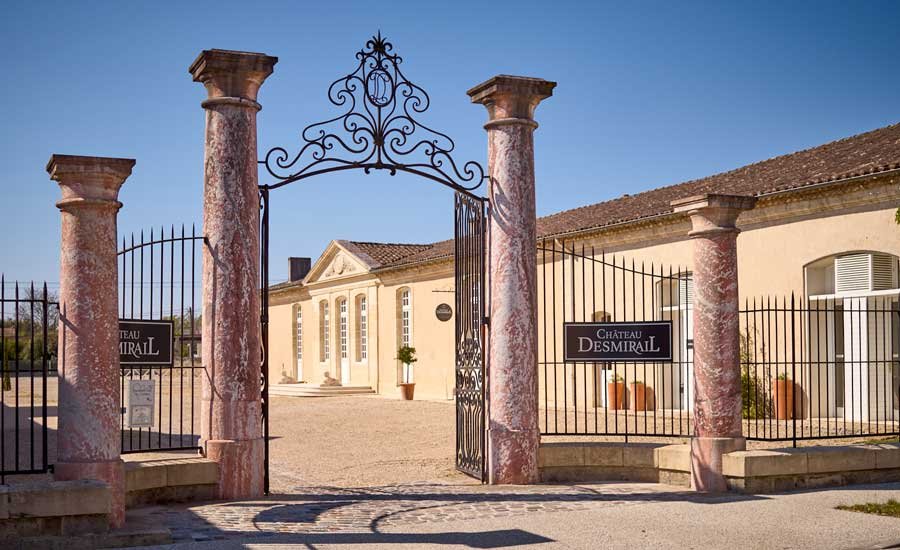
Gravel, Garonne, and the Margaux Blueprint
The road into Margaux-Cantenac follows the same logic as the wines produced along it: everything is determined by what lies beneath. The gravel ridges here, deposited over millennia by the Garonne, drain so efficiently that vine roots are forced deep into subsoils in search of water and mineral sustenance. The result is a particular kind of concentration — not the muscular density of a Pauillac, but a more lateral tension that Margaux drinkers have sought for generations. Château Desmirail, addressed at 28 Avenue de la 5ème République, occupies ground shaped by exactly these forces, and the estate's 2025 EP Club Pearl 3 Star Prestige rating positions it among the appellation's more closely watched third-growth producers.
Third-growth classification in the Médoc is a fixed hierarchy, established in 1855 and adjusted only once since. That stability means estates like Desmirail compete less on shifting rankings and more on the quality of their expression year to year — a subtler, more demanding form of peer pressure. The comparison set is not abstract: Château Durfort-Vivens, Château Ferrière, and Château Lascombes all work the same appellation with similar raw materials. What separates them, vintage by vintage, is how faithfully each estate translates its specific parcel composition , the proportion of gravel, the depth of the clay layer beneath, the age of the vines , into the glass.
What Margaux Terroir Actually Means at This Address
The Margaux appellation is the southernmost of the four principal Médoc communes, and its terroir character is the most commonly misread. Visitors expecting a fragrant, approachable red often encounter something more structured in young vintages , the floral profile that defines the appellation at its leading emerges only when drainage is precise and yields are controlled. The gravel-dominant parcels of Margaux-Cantenac, where Desmirail's vineyards sit, are among the better-drained in the commune. That drainage is the terroir mechanism: it stresses the vine just enough to concentrate flavour without shutting down phenolic development.
Cabernet Sauvignon is the anchor variety across most of the appellation's leading estates, with Merlot providing a softening counterweight that Margaux uses differently from Saint-Émilion. In the Médoc, Merlot is a blending tool rather than a lead actor , it rounds the frame without dominating the structure. The proportions shift with vintage conditions; cooler years tend to see the Merlot component carry more weight in the blend, while warm, even harvests allow Cabernet to express the graphite and cassis character that defines Margaux at its most recognisable. Understanding this blend logic is a useful frame for reading any Desmirail vintage on its own terms. For context on how other estates in the same commune handle this balance, the profiles of Château Marquis-de-Terme and Château Marquis-d'Alesme are instructive comparison points.
Pearl 3 Star Prestige: Reading the Signal
EP Club's Pearl 3 Star Prestige rating, awarded to Château Desmirail in 2025, is not a standalone data point , it is a positioning signal. Within EP Club's framework, Pearl 3 Star Prestige denotes a producer operating at the upper register of its category, with consistency and terroir expression that separates it from peers in the same classification tier. For a third-growth Margaux estate, that recognition carries specific implications: it suggests the wine is performing at or above its classification promise, which in the Médoc is not a given. Classification guarantees lineage, not current quality, and the gap between a producer's 1855 rank and their current form is a subject of ongoing debate among Bordeaux buyers.
The 2025 rating also places Desmirail in a cohort that includes Pearl-rated estates from other regions, all of which share an emphasis on terroir clarity over technical intervention. For reference points outside Bordeaux, consider the approach of Albert Boxler in Niedermorschwihr, where vineyard-specific expression is the governing principle, or Abadía Retuerta in Sardón de Duero, another estate where the land's character sets the terms. In each case, the producer's credibility rests on how legibly the vineyard speaks through the wine.
Planning a Visit to Margaux
Margaux is a village, not a city, and it functions as one. There are no large visitor centres, no wine tourist infrastructure on the scale of, say, Napa. Estates manage their own visits, and the better ones require appointment requests made weeks in advance, particularly during the April en primeur campaign week when négociants, critics, and buyers descend on the Médoc simultaneously. Outside that window, spring and early autumn offer the most rewarding conditions for visiting: the vines are either budding or harvesting, the light in the Gironde estuary valley is particular and low, and the estates are more accessible to serious visitors. For those planning a stay in the area, our full Margaux hotels guide covers the local accommodation picture, while our Margaux restaurants guide maps out where to eat between visits. The full Margaux wineries guide situates Desmirail within the broader estate map of the commune.
Reaching Margaux from Bordeaux takes roughly 45 minutes by car along the D2, the Route des Châteaux that threads through every significant Médoc commune from north to south. There is a train station at Margaux, served by occasional TER regional services from Bordeaux Saint-Jean, though frequency is limited and timings rarely align neatly with estate visits. A hired car, or a driver based in Bordeaux, remains the practical choice for anyone planning multiple estate appointments in a single day. The Margaux experiences guide covers guided formats that include transport, for those who prefer not to manage logistics independently. After visits, the Margaux bars guide offers options for rounding out an afternoon.
Desmirail in Its Peer Context
Within the Médoc's third-growth tier, Desmirail occupies an interesting structural position: it is one of the smaller estates in terms of profile, which can work either as a disadvantage in terms of trade visibility or as an advantage for buyers seeking quality without the price premium that attaches to higher-profile classified names. Châteaux like Lascombes and Malescot Saint-Exupéry carry significantly more brand recognition in export markets, which means their wines often price above their third-growth peers regardless of comparative quality in a given vintage. Desmirail, with its more restrained public footprint, tends to trade closer to its intrinsic value.
This dynamic is not unique to Margaux. Producers in any region that operate below the marketing threshold of their nearest peers offer a version of the same proposition: classification-grade terroir at prices that reflect market position rather than pure quality. The same argument applies in other wine contexts , Château Bastor-Lamontagne in Preignac occupies a similar structural position in Sauternes, and Chartreuse in Voiron is a comparable case of deep credentialed heritage operating outside the spotlight of its better-publicised peers. For Bordeaux buyers, this pattern is well understood; for newer collectors, it represents a useful way to access classified-growth quality without the allocation friction that surrounds Margaux's most sought-after addresses. The Aberlour distillery in Scotland is an interesting cross-category analogue , a producer of established credibility that operates at a price point below its intrinsic standing in the category.
Frequently Asked Questions
- What do visitors recommend trying at Château Desmirail?
- The core focus at Desmirail is Margaux-appellation red wine, built from the Cabernet Sauvignon-led blends that define the commune's classified estates. Visitors interested in how Margaux's gravel-dominant terroir expresses itself in third-growth format should use the estate's wines as a direct comparison against peers such as Château Ferrière and Château Durfort-Vivens, both of which work the same commune with different parcel compositions. The EP Club Pearl 3 Star Prestige (2025) positions Desmirail's output at the upper register of its classification tier.
- What should I know about Château Desmirail before I go?
- Château Desmirail is a classified Margaux estate and operates on the rhythms of a working wine property, not a public attraction. Visits require advance arrangement, and the Médoc's infrastructure is oriented around trade buyers and serious wine visitors rather than casual tourism. Margaux-Cantenac is a small commune; plan travel from Bordeaux, account for appointment lead times, and cross-reference your visit against the full Margaux wineries guide to build an efficient itinerary. The estate's 2025 Pearl 3 Star Prestige rating makes it a credible anchor for any Médoc itinerary.
- How far ahead should I plan for Château Desmirail?
- If your visit falls during April's en primeur campaign, lead times of several weeks are advisable , the Médoc fills quickly with trade professionals during that window. Outside en primeur, appointments during spring and autumn harvest periods should be arranged at minimum two to three weeks in advance. The estate does not publish booking details through the EP Club database, so contact via the château's address at 28 Avenue de la 5ème République, Margaux-Cantenac, is the recommended route.
- How does Château Desmirail's 1855 classification affect the wines available today?
- Desmirail's third-growth classification dates to 1855, a ranking that reflects the estate's historical standing rather than a current quality guarantee. In practice, classification sets the floor: it defines where buyers expect the wine to sit in terms of structure, longevity, and appellation typicity. The EP Club Pearl 3 Star Prestige (2025) suggests the estate is performing at or above that floor currently, which for Bordeaux buyers is the more actionable signal. Third-growth Margaux, at this address, means Cabernet-led blends shaped by the commune's signature gravel drainage, vinified to reward cellaring rather than immediate consumption.
Peer Set Snapshot
These are the closest comparables we have in our database for quick context.
| Venue | Awards | Notes |
|---|---|---|
| Château Desmirail | Pearl 3 Star Prestige | This venue |
| Château Margaux | 50 Best Vineyards #3 (2021); Pearl 5 Star Prestige | Philippe Bascaules, 12,500 cases, Premier Cru |
| Château Durfort-Vivens | Pearl 3 Star Prestige | |
| Château Ferrière | Pearl 3 Star Prestige | |
| Château Lascombes | Pearl 3 Star Prestige | Dominique Befve, 250-300,000 bottles, Second-Growths |
| Chateau Malescot St. Exupery | Pearl 4 Star Prestige | Nicolas Audebert, Est. 1660 |
Access the Cellar?
Our members enjoy exclusive access to private tastings and priority allocations from the world's most sought-after producers.
Get Exclusive Access