
Bodri Winery operates from the Faluhely-dűlő vineyard site in Szekszárd, one of Hungary's most compelling red-wine regions, where loess and clay soils shape the character of Kadarka and Kékfrankos-based blends. Awarded Pearl 2 Star Prestige in 2025, the winery holds a recognised position among Szekszárd's quality producers. It belongs to a regional tradition built on continental heat, ancient soils, and the slow rehabilitation of indigenous grape varieties.
 Discover on Pearl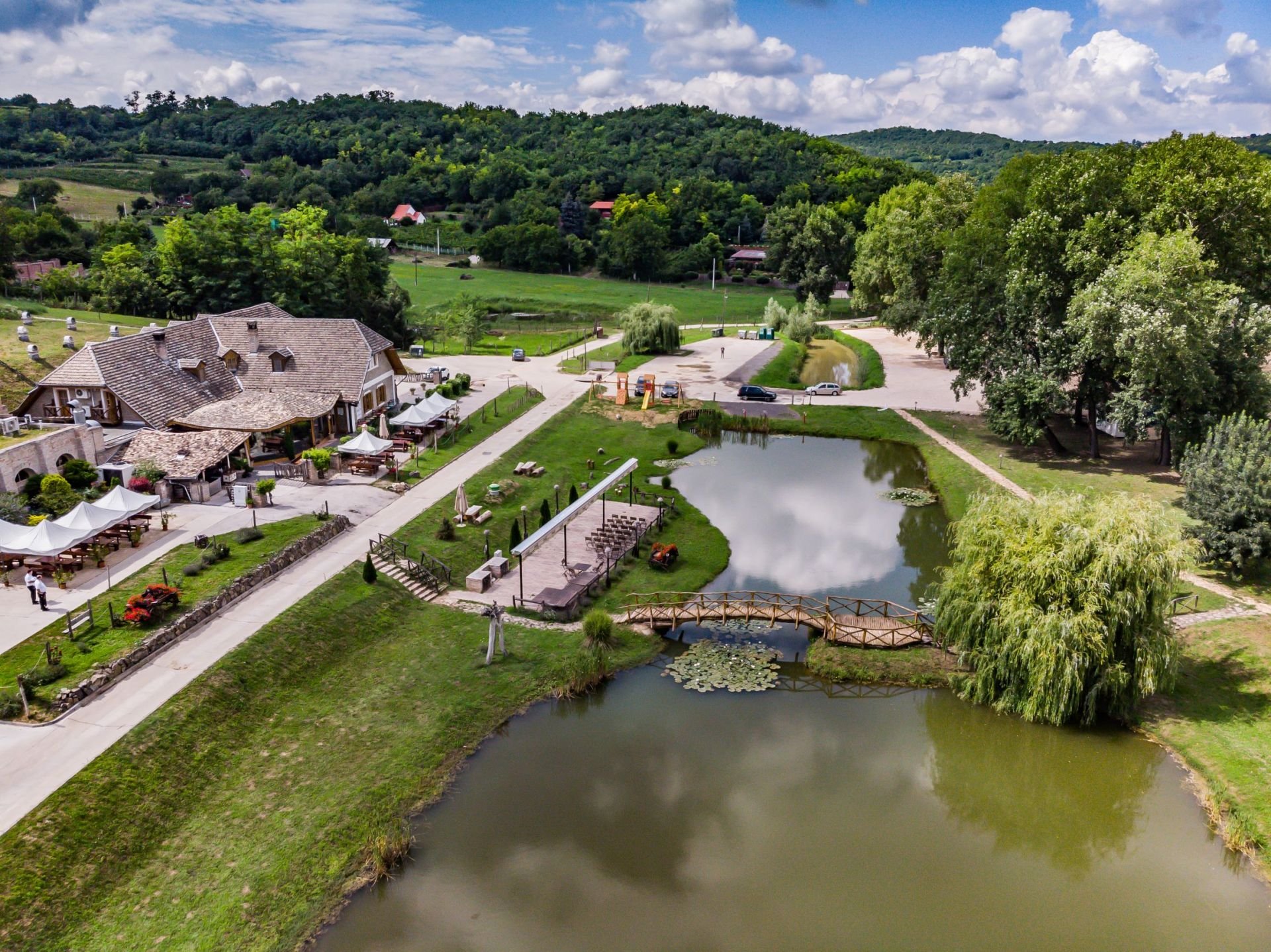
Szekszárd's Faluhely-dűlő and the Soils That Define the Glass
Approach Szekszárd from the north and the terrain tells you something immediately. The loess hills that bracket this southern Hungarian town are not incidental to its wine identity — they are the entire argument. Unlike the volcanic basalt of Badacsony or the granite-veined slopes of Villány's western reaches, Szekszárd's vineyards sit on deep loess deposits over clay, a combination that retains moisture during the brutal Pannonian summers while forcing vines to root deep for structure. The result, across the region's better parcels, is red wine with a particular weight and aromatic warmth: dark fruit, dried herbs, and a tannic grip that softens into something more complex with time in bottle.
Bodri Winery occupies one such parcel. The Faluhely-dűlő address places it on a named vineyard site — a distinction that matters in a region where single-vineyard thinking has only recently re-emerged after decades of cooperative-era blending. The 2025 Pearl 2 Star Prestige award, one of the more credible quality indicators applied to Hungarian wine producers in recent years, confirms the winery's position in the upper tier of Szekszárd's output without overstating it. It is not the region's largest name, but it operates in the bracket of producers where terroir-specificity, rather than volume, is the guiding logic.
The shortlist, unlocked.
Hard-to-book tables, cellar releases, and concierge-planned trips.
Get Exclusive Access →What Szekszárd Does That Other Hungarian Regions Don't
Hungary's wine identity abroad is still dominated by Tokaj, and understandably so , the Aszú tradition has centuries of documentation behind it and a price tier that attracts international attention. Producers including Disznókő in Mezőzombor, Royal Tokaji in Mád, Tokaj Hétszőlő in Tokaj, Tokaj Oremus in Tolcsva, and Árvay Winery in Rátka each represent a tradition rooted in botrytised white wines from a very particular northeast Hungarian geography. Szekszárd operates on a different axis entirely.
This is red-wine country, and specifically a region where Kadarka , a thin-skinned, high-acid indigenous variety that spent decades being squeezed out in favour of easier-to-grow alternatives , has staged a slow but measurable return. Kadarka at its leading in Szekszárd produces wines of surprising finesse: lighter in colour than the Bikavér blends that carry Kékfrankos as their spine, with a spiced, almost volatile aromatic lift that reads closer to Pinot Noir in structure than to the Cabernet-heavy profiles found further south in Villány. The continental climate , hot summers, cold winters, with relatively low rainfall , concentrates flavour without eliminating freshness, provided yields are managed carefully.
The regional peer set around Bodri reflects this dual identity: producers such as Heimann Winery, Eszterbauer Winery, Lajver Winery, Mészáros Pál Winery, and Sebestyén Winery each work within the same loess-and-clay template while making distinct choices about variety emphasis, oak approach, and picking timing. The region is small enough that stylistic differences between producers are legible and meaningful, rather than being obscured by the volume dynamics that affect larger appellations.
The Faluhely-dűlő Site in Context
Named vineyard sites in Hungarian wine have a complicated modern history. The communist-era cooperative system collapsed the distinction between parcels, prioritising bulk production over origin specificity. The recovery of site-specific viticulture , where the vineyard name on the label carries genuine meaning about slope aspect, soil depth, and microclimate , has been one of the more significant quality shifts in Hungarian wine over the past two decades. That Bodri works from a named dűlő (vineyard site) positions it within the cohort of producers making that argument seriously.
Faluhely-dűlő sits within the broader Szekszárd wine district, an area that received its own official designation under Hungarian wine law, giving producers a framework for origin claims that carries legal weight. The loess profiles in this district vary more than the region's reputation suggests: some parcels run deep and uniform, others have clay interruptions at varying depths that alter drainage and heat retention in ways that show up clearly in the wine's texture and ageing trajectory. Producers who work parcels closely rather than blending across the district tend to find that vintage variation is more pronounced and more interesting , a sign that the terroir is expressing itself rather than being averaged out.
Where Bodri Sits in the 2025 Quality Picture
The Pearl 2 Star Prestige recognition in 2025 places Bodri in a quality band that acknowledges consistency and deliberate viticulture. Among the producer profiles across Hungary, this tier is not routine , it requires measurable quality across multiple releases rather than a single standout vintage. For a region like Szekszárd, where the narrative of quality revival is still being written, that kind of recognition contributes to the area's collective credibility in export markets and among the Budapest wine trade, both of which have been increasingly attentive to southern Hungary's red-wine identity.
For comparison, the pattern holds across other recognised Hungarian producers: Babarczi Winery in Gyor and Béres Winery in Erdőbénye operate in different regional contexts but occupy a similar quality-tier logic: smaller production, site-specific sourcing, and a quality designation that signals genuine intent rather than marketing positioning. The comparison extends even further afield , Accendo Cellars in St. Helena and Aberlour occupy premium niches in their own categories for structurally similar reasons: named sites, controlled output, and recognition that does the heavy lifting for credibility.
Planning a Visit to Szekszárd
Szekszárd sits roughly 170 kilometres south of Budapest, accessible by train or car in under two and a half hours from the capital. The town is the administrative centre of Tolna County and functions as the practical hub for the wine district. Most serious producer visits in Szekszárd operate on an appointment basis rather than walk-in tasting rooms, which means planning ahead , ideally two to three weeks in advance during the autumn harvest season when growers are occupied in the vineyard. Spring and early summer offer more flexibility and the advantage of tasting wines from the recent vintage before they are allocated. Bodri's address at Faluhely-dűlő places it on the vineyard fringe of the town rather than the centre, so transport to the winery requires either a car or a prior arrangement with the producer.
For a fuller picture of what Szekszárd's producers collectively offer, our full Szekszárd restaurants and winery guide maps the region's quality tiers and gives context for planning a multi-producer visit. The town's dining scene, while modest compared to Budapest, supports a winery visit well enough that a full day in the region is entirely viable.
The Broader Case for Szekszárd
Szekszárd does not yet carry the international recognition of Tokaj or the growing export profile of Villány, but the argument for it is direct: this is a region where continental climate, ancient loess soils, and a returning commitment to indigenous varieties are producing red wines that reward attention. Producers who work named sites, manage yields, and age their wines appropriately are making a case for Szekszárd's place in the wider European red-wine conversation. Bodri, with its Faluhely-dűlő address and 2025 Pearl 2 Star Prestige recognition, belongs to that group. The wines are not trying to approximate Bordeaux or Burgundy , they are making the argument that Szekszárd's particular combination of soil, heat, and variety is worth understanding on its own terms.
The shortlist, unlocked.
Hard-to-book tables, cellar releases, and concierge-planned trips.
Get Exclusive Access →Frequently Asked Questions
Fast Comparison
A quick peer list to put this venue’s basics in context.
| Venue | Cuisine | Price | Awards | Notes |
|---|---|---|---|---|
| Bodri Winery | This venue | |||
| Eszterbauer Winery | ||||
| Heimann Winery | ||||
| Lajver Winery | ||||
| Mészáros Pál Winery | ||||
| Vesztergombi Winery |
Access the Cellar?
Our members enjoy exclusive access to private tastings and priority allocations from the world's most sought-after producers.
Get Exclusive AccessThe shortlist, unlocked.
Hard-to-book tables, cellar releases, and concierge-planned trips.
Get Exclusive Access →