Bodegas Barbadillo

Bodegas Barbadillo sits at the heart of Sanlúcar de Barrameda's sherry tradition, operating from a position that few wine estates in Andalusia can match. Holding a Pearl 2 Star Prestige rating for 2025, it represents the serious end of Manzanilla production, where Atlantic winds, chalky albariza soils, and the town's singular microclimate determine what ends up in the bottle.
 Discover on Pearl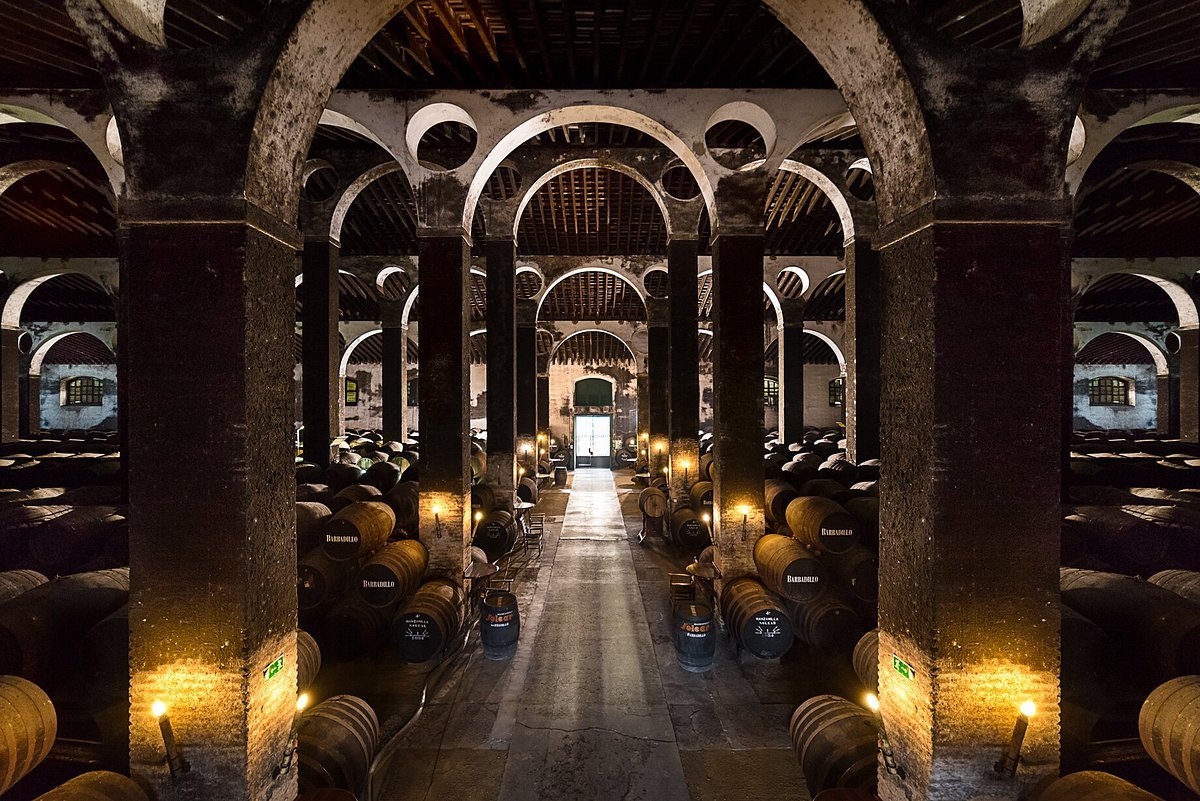
Where the Atlantic Writes the Wine
Sanlúcar de Barrameda sits at the mouth of the Guadalquivir, facing the Atlantic across the marshes of the Doñana. The sea air here is not incidental to the wine. It is the mechanism. The specific humidity and salt-laden breeze that moves through this town sustains the flor — the thin, living yeast layer that protects Manzanilla during ageing — at a depth and consistency that cannot be replicated elsewhere in the Marco de Jerez. Every other sherry-producing town makes fino. Only Sanlúcar makes Manzanilla, and the difference is written into the wine's salinity and its delicate oxidative edge.
Bodegas Barbadillo, positioned on the Plaza del Castillo de Santiago in the old quarter, sits directly within this microclimate. The bodega's location is not coincidental , the historic sherry houses of Sanlúcar clustered near the castle and the riverfront specifically to capture the Atlantic influence. Walking toward the building, you are already inside the environmental argument the wine makes. The stone walls, the cathedral-like height of the nave, the breath of cool, salt-touched air that meets you at the threshold: these are the conditions that define what Manzanilla tastes like, and Barbadillo has operated inside them for long enough that the bodega itself is part of the terroir conversation.
The Manzanilla Argument: Why Sanlúcar Matters
Within Spain's wider wine culture, sherry has spent the last decade recovering its critical standing after years in which the broader market moved on. The recovery has not been uniform. It is the serious Manzanilla producers , those working in Sanlúcar with old soleras and rigorous flor management , who have led the critical reassessment. Manzanilla en rama, drawn from the cask with minimal filtration, has become a reference point for sommeliers internationally who track Atlantic-influenced, biologically-aged wines. The style aligns with broader trends toward freshness, salinity, and low intervention that have reshaped wine preferences across the premium market.
In that context, Barbadillo's Pearl 2 Star Prestige recognition for 2025 positions the bodega within the upper tier of producers whose work carries critical weight. That designation matters as a marker of where the bodega stands relative to its peers, not just in Sanlúcar but across Spain's recognised wine estates. Compare the range of recognised Spanish producers , from Abadía Retuerta in Sardón de Duero to Clos Mogador in Gratallops , and the Manzanilla houses occupy a distinct niche: biologically-aged, place-specific, and technically demanding in ways that differ fundamentally from the barrel-aged reds that dominate the broader Spanish fine-wine conversation.
Albariza, Flor, and the Mechanics of Terroir
The terroir argument for Sanlúcar Manzanilla runs through three linked elements: soil, climate, and living yeast. The albariza soils of the Marco de Jerez , chalky, bright, and high in calcium carbonate , retain moisture through the dry Andalusian summer and reflect heat in ways that preserve acidity in the Palomino grape. Palomino is a neutral variety on its own terms, which is precisely why place and ageing method matter so much here. The grape is a vessel; the expression comes from the ground and from what happens in the bodega.
The flor yeast is where Sanlúcar's climate distinction becomes decisive. Flor thrives in specific humidity ranges, and Sanlúcar's Atlantic exposure maintains those conditions more consistently than Jerez de la Frontera or El Puerto de Santa María. The result is a Manzanilla that ages under a more continuous and thicker flor cover, which in turn drives the wine's characteristic lightness, its lower glycerol, and the pronounced marine, chamomile, and almond register that separates it from a fino produced fifteen kilometres inland. Visiting Barbadillo means visiting the place where these variables intersect at an operational scale that few bodegas in Sanlúcar match.
For those tracing the Manzanilla category across producers, Hidalgo La Gitana operates in the same town and represents the other major reference point in the category, making Sanlúcar a two-house conversation at the serious end of the style. Comparing them is not a matter of ranking one above the other , both have old soleras and distinct house styles , but of understanding how the same raw conditions produce wines with different structural emphases.
Visiting the Bodega: What to Expect
Bodega visits in Sanlúcar sit at a different register from the large-production winery tours that characterise regions like Rioja or the Penedès. The scale here is significant , Barbadillo is among the larger historic houses in town , but the format is shaped by the architecture of the solera system rather than by vineyard walks or barrel rooms designed for visitor theatre. The numbered butts stacked in the cathedral-like naves are functional, not decorative. The smell of flor in the air , yeasty, slightly briney, with an undertone of dried fruit , is present because the biological ageing process is actively occurring around you, not because it has been staged for effect.
Sanlúcar's wider character as a town adds context to the visit. This is not a wine tourism hub in the manner of Saint-Émilion or Napa Valley; it is a working Andalusian port town with a strong culinary identity built around langostinos, cazón, and the systematic pairing of chilled Manzanilla with local seafood. The bodega sits within that lived reality, which is part of what makes the visit read differently from a more polished winery experience. For practical planning, Sanlúcar is reachable from Jerez de la Frontera in under an hour, and the town warrants at least a half-day , ideally a full day , to take in both the bodega and the dining possibilities around it. Details on where to eat and drink in town are in our full Sanlúcar de Barrameda restaurants guide and our full Sanlúcar de Barrameda bars guide.
Placing Barbadillo in the Wider Spanish Wine Picture
Spain's most-visited wine regions , Rioja, Ribera del Duero, Priorat , operate on a different model from the sherry triangle. Estates like Bodegas Ysios in Laguardia, Arzuaga Navarro in Quintanilla de Onésimo, and Bodegas Protos in Peñafiel are built around single-vintage, red-dominant portfolios where the winemaking conversation centres on extraction, oak, and varietal expression. The Manzanilla model is almost an inversion of that logic: the grape is deliberately neutral, the vintage is dissolved into the solera blend, and the wine's identity comes from place and time rather than from a single growing year's conditions. That makes sherry intellectually demanding for wine drinkers accustomed to vintage-led thinking, but it also means the terroir argument is unusually pure , there is nowhere else for the character to come from.
Bodegas Vivanco in Valle de Mena and Codorníu in Sant Sadurní d'Anoia illustrate the breadth of Spain's serious wine culture, but neither sits in a category where geography alone determines style to the degree that Sanlúcar's microclimate determines Manzanilla. That specificity is the case for putting Barbadillo, and Sanlúcar as a whole, on a serious wine itinerary that goes beyond the well-trodden northern routes.
For those building a broader trip around the town, our full Sanlúcar de Barrameda hotels guide, our full Sanlúcar de Barrameda wineries guide, and our full Sanlúcar de Barrameda experiences guide cover the full scope of what the town offers at the serious end of the market.
Frequently Asked Questions
- Is Bodegas Barbadillo more formal or casual?
- Bodega visits in Sanlúcar sit closer to the educational end of the spectrum than the social. The setting , tall naves, working soleras, a historic town-centre address , gives the experience a certain weight, but the Andalusian context keeps the tone from tipping into stiff formality. Sanlúcar is not a city that performs ceremony for its own sake, and Barbadillo's place in the local fabric reflects that. Its Pearl 2 Star Prestige recognition for 2025 signals serious production credentials rather than a high-end hospitality format.
- What do visitors recommend trying at Bodegas Barbadillo?
- The Manzanilla produced here is the primary reference point, and the case for trying it en rama , minimally filtered, drawn close to the cask , is strong. The style shows the flor-driven salinity and structural delicacy that Sanlúcar's Atlantic microclimate produces more clearly than any heavily processed version. The bodega holds Pearl 2 Star Prestige status for 2025, which positions its output at the serious end of what the Manzanilla category offers.
- Why do people go to Bodegas Barbadillo?
- The pull is primarily the combination of place and category. Sanlúcar de Barrameda is the only town in the world where Manzanilla can be produced, and Barbadillo is one of its major historic houses operating with Pearl 2 Star Prestige recognition in 2025. For anyone serious about biologically-aged wines, the Atlantic-influenced terroir of the sherry triangle, or simply understanding why sherry's critical recovery has been led by Manzanilla producers, a visit here provides direct evidence that no amount of reading fully replicates.
- Should I book Bodegas Barbadillo in advance?
- Given the bodega's standing , Pearl 2 Star Prestige for 2025 and a profile that attracts both wine trade visitors and serious private travellers , advance booking for tastings and tours is sensible, particularly during spring and the pre-harvest period in late summer when the region sees higher visitor traffic. Contact details and booking options are leading confirmed directly through current official channels, as these vary by visit format.
- What makes Bodegas Barbadillo's Manzanilla distinct from other sherry styles?
- Manzanilla is a geographically specific designation: it can only be produced and aged in Sanlúcar de Barrameda, not in Jerez or El Puerto de Santa María. The Atlantic microclimate maintains the flor yeast layer at greater consistency and thickness, producing a wine that is lighter, more saline, and structurally finer than a fino aged further inland. Barbadillo, operating at Pearl 2 Star Prestige level in 2025, produces within that tradition at a scale that has shaped the category's modern reputation, making it a direct reference point for understanding what Sanlúcar's terroir actually delivers in the glass.
Peer Set Snapshot
These are the closest comparables we have in our database for quick context.
| Venue | Awards | Notes |
|---|---|---|
| Bodegas Barbadillo | Pearl 2 Star Prestige | This venue |
| Hidalgo La Gitana | Pearl 2 Star Prestige | |
| González Byass (Tío Pepe) | 50 Best Vineyards #21 (2025); Pearl 3 Star Prestige | |
| Abadía Retuerta | 50 Best Vineyards #38 (2025); Pearl 3 Star Prestige | |
| Bodegas de los Herederos del Marqués de Riscal | 50 Best Vineyards #1 (2024); Pearl 4 Star Prestige | |
| Bodegas Vivanco | 50 Best Vineyards #24 (2025); Pearl 3 Star Prestige |
Access the Cellar?
Our members enjoy exclusive access to private tastings and priority allocations from the world's most sought-after producers.
Get Exclusive Access