
Black Pearl 2 Diamond
Our verdict
Ziwei Hall belongs to Hangzhou’s serious dining tier, where regional produce, freshwater traditions, and refined Chinese service matter more than spectacle. Its Black Pearl 2 Diamond recognition in 2025 places it in a selective national awards context, useful for travellers comparing formal Hangzhou meals against the city’s noodle shops, vegetarian rooms, and lake-adjacent hotel dining.

Pearl is the En Primeur Club membership app, where members save venues, book tables and use the concierge.
The menu
What to order
- Hangzhou crisp fish
- Fried shrimp cake
- Dongpo pork
- West Lake vinegar fish
- Longjing shrimp
Approaching a serious Hangzhou dining room, the first cue is rarely noise. The city’s higher-end restaurants are often discussed through restraint: polished arrivals, composed service, and meals that try to make a clear argument rather than leaning only on spectacle. Ziwei Hall sits in that register as a planning reference. Its Black 2 Diamond recognition in 2025 gives the room a trust signal, but the more useful point is what it says about Hangzhou now: ambitious restaurants in the city are being judged not only on luxury cues, but on whether the whole experience feels coherent, disciplined, and worth setting aside time for.
Hangzhou refinement is built on water, vegetables, and precise sourcing
Hangzhou dining is often described with a different grammar from louder coastal and inland traditions. It is frequently less about force than about clarity, season, and balance. Its prestige can rest on restraint, careful pacing, and a sense that modest-looking details matter. In that context, sourcing is not just a decorative claim. It becomes part of how a meal is read, because small differences in freshness, timing, and handling tend to show quickly when a restaurant is trying to avoid excess.
This is where a Black 2 Diamond room becomes useful for the traveller. The award places Ziwei Hall above casual local eating and into a tier where consistency and service structure are expected to hold across a full meal. That does not make it a substitute for everyday Hangzhou; it makes it a different lens on the same city. A bowl at Lai Cui Mian Guan (Ji Mao Road) or the everyday focus of Er Ba Jiu Su Mian Guan expresses Hangzhou through speed, repetition, and accessibility. A higher-formality room expresses it through selection, sequencing, and the ability to make a complete meal feel intentional.
For readers mapping Hangzhou by category, the comparison is instructive. Some other dining rooms frame the city through controlled atmosphere and a smoother sense of occasion. More contemporary rooms sit closer to broader conversations around technique and presentation. Ziwei Hall is better understood as a formal Hangzhou choice with recognised standing: a place to consider when the itinerary needs one meal with a stronger sense of occasion than a quick local stop.
The award tier matters, but the city context matters more
Black ’s influence in China has made it a serious reference for domestic fine dining, especially for travellers reading restaurants beyond Michelin-covered markets. A 2 Diamond rating signals national-level visibility, but it should be read alongside the city’s broader spectrum. Hangzhou can be deceptive because its culinary identity is often presented as calm on the surface. Stronger meals may depend on timing, texture, and the confidence to avoid excess. A restaurant in this tier has to persuade without hiding behind abundance.
That distinction matters against other Chinese dining cities. Some high-end restaurants elsewhere in China compete through stronger sensory registers, banquet memory, service ritual, or other regional expectations. Hangzhou’s formal restaurants can feel as if they have a narrower margin for error because subtlety is often part of the proposition. The benchmark is not simply luxury, but whether the room can make a quieter meal feel deliberate, seasonal in spirit, and complete.
Within Hangzhou, that makes the audience specific. This is not for travellers who want the city decoded in one fast meal between sightseeing stops; casual noodle houses and simpler specialists may teach more in less time. It suits a diner already interested in the difference between local dining culture and generic luxury dining, especially one who wants a more composed meal to carry the argument. Nearby peer types, from Guan Yan Liu Jin to Sense and De Ming Fan Dian in the local conversation, show how varied the city’s serious eating can be. The stronger itinerary pairs one formal meal with one low-cost local counter, rather than pretending a single restaurant can explain Hangzhou.
How to place it in a Hangzhou itinerary
Ziwei Hall belongs in the dining portion of a trip planned around regional depth rather than checklist eating. Travellers staying two or three nights can use it as the formal anchor, then balance it with simpler meals that show daily rhythm. The broader EP Club Hangzhou coverage is useful for that split: Our full Hangzhou restaurants guide maps the restaurant field, while Our full Hangzhou hotels guide, Our full Hangzhou bars guide, Our full Hangzhou wineries guide, and Our full Hangzhou experiences guide help structure the rest of the stay without forcing every decision through dinner.
The restaurant also makes sense beside other Hangzhou options that express different versions of polish. Some sit within the same city conversation but not necessarily the same editorial function. The useful question is not which room is grander, but whether the meal should provide a smoother formal setting, offer a recognised Hangzhou booking, or push toward a more contemporary format elsewhere. Ziwei Hall’s 2025 Black 2 Diamond status makes it a credible formal choice; the stronger reason to go is the chance to place that recognition within the city’s wider dining landscape.
For international travellers building a wider China or Asia dining route, the contrast sharpens outside the mainland context. Other cities and dining cultures often show how familiar formats travel, adapt, and become shorthand for a meal. Hangzhou’s more serious dining rooms ask for a different reading: less format-driven, more dependent on local context, pacing, and the confidence to let a composed meal carry status. That is the point of placing Ziwei Hall on a serious itinerary: not as a trophy booking alone, but as a controlled encounter with one recognised version of Hangzhou dining.
Frequently asked questions
Is Ziwei Hall a family-friendly restaurant?
Ziwei Hall in Hangzhou may suit family meals if the group is comfortable with a more formal restaurant choice. Its Black 2 Diamond rating (2025) places it above a casual neighbourhood stop.
How would you describe the vibe at Ziwei Hall?
Expect a composed Hangzhou dining choice rather than an everyday quick meal. The Black 2 Diamond (2025) recognition suggests a restaurant where the overall experience is taken seriously.
Does Ziwei Hall have a Michelin star or similar recognition?
Ziwei Hall has received recognition including: Black 2 Diamond (2025).
What part of town is Ziwei Hall in?
Hangzhou.
How hard is it to get a table at Ziwei Hall?
Planning ahead is sensible. A Black 2 Diamond venue in Hangzhou is likely to draw more interest than everyday dining rooms, especially for peak dining hours.
Fast Comparison
Comparable venues by cuisine and price in the same metro.
| Venue | Cuisine | Price | Awards | Notes |
|---|---|---|---|---|
| Ziwei HallThis venue (the venue you are viewing) | Refined Hangzhou Jiangzhe Cuisine | $30–50 | Black Pearl 2 Diamond | Not listed |
| Lai Cui Mian Guan (Ji Mao Road) | Hand-Rolled Noodle Shop | Not listed | Michelin Bib Gourmand | Noodles |
| Sense | Modern French with Chinese Produce | Not listed | 1 Michelin Star | Not listed |
| De Ming Fan Dian | Traditional Hangzhou Cuisine | Not listed | Michelin Plate | Not listed |
| Er Ba Jiu Su Mian Guan | Traditional Vegetarian Noodles | Not listed | Michelin Bib Gourmand | Vegetarian |
| Guan Yan Liu Jin | Chaozhou Cuisine | $50–100 | Michelin Plate | Chao Zhou |
Recognition history
Dated appearances from independent guides and award organizations, with the underlying list record or original source where available.
Black Pearl 2 Diamond
Black Pearl
Continue exploring
More in Hangzhou
Restaurants in Hangzhou
All restaurants in Hangzhou →
Bars in Hangzhou
All bars in Hangzhou →
Details
- Elegant
- Classic
- Serene
- Sophisticated
- Business Dinner
- Special Occasion
- Celebration
- Garden
- Private Dining
- Historic Building
- Hotel Restaurant
- Sommelier Led
- Local Sourcing
- Garden
- Waterfront
- A La Carte
- Prix Fixe
- Sake Program
- Tea Program
- Vegetarian Friendly
- Pescatarian Friendly
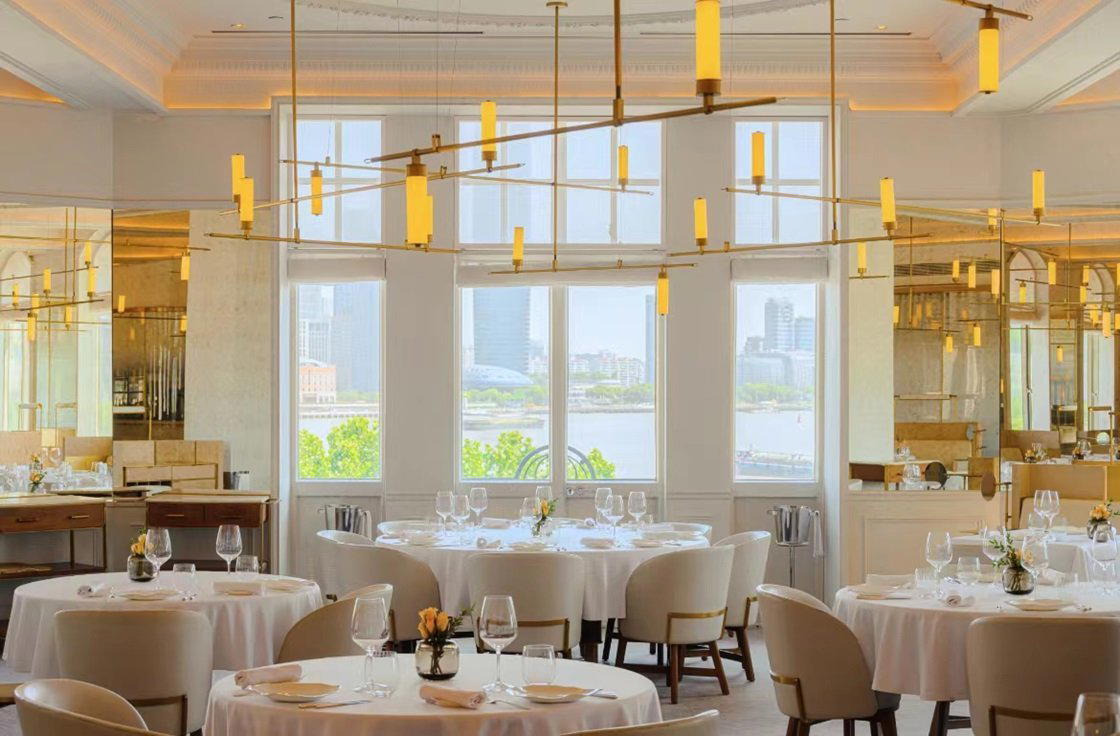
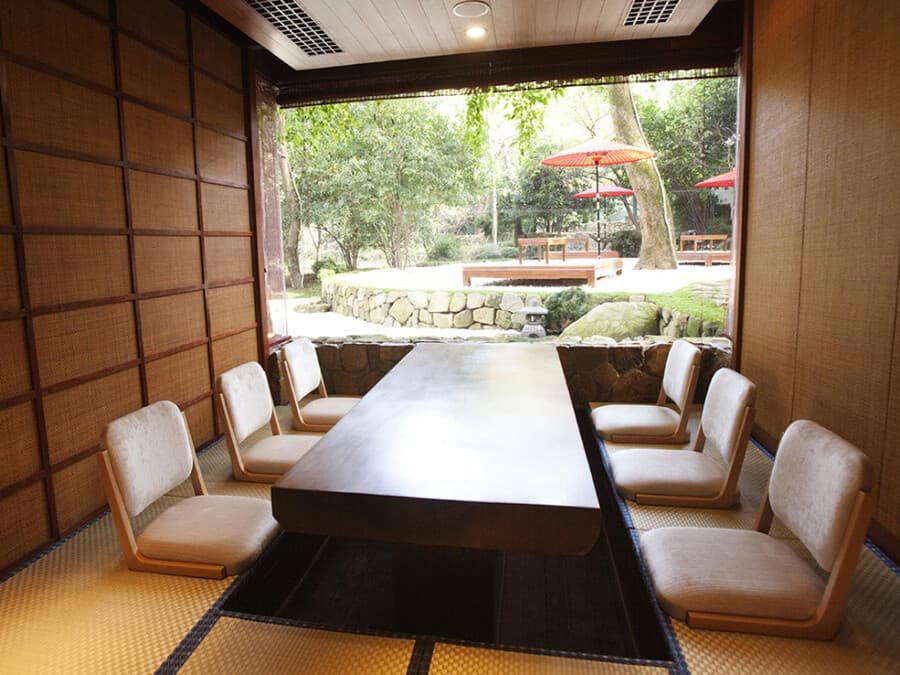
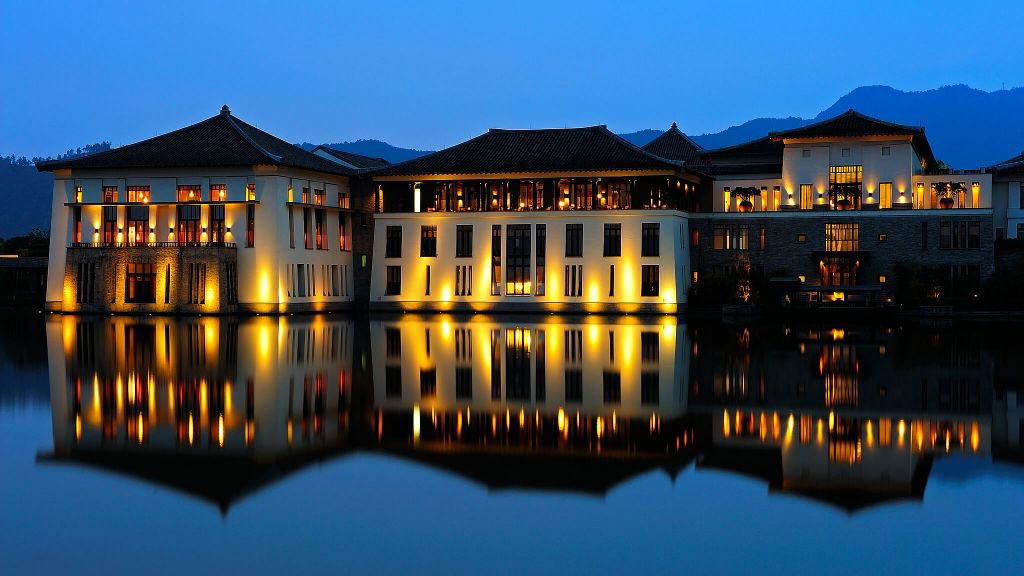
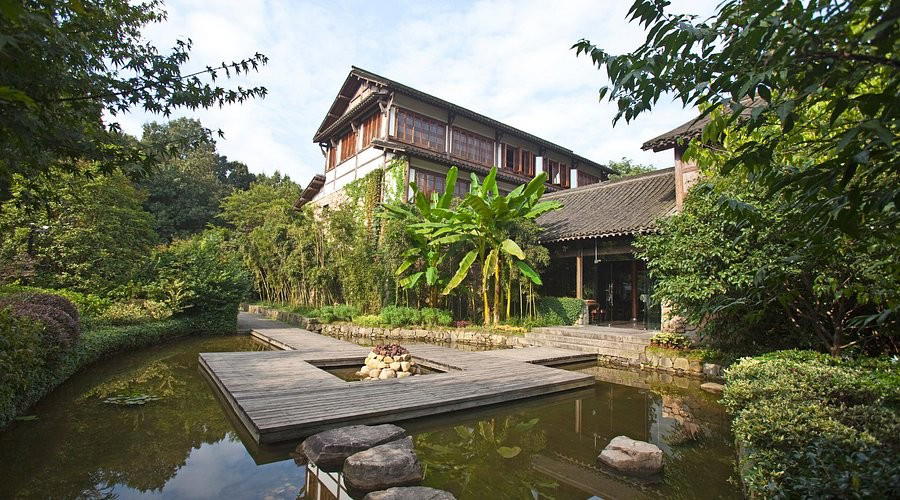
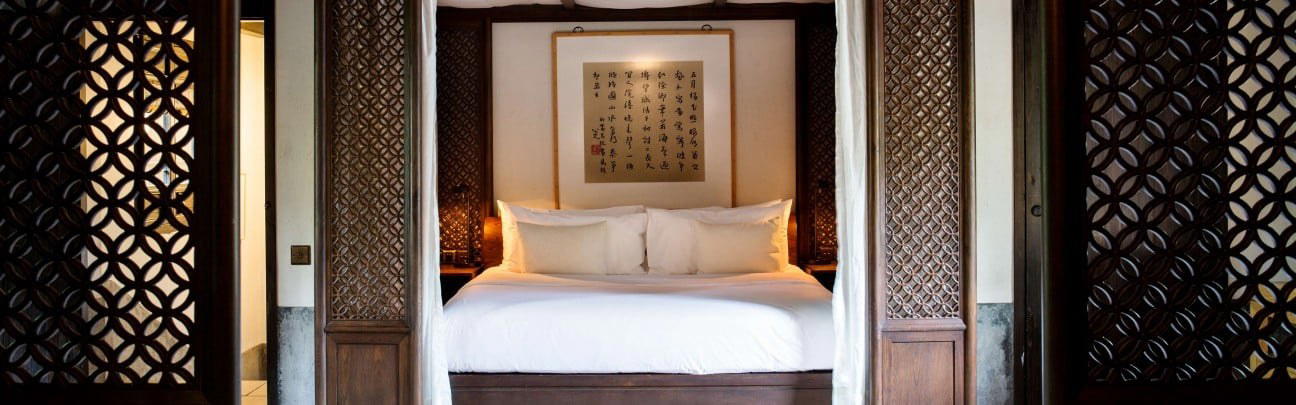
Grand and airy space with soaring ceilings, lacquered wood, traditionally furnished in a manicured Chinese garden setting, creating a serene and exclusive atmosphere.