Tabelog 100 #51
Our verdict
Yuiga Dokuson belongs to Osaka’s serious curry conversation rather than its luxury-dining circuit: compact, practical, and shaped for diners who plan around access rather than ceremony. Its Tabelog Curry WEST “Tabelog 100” selections in 2023 and 2024 give it a credible place in the regional curry tier, with Kishiwada adding a different rhythm from central Osaka’s denser restaurant districts.

Pearl is the En Primeur Club membership app, where members save venues, book tables and use the concierge.
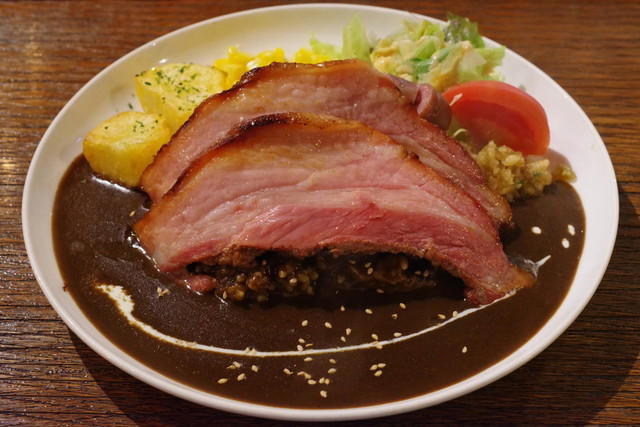
The menu
What to order
- Beef Tongue Curry
- Omelette Curry
- Beef Curry
- Seafood Curry
- Mushroom Curry
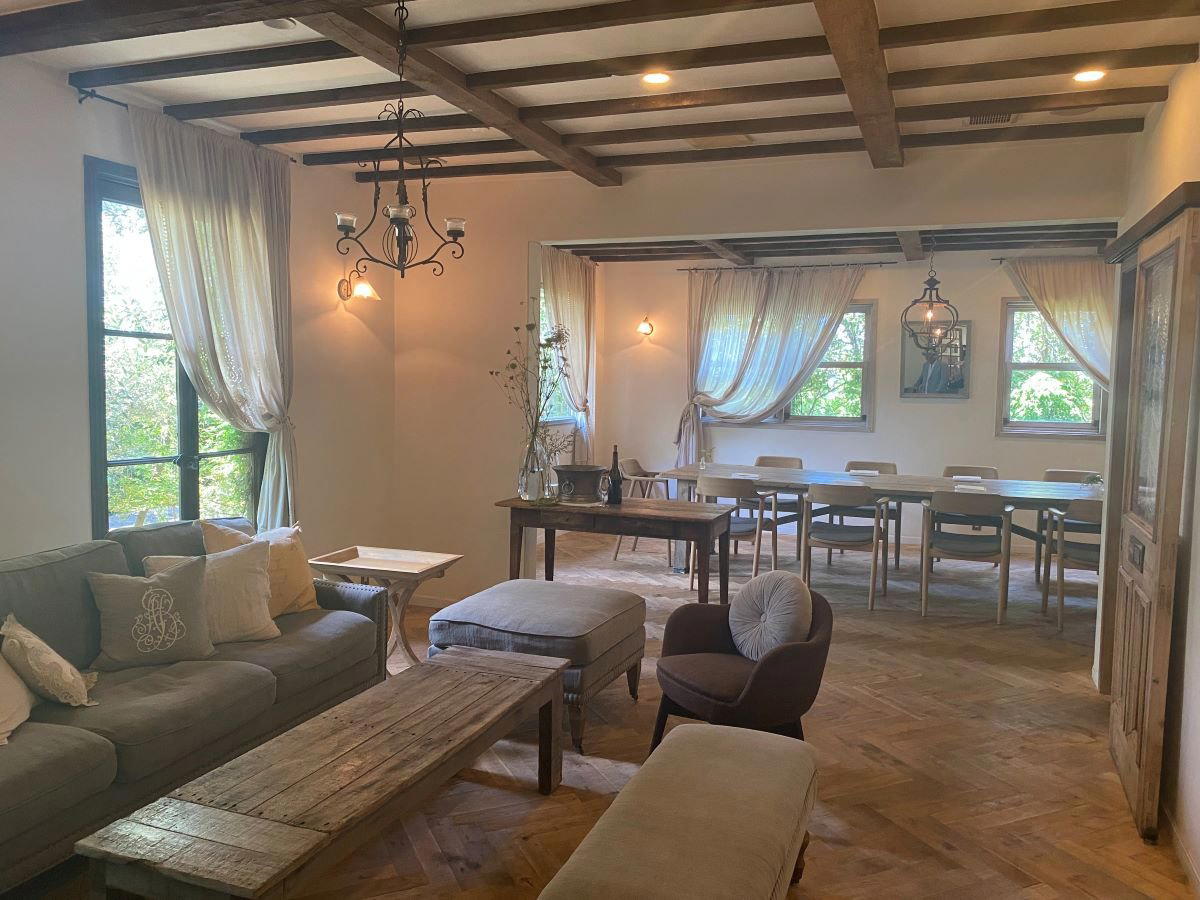
Approaching Yuiga Dokuson is a different Osaka experience from entering a polished hotel dining room or a formal counter restaurant. The pace is lower, the meal carries less theatre, and the focus stays close to the plate. Osaka’s curry culture rewards precision and repetition, often outside glossy dining corridors, in small rooms where the decision is about timing, appetite, and whether a seat opens when hunger does.
Yuiga Dokuson fits that category: a curry-and-cafe address in Osaka. Its recognition is meaningful. Selection in 2024 through Tabelog Hyakumeiten, with a listed score of 3.64, places it in a specialist conversation that treats curry as a serious field, not a casual fallback. For travelers building an Osaka food itinerary around texture, heat, rice, stock, spice, and value, this listing changes the map.
Osaka curry on a slower, more deliberate circuit
Central Osaka compresses choice. The city creates a dining pattern of density: ramen, kushikatsu, sushi counters, cafés, standing bars, and late trains. Yuiga Dokuson works differently. It turns the meal from an incidental stop into a planned one. This is not a detour for spectacle, but a reminder that Osaka’s food reputation is not built only in its busiest dining corridors.
Japanese curry has its own hierarchy. At one end are chain counters and railway-adjacent plates designed for speed. At the other are small independent shops where sauce, rice, spice profile, portioning, and room discipline mark seriousness. Tabelog Hyakumeiten recognition puts Yuiga Dokuson in that second conversation. It is not competing with kaiseki rooms or sushi counters, but with curry specialists where repeatability and local loyalty matter more than luxury signals.
That distinction explains why access, not reservation strategy, defines the experience. Diners should think like locals: arrive with flexibility, do not assume a table can be secured in advance, and treat the stop as part of an Osaka day rather than a last-minute add-on between fixed appointments. In a city where visitors often over-plan famous names and under-plan transport time, this meal rewards a tighter reading of geography.
A compact curry room, not a performance counter
The room’s scale is central to how Yuiga Dokuson should be read. It belongs closer to the everyday Japanese curry-shop model than to the tasting-menu economy of premium travel coverage. The meal needs no group, long reservation trail, or formal occasion; it needs appetite, timing, and patience.
Osaka’s value tier is often misunderstood by travelers who equate lower price bands with lower editorial interest. Many serious Japanese specialists sit in accessible categories because the craft is concentrated in one dish family, not multi-course service. Curry, udon, tonkatsu, soba, and ramen can carry obsessive standards, with proof in turnover, consistency, and peer recognition rather than linen, stemware, or staff choreography.
The Osaka comparison helps. Udon Kura Fujitaya and Utsuwa occupy a similar accessible bracket, while Fournier sits lower still; together they show that Osaka’s casual dining tier is a set of focused formats, not one category. Curry belongs beside those specialisms, not beneath them. Yuiga Dokuson’s 2024 Tabelog Hyakumeiten recognition gives the address a clear editorial function: it points travelers toward regional craft without ceremony.
For readers cross-checking styles across Japan, the logic travels. Other cities have their own casual specialist restaurants, shaped by local climate, ingredients, and dining habits. These are not substitutes; they show how Japan’s focused, accessible restaurants often reveal more about a city than its grander rooms.
How to place it in an Osaka itinerary
Use Yuiga Dokuson as an Osaka curry anchor. Pair it with a day that leaves enough time for travel and appetite rather than forcing it between central-city reservations. That respects the room’s rhythm and avoids turning a simple curry meal into rushed logistics. The format also clarifies expectations: this is an everyday specialist setting, not a controlled hospitality bubble.
Payment and timing require the same practical mindset. Smaller restaurants in Japan can still involve simple, local routines, and travelers should arrive prepared rather than assuming every process will mirror a hotel or international dining room. For visitors used to card-led cities and fixed reservation systems, the practical details can be the difference between a smooth meal and an avoidable scramble.
The broader Osaka plan should balance high-density central eating with specialist stops. For a wider restaurant map, use Our full Osaka restaurants guide; for overnight positioning, Our full Osaka hotels guide helps separate central convenience from quieter bases. Drinking routes belong in Our full Osaka bars guide, while Our full Osaka wineries guide and Our full Osaka experiences guide cover the surrounding layers that make a food-led trip work.
Osaka’s casual spectrum is broad enough to build a day without repetition. Bakery stops, pork-bun counters, pizza specialists, Italian cooking, and café-led pacing all sit in different lanes. Beyond Osaka, EP Club’s broader Japan and international index covers many other casual and specialist formats, but the useful lesson here is local: a city’s food identity is often clearest when the room is modest and the format is focused.
The editorial case is simple: this is Osaka curry with enough third-party recognition to justify planning around it, but not a place that should dominate a trip. Its value is sharper. It shows how a serious meal in Japan can be compact, accessible, and logistically demanding in small ways: transport, timing, and local dining rhythm. Travelers who understand those constraints will read the room correctly.
Frequently asked questions
What's the overall feel of Yuiga Dokuson?
Yuiga Dokuson feels compact and casual, with a curry-and-cafe identity that places the emphasis on the meal rather than ceremony. It is in Osaka, and its 2024 Tabelog Hyakumeiten recognition gives it a clear place in the city's curry conversation.
Is Yuiga Dokuson open every day?
Opening days and hours should be checked directly before visiting, as the provided venue details do not establish a full weekly schedule.
What price level is Yuiga Dokuson?
Pricing at Yuiga Dokuson is listed as JPY 1,000 - JPY 1,999 for dinner and JPY 1,000 - JPY 1,999 for lunch.
What is Yuiga Dokuson known for?
Yuiga Dokuson is known as an Osaka curry-and-cafe venue with 2024 Tabelog Hyakumeiten recognition and a listed score of 3.64.
The Minimal Set
Comparable venues by cuisine and price in the same metro.
| Venue | Cuisine | Price | Awards | Notes |
|---|---|---|---|---|
| Yuiga DokusonThis venue (the venue you are viewing) | Japanese Curry & Cafe | $10–20 | Tabelog 100 #51 | Not listed |
| Udon Kura Fujitaya | Traditional Sanuki Udon & Tempura | $10–20 | Tabelog 100 #10 | JPY 1,000 - JPY 1,999 JPY 1,000 - JPY 1,999 |
| Utsuwa | Udon and Tempura Noodle Shop | $10–20 | Tabelog 100 #23 | JPY 1,000 - JPY 1,999 JPY 1,000 - JPY 1,999 View spending breakdown |
| Fournier | Whole-grain Japanese bakery | $1–10 | Tabelog 100 #68 | JPY 999 View spending breakdown |
| Osamuchan | Yakiniku Omakase | $100–150 | Tabelog Bronze #343 | Not listed |
Recognition history
Dated appearances from independent guides and award organizations, with the underlying list record or original source where available.
Tabelog 100 #51 · No. 51
Tabelog · Tabelog 100 - Curry - WEST - 2024