
Yoshoku Matsushita places Osaka’s Japanese-style Western cooking in a more serious register than the category’s comfort-food reputation suggests. Its 2025 Tabelog 100 Yoshoku WEST selection, 18-seat scale, Higashishinsaibashi address, and dinner pricing put it closer to a specialist counter than a casual department-store yoshoku stop.
Pearl is the En Primeur Club membership app — saves, bookings, and concierge access live there. Same editors, same standards.
- Address
- 1 Chome-9-13 Higashishinsaibashi, Chuo Ward, Osaka, 542-0083, Japan
- Phone
- +81 6-6227-8455
- Website
- yoshoku-matsushita.com
 Saves & bookings on Pearl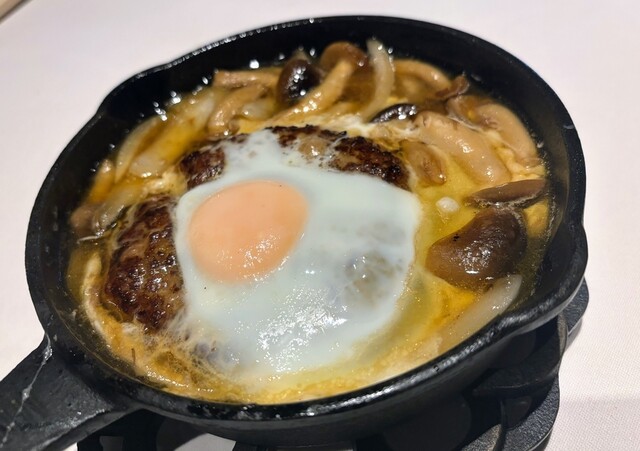
Higashishinsaibashi is built for quick turns: late trains, narrow buildings, small elevators, and dining rooms stacked above street level rather than displayed from the pavement. Here, yoshoku carries an Osaka charge: familiar enough to feel domestic, technical enough to expose weak kitchens. Yoshoku Matsushita treats Japanese-style Western cooking as a serious urban category, not tourist nostalgia.
Osaka has long been comfortable with hybrid food. Less doctrinaire than Kyoto and less status-coded than parts of Tokyo, it rewards cooking that moves from everyday craving to adult dinner without apology. Yoshoku, with Meiji-era roots and postwar popularity, suits that temperament: Western references filtered through Japanese rice culture, sauces, portion logic, and service rhythm until they become local. At its weaker end, the genre is soft-focus comfort; at its stronger end, it demands control over heat, batter, reductions, frying, and timing.
Yoshoku in Osaka, judged by a serious dining audience
The useful signal is critical reception. Selection for Tabelog 100 - Yoshoku - WEST - 2025 places Yoshoku Matsushita in a regional field judged specifically against other Japanese-style Western restaurants, not French, kaiseki, sushi, or general Osaka dining. That matters because visitors often mistake yoshoku for casual food by default. Recognition on a dedicated list suggests a kitchen measured by the cuisine’s own grammar: sauce work, cutlet precision, rice compatibility, and keeping familiar dishes from flattening into diner food.
The price band also shifts expectation. Dinner sits in a bracket that asks for intent rather than impulse, while lunch is far lower. That split is common in urban Japan, where daytime meals can be a narrow entry point into a more ambitious evening restaurant. It separates the venue from lower-cost Osaka comfort stops such as Buttah or Shigeki Ya, and from European-format meals such as Le Nez or PESCE ROSSO. The comparison is not cuisine equivalence, but how a traveler allocates one serious meal in a city that feeds well at many price levels.
For readers mapping Osaka, this is a counterweight to the city’s louder food stereotypes. Takoyaki, kushikatsu, okonomiyaki, ramen, and standing bars dominate the shorthand, while yoshoku sits in the middle distance: known to domestic diners, less legible to visitors scanning English-language lists. Awards and category-specific recognition point to a dining tradition deserving the same attention as more exportable Japanese formats, especially in Kansai, where Western-influenced cooking has long been absorbed into local habits rather than staged as foreign novelty.
An 18-seat room changes the rhythm of comfort food
Scale is part of the argument. An 18-seat restaurant gives yoshoku a tighter frame than a broad family-restaurant room. Small capacity sharpens pacing, clarifies the gap between lunch utility and dinner concentration, and reduces the margin for casual walk-in assumptions, especially where local demand can fill small restaurants before visitors decode the building directory.
The setting near Nagahoribashi places the meal in a useful Osaka corridor. Higashishinsaibashi sits close to the wider Shinsaibashi and Namba orbit, where department stores, late-night drinking, fashion retail, and small independent dining rooms overlap. Yoshoku works before or after a night built around bars, coffee, or specialist snacks, not only as a sealed-off destination meal. A traveler could spend the same area differently: coffee at .cafe, bread at 52CHO-ME BAKERY, dumpling culture at 551 Horai (551蓬莱), or Italian cooking at 99 Pizza Napoletana Gourmet and a canto (Italian). The point is not ranking them, but reading the city through categories locals use fluidly.
Yoshoku rewards diners who know what not to demand. It is not faithful Western cuisine, and European restaurant codes miss the form. The better lens is adaptation: how Japanese kitchens use demi-glace logic, frying technique, rice, cabbage, egg, and sauce to create a meal neither imported nor purely traditional. In Osaka, that hybridity needs little explanation; it is simply part of the dining vocabulary.
How to place it in an Osaka itinerary
Yoshoku Matsushita is strongest as a deliberate Osaka dinner for travelers who have checked the street-food boxes and want a quieter read on the city’s appetite. The Sunday closure and tighter Friday-Saturday lunch schedule shape planning, while the no-smoking policy and absence of private rooms point to a compact, shared dining environment rather than a private-occasion setup. Reservations are available, and 18 seats make advance planning sensible without turning the meal into trophy hunting.
Payment flexibility is broader than at many small Japanese restaurants, with credit cards, electronic money, and PayPay accepted. Parking is unavailable, standard enough in central Osaka to signal rail or taxis rather than a car-based evening. Nagahoribashi is the nearest station, useful for travelers staying around Shinsaibashi, Namba, or the broader Chuo Ward hotel belt.
For a fuller city plan, use Our full Osaka restaurants guide alongside Our full Osaka hotels guide, Our full Osaka bars guide, Our full Osaka wineries guide, and Our full Osaka experiences guide. Readers extending the trip across Japan can compare category-specific dining elsewhere, from -Grilled beef Sukiyaki- KAMAKURA TANUKIAN 鎌倉 たぬき庵 in Kamakura and. 鮪と炭火焼き うお炭 秋葉原店 in Tokyo to.know in Kumamoto, (Shoku) Vietnam in Kawasaki, [Curry Senmon Ten] Maruyama Kyoju. in Sapporo, and [ki:] in Kyoto. For Japanese food culture abroad, Jōdo Saké Bar in Los Angeles and Onigiri Time in Pasadena show how tightly focused formats travel outside Japan.
The editorial case is simple: Osaka’s serious dining is not limited to luxury sushi, kappo counters, or French-influenced tasting menus. A recognized yoshoku room in Higashishinsaibashi gives the city’s hybrid cooking tradition a sharper frame. For travelers who care how a cuisine becomes local over generations, this is more interesting than another generic premium meal.
Cuisine and Awards Snapshot
Comparable venues by category and price.
| Venue | Cuisine | Price | Notes |
|---|---|---|---|
| Yoshoku MatsushitaThis venue — the venue you are viewing | Yoshoku (Japanese-style Western) | $$$ | Not listed |
| Kiyo Suke | Traditional Sukiyaki & Shabu-shabu | $$$ | Chūō |
| Goichi Nishitenma ten | Yakitori Omakase | $$$ | Kita |
| Etchuya | Casual Neighborhood Sushi | $$$ | Nishinari |
| Sumiya | Intimate Sushi Omakase Counter | $$$ | Chūō |
| Yakiniku Kappa Kajioka | Traditional Yakiniku (Japanese BBQ) | $$$ | Toyonaka |
Recognition history
Dated appearances from independent guides and award organizations, with the underlying list record or original source where available.
Tabelog 100 #31 · No. 31
Tabelog · Tabelog 100 - Yoshoku - WEST - 2025
Continue exploring
More in Osaka
Restaurants in Osaka
Browse all →




Bars in Osaka
Browse all →




Hotels in Osaka
Browse all →



Wineries in Osaka
Browse all →
At a Glance
- Cozy
- Classic
- Intimate
- Date Night
- Solo
- After Work
- Casual Hangout
- Chefs Counter
- Standalone
Current opening hours
- Monday
- 5–10 PM
- Tuesday
- 5–10 PM
- Wednesday
- 5–10 PM
- Thursday
- 5–10 PM
- Friday
- 11:30 AM–3 PM, 5–10 PM
- Saturday
- 12–3 PM, 5–10 PM
- Sunday
- Closed
Hours can change for holidays and private events. Last verified .
A small, all-non‑smoking second‑floor dining room with counter and table seating, giving a cozy, classic yoshoku feel that is more refined than a casual diner but still relaxed and unpretentious.