
A reservation-only kaiseki restaurant in Tsuchiura, Ibaraki, Yoshicho has earned consecutive Tabelog Bronze Awards in 2025 and 2026 alongside two selections for Tabelog Japanese Cuisine EAST 100. The menu frames Ibaraki's seasonal produce and prized ingredients — suppon and anko among them — within a single-chef operation running a fully customised course format at JPY 15,000–20,000 per person.
 Discover on Pearl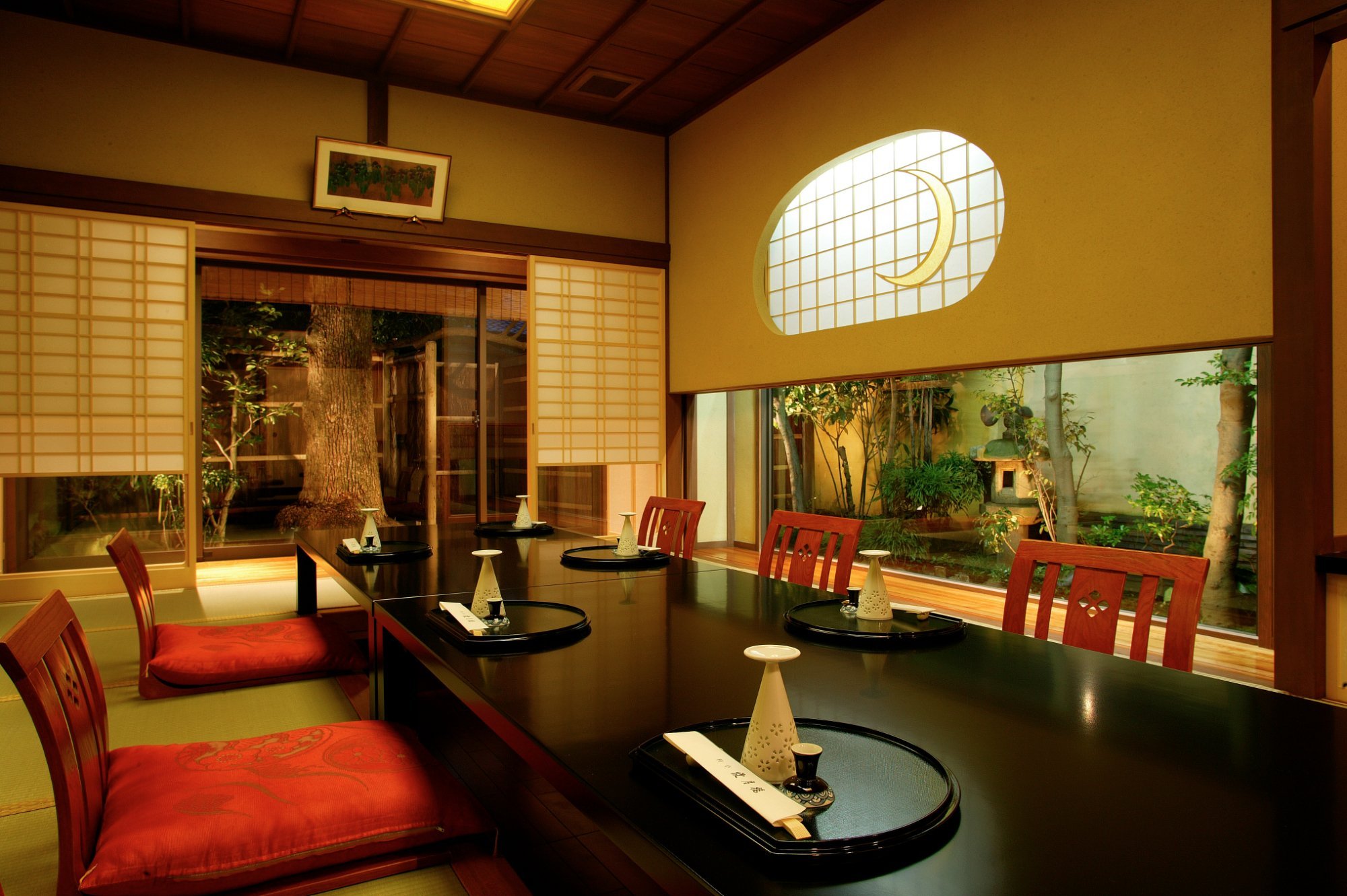
Tsuchiura's Terroir Table
The address is a quiet block in central Tsuchiura, about twelve minutes on foot from the station's west exit. There is nothing about the approach that signals what awaits inside: no crowd at the door, no review clippings in the window. This is not an accident. In Japan's regional fine dining circuit, the restaurants that have built the most durable reputations tend to operate at low volume, by reservation only, and without the theatre of visibility. Yoshicho fits that pattern precisely, and the calm of its setting is part of the contract the meal asks you to enter.
Japan's kaiseki and seasonal Japanese cuisine tradition has always privileged the idea of shun — ingredients at their seasonal peak — over any fixed repertoire. What distinguishes the stronger regional practitioners from the well-known metropolitan counters is not ambition but access: proximity to land and water that feeds the menu directly. Tsuchiura sits on the western bank of Lake Kasumigaura, Japan's second-largest lake, and Ibaraki Prefecture produces a supply chain that metropolitan kitchens source from but rarely have the geographical advantage to express as directly. Yoshicho makes that geography the explicit subject of the meal.
The shortlist, unlocked.
Hard-to-book tables, cellar releases, and concierge-planned trips.
Get Exclusive Access →The Shape of the Meal
The dining ritual at Yoshicho is built around the concept the restaurant calls Ibaraki Terroir , a course format that uses the prefecture's seasonal ingredients as its organising logic rather than a fixed template of classical kaiseki progression. Two course price points are listed: 16,500 yen and 22,000 yen, both subject to a 10% service charge. Actual spend based on review data runs higher, typically in the JPY 20,000–29,999 range once drinks are added, which is consistent with the drinks programme: the restaurant signals a particular focus on nihonshu (sake), shochu, and wine, and the drink selection at a table often pushes the final bill meaningfully above the course price.
The one-person kitchen operation shapes the pace and the etiquette of the meal in ways worth understanding before you arrive. Menu customisation is available, but only at the point of reservation. Preferences, dislikes, and dietary constraints must be communicated when booking; the kitchen cannot accommodate changes on the day. The cancellation policy reflects the same constraint , a 100% fee applies from the day before. This is the operating structure of a chef working alone with locally sourced, procurement-dependent ingredients: once the menu is set and produce ordered, substitution is not logistically possible. Diners who engage with this structure as a feature rather than a limitation find it concentrates the pre-meal conversation into something useful, a negotiation between what you want and what the season offers.
Room holds 42 seats across what the venue describes as a stylish, spacious layout that includes a tatami room and private rooms configured for groups from two to over thirty people. The non-smoking policy is consistent throughout. For larger parties , eight to fifty people , the venue asks for direct contact rather than standard reservation channels, and private hire is available for groups of twenty or more.
Ingredients at the Centre
Two ingredients define Yoshicho's identity within Ibaraki's dining scene in a way that few regional Japanese restaurants achieve with such specificity. Suppon (soft-shell turtle) and anko (monkfish) are not simply seasonal features; they are listed alongside Japanese cuisine as the restaurant's primary category descriptors on Tabelog. Both carry significance in Japanese culinary tradition that extends well beyond Ibaraki, but both have a particular regional logic here.
Anko is caught in the waters off Ibaraki's Pacific coastline, and the prefecture has maintained a reputation as one of Japan's premier anko sources for decades. The fish's rich, collagen-heavy flesh lends itself to the nabemono formats common in winter kaiseki, and its liver , used in ankimo preparation , is sometimes compared in texture and intensity to foie gras by Japanese food writers covering the region. Suppon, meanwhile, occupies a different register: richer, more restorative, historically associated with stamina and seasonally concentrated preparation. A kitchen that has built its identity around both ingredients is making a deliberate statement about depth of sourcing and preparation range. Yoshicho's fish focus, noted explicitly in the venue data, extends beyond these two anchors but they remain the most telling markers of its positioning.
Where Yoshicho Sits in the Regional Picture
The Tabelog award structure gives a useful frame for understanding Yoshicho's competitive position. Tabelog Bronze is awarded to restaurants scoring consistently above 3.8 on a platform where crossing 4.0 is considered a marker of serious standing. Yoshicho holds a 4.03 listed score, with review-based averages suggesting actual performance in the 4.1 range. The restaurant has received Bronze recognition in both 2025 and 2026 and has been selected for the Tabelog Japanese Cuisine EAST 100 in both 2023 and 2025 , a list that covers the eastern half of Japan and sits outside the metropolitan Michelin circuit. That dual track, award recognition combined with the curated 100 list, places Yoshicho in a tier that metropolitan visitors seeking quality outside Tokyo's established counters should take seriously.
Within Ibaraki's dining options, Yoshicho operates at a different register than most of what the prefecture offers. YOSHIKI FUJI works in the innovative category at a similar price ceiling (JPY 20,000–29,999), while Italian-focused options like La Stalla and Nonna Nietta occupy lower price bands in a different cuisine tradition. For Japanese cuisine specifically, Yoshicho has no obvious peer competitor within the prefecture at its recognised award level. For comparison with the national tier, the Tokyo kaiseki circuit , counters like Harutaka , operates at considerably higher price points; regional award winners like Yoshicho represent a different value proposition, one where ingredient provenance is immediate and the experience operates at a more contained scale. Other geographically-rooted Japanese cuisine practitioners that have attracted comparable notice include Gion Sasaki in Kyoto, Goh in Fukuoka, and HAJIME in Osaka, each building identity from a specific regional and seasonal logic rather than abstract technique.
Planning the Visit
Yoshicho operates Monday, Tuesday, Wednesday, and Friday from 18:00 to 22:00, with Saturday and Sunday lunch sittings from 12:00 to 14:30 and dinner service running through to 22:00 on those days as well. Thursday is closed. Lunch is available weekends only and requires a reservation. The restaurant is approximately twelve minutes on foot from the west exit of Tsuchiura Station, or five minutes by taxi; fifteen parking spaces are available nearby for those arriving by car. Payment by credit card is accepted (Visa, Mastercard, JCB, Amex, Diners), though electronic money and QR code payments are not. The 10% service charge applies across all bookings.
Reservations should be made in advance , this is a reservation-only operation , and the pre-booking conversation should include any ingredient preferences or dislikes, as the menu is built to order and cannot be adjusted on the day. For groups of eight or more, direct contact with the restaurant is required. The venue is family-friendly, with children of all ages welcome and a kids menu available; strollers are accommodated. Private rooms cover the full range of group sizes from intimate couples' dining to full venue hire for fifty or more.
For broader context on dining, accommodation, and cultural experiences in the prefecture, see our full Ibaraki restaurants guide, Ibaraki hotels guide, bars guide, wineries guide, and experiences guide. Visitors drawn to serious Japanese cuisine elsewhere in Japan may also find it useful to review EP Club coverage of akordu in Nara, 1000 in Yokohama, 6 in Okinawa, Abon in Ashiya, and internationally, Le Bernardin and Atomix in New York City for comparative reference points on tasting-menu discipline and ingredient-led cooking.
Frequently Asked Questions
- What do people recommend at Yoshicho? The Terroir Course is the kitchen's primary format, available at 16,500 yen and 22,000 yen (plus 10% service charge). Suppon and anko are the two signature ingredients that define Yoshicho's identity on Tabelog, where it has earned consecutive Bronze Awards in 2025 and 2026 and back-to-back selection for the Japanese Cuisine EAST 100 list in 2023 and 2025. Given the single-chef operation and procurement-dependent menu, the most productive approach is to communicate preferences clearly at reservation , the kitchen builds the course around what you tell them.
- Is Yoshicho formal or casual? The setting combines a stylish space with tatami rooms and private dining options, which places it at the more considered end of regional Japanese dining without the strict formality of a Michelin-starred Tokyo counter. At JPY 15,000–20,000 per person (before drinks and service), it occupies the serious-dining tier in Ibaraki's context. The cancellation policy , 100% from the day before , and the reservation-only, pre-customised menu structure signal a restaurant that takes the meal seriously and expects guests to as well. Dress code is not specified, but the awards positioning and price point suggest smart-casual as a reasonable baseline.
- Is Yoshicho child-friendly? Yes. The venue explicitly welcomes babies, preschoolers, and school-age children, provides a kids menu, and accommodates strollers. The private room options , available from two people upward , give families a contained dining environment if preferred. That said, at JPY 15,000–20,000 per person in the adult course format, the meal is calibrated around a slow, multi-course ritual that suits older children or families treating a visit as a deliberate occasion rather than a casual dinner stop.
Cuisine Lens
A compact peer snapshot based on similar venues we track.
| Venue | Cuisine | Awards | Notes |
|---|---|---|---|
| Yoshicho | {"Year":"2026","Award Source":"Tabelog",… | This venue | |
| La Stalla | |||
| Nonna Nietta | Italian, Pasta | Italian, Pasta, JPY 10,000 - JPY 14,999 JPY 10,000 - JPY 14,999 | |
| YOSHIKI FUJI | Innovative | Innovative, JPY 20,000 - JPY 29,999 JPY 20,000 - JPY 29,999 |
Need a table?
Our members enjoy priority alerts and concierge-led booking support for the world's most difficult tables.
Get Exclusive AccessThe shortlist, unlocked.
Hard-to-book tables, cellar releases, and concierge-planned trips.
Get Exclusive Access →