Yeongdong Pochana

Yeongdong Pochana sits in Gangnam's Eonju-ro 148-gil, where Seoul's indoor pocha tradition meets the loose, communal energy of Southeast Asian street dining. The format blurs the line between late-night bar and casual restaurant, producing a hybrid that fits neither category neatly but works in practice. It occupies a specific niche in a district better known for high-end Korean tasting menus and international fine dining.
 Discover on Pearl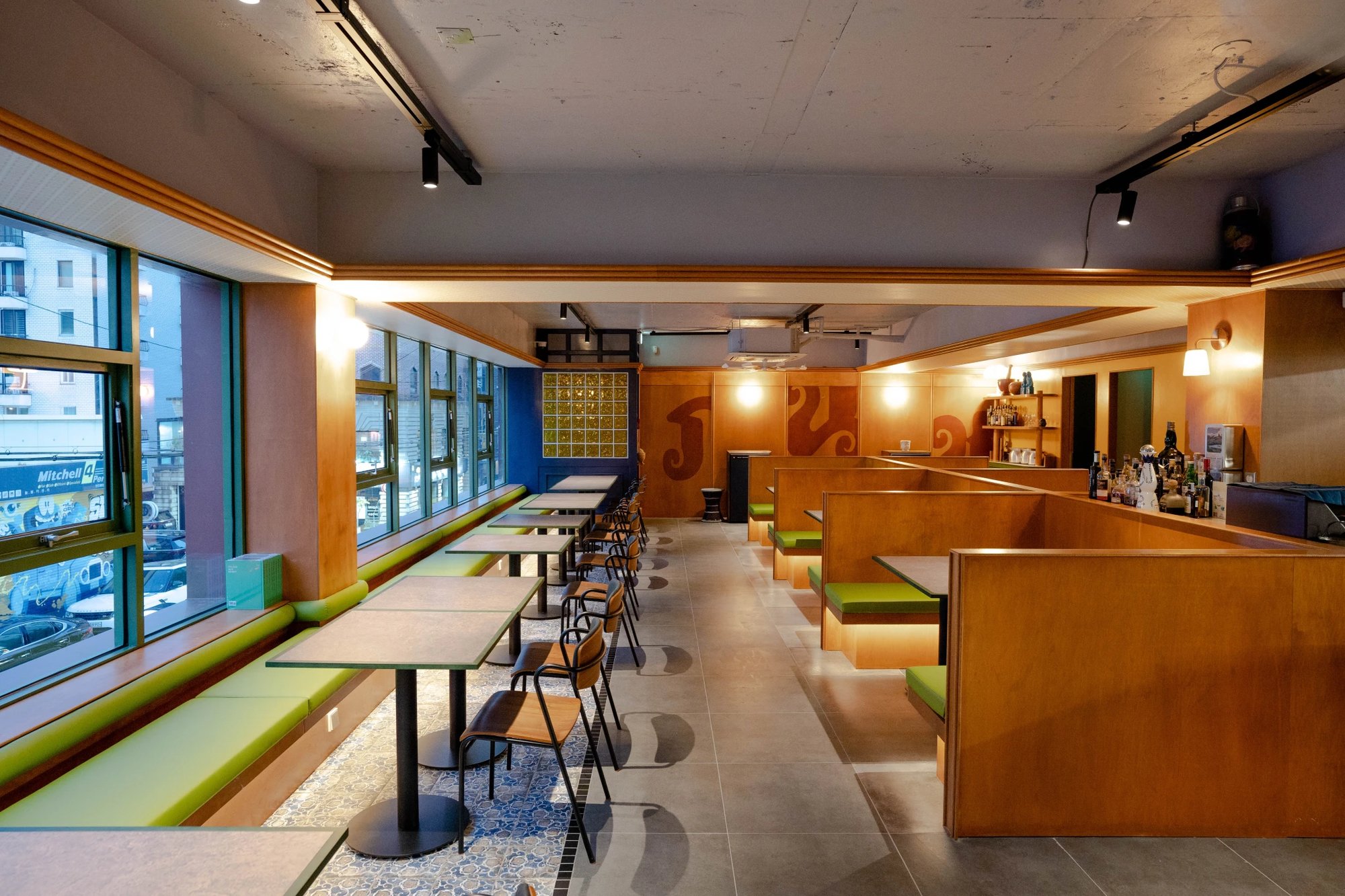
Where the Pocha Format Meets Gangnam
Seoul's indoor pocha scene has always existed in a different register from the city's fine-dining belt. Where venues like Mingles or Jungsik (Contemporary) operate with tasting menus and advance reservations, the pocha tradition runs on immediacy: you arrive, you drink, you eat, the night decides the rest. Yeongdong Pochana lands on the Gangnam side of that divide, at Eonju-ro 148-gil in a district not typically associated with street-bar energy. That positioning alone tells you something about how the format has shifted.
The indoor pocha concept started as a practical workaround for Seoul's outdoor street vendors, bringing the tent-bar atmosphere inside year-round. Over time, operators began importing aesthetic and culinary references from beyond Korea. Yeongdong Pochana's particular direction borrows from Bangkok's local eating houses, mixing the communal heat of Thai street dining with the late-night Korean bar structure. It is a format that has become more common in the Gangnam corridor as younger operators look for alternatives to the formal Korean dining establishments that have defined the area's restaurant identity. For broader context on what Gangnam's dining scene looks like across registers, our full Seoul restaurants guide maps the range.
The shortlist, unlocked.
Hard-to-book tables, cellar releases, and concierge-planned trips.
Get Exclusive Access →The Evolution of Hybrid Format Dining in Seoul
The shift Yeongdong Pochana represents is worth placing in sequence. A decade ago, Seoul's casual dining options in Gangnam defaulted to Korean barbecue chains or Japanese izakaya imports. The Bangkok-inflected pocha hybrid is a later development, one that reflects Seoul's growing appetite for Southeast Asian culinary references at the informal end of the market. This is not fusion in the tasting-menu sense practiced by venues like Soigné (Innovative) or alla prima (Innovative). It is more about atmosphere and format borrowing than technical culinary merging.
Indoor pocha has also evolved structurally. Earlier iterations leaned heavily on soju-and-anju pairings, with food as secondary support for drinking. More recent venues have pushed the food component forward, making the eating experience substantive enough to carry the visit independently of the drinking context. Whether Yeongdong Pochana has made that pivot fully is a question its current menu would answer, but the venue's positioning within Gangnam's casual tier suggests it is operating in the space where that evolution is actively happening.
For comparison, venues like Kwonsooksoo (Korean) or 권숙수 - Kwon Sook Soo in Gangnam-gu occupy a more formal register of Korean dining in the same district. Yeongdong Pochana reads as the lower-formality counterpart, the kind of place the same neighbourhood needs if it wants to function as something other than a purely high-end dining zone.
The Venue in its Neighbourhood Context
Eonju-ro 148-gil runs through a section of Gangnam that has seen steady commercial densification. The address places Yeongdong Pochana inside a mixed-use building, unit 208 in the Na-dong block, which is typical of how casual dining embeds itself into Gangnam's residential-commercial fabric. This is not a standalone restaurant on a high-visibility street corner. It operates in the kind of location that rewards repeat visitors who know the building, rather than walk-in traffic drawn by a prominent shopfront.
That physical reality shapes the experience before you enter. Venues at this type of address in Gangnam tend to build their audiences through word-of-mouth and neighbourhood loyalty rather than tourist discovery. The indoor pocha format suits that model well. Seoul's broader casual bar-dining scene outside Gangnam, including spots in Itaewon and Mapo, tends to be more visible and tourist-accessible. Gangnam's equivalent operates quietly inside mixed-use buildings, and Yeongdong Pochana fits that pattern. If you are building a picture of Seoul's casual dining geography beyond the city centre, Mori in Busan and Double T Dining in Gangneung offer useful reference points for how regional Korean casual dining operates outside Seoul.
Practical Considerations for a Visit
Yeongdong Pochana does not publish a phone number or website through available records, which is consistent with how many informal Gangnam dining spots operate. Walk-in visits are the most reliable approach, though the venue's location inside a residential-commercial block means checking current operating status before making a trip from elsewhere in the city is advisable. The indoor pocha format typically runs into late evening and does not observe the same lunch-service norms as formal restaurants.
Seasonal timing is worth factoring in. Late autumn and winter are when the indoor pocha format performs leading in Seoul. The appeal of a heated, convivial interior after cold street temperatures is a genuine draw, and the format's origins as a year-round alternative to outdoor street stalls mean the experience is calibrated for colder months. Summer visits are certainly possible, but the atmospheric contrast that makes an indoor pocha feel like a destination is strongest between October and February.
For drinking context, Seoul's broader bar scene is covered in our full Seoul bars guide. For hotel options in the district, our full Seoul hotels guide covers the range of properties across Gangnam and beyond. Visitors combining casual dining with temple stays or regional excursions might also find Baegyangsa Temple in Jangseong-gun a useful counterpoint to the urban pocha experience.
The Gangnam casual tier also intersects with international dining at venues like Pool House in Incheon for those moving between the airport corridor and the city. For reference points further afield, Le Bernardin in New York City and Emeril's in New Orleans sit at a very different register, but they illustrate how distinct dining formats develop their own institutional logic over time, which is the same process playing out at the informal end of Seoul's market. More Korean regional dining context is available through 더 플라잉 호그 - The Flying Hog in Seogwipo, and our full Seoul experiences guide covers the city's non-dining programming. Our full Seoul wineries guide is also available for those whose interests extend to the city's natural wine and makgeolli-adjacent scene.
Frequently Asked Questions
- What is the must-try dish at Yeongdong Pochana?
- Specific menu items are not confirmed through available records for this venue. The indoor pocha format typically centres on anju, the small dishes designed to accompany drinking, with Korean standbys alongside whatever Bangkok-inflected additions the kitchen is running. For verified dish information, visiting in person or checking current community boards for Seoul's Gangnam dining scene is the most reliable approach. Venues at a comparable casual register, such as Kwonsooksoo, demonstrate how seriously Korean kitchens treat side dishes even at lower formality levels.
- Can I walk in to Yeongdong Pochana?
- Walk-ins appear to be the standard approach given the absence of a published booking system or website. The venue's address inside a mixed-use residential block in Gangnam means it does not operate on the same high-visibility, high-footfall model as street-level restaurants. Arriving during standard evening service hours is the most practical strategy. Seoul's indoor pocha category generally favours spontaneous visits over advance reservations, which distinguishes it from the tasting-menu tier that defines much of Gangnam's dining identity.
- What do critics highlight about Yeongdong Pochana?
- Published critical coverage of Yeongdong Pochana is not available in the current record. The venue's framing positions it within the Bangkok-inflected indoor pocha niche, a format that receives less structured critical attention than Seoul's Michelin-tracked dining tier. For Gangnam venues with documented critical recognition, Mingles and Jungsik provide useful benchmarks for what formal recognition looks like in the same district.
- How does Yeongdong Pochana handle allergies?
- No website or phone contact is available through current records, which limits pre-visit allergy communication. If dietary requirements are a concern, visiting in person before a planned meal and speaking directly with staff is the most reliable approach. Seoul's informal dining sector does not generally apply the same allergy documentation protocols as formal tasting-menu restaurants. For venues with more structured communication channels in Seoul, alla prima and Soigné operate at a level where pre-visit contact is standard.
- How does Yeongdong Pochana compare to a traditional outdoor Seoul street bar?
- The indoor pocha format, which Yeongdong Pochana represents, developed specifically to replicate outdoor pojangmacha energy inside a permanent, weather-proof setting. Where outdoor stalls in areas like Insadong or Jongno are seasonal and contingent on foot traffic, indoor venues in Gangnam operate year-round with a more controlled atmosphere. The Bangkok street-dining reference at Yeongdong Pochana adds a Southeast Asian overlay to that structure, which distinguishes it from straight Korean pocha operators and positions it within a younger cohort of hybrid-format venues that have emerged in Seoul's casual dining sector over the past several years.
Nearby-ish Comparables
A quick peer list to put this venue’s basics in context.
| Venue | Cuisine | Price | Notes |
|---|---|---|---|
| Yeongdong Pochana | This venue | ||
| 7th Door | Korean, Contemporary | ₩₩₩₩ | Korean, Contemporary, ₩₩₩₩ |
| Eatanic Garden | Contemporary | ₩₩₩₩ | Contemporary, ₩₩₩₩ |
| Onjium | Korean | ₩₩₩₩ | Korean, ₩₩₩₩ |
| L'Amitié | French | ₩₩₩ | French, ₩₩₩ |
| Zero Complex | Korean-French, Innovative | ₩₩₩₩ | Korean-French, Innovative, ₩₩₩₩ |
Need a table?
Our members enjoy priority alerts and concierge-led booking support for the world's most difficult tables.
Get Exclusive AccessThe shortlist, unlocked.
Hard-to-book tables, cellar releases, and concierge-planned trips.
Get Exclusive Access →