
Our verdict
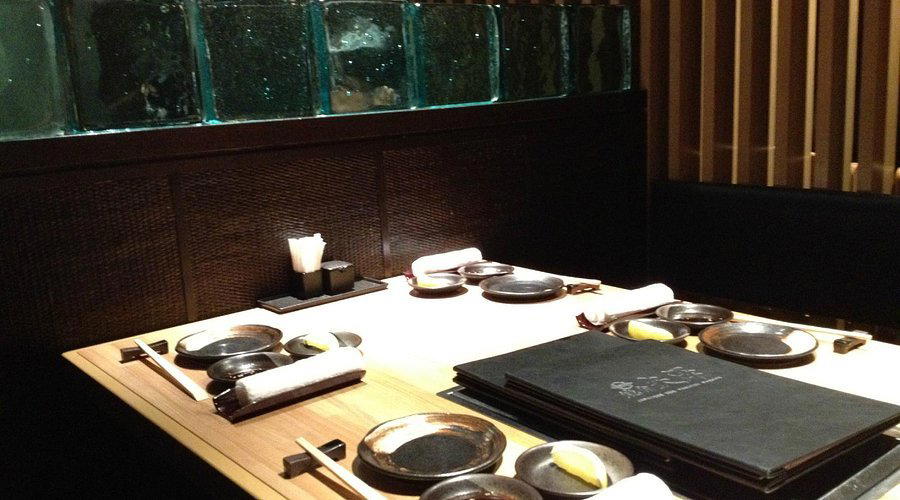
The format centres on high-grade beef, table-side grilling, and a service floor that operates with the precision you'd expect from a Japanese specialist rather than a casual barbecue house. Dinner runs nightly from 6 pm.

Pearl is the En Primeur Club membership app, where members save venues, book tables and use the concierge.
The menu
What to order
- A5 Japanese wagyu
- Kuroge Japanese wagyu
- Premium beef cuts
Where Yakiniku Becomes a Structured Dining Event
Japanese yakiniku has followed a familiar arc in Southeast Asia: it arrived as casual barbecue, spread through mid-market chains, and has spent the last decade stratifying. At the top of that hierarchy sits a small group of operations that treat the charcoal grill not as a communal distraction but as the centrepiece of a composed dining sequence. Since opening, it has earned placement on the Opinionated About Dining Leading Restaurants in Asia list three consecutive times: a Recommended listing in 2023, a ranking of #316 in 2024, and a ranking of #368 in 2025. That trajectory, across three evaluation cycles, is the kind of external calibration that separates a restaurant with consistent standards from one that had a good year.
The Yakiniku Tradition It Draws From
Premium yakiniku in Japan is not self-service barbecue. At serious Tokyo counters, beef is sourced from specific prefectures, cut by hand to optimal thickness for each grilling surface, and presented in a sequence that mirrors the logic of an omakase: lighter cuts first, richer fat-forward pieces as the meal progresses. The tradition prizes restraint as much as quality. In Tokyo, operations like Cossott'e, Jumbo Hanare, Kinryuzan, Kiraku-Tei, and Nikusho Horikoshi operate at the upper tier of that format, where sourcing transparency and cutting discipline are as legible as the wine list at a French restaurant. Yazawa exports that sensibility to Singapore, sitting in a different competitive context than its Tokyo peers but anchored to the same core proposition. For comparison within the wider Asian yakiniku scene, Nikushou in Hong Kong and Nikuya Setsugekka Nagoya occupy adjacent positions in their respective cities, while Gyu-Kaku in Los Angeles illustrates the mass-market end of the same format, where Yazawa clearly does not compete.
The Team Behind the Grill
Singapore's premium restaurant scene has increasingly moved toward tightly coordinated floor teams, where the division between kitchen, grill station, and front-of-house is deliberate rather than incidental. Yazawa reflects this. Chef Darren Tan anchors the culinary side, and the format places the grill at the intersection of kitchen execution and tableside service, which means the front-of-house carries more technical responsibility than in a standard restaurant setting. In yakiniku specifically, the service team is not auxiliary: they manage timing, explain cuts, guide progression, and in many cases handle the grilling itself. That dynamic compresses the distance between the kitchen and the guest in ways that most other formats do not. The result, when the coordination works, is a dining experience where the meal's pace is actively managed rather than left to the table.
Singapore operates a competitive field of multi-component dining operations. Odette and Zén represent the French and European Contemporary end of tightly choreographed service, where kitchen-floor communication is central to execution at the $$$$ tier. Les Amis and Jaan by Kirk Westaway maintain their own versions of that model within the city's deep French-influenced tradition. Yazawa approaches the same level of service coordination but through an entirely different format and cultural framework, one where the meal's texture depends on the grill rather than the pass. This context suits a yakiniku operation that requires engagement with the format rather than passive consumption. For those planning a wider Singapore itinerary, the full Singapore hotels guide maps the relevant accommodation options across the city.
Positioning Within Singapore's Japanese Dining Scene
Japanese cuisine holds a disproportionately prominent position in Singapore's restaurant market relative to most Southeast Asian cities, supported by a large Japanese expatriate population, deep institutional familiarity with Japanese formats, and sustained media attention from both local and regional publications. Within that broader Japanese category, yakiniku occupies a smaller but high-value niche. It does not have the volume or institutional prestige of Singapore's sushi and kaiseki operations, but the ceiling in quality terms is comparable. Yazawa's OAD ranking places it within the top tier of that niche, alongside operations that treat the format as a serious culinary proposition rather than a social dining backdrop. For context, Singapore's most recognised restaurants at the $$$$ tier, including Meta at the innovative end, operate in a city where the competition for recognition is as dense as any in Asia. Holding three consecutive OAD placements in that environment carries weight.
Planning Your Visit
Yazawa Yakiniku operates dinner service only, running Monday through Sunday from 6 pm to 10:30 pm. There are no lunch sittings. Booking ahead is the practical default. Singapore's dining tempo at this level tends to run later than many European cities, so the 10:30 pm closing allows for an unhurried meal without the compressed timing of early sittings. For broader orientation across the city's dining options at comparable quality levels, the full Singapore restaurants guide covers the field. Those building a complete Singapore itinerary can also consult the bars guide, the wineries guide, and the experiences guide for coverage beyond the table.
Frequently asked questions
What should I eat at Yazawa Yakiniku?
The format at Yazawa is yakiniku, meaning the meal is structured around high-grade beef cuts grilled at or near the table. The strongest approach is to follow the service team's guidance on progression: lighter, leaner cuts early in the sequence, moving toward richer, fat-forward pieces as the meal develops. This mirrors the logic applied at serious yakiniku houses in Tokyo, where cut selection and sequencing are treated as an editorial decision rather than a buffet choice. Chef Darren Tan's programme has been recognised by Opinionated About Dining across three consecutive years, which is the clearest external signal that the kitchen's sourcing and execution meet a consistent standard. Let the team lead the order, and resist the impulse to front-load the richest cuts.
Cuisine and Recognition
| Venue | Cuisine | Price | Awards | Notes |
|---|---|---|---|---|
| Yazawa YakinikuThis venue (the venue you are viewing) | Japanese Yakiniku BBQ | Not listed | Not listed | Not listed |
| Zén | Yakitori & Japanese Izakaya | $50–100 | Tabelog 100 #92 | European Contemporary |
| Jaan by Kirk Westaway | Modern British Fine Dining | $200–300 | 2 Michelin Stars · Michelin Guide 2 Stars | British Contemporary |
| Burnt Ends | Modern Australian Barbecue | $100–150 | 1 Michelin Star · Michelin Guide 1 Star | Australian Barbecue, Barbecue |
| Summer Pavilion | Michelin-Starred Cantonese | $100–150 | 1 Michelin Star · Michelin Guide 1 Star | Cantonese |
| Born | Contemporary Fusion Fine Dining | $200–300 | 1 Michelin Star · Michelin Guide 1 Star | Creative Cuisine, Innovative |
Recognition history
Dated appearances from independent guides and award organizations, with the underlying list record or original source where available.
Opinionated About Dining Top Restaurants in Asia Recommended
Opinionated About Dining
Full recognition history (4 entries)
Opinionated About Dining Top Restaurants in Asia Ranked #368
Opinionated About Dining
Opinionated About Dining Top Restaurants in Asia Ranked #316
Opinionated About Dining
Opinionated About Dining Top Restaurants in Asia Recommended
Opinionated About Dining
Continue exploring
More in Singapore
Restaurants in Singapore
All restaurants in Singapore →
Bars in Singapore
All bars in Singapore →
Details
- Elegant
- Sophisticated
- Intimate
- Classic
- Date Night
- Business Dinner
- Special Occasion
- Group Dining
- Standalone
- Sake Program
- Local Sourcing
- A La Carte
- Sake
- Wine
Current opening hours
- Monday
- 6–10:30 PM
- Tuesday
- 6–10:30 PM
- Wednesday
- 6–10:30 PM
- Thursday
- 6–10:30 PM
- Friday
- 6–10:30 PM
- Saturday
- 6–10:30 PM
- Sunday
- 6–10:30 PM
Hours can change for holidays and private events. Hours as of .
Elegant, refined, and intimate, with a premium, dinner-focused atmosphere.