Our verdict
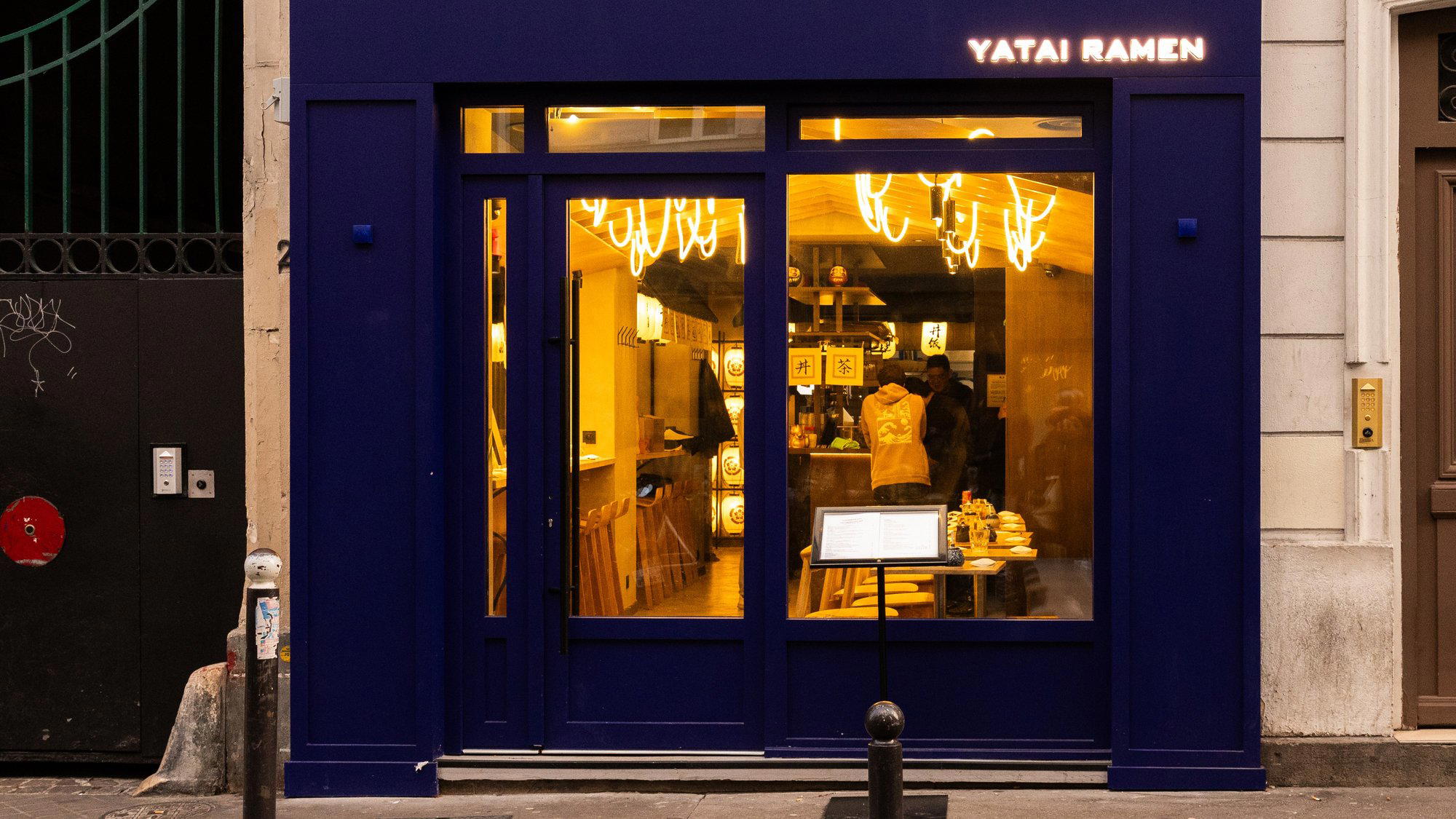
A ramen counter on Rue de la Roquette places the Japanese yatai tradition firmly in the 11th arrondissement, where the neighbourhood's appetite for casual, technically minded dining runs deep. Paris has developed one of Europe's more serious ramen scenes over the past decade, and this address sits within that movement. Walk-in format, bowl-forward menu, and a price point well below the city's starred French houses make it a reference point for the category.

Pearl is the En Primeur Club membership app, where members save venues, book tables and use the concierge.
The menu
What to order
- Rāmen traditionnel
- Gyoza Maison
- Rāmen signature
- Rāmen végétarien
- Kurogoma cheesecake
The 11th Arrondissement and the Rise of Serious Ramen in Paris
Paris took longer than London or Amsterdam to build a credible ramen scene, but once the city committed, it moved fast. By the mid-2010s, the 11th arrondissement had emerged as the neighbourhood most receptive to Japanese-influenced counter dining: high foot traffic, a population that eats late, and a dining culture that rewards technical execution at accessible prices. Yatai Ramen Bastille, at 22 Rue de la Roquette, sits inside that movement. The address is a short walk from Place de la Bastille, a junction that has long separated the more formal dining of the Marais from the looser, more experimental restaurant culture of Oberkampf and Charonne.
The word yatai carries specific weight. In Japan, a yatai is a mobile or semi-permanent street food stall, most associated with Fukuoka, where vendors set up along the Nakasu riverbank and serve ramen, yakitori, and oden to late-night crowds. The format implies immediacy: few seats, no ceremony, a short menu executed with precision. Translating that model to a Paris side street requires adaptation, but the core proposition, bowl, broth, counter, remains legible across cultures.
For context on how Paris positions its broader fine dining scene, the city's Michelin-starred French houses occupy a completely different category: Alléno Paris au Pavillon Ledoyen, Arpège, Kei, L'Ambroisie, and Le Cinq at the Four Seasons Hôtel George V define the upper tier of French and Franco-Japanese cuisine in the capital. Yatai Ramen Bastille operates in a parallel economy where the metrics are broth clarity, noodle texture, and queue length rather than tasting menus and sommelier programmes.
Lunch vs. Dinner: Two Versions of the Same Bowl
Counter ramen operations in Paris tend to behave differently at midday than they do after dark, and understanding that divide is useful before you decide when to go. At lunch, the clientele skews local and purposeful: people from nearby offices and workshops who want something substantial and quick. Service moves at pace, the room turns over faster, and the ambient noise sits at a productive hum rather than a roar. The practical advantage is shorter waits and, in some operations, a tighter daytime menu that represents the kitchen's core strengths rather than its full range.
Evening service at a Bastille-area ramen counter shifts in character. The 11th fills later than most Paris arrondissements, with serious dinner traffic arriving after 8pm. The crowd at that hour is more likely to be treating the bowl as a full evening's destination rather than a meal between commitments. That changes the rhythm: people linger longer, order additional plates where available, and the queue outside, if there is one, reflects appetite rather than efficiency. For the kitchen, evening service typically allows the broth that has been building since morning to reach its fullest reduction, which in tonkotsu and tare-heavy styles means more concentration in the later hours. Ramen insiders in Tokyo and Fukuoka often cite this as a reason to eat late, and the logic transfers to Paris operations using similar techniques.
The practical takeaway: if value and speed matter, lunch is the entry point. If you want the broth at peak intensity and are comfortable with a possible wait, the evening slot earns its place.
Where Yatai Ramen Bastille Sits in the Paris Ramen Category
Paris now has enough ramen addresses to support meaningful comparison. The category splits between operations with Japanese ownership or direct supply chains, and those using locally sourced pork and French production methods adapted to the format. Each approach produces a different result: the former often prioritises authenticity of profile, the latter can deliver a bowl that reflects French charcuterie traditions in a ramen structure. Neither is automatically superior, but they serve different expectations.
The Rue de la Roquette address is positioned in a neighbourhood where the dining competition is dense and the audience is experienced. This is not a tourist corridor. The streets between Bastille and Charonne attract Parisians who eat out frequently and compare notes. That audience is harder to satisfy with novelty alone, which makes the format and consistency of a yatai-style operation more legible as a signal of quality than any single dish claim.
France's broader restaurant culture, covered across our full Paris restaurants guide, also includes reference points well outside the capital: Flocons de Sel in Megève, Mirazur in Menton, Troisgros in Ouches, Auberge de l'Ill in Illhaeusern, Bras in Laguiole, Paul Bocuse in Collonges-au-Mont-d'Or, AM par Alexandre Mazzia in Marseille, Assiette Champenoise in Reims, Au Crocodile in Strasbourg, and Auberge du Vieux Puits in Fontjoncouse. The range of that list underlines how diverse the French dining scene has become, even as Paris remains its centre of gravity.
For comparison beyond France, the Japanese-influenced counter format also appears in the work of internationally recognised addresses: Le Bernardin in New York and Atomix in New York each demonstrate, in different ways, how Japanese technique and rigour have been absorbed into Western fine dining. Yatai Ramen Bastille operates at a different price point and scale but draws from the same cultural current.
Planning Your Visit
The address is 22 Rue de la Roquette, 75011 Paris, a five-minute walk from Bastille metro (lines 1, 5, and 8). Reservations: Walk-in format is typical for this category of operation in Paris; arrive early for lunch or expect a queue at peak dinner hours. Budget: Dress: No dress code applies to counter ramen in this neighbourhood context. Leading timing: Lunchtime for pace and availability; evening service for broth depth, though waits are longer from 7:30pm onward on weekends.
Frequently asked questions
Where is Yatai Ramen Bastille located?
Yatai Ramen Bastille is located at 22 Rue de la Roquette, 75011 Paris, France, Paris.
How close is Yatai Ramen Bastille to Bastille metro station?
The restaurant is at 22 Rue de la Roquette, 75011 Paris, a five-minute walk from Bastille metro, which is served by lines 1, 5, and 8. That transit access makes it one of the more straightforwardly reachable ramen counters in the 11th arrondissement, sitting between the Place de la Bastille and the denser restaurant stretch toward Oberkampf.
What dish is Yatai Ramen Bastille famous for?
The ramen bowl is the centrepiece of the menu, consistent with the yatai format that concentrates on a short selection executed with discipline rather than a broad à la carte offering. Yatai operations in Paris's 11th arrondissement typically build their identity around one or two broth styles done well, rather than rotating specials. That focused approach is what separates this category from general Japanese restaurants on the same street.
Do they take walk-ins at Yatai Ramen Bastille?
Walk-in service is the standard operating model for yatai-style ramen counters, and that holds at 22 Rue de la Roquette. The format comes from Fukuoka's street stall tradition, where queuing rather than reserving is part of the experience. Arriving outside peak lunch and dinner windows improves your odds of a seat without a long wait.
What is Yatai Ramen Bastille known for?
The address is known for applying the yatai counter concept, rooted in Fukuoka's compact street food culture, to one of Paris's most competitive dining corridors. The 11th arrondissement developed a credible ramen scene from the mid-2010s onward, and Yatai Ramen Bastille sits within that wave of operations prioritising format integrity over sprawling menus. It draws a crowd that knows the difference between a Paris ramen counter and a broader pan-Asian restaurant.
Booking and Cost Snapshot
Comparable venues nearby, for context on price, style, and recognition.
| Venue | Cuisine | Price | Notes |
|---|---|---|---|
| Yatai Ramen BastilleThis venue (the venue you are viewing) | Franco-Japanese Ramen | $20–30 | Not listed |
| Taisho ken | Authentic Japanese Izakaya | $20–30 | 8th Arr. - Élysée, Authentic Japanese Izakaya |
| Iza by Kura | Japanese Izakaya | $20–30 | Passy, Japanese Izakaya |
| L'IZAKAYA DASSAI par Yannick Alléno | Modern Japanese Izakaya | $50–100 | Beaupassage, Modern Japanese Izakaya |
| Ramen Wagaya | Authentic Japanese Ramen | $20–30 | Oberkampf, Authentic Japanese Ramen |
| Ojii | Modern Japanese Fine Dining | $50–100 | Saint-Germain-des-Prés, Modern Japanese Fine Dining |