

1 Michelin Star
Our verdict
Ranked #156 in Japan by Opinionated About Dining in 2025, the restaurant treats sweetness as a serious creative discipline, with citrus, mango, peach, fig, and chestnut appearing as temperature, texture, and fragrance shift across the menu.

Pearl is the En Primeur Club membership app, where members save venues, book tables and use the concierge.
The menu
What to order
- Rectangle seasonal fruit takeaway
- Mango-focused Rectangle
- Peach and seasonal fruit Rectangle
Where Dessert Becomes a Culinary Discipline
Japan's fine dining ecosystem is built on precision and seasonality, but its formal restaurants tend to treat sweet courses as a coda to a savoury progression. Yama inverts that structure. Here, the fruit course is the progression, and the kitchen approaches it with the same analytical rigour that a kaiseki house applies to dashi or an omakase counter applies to fish aging.
The seasonal rotation moves through citrus in the colder months, into mangoes and peaches as summer approaches, and then into figs and chestnuts as autumn arrives. Within each course, the kitchen layers fragrance, temperature, and texture, elements treated as compositional variables rather than incidental qualities. Vegetables enter the menu as textural and flavour counterpoints, grounding the sweetness in something more saline or bitter. The effect is closer to a wine flight than to a restaurant dessert menu: each element chosen to contrast or extend what came before. Where restaurants like akordu in Nara, where European fine dining structure meets Yamato-region produce, and at HAJIME in Osaka, where the framework is broader but the commitment to sourcing as a kitchen identity is equally legible. Yama's version of this is the most concentrated: one ingredient category, sourced directly, treated with maximum technical range. Dessert-focused tasting menus as a serious format have precedent in Spain and France, where patisserie training and creative cuisine overlap more frequently, but the application to Japanese seasonal produce, with its hyper-regional variation and cultural weight, is something different. Katsumata's background connects directly to Yamanashi's agricultural identity, which gives the sourcing its credibility, but the technical vocabulary in use at Yama draws from a broader tradition of modern creative cuisine.
This alignment with global creative technique applied to indigenous product is also visible, in entirely different ingredient categories, at restaurants like Alléno Paris au Pavillon Ledoyen and Enrico Bartolini in Milan, where the interplay between European classical training and specific regional product drives the menu's identity. The difference at Yama is the depth of the singular focus: not a balance between multiple ingredient categories, but a full formal progression built on one of them.
For readers exploring Japan more broadly, the approach at Yama connects to a range of restaurants where the indigenous-product, global-technique intersection drives the offer: Gion Sasaki in Kyoto, Goh in Fukuoka, 1000 in Yokohama, and 6 in Okinawa each operate in this space, though none with the concentrated singular-ingredient focus that Yama has built its identity around.
Planning Your Visit
Given the counter format and Michelin recognition, advance planning is advisable.enprimeurclub.enprimeurclub.com/restaurants/ryugin">RyuGin
at Yama?
Yama does not operate an à la carte format, so the question of what to order resolves to: when to visit. The menu is structured around seasonal fruit sourced directly from farms across Japan, which means the course progression changes with the calendar. Citrus-driven menus run in winter, peach and mango in summer, fig and chestnut from early autumn. Each iteration of the menu layers those fruits against vegetables and varying temperatures and textures across multiple courses. The Michelin inspectors awarded a star in 2024, and the OAD ranking of #156 in Japan (2025) reflects consistent performance rather than a single standout dish, which suggests the construction of the full progression is the point, not any single course within it.
What It’s Closest To
A short peer table to compare basics side-by-side.
| Venue | Cuisine | Price | Awards | Notes |
|---|---|---|---|---|
| YamaThis venue (the venue you are viewing) | Michelin-Starred Dessert Tasting Menu | $200–300 | 1 Michelin Star | Not listed |
| Harutaka | Edo-Style Omakase Sushi | $200–300 | 3 Michelin Stars · World's 50 Best #76 | Sushi |
| RyuGin | Modern Kaiseki | $500+ | 3 Michelin Stars · World's 50 Best #41 | Kaiseki, Japanese |
| L'Effervescence | Modern French with Japanese Influences | $200–300 | 3 Michelin Stars · World's 50 Best #69 | French |
| HOMMAGE | Modern French with Japanese Influences | $150–200 | 2 Michelin Stars · World's 50 Best #78 | Innovtive French, French |
| MAZ | Innovative Peruvian-Japanese Fusion | $150–200 | 2 Michelin Stars · World's 50 Best #28 | Innovative |
Recognition history
Dated appearances from independent guides and award organizations, with the underlying list record or original source where available.
Michelin 1 Star
Michelin
Opinionated About Dining Top Restaurants in Japan Ranked #106
Opinionated About Dining
Full recognition history (5 entries)
Opinionated About Dining Top Restaurants in Japan Ranked #156
Opinionated About Dining
Opinionated About Dining Top Restaurants in Japan Ranked #590
Opinionated About Dining
Michelin 1 Star
Michelin
Yama
Featured Guides

Continue exploring
More in Tokyo
Restaurants in Tokyo
All restaurants in Tokyo →

Bars in Tokyo
All bars in Tokyo →






Details
- Intimate
- Sophisticated
- Rustic
- Minimalist
- Special Occasion
- Date Night
- Celebration
- Solo
- Chefs Counter
- Standalone
- Private Dining
- Zero Proof
- Local Sourcing
- Tasting Menu
- Set Menu
- Non Alcoholic Pairing
Current opening hours
- Monday
- Closed
- Tuesday
- Closed
- Wednesday
- 12–4:30 PM
- Thursday
- 12–4:30 PM
- Friday
- 12–4:30 PM
- Saturday
- 12–4:30 PM
- Sunday
- 12–4:30 PM
Hours can change for holidays and private events. Hours as of .
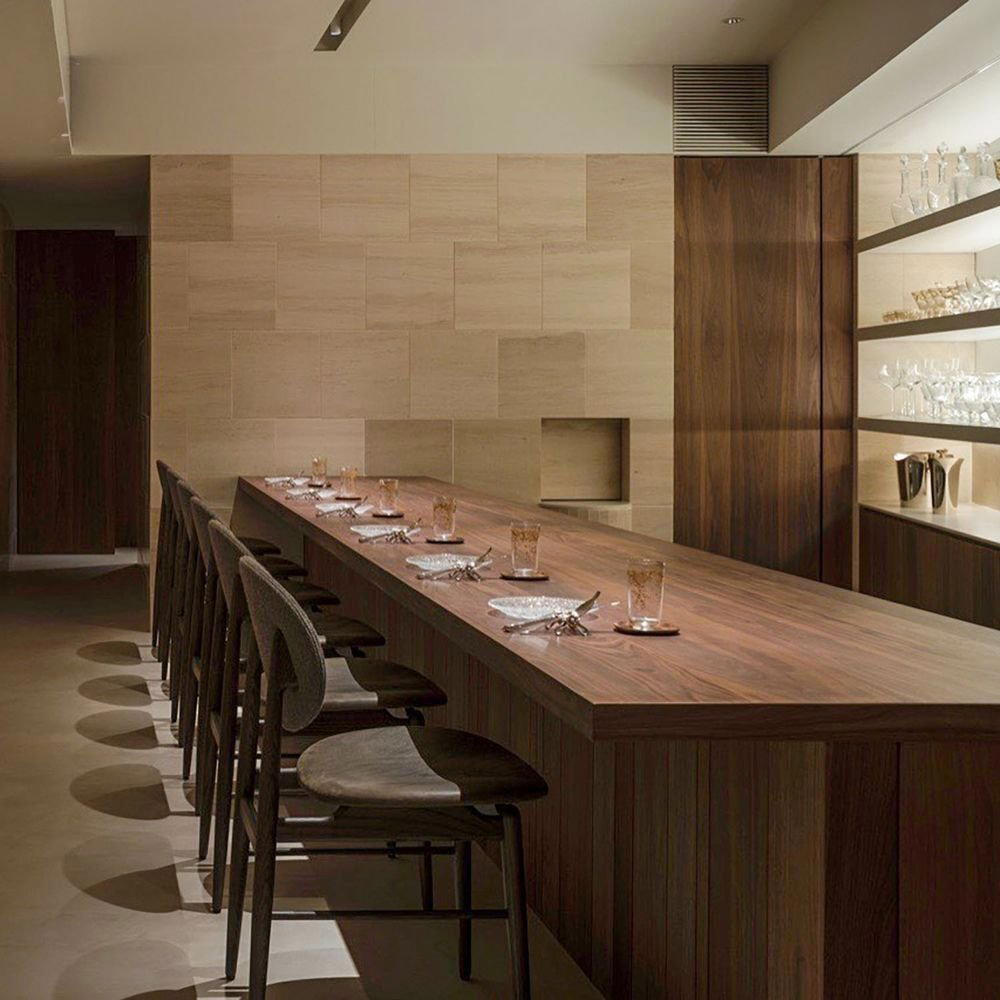
An intimate six-seat setting with a refined, quiet atmosphere; press describes its original space as rustic and raw-concrete, while the experience is tightly paced and reservation-only.