
Where the Vegetable Is the Point Nakagyo Ward sits at the geographic center of Kyoto, a district more often associated with machiya townhouses and textile merchants than with dining destinations. Yakiyasai Isoya occupies an address within this...
 Discover on Pearl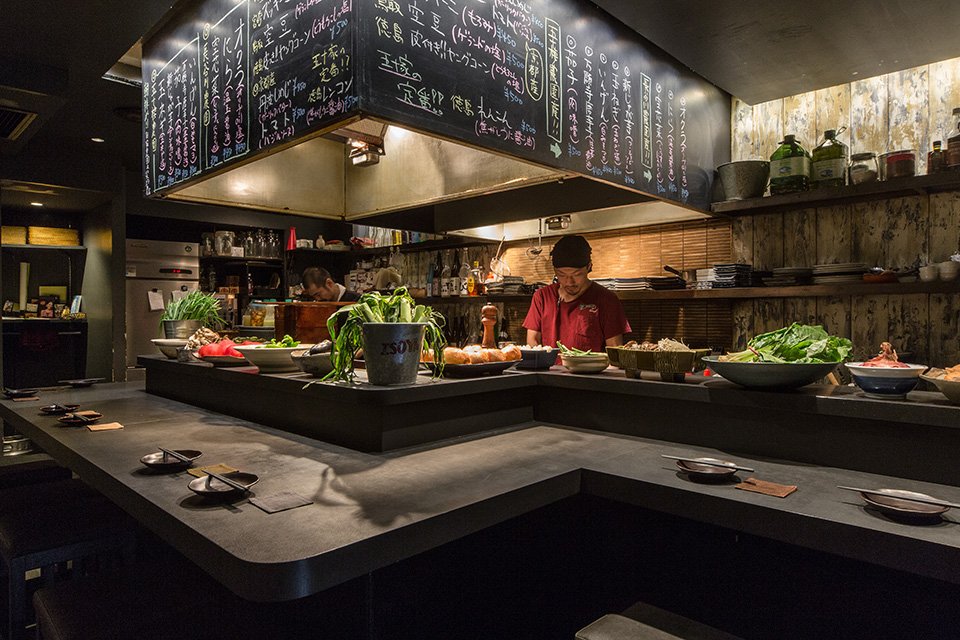
Where the Vegetable Is the Point
Nakagyo Ward sits at the geographic center of Kyoto, a district more often associated with machiya townhouses and textile merchants than with dining destinations. Yakiyasai Isoya occupies an address within this residential fabric, and that positioning is deliberate: the restaurant is not trying to attract foot traffic from temple-circuit tourists. It is trying to source, prepare, and serve Kyoto vegetables at the level they deserve, which is a different project entirely.
Kyoto has long occupied a particular position in Japanese vegetable culture. The city's soil, irrigation from the surrounding mountains, and centuries of market-garden cultivation produced what are collectively known as Kyo-yasai, a designated category of traditional Kyoto vegetables that includes items like kujo negi (a variety of green onion), manganji pepper, and kamo eggplant. These are not supermarket vegetables. They are cultivated by specialist farmers, harvested in quantities small enough that most of them never leave the prefecture, and eaten by people who understand what they are looking at. The kaiseki houses that define Kyoto's prestige dining, places like Gion Sasaki, Hyotei, and Kikunoi Honten, treat these vegetables as supporting material for elaborate multi-course structures. Yakiyasai Isoya, part of the Ikkaya restaurant group, takes the opposite approach: the vegetables are the architecture, not the decoration.
The shortlist, unlocked.
Hard-to-book tables, cellar releases, and concierge-planned trips.
Get Exclusive Access →The Ikkaya Group's Farm-to-Table Commitment
The operational model here is worth understanding before you arrive. The Ikkaya group operates multiple vegetable-centered restaurants under a single sourcing philosophy. All of them draw fresh produce daily from Gojisui farm, a single agricultural source that supplies the group's kitchens with seasonal output. This is not a marketing phrase. The menu changes because the farm changes, and the farm changes because the seasons change. A restaurant that is genuinely bound to one farm's daily harvest cannot offer a fixed menu, and Yakiyasai Isoya does not try to.
This model puts the venue in a small but growing category of Japan's most ecologically disciplined restaurants. Sourcing from a single named farm eliminates the opacity that characterizes most supply chains, reduces transportation emissions, and creates direct accountability between grower and kitchen. You can find analogues at HAJIME in Osaka, where environmental ethics shape the menu's architecture, or at akordu in Nara, which draws from regional producers with similar directness. Internationally, the logic is familiar from places like Le Bernardin in New York City, where sourcing fidelity functions as both ethical commitment and quality guarantee. At Yakiyasai Isoya, the commitment is concentrated and local in a way that reflects something particular about Kyoto's food culture: the city has always treated its agricultural hinterland as a civic resource, not merely an ingredient source.
How the Cooking Works
The preparation at Yakiyasai Isoya stays close to the ingredient. Grilling, steaming, and stir-frying are the primary methods, and sauces lean toward miso and other traditional fermented bases that amplify rather than obscure. This is a different register from the intricate plating and multi-component compositions you would find at Mizai or Isshisoden Nakamura. Those kaiseki houses use vegetable as one voice in a complex conversation. Here, the vegetable speaks alone, and the cooking's job is to help it do that clearly.
Grilling, in particular, suits this philosophy. The Maillard reaction that develops sugars on a charred manganji pepper or a grilled slice of kamo eggplant produces flavor complexity that needs no supplementary layering. Miso, as a fermented soybean paste with deep umami, extends the ingredient's savory register without replacing it. The restraint is intentional and requires a level of confidence in the raw material that is only possible when that material comes from a farm you know well.
Compare this with how vegetable-forward cooking has evolved at restaurants further afield. Goh in Fukuoka and Bleston Court Yukawatan in Nagano both work with regional produce in ways that emphasize local identity, but both operate within fine-dining frameworks that add technical complexity as a form of value. Yakiyasai Isoya is making a different argument: that a Kyoto vegetable at peak seasonal condition, properly grilled and served with a considered miso, is a complete statement. That argument is, in this city, on strong historical ground.
Kyoto's Vegetable Tradition in Context
Japan's plant-forward culinary tradition runs deeper than any single restaurant. Buddhist shojin ryori, the meatless temple cuisine that originated in Zen monasteries and remains practiced at institutions like Tenryuji and Daitokuji, has shaped Kyoto's palate for centuries. The insistence on seasonal produce, minimal intervention, and respect for the ingredient's inherent flavor is not a contemporary wellness concept imported from elsewhere. It is the underlying grammar of this city's food culture, expressed in different registers from temple cooking to kaiseki to street-level vegetable vendors in Nishiki Market.
Yakiyasai Isoya operates within that tradition, but as a commercial dining room rather than a ceremonial or meditative space. The Ikkaya group's farm-direct model connects the restaurant to the city's agricultural past while addressing contemporary concerns about food chain transparency and waste. When produce arrives from a single farm daily and is cooked to order, the system has fewer points at which food can be discarded unused. The vegetables that drive the menu are harvested in volumes calibrated to kitchen demand, not to distribution logistics.
This is what the sustainability story looks like in practice in Kyoto's restaurant context. It is less about carbon certification and more about the physical and economic relationship between a restaurant and the land that feeds it. For readers who have been tracking this conversation at restaurants like giueme in Akita or Harutaka in Tokyo, where sourcing philosophy shapes both menu and identity, Yakiyasai Isoya represents the same current expressed through Kyoto's specific vegetable heritage.
Planning Your Visit
Yakiyasai Isoya is located at 4215 Shimomaruyacho in Nakagyo Ward, a central Kyoto address that is reachable from most of the city's major transit hubs. Because this is a group-operated concept rather than a chef-driven destination with a limited counter, booking pressure may be less acute than at the city's kaiseki institutions, but table availability during peak Kyoto tourism seasons, particularly cherry blossom in late March to early April and autumn foliage in November, deserves early attention. Confirming hours and reservation options directly with the venue is advisable before finalizing plans.
The format suits a dinner that does not require three hours and a mortgage. Compared with the full kaiseki investment required at Gion Sasaki or the ritualized progression of a multi-course meal, a vegetable-focused grill restaurant occupies a more accessible position in the city's dining range, both in duration and in the kind of preparation required from the diner. You do not need a deep fluency in Japanese dining codes to eat here well. You need an appetite for vegetables at their seasonal moment and a willingness to let the produce drive the conversation.
For a broader view of where this restaurant sits within Kyoto's dining scene, see our full Kyoto restaurants guide. Planning to extend your time in the city? Our Kyoto hotels guide covers the accommodation range, while our Kyoto bars guide, Kyoto wineries guide, and Kyoto experiences guide provide context for the rest of the itinerary. You might also consider Emeril's in New Orleans as a point of contrast, a restaurant that built its identity on maximalism in a city that revels in it, which clarifies by opposition what Yakiyasai Isoya is doing with its studied restraint.
Frequently Asked Questions
- What kind of setting is Yakiyasai Isoya?
- Yakiyasai Isoya is a vegetable-centered restaurant in Nakagyo Ward, Kyoto, operated by the Ikkaya restaurant group. The format centers on seasonal Kyoto vegetables sourced daily from Gojisui farm, prepared through grilling, steaming, and stir-frying. It sits at a different register from the city's kaiseki houses in terms of formality, but it draws on the same deep Kyoto tradition of treating locally grown produce as the primary subject of a meal.
- What should I order at Yakiyasai Isoya?
- The menu is driven by what Gojisui farm delivers on a given day, so fixed recommendations are difficult to pin down. The kitchen's signature approach is grilling and steaming seasonal Kyoto vegetables and serving them with miso or light sauces designed to amplify rather than mask their natural flavor. Kyo-yasai, the traditional category of Kyoto heritage vegetables, is the core of what appears on the table; what specific items appear will depend on the season and the harvest.
- How far ahead should I plan for Yakiyasai Isoya?
- Yakiyasai Isoya is a group-operated restaurant rather than a chef-counter with limited seats, which generally means booking pressure is lighter than at Kyoto's kaiseki institutions. That said, Kyoto's peak tourism windows, cherry blossom season in late March through early April and autumn foliage through November, compress demand across all dining categories. Contacting the venue directly to confirm availability is advisable if your travel dates fall within those periods.
A Credentials Check
A compact comparison to help you place this venue among nearby peers.
| Venue | Awards | Cuisine | Notes |
|---|---|---|---|
| Yakiyasai Isoya | What if you had the very best vegetables from Kyoto and wanted to share them wit… | This venue | |
| Gion Sasaki | Michelin 3 Star | Kaiseki, Japanese | Kaiseki, Japanese, ¥¥¥¥ |
| cenci | Michelin 1 Star | Italian | Italian, ¥¥¥ |
| Ifuki | Michelin 2 Star | Kaiseki | Kaiseki, ¥¥¥¥ |
| Kyokaiseki Kichisen | Michelin 2 Star | Japanese | Japanese, ¥¥¥¥ |
| SEN | Michelin 1 Star | French, Japanese | French, Japanese, ¥¥¥¥ |
Need a table?
Our members enjoy priority alerts and concierge-led booking support for the world's most difficult tables.
Get Exclusive AccessThe shortlist, unlocked.
Hard-to-book tables, cellar releases, and concierge-planned trips.
Get Exclusive Access →