
Tabelog 100 #41
Our verdict
West India Spice Gayabaji puts regional Indian curry into Tokyo’s compact specialist-dining register rather than the city’s hotel-restaurant frame. Its Tabelog 100 selection for Asian and ethnic cuisine in Tokyo across 2022, 2023, and 2024, 20-seat scale, vegetable focus, and Tawaramachi location make it a useful reference point for how Tokyo rewards precise, low-friction cooking outside luxury formats.

Pearl is the En Primeur Club membership app, where members save venues, book tables and use the concierge.
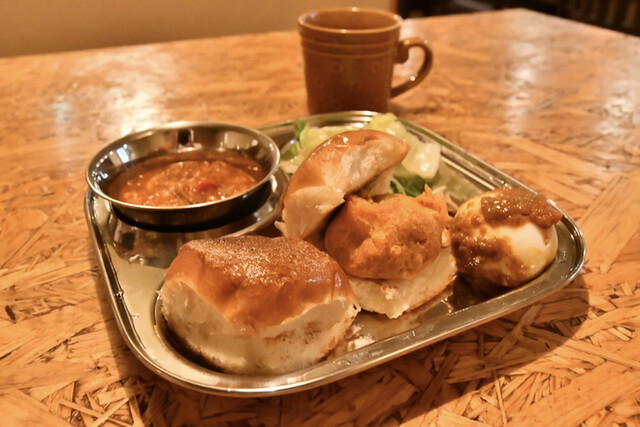
Approaching West India Spice Gayabaji as part of a Tokyo dining day, the rhythm is less about ceremony than about focus: compact specialist restaurants, lunch rooms built for repeat visits, and menus that win attention through consistency rather than spectacle. Tokyo’s serious curry scene often operates in this register, where the signal is not linen, cellar depth, or theatrical plating, but a narrow kitchen brief executed well enough to pull diners across the city.
West India Spice Gayabaji belongs to that smaller category of Tokyo restaurants where the format matters more than luxury cues. The public listing identifies Indian and Indian curry as the core categories, which gives the room a clear brief in a city where curry can mean anything from quick comfort food to spice-led destination dining. The appeal is not just heat or volume, but the way a focused curry restaurant can structure a meal around seasoning, texture, and pace without needing the trappings of fine dining.
Indian curry in a city that takes curry seriously
Tokyo has long absorbed curry into daily life, but its specialist Indian restaurants sit apart from everyday curry shops. The difference is less about authenticity as a slogan than about method: spice handling, layered aromatics, and dishes built around balance rather than simple richness. That is where this venue earns attention. Its listed categories of Indian and Indian curry place it within a part of the market that appeals to diners who want clarity, spice discipline, and a meal guided by a focused kitchen identity.
The Tabelog Hyakumeiten recognition in 2024 gives the restaurant a public credential inside a competitive field. Tabelog’s Hyakumeiten lists matter in Japan because they tend to reward sustained local approval rather than imported prestige. A score of 3.60 also places the restaurant in the zone where Tokyo diners are paying attention, especially for a modestly priced operation outside the city’s luxury dining corridors.
That positioning matters. A focused curry room changes the mood of service: decisions are faster, the kitchen brief is clearer, and the meal reads as a specialist stop rather than a broad survey. In Tokyo, that format can work especially well for restaurants that need to serve both local regulars and travellers without becoming generic versions of themselves.
How it compares with Tokyo's casual specialist tier
The useful comparison is not with luxury counters or hotel dining. It is with Tokyo’s compact, purpose-built rooms where one idea carries the business. In the same broad casual bracket, Men Mitsui, Tachinomi Asakusa Sharemon, Hirayama, Kikumaru, and Momotaro all illustrate how different small-format venues can build a following around focus. West India Spice Gayabaji is priced for repeat use rather than celebration dining, but its Tabelog Hyakumeiten recognition puts it in a more selective conversation than the budget alone suggests.
For curry-focused readers, the sharper peer reference inside Tokyo is the city’s wider appetite for specialist curry rooms rather than catch-all menus. The broader restaurant map also includes formats as different as casual counters, compact rooms, and neighborhood specialists. Taken together, they show how Tokyo rewards single-minded concepts when the format is clear.
The ingredient angle is the point to watch here. A restaurant working in Indian curry is operating in a category where seasoning, texture, and balance have to carry the meal. Curry, at this level, is not only a question of spice blend. It depends on how the elements are cooked and integrated; how acidity and richness are managed; and whether the plate has enough structure without resorting to heaviness. Those are the details that separate a serious curry room from a generic dining listing.
Planning the meal around the neighbourhood
This is an easy add-on to a Tokyo dining day because the venue sits within the city’s broad network of specialist restaurants and casual rooms. Plan around rail access and allow enough flexibility for a meal that is more about focused cooking than extended ceremony.
The practical profile is straightforward: Indian and Indian curry are the listed categories, with lunch in the JPY 1,000–1,999 range and dinner in the JPY 2,000–2,999 range. The restaurant’s 2024 Tabelog Hyakumeiten recognition, together with a listed score of 3.60, makes the recognition-to-cost ratio strong for visitors building a Tokyo food itinerary around substance rather than ceremony.
For broader planning, use Our full Tokyo restaurants guide alongside our Tokyo hotels, bars, wineries, and experiences guides. Travellers extending the same ingredient-first lens beyond the capital can compare regional formats generically, but West India Spice Gayabaji is best understood first as a Tokyo specialist: modestly priced, clearly categorized, and publicly recognized for 2024.
Frequently asked questions
Is West India Spice Gayabaji expensive?
Pricing at West India Spice Gayabaji is listed as dinner JPY 2,000 - JPY 2,999 and lunch JPY 1,000 - JPY 1,999.
What are the opening hours for West India Spice Gayabaji?
Specific opening hours for West India Spice Gayabaji are not provided here; check directly before visiting.
What's West India Spice Gayabaji's location?
Tokyo.
What's the standout thing about West India Spice Gayabaji?
Its clearest credential is Tabelog Hyakumeiten recognition in 2024. The restaurant is listed in the Indian and Indian curry categories, with a score of 3.60 and a lunch range of JPY 1,000–JPY 1,999.
A Minimal
Nearby venues at a similar price tier for orientation.
| Venue | Cuisine | Price | Awards | Notes |
|---|---|---|---|---|
| West India Spice GayabajiThis venue (the venue you are viewing) | West Indian Curry & Marathi Cuisine | $10–20 | Tabelog 100 #41 | Not listed |
| Hirayama | Charcoal-Grilled Wagyu Steakhouse | $200–300 | Michelin Bib Gourmand · Tabelog 100 #100 | Steak |
| Men Mitsui | Refined Tokyo Ramen | $10–20 | Tabelog 100 #2 | JPY 1,000 - JPY 1,999 JPY 1,000 - JPY 1,999 View spending breakdown |
| Tachinomi Asakusa Sharemon | Japanese Izakaya / Standing Bar | $20–30 | Tabelog 100 #40 | JPY 3,000 - JPY 3,999 |
| Kikumaru | Traditional Japanese sweets café (anmitsu & wagashi) | $1–10 | Tabelog 100 #82 | JPY 999 - JPY 999 |
| Momotaro | Traditional Japanese wagashi (confectionery) shop | Not listed | Tabelog 100 #86 | JPY 999 - JPY 999 View spending breakdown |
Recognition history
Dated appearances from independent guides and award organizations, with the underlying list record or original source where available.
Tabelog 100 #41 · No. 41
Tabelog · Tabelog 100 - Asian cuisine / Ethnic cuisine - TOKYO - 2024
Continue exploring
More in Tokyo
Restaurants in Tokyo
All restaurants in Tokyo →







Details
- Cozy
- Solo
- Casual Hangout
- After Work
- Brunch
- Standalone
- A La Carte
- Vegetarian Friendly
Current opening hours
- Monday
- Closed
- Tuesday
- 11 AM–2:30 PM, 6–9 PM
- Wednesday
- 11 AM–2:30 PM, 6–9 PM
- Thursday
- 11 AM–2:30 PM, 6–9 PM
- Friday
- Closed
- Saturday
- 11 AM–2:30 PM, 6–9 PM
- Sunday
- 11 AM–2:30 PM, 6–9 PM
Hours can change for holidays and private events. Hours as of .
A small, alleyway spot with about twenty seats and counter seating, giving a cozy, casual feel more like a neighborhood curry stand than a formal restaurant.