
Tabelog 100 #82
Our verdict
Kikumaru places Tokyo’s wagashi-cafe tradition in a compact Nishiasakusa setting, closer to a neighbourhood sweet shop than a formal dessert counter. Its Tabelog 100 selection for Tokyo Japanese traditional sweets and sweets cafes in 2023, low JPY 999 price band, and 18-seat format make it a useful stop for understanding how Asakusa-area sweets culture works at street level.

Pearl is the En Primeur Club membership app, where members save venues, book tables and use the concierge.
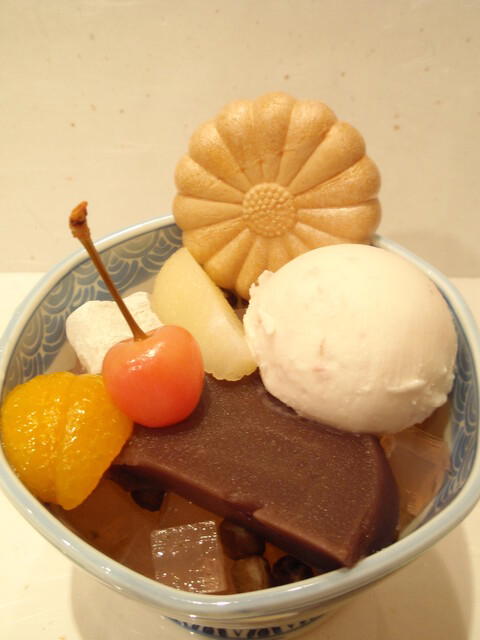
The menu
What to order
- Anmitsu
- Parfait
- Zenzai
- Mamekan
- Kakigori (shaved ice)
Approaching Kikumaru in Tokyo, the useful frame is the quieter pleasure of a sweets stop rather than a reservation ritual. Kikumaru belongs to that grammar. It does not perform luxury dessert culture; it sits in a Japanese sweets-cafe tradition, where kakigori, Japanese sweets, and cafe service can carry as much local meaning as a chef’s tasting menu elsewhere in the city.
That matters because Tokyo sweets are split across cultures: counters for gifting, patisseries, coffee shops that fold dessert into cafe culture, and casual Japanese sweets cafes where shaved ice and other desserts draw mixed crowds. Tokyo suits that last category especially well. Away from the city’s more theatrical dining circuits, everyday sweets shops can serve locals, solo diners, and visitors who know Tokyo dessert is not confined to luxury rooms or highly staged counters.
Japanese sweets-cafe discipline without the ceremony
The useful way to read this shop is not fine-dining language. A Japanese sweets cafe succeeds through range, pacing, price, and repeatability. Kikumaru is listed as a cafe featuring Japanese sweets, kakigori, and cafe service, placing it in the casual sweets-cafe lane rather than a formal counter built around boxed confections. Its 2023 Tabelog Hyakumeiten recognition gives it a public credential within that narrower category, not a general restaurant award.
The price band is part of the story. Listed at - JPY 999 - JPY 999, this is a Tokyo food experience where recognition has not pushed the format into luxury. Compare the city’s broader spread: LOOP TOKYO, West India Spice Gayabaji, and Men Mitsui each belong to different casual or restaurant conversations. Kikumaru’s value is different: recognised sweets culture tied to afternoon routines, short visits, and modest spend.
Wine-list assignment reveals that by contrast. There is no need to force a sommelier-led cellar narrative onto a Japanese sweets cafe; doing so would misread the format. The equivalent of curation is the disciplined sweets selection: Japanese sweets, shaved ice, and cafe service arranged for repeat use. In Tokyo, that restraint can be as telling as a deep bottle list. Dessert shops need no cellar to show editorial judgment; they need a clear identity and enough consistency to survive regulars as well as guides.
Tokyo's quieter answer to snack traffic
Tokyo can make casual eating feel like a procession: street sweets, savoury snacks, seasonal desserts, and tourist-facing stalls competing for attention. Kikumaru pulls the experience into a cafe register. A sweets cafe changes the tempo from street grazing to seated pause. The distinction is practical and cultural. Japanese sweets cafes are often useful mid-afternoon, before dinner, or during a city day when a full meal is not the point.
The shop’s positioning is not minor. In Tokyo, where many small venues operate with tight spatial codes, a sweets cafe can offer a different hospitality from the hushed tasting-menu room. The low price and clear category reinforce that democratic function. This is a low-cost, low-ceremony entry into a tradition that can seem opaque to travellers who know sushi and ramen but not the grammar of Japanese sweets or kakigori.
Tokyo’s useful dining map is built from these contrasts. Other Tokyo dining rooms point to different appetites, from counter formats to casual specialists and everyday categories. Kikumaru’s lane is quieter: Japanese sweets first, cafe format second, spectacle last. That focus is what makes its Tabelog Hyakumeiten recognition meaningful; it is being read inside a specific sweets-cafe culture rather than inflated into a universal fine-dining claim.
How to place it in a Tokyo itinerary
The strongest use case is not a destination dinner but a calibrated break in a Tokyo day. Pair it with other Tokyo wandering rather than a cross-city checklist built only around major meals. Timing matters more than formality: this is a modest sweets-cafe stop, not a long reservation-driven dining event. The point is to leave room for shaved ice, Japanese sweets, and a pause that feels proportionate to the format.
Planning discipline is part of the texture. Kikumaru’s listed budget is Dinner: - JPY 999; Lunch: - JPY 999, which makes it unusually accessible within a city where recognised venues can quickly move into higher spending bands. The Tabelog score provided is 3.72, and the listed phone number is +81-3-3841-8320. Treat those details as practical anchors, while keeping the experience simple: this is Tokyo sweets culture at cafe scale.
For a wider city edit, use Our full Tokyo restaurants guide alongside Our full Tokyo hotels guide, Our full Tokyo bars guide, Our full Tokyo wineries guide, and Our full Tokyo experiences guide. Regional and international comparisons can sharpen the point without needing to overstate Kikumaru’s format: other dining in Japan and abroad may turn Japanese food culture into destination meals, design statements, or export formats. Kikumaru shows why the source culture is often quieter, cheaper, and more exacting than its more dramatic interpretations suggest.
Credentials Lens
Comparable venues at a similar level for quick context.
| Venue | Cuisine | Price | Awards | Notes |
|---|---|---|---|---|
| KikumaruThis venue (the venue you are viewing) | Traditional Japanese sweets café (anmitsu & wagashi) | $1–10 | Tabelog 100 #82 | Not listed |
| Tokyo Style Noodle Hotate Biyori | Scallop-focused Tsukemen & Ramen | $10–20 | Tabelog 100 #96 | Chiyoda |
| Takemura | Traditional Japanese sweets café (kanmi-dokoro) | $1–10 | Tabelog 100 #6 | Chiyoda |
| Teuchi Udon Akau | Handmade Udon & Izakaya | $20–30 | Tabelog 100 #47 | Arakawa |
| Nishi Mura | Tonkatsu | Not listed | Tabelog 100 #4 | Chūō |
| Mitsuru Akebonobashi honten | Japanese neighborhood bakery | $1–10 | Tabelog 100 #43 | Shinjuku |
Recognition history
Dated appearances from independent guides and award organizations, with the underlying list record or original source where available.
Tabelog 100 #82 · No. 82
Tabelog · Tabelog 100 - Japanese traditional sweets / Japanese sweets cafe - TOKYO - 2023
Continue exploring
More in Tokyo
Restaurants in Tokyo
All restaurants in Tokyo →

Bars in Tokyo
All bars in Tokyo →


Details
- Cozy
- Classic
- Quiet
- Solo
- Casual Hangout
- Family
- After Work
- Brunch
- Historic Building
- Standalone
- Street Scene
- A La Carte
- Tea
- Coffee
Current opening hours
- Monday
- Closed
- Tuesday
- Closed
- Wednesday
- 11:30 AM–6:30 PM
- Thursday
- 11:30 AM–6:30 PM
- Friday
- 11:30 AM–6:30 PM
- Saturday
- 11:30 AM–6:30 PM
- Sunday
- 11:30 AM–6:30 PM
Hours can change for holidays and private events. Hours as of .
A small, retro-style Japanese sweets café with a teahouse feel: simple sky-blue tables, bright but gentle lighting, and a calm, down-to-earth atmosphere typical of old-town Asakusa, suited to quietly enjoying wagashi and tea between sightseeing stops.