Wepler occupies Place de Clichy on the edge of Montmartre, holding a position in Paris's brasserie tradition that few addresses on the Right Bank's northern fringe can match. Where much of the city has moved toward tasting menus and minimalist interiors, Wepler remains anchored in a format built for duration: long tables, unhurried service, and a room designed for the act of sitting rather than turning covers.
Pearl is the En Primeur Club membership app — saves, bookings, and concierge access live there. Same editors, same standards.
- Address
- 14 Pl. de Clichy, 75018 Paris, France
- Phone
- +33145225324
- Website
- wepler.com
- Directions
- Get directions
 Saves & bookings on Pearl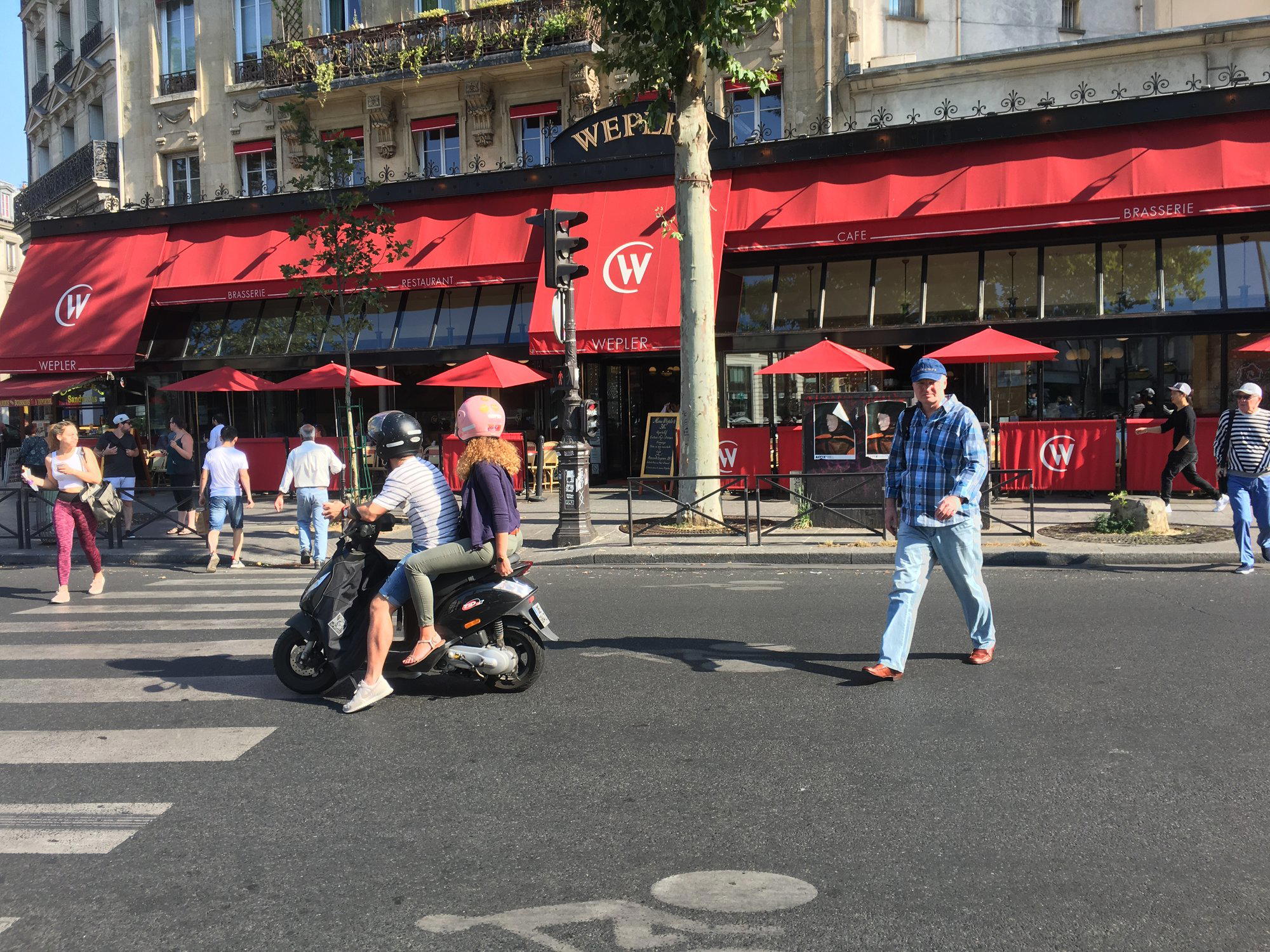
Place de Clichy and the Brasserie as Architectural Argument
The Place de Clichy sits at one of Paris's more functional intersections, a rotary that connects the 8th, 17th, and 18th arrondissements without offering much in the way of prettiness. What it offers instead is momentum: the kind of foot traffic that sustained the grand café-brasserie format through two centuries of Parisian urban life. Wepler has occupied this corner long enough to become part of the square's visual grammar, its facade doing the work that a more fashionable address might leave to a publicist. The room announces itself before you sit down.
This matters in the context of how Paris dining has evolved. The city's most-discussed restaurants over the past decade — places like Alléno Paris au Pavillon Ledoyen or Arpège — operate with a fundamentally different physical logic: intimate counters, curated lighting, rooms that frame the plate as the primary object. The brasserie format, by contrast, treats the room itself as the primary object. Tables are set close. The ceiling carries height. Mirrors double the available space without adding square footage. The diner is positioned inside a social scene, not delivered a private experience. These are deliberate spatial choices, and Wepler's address on Place de Clichy has always amplified them.
The Physical Container and What It Produces
Grand Parisian brasseries share a design logic that dates to the Belle Époque, when the city's café culture demanded spaces that could absorb crowds while still offering legibility, you needed to see and be seen without feeling compressed. The high ceilings, banquette seating, and mosaic or tile detailing that characterize this era were not decorative accidents. They were engineering solutions to a social problem: how to seat a large number of people without making any of them feel invisible.
Wepler fits within this tradition in terms of both location and format. What the Place de Clichy corner provides architecturally is exposure. Unlike the enclosed courtyards of the Marais or the tucked side streets of Saint-Germain, this is a room that opens onto a public square, which means the line between interior and exterior was always slightly porous. The brasserie model depends on that porosity. You do not make a reservation at a grand café for the same reasons you book at Kei or L'Ambroisie. The spatial contract is different: you come to occupy the room rather than to be served through a sequence.
This distinction matters for how you read the room. At addresses like Le Cinq at the Four Seasons George V, the interior is engineered for a kind of theatrical formality, gilded ceilings, table distances measured to allow privacy. The brasserie does the opposite: proximity is the point. You hear the table beside you. The waiter moves through tight lanes. The ambient noise is not an obstacle to the experience; it is part of the experience.
Where Wepler Sits in Paris's Broader Dining Map
The northern Right Bank above the grandes boulevards occupies a different register in the Paris dining conversation from the 1st, 6th, or 8th arrondissements. Montmartre and the Place de Clichy district have historically attracted a mix of artists, tourists, and local working professionals rather than the more concentrated luxury spend of the Triangle d'Or or the Left Bank's institutional dining rooms. This has kept the area's most durable restaurants oriented toward accessibility and volume rather than the tasting-menu format that now dominates the upper tiers of French fine dining.
France's highest-recognized tables, Mirazur in Menton, Troisgros in Ouches, Bras in Laguiole, Auberge de l'Ill in Illhaeusern, operate in a register defined by focus, scarcity, and destination dining. Even in Paris, addresses like Paul Bocuse's Auberge du Pont de Collonges or the haute cuisine rooms of the 8th function as deliberate events for the diner. Wepler's position is structurally different: it is a room you arrive at rather than plan toward, or at least that is what the format implies. The brasserie that has endured on a busy Parisian square is not competing with Assiette Champenoise in Reims or Au Crocodile in Strasbourg. It is competing with the city's other durable, room-forward addresses that have managed to stay relevant without pivoting to the tasting-menu format.
The comparison set for Wepler is closer to Brasserie Lipp on the Boulevard Saint-Germain or Le Dôme in Montparnasse than to the €€€€ progressive kitchens clustered in the haute arrondissements. That peer group is defined less by kitchen creativity and more by spatial persistence: the ability to remain a reference point across decades without requiring a major reinvention.
Seafood and the Brasserie's Culinary Anchor
The grand Parisian brasserie and plateaux de fruits de mer have maintained a near-inseparable association since the late 19th century, when Alsatian operators brought the format to the capital and built their identity around oysters, crab, langoustines, and shellfish served cold on beds of crushed ice. This is category-level knowledge, not specific to any single address, but it shapes what a room like Wepler's signals to a returning visitor. The cold seafood plateau is architectural in its own right: it arrives at height, requires space, and imposes a pace on the meal that resists the quick-turn table management of modern restaurant economics. You do not eat a plateau de fruits de mer in forty-five minutes.
This seafood orientation connects Paris's brasserie tradition to France's broader coastal restaurant culture, the same logic that runs through addresses like Auberge du Vieux Puits in Fontjoncouse and, at a different scale entirely, Le Bernardin in New York City, which drew directly from French classical seafood traditions. Paris's brasseries represent the populist end of that lineage.
Planning a Visit
Wepler sits at 14 Place de Clichy in the 18th arrondissement, directly accessible from the Place de Clichy metro station (lines 2 and 13), which makes it one of the more straightforwardly reached addresses in northern Paris. The square is a transit hub as much as a dining destination, which historically has kept the room's clientele broad rather than self-selecting. For readers accustomed to booking windows at tasting-menu restaurants, where three to four months ahead is standard at addresses like Atomix in New York or Flocons de Sel in Megève, the walk-in capacity of a large brasserie room represents a different kind of access. The room's scale, typical of the format, is designed to absorb demand rather than restrict it. For a broader map of where Wepler fits among Paris's dining options at every tier, see our full Paris restaurants guide.
Just the Basics
A quick snapshot of similar venues for side-by-side context.
| Venue | Cuisine | Price |
|---|---|---|
| WeplerThis venue — the venue you are viewing | Not listed | Not listed |
| Alléno Paris au Pavillon Ledoyen | Creative | €€€€ |
| Kei | Contemporary French, Modern Cuisine | €€€€ |
| L'Ambroisie | French, Classic Cuisine | €€€€ |
| Le Cinq - Four Seasons Hôtel George V | French, Modern Cuisine | €€€€ |
| Pierre Gagnaire | French, Creative | €€€€ |
Continue exploring
More in Paris
Restaurants in Paris
Browse all →

Bars in Paris
Browse all →
Hotels in Paris
Browse all →



At a Glance
- Classic
- Lively
- Well Known
- Casual Hangout
- Brunch
- Late Night
- Terrace
- Historic Building
- Street Scene
Lively Parisian brasserie atmosphere with terrace seating for people-watching, sedate yet lively historic charm.