Our verdict
Weis Stue occupies a historic address on Ribe's central square, placing it inside Denmark's oldest market town and one of the country's most culturally layered dining settings. The restaurant draws on the deep-rooted traditions of Southern Jutland hospitality, where a meal is inseparable from the architecture and centuries of trade history surrounding it. Visitors to Ribe's compact dining scene consistently include it among their first stops.

Pearl is the En Primeur Club membership app, where members save venues, book tables and use the concierge.
The menu
What to order
- Veal Wienerschnitzel
- Beef Fillet Bearnaise
A Square That Predates the Menu
Ribe is not a city that requires introduction to Danes, and for international visitors it tends to arrive as a surprise: a Viking-age market town on the southwestern edge of Jutland where the cathedral has watched over the same central square for nearly a thousand years. Torvet 2 is not just a postal address, it is a position at the gravitational centre of Denmark's oldest town, and the building that houses Weis Stue carries that context into every meal served inside it. In a country where the Geranium in Copenhagen and Jordnær in Gentofte define the high-modernist end of Danish dining, Weis Stue represents something older and, in its own way, more demanding to get right: the provincial inn tradition, where hospitality is expected to be both rooted and reliable.
Southern Jutland's dining culture has always been shaped by its geography. The flat marshland and tidal flats of the Wadden Sea coast produce ingredients, lamb grazed on salt-marsh grass, freshwater eel from the rivers, North Sea fish landed at Esbjerg, that define what regional cooking here can look like when kitchens take them seriously. What the setting guarantees is that the surrounding context is doing its part.
The Older Inn Format in a Nordic Context
Across Denmark's provincial towns, the traditional kro and inn format has undergone significant pressure over the past two decades. Some houses have converted entirely to contemporary Nordic tasting menus, chasing the critical recognition that properties like Henne Kirkeby Kro in Henne have achieved. Others have moved downmarket, simplifying menus to survive reduced foot traffic outside summer season. A smaller group has maintained the middle register: serious kitchens committed to regional cooking without the theatrics of the tasting-menu format. Weis Stue's position on Ribe's main square, in a town that draws visitors year-round for its cathedral and Viking Museum, gives it a more stable audience than many rural counterparts, and that stability tends to correlate with a kitchen that can maintain consistency rather than reinventing itself seasonally to attract attention.
The comparison set in Ribe itself is instructive. Hr. Skov - Huset Ribe and Jacob A. Riis each take a different approach to the town's dining needs, while Kammerslusen operates closer to the river with its own distinct character. Café Sallys and Hviding Pizzeria og Restaurant address the town's more casual end. Within that range, a historic address on the main square implies a certain register, the kind of room where a long lunch is a reasonable expectation and where the wine list is expected to have considered some thought. Our full Ribe restaurants guide maps the full range of options across the town.
What the Cultural Setting Demands of a Kitchen
Cooking inside a historically significant building in a Unesco-protected town is not a neutral circumstance. The architecture sets a register that a kitchen either rises to meet or quietly undermines. The inn tradition across Southern Jutland has its own logic: generous portions, dishes built around preserved and pickled ingredients from the region's long winters, and a relationship with the table that prizes duration over efficiency. These are not constraints, they are a culinary grammar, and the most interesting provincial kitchens in Denmark treat them as a starting point rather than a limitation.
For context on what serious regional cooking looks like elsewhere in Jutland, Frederikshøj in Aarhus and LYST in Vejle both demonstrate how Jutlandic ingredients can be handled at a fine-dining level. Alimentum in Aalborg and ARO in Odense represent the broader new-Nordic provincial ambition. Weis Stue operates outside that formal register, but the regional ingredient tradition it draws on is the same one those kitchens take seriously. Further afield, Dragsholm Slot Gourmet in Hørve, Frederiksminde in Præstø, and Domæne in Herning each show how Danish country houses handle the same tension between tradition and ambition.
Planning a Visit
Ribe is accessible by train from Esbjerg, which connects to the main Jutland rail corridor. The town is compact enough to walk entirely, with Weis Stue on the central square placing it within a few minutes of the cathedral, the Viking Museum, and the river. Visitors combining a meal here with the town's other cultural draws tend to structure around an afternoon arrival and an early dinner, which allows time to see the square in the changing light of a Jutland evening. Booking ahead is advisable during peak summer months, when the town draws visitors from across Scandinavia, and equally during the Christmas market period in December when Ribe's medieval setting attracts significant crowds. For the quieter shoulder seasons, March through May and September through October, the town is considerably more relaxed, and the table is easier to secure with shorter notice.
Frequently asked questions
What's the address for Weis Stue?
Weis Stue is located at Torvet 2, 6760 Ribe, Denmark, Ribe.
Is Weis Stue a good base for exploring Ribe's Viking history?
Weis Stue sits at Torvet 2, directly on Ribe's central market square, which places it within walking distance of the Ribe VikingeCenter and the town's cathedral, both central to understanding Ribe's status as Denmark's oldest town. The inn format historically served travellers moving through Jutland, so the connection between the building and the town's long commercial past is not incidental. Ribe is compact enough that the square functions as a natural starting point for any visit.
What do people recommend at Weis Stue?
Weis Stue draws visitors through its position on Torvet, Ribe's central market square, as much as through any single dish. The inn format typical of Danish provincial houses like this tends toward hearty, regionally grounded cooking. Specific menu recommendations are best confirmed directly with the venue before your visit.
What's the best way to book Weis Stue?
With no phone number or website listed in public records at the time of writing, the most reliable approach is to check the venue's official channels by visiting in person or sourcing current contact details through Ribe's local tourism office. The address is Torvet 2, 6760 Ribe. Given the inn's position in a town that draws significant visitor traffic in summer, booking ahead for dinner is advisable.
What's the signature at Weis Stue?
The setting is the most consistent reference point: a historic inn on the oldest market square in what is considered Denmark's oldest surviving town. That context shapes the register of the house, placing it in a category of Danish provincial inns where the building itself carries as much weight as the menu.
What if I have allergies at Weis Stue?
As with any traditional inn format, it is worth communicating requirements clearly when booking or on arrival. Ribe is a small town with limited alternative dining options nearby, so confirming ahead is practical advice regardless of the venue.
Is Weis Stue worth the price?
Pricing information for Weis Stue is not currently on record. What can be said is that dining in a historically intact inn on Ribe's medieval square carries a context that most Danish provincial restaurants cannot replicate. Whether that context justifies the outlay depends on how much the surroundings factor into your read of value.
Price Lens
A short peer table to compare basics side-by-side.
| Venue | Cuisine | Price |
|---|---|---|
| Weis StueThis venue (the venue you are viewing) | Classic Danish | $30–50 |
| Kammerslusen | Danish Seasonal Seafood | $30–50 |
| Hr. Skov - Huset Ribe | Danish Brasserie Café | $20–30 |
| KOLVIG By Skovmose | Modern Danish with Scandinavian influences | Not listed |
| Jacob A. Riis | Danish Steakhouse & Brasserie | $20–30 |
| Vægterkælderen | Traditional Danish Cellar Bistro | $20–30 |
Continue exploring
More in Ribe
Details
- Classic
- Cozy
- Historic
- Rustic
- Family
- Group Dining
- Casual Hangout
- Historic Building
- Courtyard
- Street Scene
- A La Carte
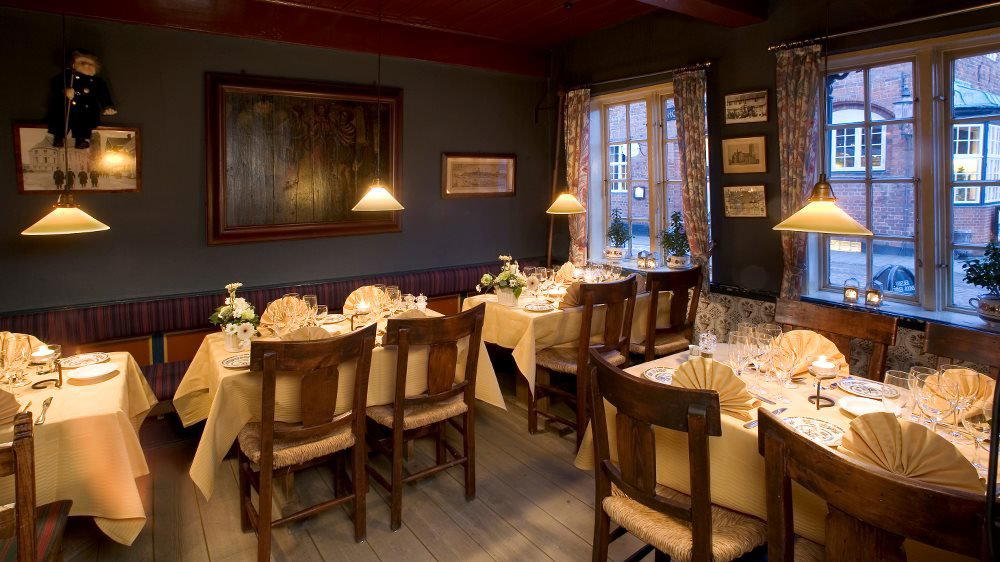
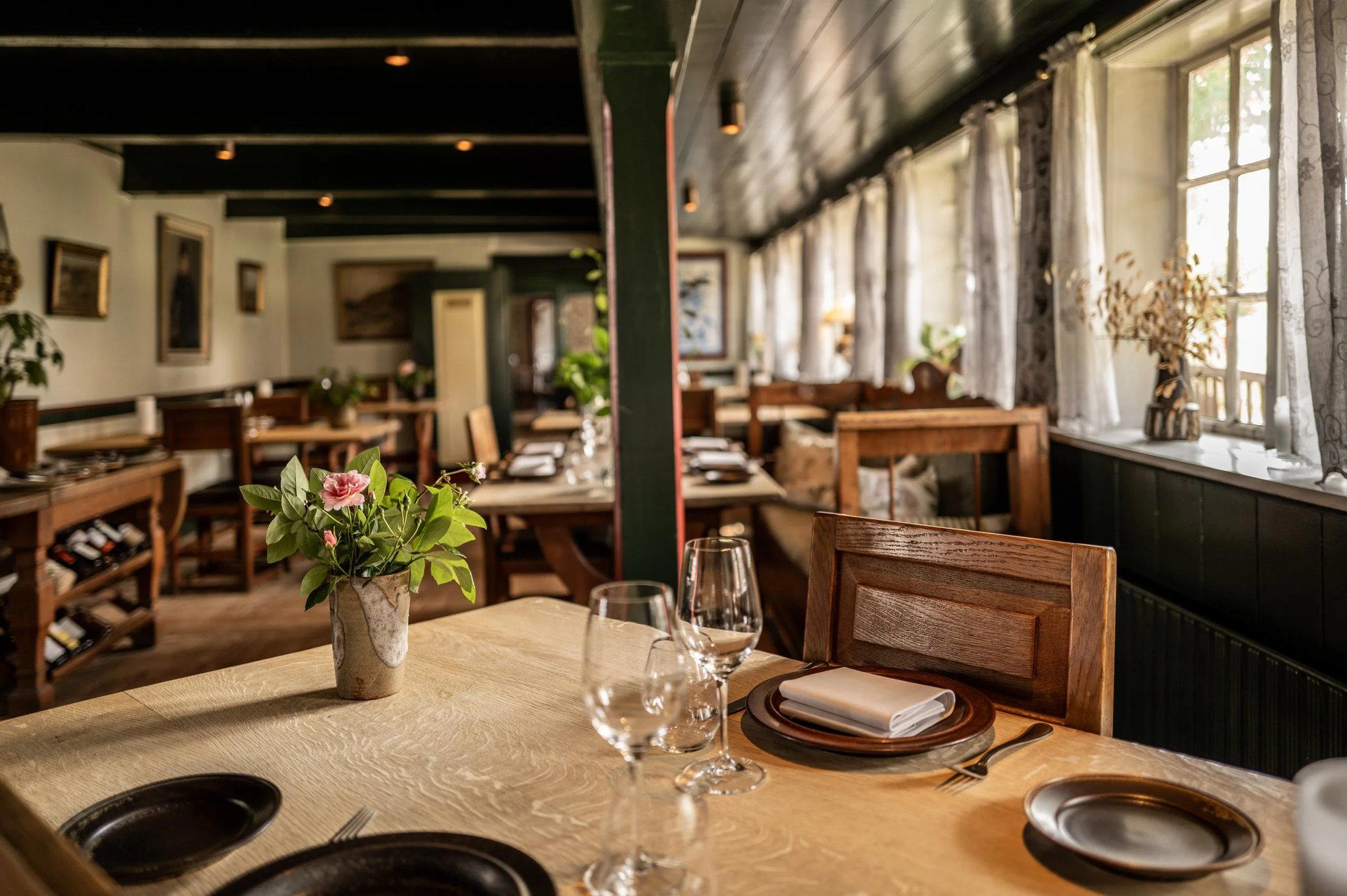
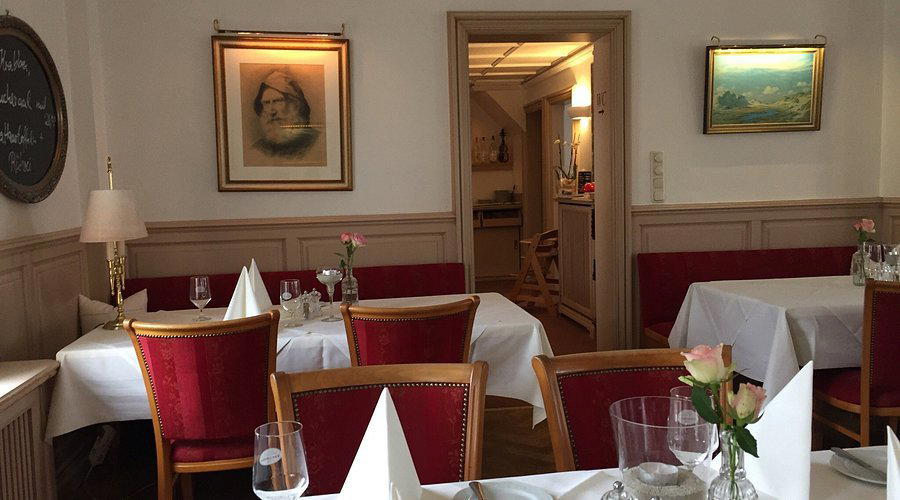
Cozy atmosphere with original wooden furniture, decorated ceilings, and panel walls evoking a living museum feel.