
WARUNG PHUAN brings Thai, curry and dining-bar cooking into Nagoya’s Imaike orbit with a reputation sharpened by selection for Tabelog 100 Asian cuisine / Ethnic cuisine EAST 2024. The appeal is less about grand dining-room theatre than a compact house-restaurant format, counter seating, shochu and wine, and a price tier that puts it above casual Imaike staples without entering formal tasting-menu territory.
Pearl is the En Primeur Club membership app — saves, bookings, and concierge access live there. Same editors, same standards.
- Address
- 1 Chome-14-8 Imaike, Chikusa Ward, Nagoya, Aichi 464-0850, Japan
- Website
- instagram.com
 Saves & bookings on Pearl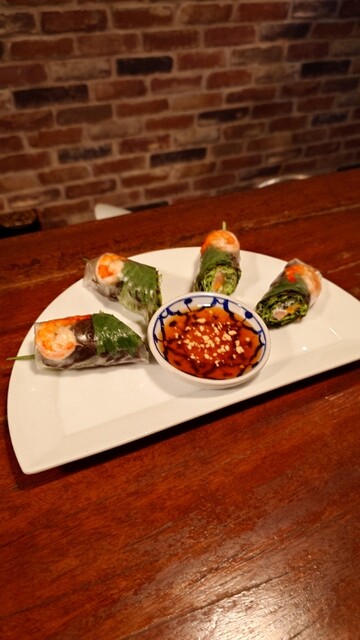
Imaike has the feel of a Nagoya neighbourhood that eats late and without ceremony: small restaurants, station-adjacent bars, curry counters, Chinese rooms, bakeries and drinking dens packed into short walks rather than staged into a single dining district. In that setting, Thai and ethnic cooking occupies a useful middle ground. It can behave like dinner, drinking food, curry stop, or small-group table, depending on the night. WARUNG PHUAN fits that pattern with a house-restaurant scale and counter-led intimacy, but its 2024 selection for Tabelog 100 Asian cuisine / Ethnic cuisine EAST moves it into a more scrutinised category than the average neighbourhood Thai room.
Nagoya’s reputation still leans toward miso katsu, kishimen, tebasaki and café culture, which means non-Japanese regional Asian restaurants often have to earn attention in quieter ways. Here, the signal is critical rather than theatrical: a Tabelog score of 3.62, Hyakumeiten recognition in the EAST regional list, and a dinner budget in the JPY 4,000 to JPY 4,999 band. That places the restaurant above quick local staples such as Hyakurotei Imaike ten, Imaike Hanten, Menya Tamagusuku, Nakaya Pan and Yaki Tonkatsu Taira, which sit in lower everyday price brackets, while keeping the experience closer to a neighbourhood dining bar than a formal destination restaurant.
Imaike's ethnic-food reputation is built on small rooms, not spectacle
The stronger Asian and ethnic restaurants in Japanese cities rarely rely on large-format service. They tend to be compact, owner-driven rooms where the food has to justify repeat local use before outside recognition arrives. The Tabelog 100 Asian cuisine / Ethnic cuisine EAST list matters in that context because it does not frame the category as a novelty sideline to sushi, kaiseki or French-Japanese dining. It rewards restaurants working in Thai, curry, Vietnamese, Indian, Nepalese, Chinese regional and other non-Japanese forms across eastern Japan, where consistency and local demand carry weight.
Within Nagoya, that makes WARUNG PHUAN a useful reading of the city’s dining habits. It is not competing with particularly formal restaurants in town; it is competing for the kind of evening when spice, rice, curry and alcohol make more sense than a course sequence. The venue’s categories, Thai, curry and dining bar, explain the format better than a chef biography would. This is a restaurant for people who understand that a serious meal does not always require linen, a long menu explanation, or a ceremonial counter. Recognition gives it an extra reason to cross town, but the format remains grounded in Imaike’s practical, after-work rhythm.
For readers mapping Nagoya beyond one booking, the surrounding scene is worth treating as a cluster rather than a checklist. EP Club’s local restaurant coverage includes 1022, 451, Aaron, Alan. and All Day Dining Montmartre, each pointing to a different side of the city’s dining range. For a broader planning view, use Our full Nagoya restaurants guide alongside Our full Nagoya hotels guide, Our full Nagoya bars guide, Our full Nagoya wineries guide and Our full Nagoya experiences guide.
The price tier changes the expectation
A JPY 4,000 to JPY 4,999 dinner budget is an important clue in Imaike. This is not the cost profile of a ramen counter or bakery stop; it is the level at which diners should expect a fuller evening, drinks included for many tables, and a cooking style that has enough range to carry a group. Shochu and wine appear in the drinks profile, which reinforces the dining-bar reading. The restaurant’s category is not simply Thai restaurant in the narrow sense; curry and bar use are part of the identity, which makes it more flexible than a single-purpose specialist.
The room scale also shapes the meal. Thirteen seats and counter seating put the emphasis on proximity rather than polish. The second-floor banquet room, available for larger reservations, changes the use case: small counter dinner on one night, private-use gathering on another. That dual format is common in Japanese neighbourhood dining, where the same address may serve solo diners, couples, families and groups without presenting itself as a special-occasion room. Children are welcome, and the no-smoking policy removes one common barrier for mixed-age dinners in small urban restaurants.
There is a planning lesson here. Award recognition can draw travellers toward a place, but the better decision is whether the format matches the night. WARUNG PHUAN makes sense when the goal is a compact, spice-led dinner with drinks in Imaike, not when the brief calls for ceremony or a long chef-counter narrative. The award is useful because it reduces the guesswork around quality in a category that can be uneven across cities. It does not change the essential proposition: a small Thai, curry and dining-bar address in a neighbourhood where eating well often means choosing a tight room over a grand one.
Where it sits in a Japan-wide reading of casual excellence
Japan’s casual restaurant excellence is often easier to see when comparing across categories rather than cuisines. A curry specialist in Sapporo, a Vietnamese restaurant in Kawasaki, a sake bar in Los Angeles, or an onigiri counter in Pasadena can all carry the same lesson: narrow formats reward discipline. For wider context, see -Grilled beef Sukiyaki- KAMAKURA TANUKIAN 鎌倉 たぬき庵 in Kamakura. 鮪と炭火焼き うお炭 秋葉原店 in Tokyo.cafe in Osaka.know in Kumamoto, (Shoku) Vietnam in Kawasaki, [Curry Senmon Ten] Maruyama Kyoju. in Sapporo, Jōdo Saké Bar in Los Angeles and Onigiri Time in Pasadena. The connective tissue is not luxury; it is clarity of purpose.
That is the strongest way to read the restaurant. The restaurant has enough recognition to appear on a serious Nagoya shortlist, but its value lies in how it represents a category that premium travel coverage often underserves: small, independent Asian cooking with local credibility, a defined drinks culture and a price point that encourages a real dinner rather than a quick snack. In a city where the familiar specialities dominate first-time itineraries, this is the kind of address that shows how Nagoya actually eats after the headline dishes have been accounted for.
Cost and Credentials
Comparable venues to anchor price and recognition.
| Venue | Cuisine | Price | Notes |
|---|---|---|---|
| WARUNG PHUANThis venue — the venue you are viewing | Chikusa, Thai & Asian dining bar | $$ | Not listed |
| FORTISSIMO H | Not listed | $$ | Chikusa, French-style patisserie & dessert cafe |
| Pizzeria Vacanze Nagone | Not listed | $$ | Chikusa, Neapolitan Pizza & Italian Trattoria |
| Sukhontha Nishiki ten | Naka, Authentic Thai Restaurant | $$ | Not listed |
| Gyoza to Sparkling Bubbles | Not listed | $$ | Naka, Creative Gyoza and Sparkling Drinks |
| Don Hyara | Not listed | $$ | Nishi, Traditional Japanese Izakaya & Tempura |
Recognition history
Dated appearances from independent guides and award organizations, with the underlying list record or original source where available.
Tabelog 100 #23 · No. 23
Tabelog · Tabelog 100 - Asian cuisine / Ethnic cuisine - EAST - 2024
Continue exploring
More in Nagoya
Restaurants in Nagoya
Browse all →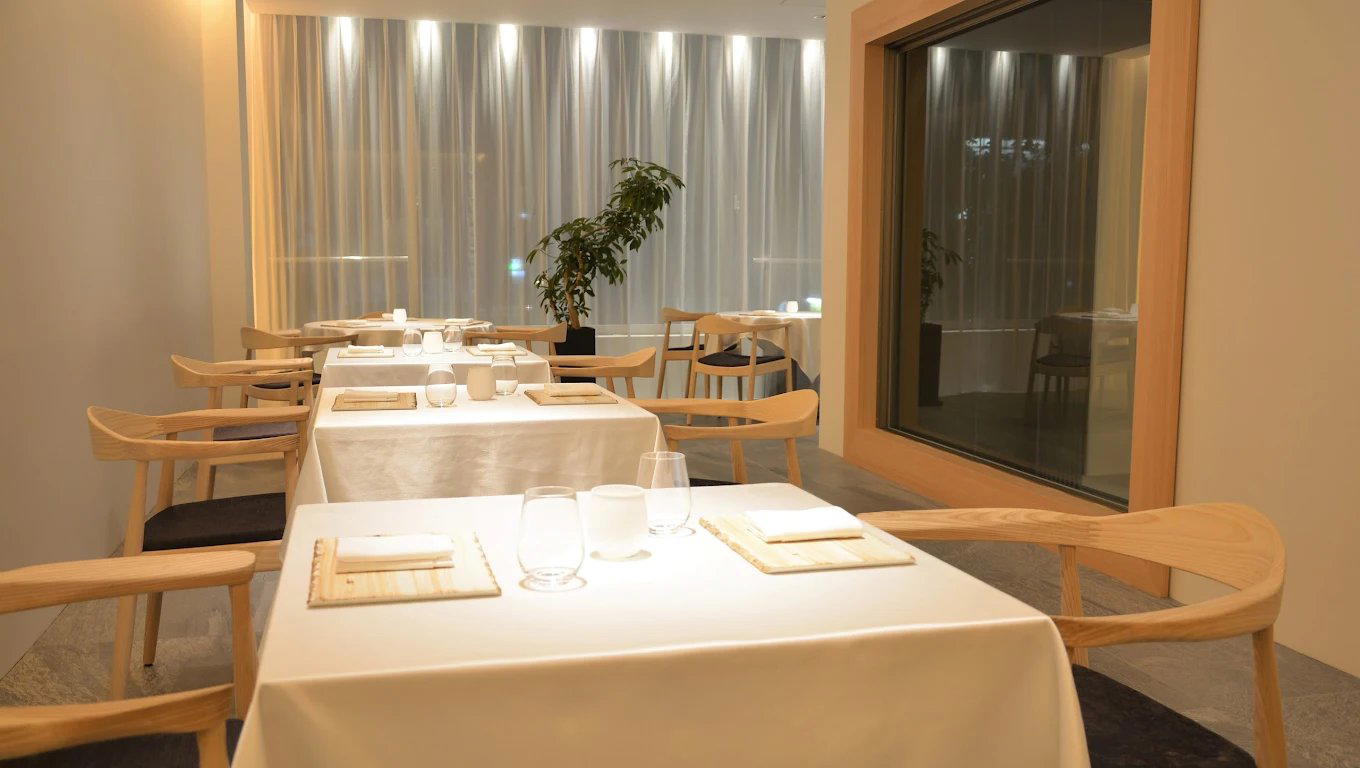
At a Glance
- Standalone
Current opening hours
- Monday
- 5 PM–12 AM
- Tuesday
- 5 PM–12 AM
- Wednesday
- 5 PM–12 AM
- Thursday
- Closed
- Friday
- 5 PM–12 AM
- Saturday
- 5 PM–12 AM
- Sunday
- 5 PM–12 AM
Hours can change for holidays and private events. Last verified .