Waikiki Shokudo
Our verdict
Royal Hawaiian Avenue and the Casual Counter Culture of Waikiki On Royal Hawaiian Avenue, a block or two removed from the main drag of Kalakaua, the register of Waikiki changes. The souvenir shops thin out, the foot traffic slows to something...

Pearl is the En Primeur Club membership app — saves, bookings, and concierge access live there. Same editors, same standards.
- Address
- 355 Royal Hawaiian Ave # 201, Honolulu, HI 96815
- Phone
- (808) 425-4061
- Hours
- Daily 5 PM–1 AM
- Website
- waikikishokudo.com
- Directions
- Get directions
- Booking
- Book on OpenTable
The menu
What to order
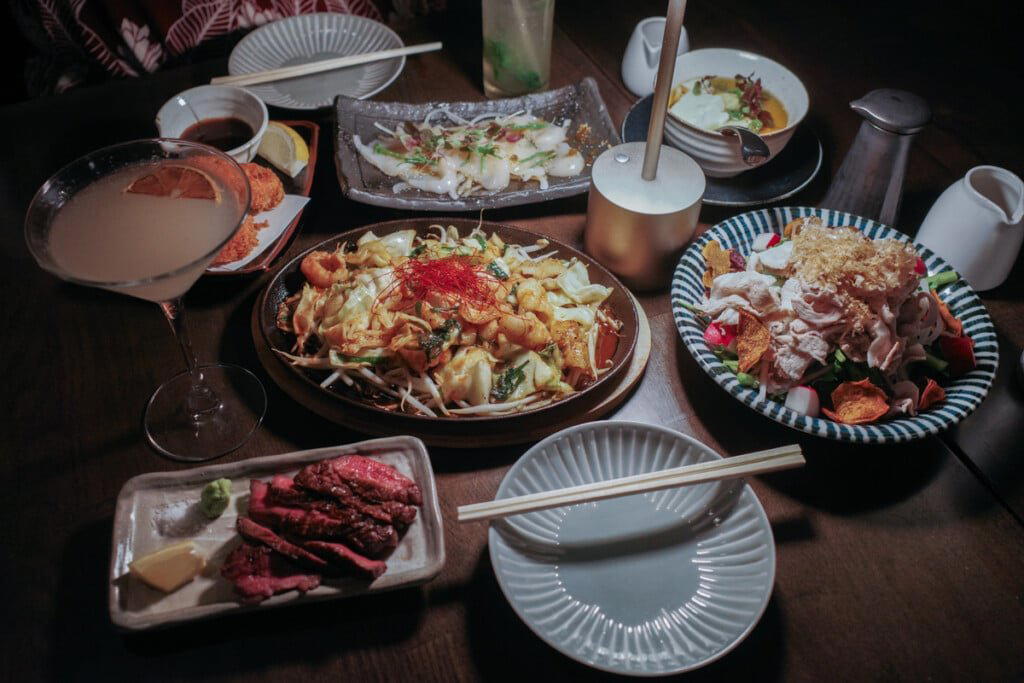
- Ichibo washugyu steak
- Miso butterfish
- Jidori chicken
- Garlic dish
Royal Hawaiian Avenue and the Casual Counter Culture of Waikiki
On Royal Hawaiian Avenue, a block or two removed from the main drag of Kalakaua, the register of Waikiki changes. The souvenir shops thin out, the foot traffic slows to something more purposeful, and the buildings carry a workaday character that the beachfront strip long since abandoned. It is in this more grounded pocket of the neighborhood, at 355 Royal Hawaiian Ave on the second floor, that Waikiki Shokudo operates. The name itself signals intent: shokudo in Japanese refers to a casual dining hall or canteen, a format built on accessibility and repetition rather than occasion and ceremony. In a district where hotel restaurants and beachside tourist traps dominate, the shokudo model represents a different set of priorities entirely.
The Dining Ritual: How a Shokudo Shapes the Meal
The shokudo format has roots in everyday Japanese dining culture, where the measure of a room is not its ambition but its reliability. These are not tasting-menu destinations or chef-driven showcases. The meal follows a rhythm that regulars understand without instruction: arrive, orient yourself to the menu, order from a focused selection, eat without theater, leave when you are ready. There is no choreography of courses, no parade of small plates designed to build toward a climax. The pacing is set by the diner, not the kitchen.
This format suits Waikiki more than it might first appear. The neighborhood runs on visitor cycles, with guests often disoriented by jet lag, unfamiliar with local geography, and looking for something that does not require a reservation weeks in advance or a working knowledge of wine pairings. The shokudo tradition answers those conditions directly. In that sense, places like Waikiki Shokudo occupy a category that Honolulu's dining scene has historically under-served at the neighborhood level, particularly within Waikiki itself where price points skew toward the resort premium. Comparable casual Japanese formats elsewhere in Honolulu, such as Ginza Bairin with its katsu-focused menu, tend to cluster in areas like Ala Moana or Kapahulu, where residential density supports the repeat-customer model the format depends on.
Waikiki's Dining Tiers and Where the Casual Register Fits
Honolulu's restaurant scene distributes across several distinct tiers. At the leading sit destination-dining rooms that price against mainland counterparts such as Le Bernardin in New York City, The French Laundry in Napa, or Alinea in Chicago, where a meal is a structured event with corresponding price and booking lead times. Honolulu has its own version of that tier: 53 By The Sea captures a specific occasion-dining market, while Fête (New American) and 3660 On the Rise have built sustained reputations in the serious-but-approachable middle. Then there are the more experiential formats, like Ahaaina Luau, which serve a cultural programming function distinct from direct restaurant dining.
The shokudo sits below all of those in deliberate contrast. Its value is not in refinement or spectacle but in the specific utility of a well-executed, unpretentious meal in a neighborhood that overcharges for mediocrity at scale. The same casual-counter ethos appears in formats across the Pacific Rim, from the ramen-ya culture of Tokyo to the dai pai dong tradition in Hong Kong that places like 8 1/2 Otto e Mezzo Bombana (Hong Kong) exist in studied contrast to. The point of the casual format is that it earns loyalty through consistency, not through novelty.
By that measure, premium mainland destinations such as Lazy Bear in San Francisco, Providence in Los Angeles, Addison in San Diego, Blue Hill at Stone Barns in Tarrytown, Atomix in New York City, Single Thread Farm in Healdsburg, The Inn at Little Washington, and Emeril's in New Orleans all occupy a different competitive logic entirely, one where the investment in a meal is part of the proposition. The shokudo operates from the opposite premise: the less friction between hunger and a good plate of food, the better.
The Neighborhood as Context
Royal Hawaiian Avenue functions as a secondary corridor through central Waikiki, parallel to the main retail strip but slightly removed from its heaviest commercial pressure. The second-floor positioning at number 355 places the dining room above street level, a configuration common to the small, informal restaurants that occupy the older commercial buildings of inner Waikiki. This kind of address, neither resort-facing nor buried in a food court, tends to self-select for a more considered diner: someone who has done at least minimal research rather than stumbling in off the beach. That self-selection matters for how the room functions in practice. Waikiki's street-level restaurants absorb enormous volumes of walk-in traffic; the second-floor rooms operate on a slightly different rhythm.
The broader Royal Hawaiian corridor also houses other concentrated food options, which means competition for the casual-meal slot is real. Waikiki is not short of Japanese and Japanese-influenced options at accessible price points, from izakaya formats to ramen counters. What distinguishes a shokudo within that crowded field is the comprehensiveness of the menu relative to its price: the format traditionally covers rice bowls, noodle dishes, and set meals under one roof rather than specializing narrowly. Whether Waikiki Shokudo hews closely to that traditional breadth is best confirmed by checking current menus directly. See our full Honolulu restaurants guide for the wider picture of where this fits in the city's dining geography. For alternatives in the Japanese format category, 855-ALOHA covers adjacent territory from a different angle.
Planning Your Visit
The address at 355 Royal Hawaiian Ave, suite 201, puts Waikiki Shokudo within walking distance of the main Waikiki hotel corridor, making it a viable option for guests staying anywhere between the Ala Wai Canal and the beach. The second-floor location means you are looking for stairs or an elevator rather than a street-level entrance. Given the shokudo format's general orientation toward casual, walk-in dining, a reservation is unlikely to be required, though the specifics should be confirmed with the venue directly, as details on booking policy, hours, and current price range were not available at time of publication.
Frequently asked questions
What's Waikiki Shokudo's location?
Waikiki Shokudo is located at 355 Royal Hawaiian Ave # 201, Honolulu, HI 96815, Honolulu.
Where exactly is Waikiki Shokudo located, and is it easy to reach without a car?
Waikiki Shokudo is on the second floor at 355 Royal Hawaiian Ave, suite 201, in central Waikiki, Honolulu. The address sits one block from the main Kalakaua retail strip, within walking distance of most hotels in the Waikiki corridor.
What should I eat at Waikiki Shokudo?
Waikiki Shokudo operates in the shokudo tradition, which means the menu centers on reliable, everyday Japanese staples rather than tasting-menu ambition. Rice-based plates, noodle dishes, and set meals are the format's backbone across Honolulu's shokudo-style counters. Check the in-house menu board or current specials on arrival, as posted daily offerings are the clearest guide at casual counters of this type.
Is Waikiki Shokudo reservation-only?
No reservation contact information is publicly listed for Waikiki Shokudo at 355 Royal Hawaiian Ave. Shokudo-format restaurants in Honolulu generally operate as walk-in counters, prioritizing turnover and accessibility over advance booking. Arriving during off-peak hours — mid-afternoon or early dinner — is the most reliable way to avoid a wait.
What is Waikiki Shokudo known for?
The name itself is the clearest signal: shokudo translates roughly to 'dining hall' in Japanese, describing a format built around consistent, unpretentious meals served at speed. In Waikiki's dining ecosystem, that positions Waikiki Shokudo a tier below destination dining rooms like those targeting Michelin recognition, and a register above grab-and-go fast food. Its address on Royal Hawaiian Avenue, one block from the Kalakaua corridor, places it in the part of Waikiki where local-skewing counters tend to cluster.
Is Waikiki Shokudo good for vegetarians?
Traditional shokudo menus in Japan and Hawaii lean heavily on fish, dashi-based broths, and meat-centred set meals, so vegetarian coverage at shokudo-format venues is typically limited rather than a core feature. Without a published menu on record for Waikiki Shokudo, it is not possible to confirm specific vegetarian options. Guests with dietary restrictions should confirm available dishes directly on arrival.
Does Waikiki Shokudo justify its prices?
As a frame of reference, shokudo counters in Honolulu's Waikiki district generally price below the destination dining rooms along Kalakaua and well below hotel restaurants in the main corridor. The format's value proposition has always been reliability and portion size rather than occasion dining.
Cost and Credentials
Comparable venues nearby, for context on price, style, and recognition.
| Venue | Cuisine | Price | Notes |
|---|---|---|---|
| Waikiki ShokudoThis venue — the venue you are viewing | Japanese Izakaya | $20–30 | Not listed |
| Kamukura Surf + Dine | Japanese-Hawaiian Fusion Ramen and Sushi | $20–30 | Kapahulu, Japanese-Hawaiian Fusion Ramen and Sushi |
| Kaimuki Shokudo | Japanese Soba & Izakaya | $20–30 | Kaimuki, Japanese Soba & Izakaya |
| Kaneko Hannosuke | Tempura | Not listed | Waikiki, Tempura |
| Tonkatsu Kuro | Modern Japanese Tonkatsu & Soba | $30–50 | Ala Moana, Modern Japanese Tonkatsu & Soba |
| Jimbo Restaurant | Traditional Japanese Udon | Not listed | McCully-Moiliili, Traditional Japanese Udon |