Our verdict
YEN (艳餐厅) occupies the fifth floor of W Shanghai The Bund, positioning itself within the upper tier of hotel restaurants along the riverfront corridor. The space trades on its Bund-adjacent address and the W brand's design sensibility, sitting between the casual all-day hotel dining segment and the destination fine-dining tier that defines Shanghai's most competitive restaurant category.

Pearl is the En Primeur Club membership app, where members save venues, book tables and use the concierge.

The menu
What to order
- Bamboo shoot and prawn dumpling
- Peking Duck
The Fifth Floor and What It Signals
Shanghai's Bund corridor has always carried a premium that extends well beyond the food. The riverfront address, the sightline toward Pudong's skyline, the particular register of a room that knows it can charge for the view, these are the conditions that shaped hotel dining in this city, and they continue to define what guests expect when they step into a fifth-floor restaurant attached to a global design-hotel brand. YEN (艳餐厅) at W Shanghai The Bund operates within that framework, which means it sits in a competitive tier where the dining room itself is doing as much work as the kitchen.
That framework matters because hotel restaurants in Shanghai occupy a narrower band of the market than they once did. The city's independent fine-dining scene, places like Taian Table and Fu He Hui, has matured enough to pull serious diners away from the hotel circuit, leaving hotel F&B to compete on two distinct fronts: the design-led experience that draws guests who want occasion dining with a view, and the all-day practicality that serves hotel guests who need a reliable meal without crossing the street. YEN, positioned inside one of the more design-forward W properties in mainland China, is playing both sides of that divide.
Lunch vs. Dinner: Two Different Rooms
The lunch-dinner divide at a Bund-adjacent hotel restaurant is not merely a question of hours. It is a question of who is in the room and what they are there for. Midday service at a property like this tends to draw a different crowd than the evening: corporate lunches, hotel guests easing into the afternoon, and the occasional tourist who has timed a meal to coincide with the clearest daylight views across the river. The light through a fifth-floor window facing the Huangpu in the afternoon is a distinct dining condition, and it shapes the mood of the room in ways that candlelit evening service cannot replicate.
Evening service at W Shanghai The Bund tilts the experience toward occasion dining. The W brand's design vocabulary, saturated palettes, bold lighting, an aesthetic that reads more Berlin or New York than traditional Shanghainese, creates a room that after dark operates more as a destination event than a daytime refuelling stop. For diners approaching from outside the hotel, this distinction is worth registering before booking: if the priority is atmosphere over cost efficiency, dinner is the appropriate frame. If the priority is a well-positioned meal with daylight views and a more relaxed pace, lunch at this address offers a different proposition, often at a lower commitment level than the evening service requires.
This lunch-dinner split is a broader pattern across the Bund's hotel dining tier, visible at comparable addresses elsewhere in the city. The Chinese restaurant 102 House and Taizhou specialists like Xin Rong Ji (West Nanjing Road) demonstrate that Shanghai's Chinese fine dining has its own daytime service culture, often centered on dim sum or set menus that differ substantially from the evening format in both price and structure.
Where YEN Sits in the Shanghai Dining Tier
Comparing YEN to Michelin-flagged independents like Taian Table or the vegetarian precision of Fu He Hui misframes the category. The more accurate comparison is with other hotel restaurants operating at design-forward properties along or near the waterfront, where the room, the brand identity, and the address are integrated into the value proposition alongside the food.
Within that tier, a W Hotel restaurant in mainland China carries specific associations. The brand's design-first positioning and its international guest profile mean the kitchen typically operates across a broader cuisine range than a specialist independent would, accommodating a mix of local dining expectations and the preferences of international hotel guests. This is a structural condition of the format, not a shortcoming specific to this address. For diners who want narrow cuisine depth and chef-led tasting discipline, the independent sector, including places like 8½ Otto e Mezzo Bombana, provides a different offer. For diners who want the Bund address, the design environment, and a kitchen that covers reasonable ground across the menu, the hotel restaurant format is the appropriate choice.
Across greater China, comparable hotel dining formats at major-brand properties in waterfront or urban-premium positions include Chef Tam's Seasons in Macau and Imperial Treasure Fine Chinese Cuisine in Guangzhou, both of which demonstrate how hotel-adjacent or hotel-embedded Chinese restaurants operate in premium tier markets. Outside China, the structural comparison extends to internationally recognised hotel dining rooms like Le Bernardin in New York City, where address and reputation carry distinct weight in the pricing logic.
Planning a Visit
YEN sits on the fifth floor of W Shanghai The Bund at 66 Lvshun Road, making it accessible both to hotel guests and diners arriving independently. Lvshun Road places the property within reasonable distance of the Bund's main artery without sitting directly on the most congested tourist stretch, which affects the approach experience at evening peak hours. For diners arriving by taxi or rideshare, the W's hotel entrance provides a cleaner arrival than street-level navigation on a busy Bund evening. Booking ahead is advisable for dinner service, particularly on weekends and during peak Shanghai travel periods in spring and autumn, when the Bund corridor operates at highest capacity across all price tiers. For a broader look at where this restaurant fits within Shanghai's wider dining scene, our full Shanghai restaurants guide maps the city's major categories and neighbourhoods.
Readers building a Shanghai itinerary around Chinese regional cuisine will find useful comparisons in Xin Rong Ji (West Nanjing Road) for Taizhou seafood, and beyond Shanghai in venues like Ru Yuan in Hangzhou, Dingshan·Jiangyan in Suzhou, and Dai Yuet Heen in Nanjing for regional reference points across the Yangtze Delta.
Frequently asked questions
Is W Shanghai The Bund - YEN (艳餐厅) a family-friendly restaurant?
YEN sits within W Shanghai The Bund, a hotel brand pitched at a design-forward, adult-oriented traveller. The fifth-floor setting at 66 Lvshun Road, the Bund-adjacent address, and the evening atmosphere all point toward a space where families with young children would feel out of place rather than welcomed. Families visiting Shanghai with older teenagers seeking a considered dining experience would find it more suitable than those with younger children.
What should I expect atmosphere-wise at W Shanghai The Bund - YEN (艳餐厅)?
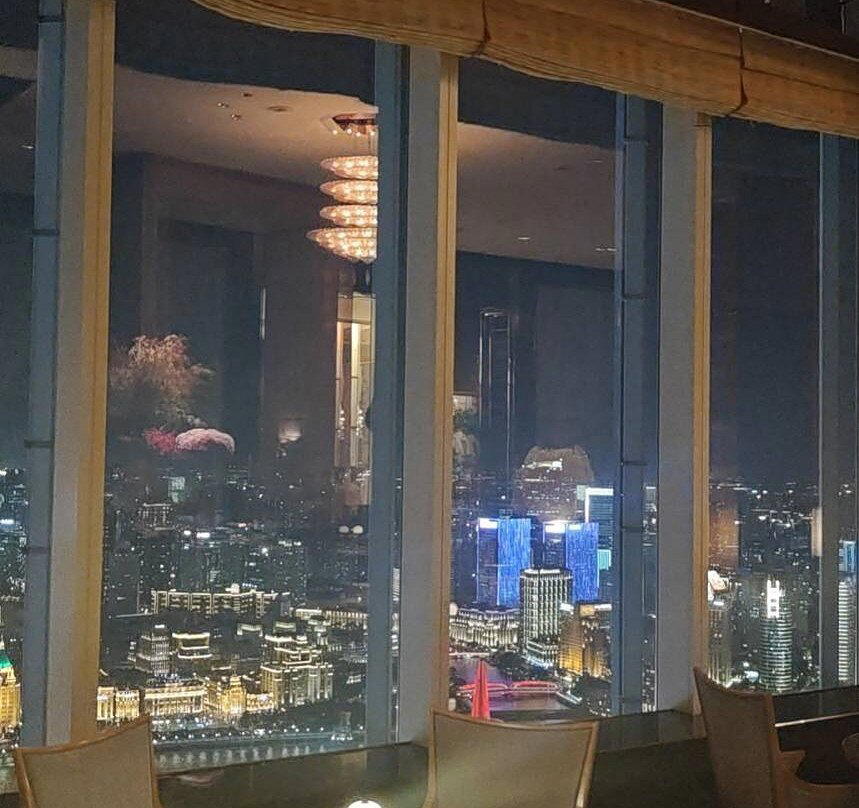
The fifth-floor position within W Shanghai The Bund places YEN in sightline of Pudong's skyline across the river, which shapes the room's baseline register before a single dish arrives. W as a brand runs toward high-contrast interiors, ambient sound levels above a murmur, and a crowd that splits between corporate expense-account lunches and hotel guests who want a Bund address without leaving the property. Evening service typically shifts the energy toward something more social than the midday crowd.
How does YEN (艳餐厅) compare to independent fine-dining restaurants along Shanghai's Bund corridor?
YEN operates within W Shanghai The Bund at 66 Lvshun Road, which places it in a distinct category from the city's independent fine-dining tier. Hotel restaurants in this bracket compete on access, address prestige, and consistent execution rather than on the chef-driven ambition that defines Shanghai's Michelin-tracked independents. For a visitor whose priority is a Bund sightline combined with the logistical ease of hotel dining, YEN answers that brief; those chasing the city's most progressive cooking will be looking elsewhere.
What do people recommend at W Shanghai The Bund - YEN (艳餐厅)?
What the venue's profile does indicate is a hotel-restaurant context at a Bund-corridor address, where the dining room's positioning and skyline access tend to be as discussed as the food itself. Checking current guest reviews on booking platforms will give the most accurate picture of what is resonating on the current menu.
Cuisine and Credentials
Comparable options at a glance, pulled from our tracked venues.
| Venue | Cuisine | Price | Awards | Notes |
|---|---|---|---|---|
| W Shanghai The Bund - YEN (艳餐厅)This venue (the venue you are viewing) | Contemporary Cantonese & Jiangnan | $50–100 | Not listed | Not listed |
| Fu He Hui | Modern Seasonal Vegetarian Fine Dining | $200–300 | 2 Michelin Stars · World's 50 Best #62 | Vegetarian |
| Ming Court | Cantonese with Shanghainese Influences | $30–50 | 1 Michelin Star · Black Pearl 1 Diamond | Cantonese |
| Polux | French Bistro | $30–50 | Michelin Bib Gourmand | French |
| Royal China Club | Cantonese Dim Sum | $100–150 | Michelin Plate · The Good Food Guide GFG Good | Chinese, Cantonese |
| Scarpetta | Refined Italian Pasta & Pizza | $50–100 | Michelin Plate · Wine Spectator Best of Award of Excellence | Italian |
Continue exploring
More in Shanghai
Restaurants in Shanghai
All restaurants in Shanghai →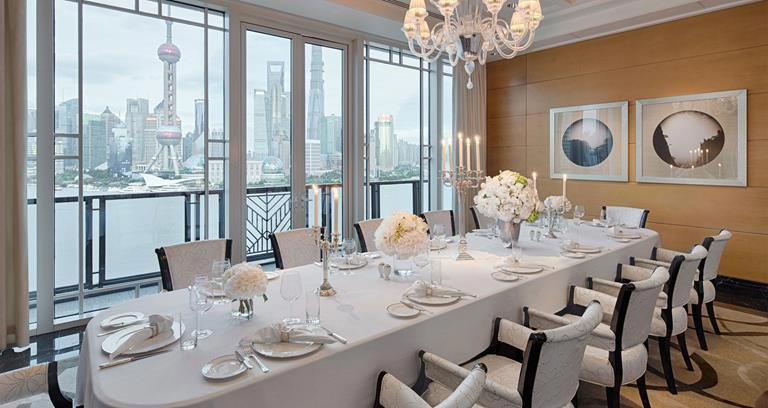
Bars in Shanghai
All bars in Shanghai →
Details
- Modern
- Elegant
- Sophisticated
- Business Dinner
- Special Occasion
- Group Dining
- Hotel Restaurant
- Private Dining
- Panoramic View
- Sake Program
- Waterfront
- Skyline
- A La Carte
- Buffet
- Craft Cocktails
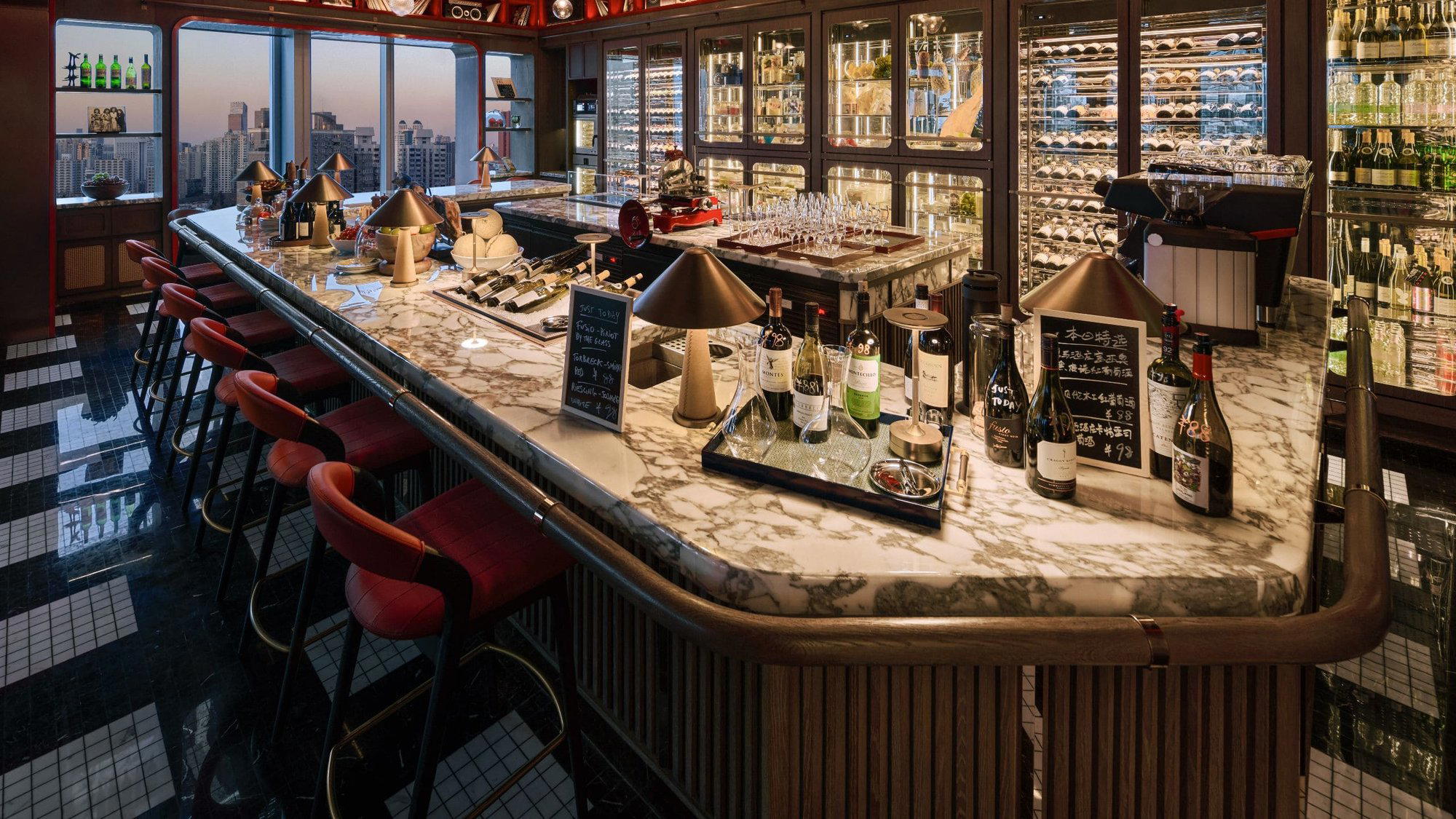
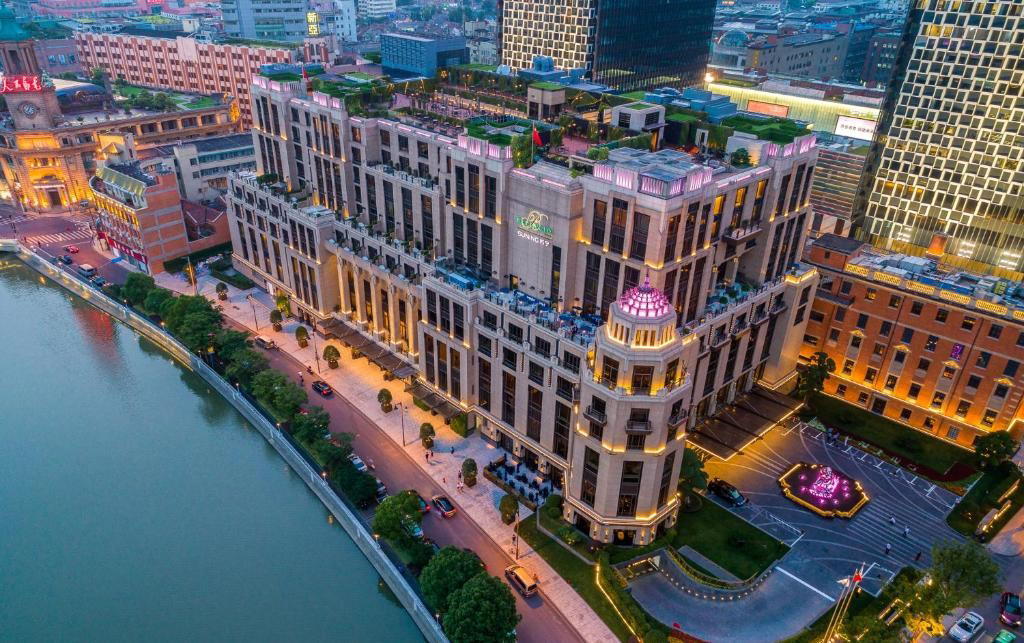
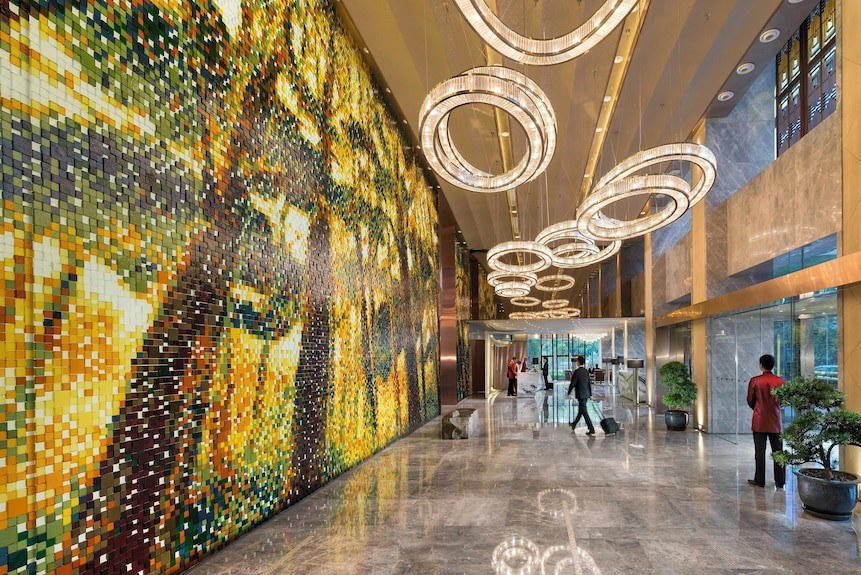
Bright, spacious dining room blending sophisticated Mandarin designs with playful contemporary twists and Huangpu River views.