Vita Pugliese
.png)
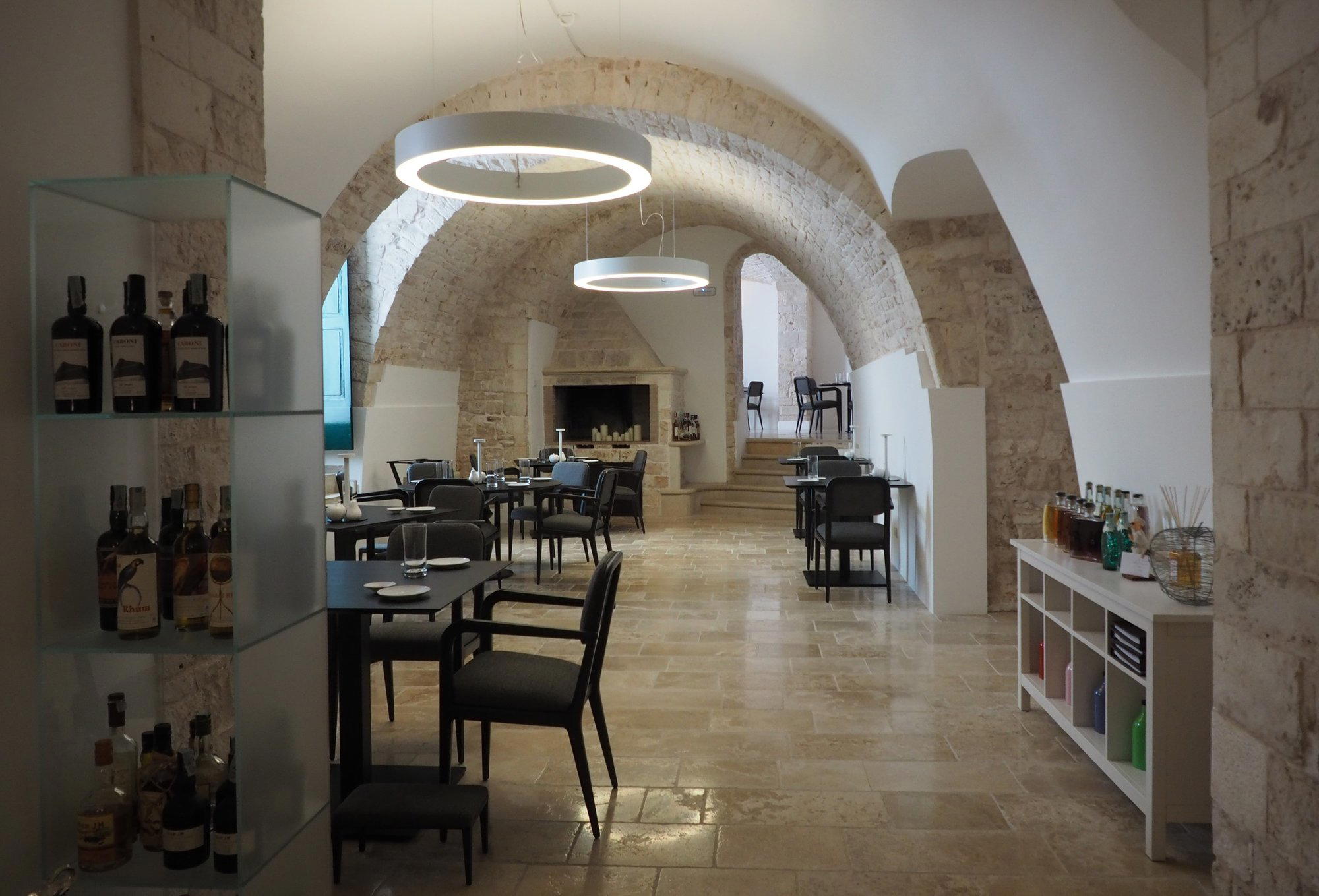
Vita Pugliese occupies a historic alleyway steps from Conversano's castle and cathedral, serving traditional Puglian dishes with occasional creative touches beneath barrel-vaulted ceilings. The combination of medieval setting and regional cooking grounded in local ingredients makes it a reference point for authentic cucina pugliese in the town's historic centre. Find it at Via Ospedale, 15.
Pearl is the En Primeur Club membership app — saves, bookings, and concierge access live there. Same editors, same standards.
- Address
- Via Ospedale, 15, 70014 Conversano BA, Italy
- Phone
- +39 080 495 6929
- Website
- vitapugliese.it
 Saves & bookings on Pearl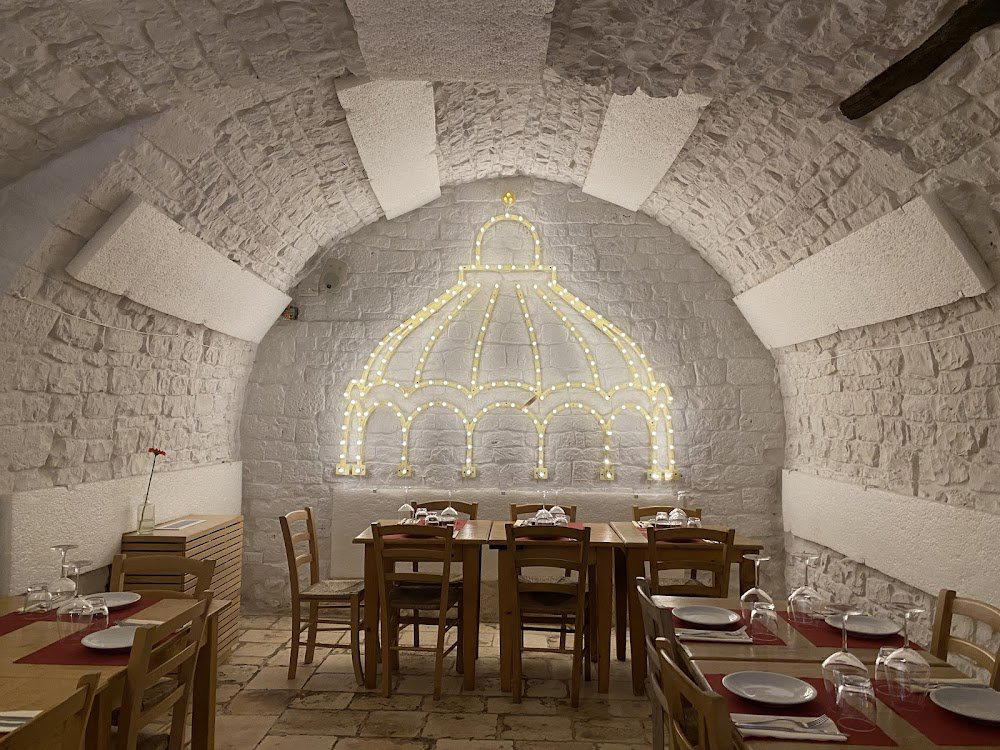
Stone, Arch, and the Logic of Puglian Cooking
Vita Pugliese is a restaurant in Conversano serving Modern Apulian cuisine. Via Ospedale runs through one of Conversano's quieter medieval lanes, close enough to the Norman castle and the cathedral that both frame the walk from the main piazza. The alleyway dining space, exposed stone, the particular hush of a narrow southern Italian street in the early evening, belongs to a category of outdoor terrace that Puglia does better than almost anywhere in Italy: not a garden annexed to a building, but a room that happens to have no ceiling. When the temperature drops, the interior barrel-vaulted dining rooms provide the same architectural logic in a warmer register. The vaulting is not decorative. In this part of Apulia, it is simply how buildings were made.
Puglian cooking is among the most coherent regional cuisines in the Italian south, shaped by a combination of geography, poverty economics, and an unusually deep agricultural identity. The Murge plateau, which Conversano sits on the edge of, produces durum wheat, olives, almonds, and the specific bitter greens, cicoria, cime di rapa, that anchor the cuisine. The coast is close enough that sea urchin, raw shellfish, and octopus appear regularly. What Puglia does not have, historically, is an elaborate court cooking tradition. The cuisine evolved from what the land and sea provided, not from what wealthy patrons demanded, and that gives it a directness that creative intervention has to earn its place around.
Tradition, Twist, and What Separates Them
Vita Pugliese positions itself within that tradition while introducing selective creative touches, a framing that carries different weight here than it might in, say, Milan or Florence. At the established end of Italy's restaurant hierarchy, places like Osteria Francescana in Modena or Enoteca Pinchiorri in Florence operate in a register where creative reinvention is the explicit project, supported by decades of technique and international recognition. At the other end, treatment of a regional cuisine as a fixed archive produces cooking that is technically competent but inert. The more interesting middle ground involves understanding why a dish exists, what ingredient logic, what seasonal constraint, what domestic ritual produced it, and then deciding, on those terms, where intervention adds rather than substitutes.
In Conversano, the comparison point is closer to home. Pashà, the other significant restaurant in the town's historic centre, works in a more explicitly contemporary Apulian register. Between the two, a visitor gets a reasonable picture of what serious engagement with this cuisine looks like at different points on the tradition-to-creativity axis. Neither approach is inherently superior; they answer different questions about what regional cooking is for.
What Puglian Cooking Actually Involves
For readers arriving from outside the region, it is worth being specific about what the cuisine contains. Those elements are real, Puglia produces around forty percent of Italy's olive oil, and the hand-rolled pasta tradition is genuinely distinct, but they sit inside a much wider repertoire. Fave e cicoria, the purée of dried broad beans paired with bitter wild chicory, is one of the defining dishes of the Murge interior: simple in construction, dependent entirely on ingredient quality and the calibration of bitterness against richness. Bombette, small rolls of pork wrapped around cheese or cured meat, are a Conversano and Valle d'Itria speciality, tied to the masseria butchery tradition. Taralli, the ring-shaped crackers flavoured with fennel seed or white wine, appear at the start of a meal as a matter of course.
On the seafood side, crudo di mare, raw shellfish and sea urchin dressed simply, reflects the proximity to the Adriatic and Ionian coasts. Tiella, the baked rice, potato, and mussel dish from Bari, is a coastal staple that moves inland in various forms. Pasticciotto, the short-crust pastry filled with custard, is the standard dessert of the Salento but appears across the region. The common thread is an economy of technique applied to specific local materials: the cuisine does not try to do more than its ingredients require, which is a different discipline from minimalism as an aesthetic choice.
Conversano as a Setting
Conversano's position in the wider Apulian travel circuit is slightly peripheral in the leading sense. Alberobello, with its trulli, draws the bulk of Valle d'Itria visitors; Ostuni commands the white-town market to the south; Bari handles arrivals as the regional transport hub. Conversano sits between these gravitational centres, accessible enough, around 30 kilometres southeast of Bari, but without the volume of tourism that flattens restaurant culture in more-visited towns. The historic centre, which contains both Vita Pugliese and the medieval castle complex, is compact and walkable.
Apulian wine has developed considerably over the past two decades. Primitivo di Manduria and Negroamaro, both historically used for blending to bolster wines elsewhere in Italy, are now bottled seriously under their own appellations. The shift toward local wine lists that reflect the same regional logic as the food is consistent with how Puglian restaurants at this level now operate. It is a reasonable expectation that the wine offering at a restaurant positioned around traditional Puglian cooking will reflect that local identity.
Planning a Visit
Vita Pugliese is located at Via Ospedale, 15, in Conversano's historic centre, a short walk from both the castle and the cathedral. The outdoor alleyway seating and the barrel-vaulted interior rooms operate as distinct environments, with the outdoor space more subject to seasonal availability. Conversano is warmest and driest from June through September, which aligns with the peak period for alfresco dining in the historic lanes. Booking in advance is advisable during summer months, when the town receives visitors using it as a base for the Valle d'Itria and the Adriatic coast. Reservations are recommended.
For a wider orientation to the town's eating and drinking options, see the Conversano restaurants guide. Those extending their itinerary across southern Italy can cross-reference with destinations like Quattro Passi in Marina del Cantone and Reale in Castel di Sangro for the broader spectrum of serious southern Italian cooking, or look north to Uliassi in Senigallia, Dal Pescatore in Runate, Le Calandre in Rubano, Piazza Duomo in Alba, Atelier Moessmer Norbert Niederkofler in Brunico, and Enrico Bartolini in Milan for a fuller picture of where Italy's regional cooking traditions are being taken at the higher end of the market. For points of international comparison, Le Bernardin in New York City and Atomix in New York City illustrate how different culinary traditions handle the tension between rigorous tradition and creative development. The Conversano experiences guide covers activities in and around the town for those spending more than a single evening.
Budget and Context
Comparable venues nearby, for context on price, style, and recognition.
| Venue | Cuisine | Price | Awards | Notes |
|---|---|---|---|---|
| Vita PuglieseThis venue — the venue you are viewing | historic centre, Modern Apulian | $$ | Michelin Plate | |
| Pashà | Conversano, Modern Puglian Fine Dining | $$$$ | Michelin 1 Star | |
| Ristorante da Cherubino | $$ | , | San Marco, Traditional Venetian Trattoria | |
| U' Vulesce | center, Puglian Seafood | $$ | Michelin Plate | |
| Luppolo & Farina | $$ | Latiano, Neapolitan Pizza with Regional Puglia Ingredients | ||
| Arso Trattoria Moderna | $$ | , | .null, Traditional Roman Trattoria |
Continue exploring
More in Conversano
Restaurants in Conversano
Browse all →
Bars in Conversano
Browse all →
At a Glance
- Cozy
- Elegant
- Rustic
- Intimate
- Romantic
- Date Night
- Special Occasion
- Family
- Open Kitchen
- Terrace
- Historic Building
- Natural Wine
- Extensive Wine List
- Local Sourcing
- Organic
- Street Scene
Warm, relaxing atmosphere with soft lighting in stone vaulted rooms and lively yet cozy alleyway outdoor seating.