On Polignano a Mare's main piazza, Super Mago del Gelo Mario Campanella has served generations of locals and visitors from one of the Adriatic coast's most recognisable town squares. The gelateria occupies a position where the social ritual of the evening passeggiata meets the craft tradition of artisan Italian gelato. For the full picture of drinking and eating in the area, see our full Polignano restaurants guide.
Pearl is the En Primeur Club membership app — saves, bookings, and concierge access live there. Same editors, same standards.
- Address
- P.zza Giuseppe Garibaldi, 22, 70044 Polignano a Mare BA, Italy
- Phone
- +39 080 424 0025
- Website
- ilsupermagodelgelo.it
- Directions
- Get directions
 Saves & bookings on Pearl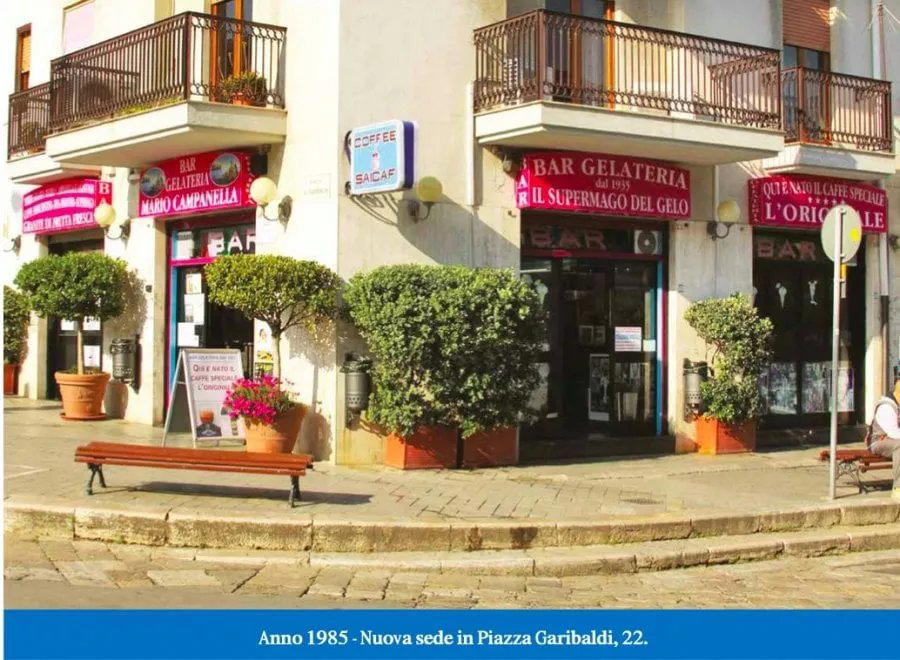
Piazza Garibaldi and the Art of the Italian Piazza Gelateria
In southern Italian towns, the piazza gelateria operates by rules distinct from those of the destination restaurant or the hotel bar. It is not a place you book, dress for, or arrive at with intent. You end up there, drawn by the evening light, the hum of conversation, and the logic of the passeggiata, that slow pedestrian circuit which remains among the more persistent social rituals in Puglia. Piazza Giuseppe Garibaldi in Polignano a Mare is precisely the kind of square that organises this ritual: wide enough for tables to sprawl, positioned at the town's civic heart, and flanked by the kind of facades that make the act of standing still feel deliberate. Super Mago del Gelo Mario Campanella sits within this frame, at number 22, as one of the square's established presences.
What the Gelateria Format Means on the Adriatic Coast
The artisan gelateria in a small Adriatic town occupies a different tier than the tourist-facing gelato bars of Florence or Rome. In Polignano, where the old town perches above limestone cliffs and the local identity runs on fishing, stone, and a fierce attachment to place, the gelateria tends to be a neighbourhood institution before it is anything else. The format is not about theatre or tasting menus. It is about consistency, seasonal rotation, and the accumulated trust of regulars who return weekly across decades. Super Mago del Gelo Mario Campanella operates within that tradition, in a square that draws both locals completing their evening circuit and visitors who have arrived in town via the coastal road from Bari, roughly 34 kilometres to the north.
The name itself carries a certain local bravado, the kind of self-styling common to southern Italian artisan producers who wear their craft as identity. “Il Mago del Gelo” translates loosely as “the wizard of ice” a designation that places technique and product at the centre of the proposition rather than ambience or concept.
Gelato as a Craft Tradition: Where Polignano Fits
Italy's artisan gelato scene has professionalised considerably over the past two decades, with formal competitions, regional guilds, and certification programmes creating a more structured hierarchy among producers. Well-regarded southern Italian gelaterie tend to emphasise local flavour profiles: almond from the Pugliese countryside, fichi d'india (prickly pear) from the rocky coastal terrain, fresh ricotta from local dairies, and seasonal stone fruit from the Valle d'Itria inland. These are not generic choices. They reflect a sourcing logic tied to what the surrounding agricultural zone actually produces, and they distinguish serious local operations from those using industrial bases.
Polignano a Mare itself is most closely associated in culinary terms with the local carota di Polignano, a heritage carrot variety grown in the sandy coastal soils nearby and awarded IGP protected status. While that ingredient appears more commonly in restaurant kitchens than in gelato counters, it signals the broader culture of localism that shapes food production across this stretch of the Murgia coastline. For visitors arriving from the north of Italy or from abroad, the shift in flavour reference points, from the hazelnut-and-cream registers of Piedmont to the drier, more intensely perfumed profiles of Puglia, is itself an editorial point worth noting.
The Piazza Experience: Timing and Approach
Arriving at Piazza Garibaldi in the late afternoon or early evening, before the dinner hour but after the heat of the day has broken, is the logic the square rewards. Tables fill from around six o'clock onward, and the rhythm shifts from daytime tourist traffic to the more deliberate pace of residents taking the air. The gelateria functions as a social anchor in this dynamic, a place where the transaction of buying gelato is almost secondary to the standing, talking, and watching that surrounds it. This is a spatial and cultural observation about how Italian piazza life works, not a claim about any particular queue or wait time, though summer weekends do draw sizeable crowds to Polignano's centre given the town's popularity as a day-trip destination from Bari and Brindisi.
For those building a broader itinerary of drinking and eating across southern Italy, the contrast between Polignano's piazza gelateria culture and the more structured cocktail programmes found in cities like Naples is worth holding in mind. L'Antiquario in Naples represents the kind of technical, archive-driven bar culture that has little overlap with the piazza format, and yet both sit within the same southern Italian hospitality tradition. Similarly, the craft-beverage scene documented at Fauno Bar in Sorrento shows how coastal Campania has developed a slightly different register of outdoor drinking culture, one oriented more toward the aperitivo than the gelato circuit. Further afield, the northern Italian bar programme at Bistrot Torrefazione Samambaia Torino in Turin illustrates how differently the evening ritual is constructed once you cross into Piedmont.
Across Italy more broadly, the range of drinking and eating formats worth tracking includes the technically ambitious cocktail bars of Milan such as 1930 in Milan, the wine-focused rooms documented at Enoteca Historical Faccioli in Bologna, and the design-led programmes at Gucci Giardino in Florence. In Venice, Al Covino sits at the quieter, wine-bar end of the spectrum. Outside Italy, Drink Kong in Rome represents the more internationally oriented cocktail bar format that has gained considerable recognition in recent years. Lost and Found in Nicosia and Bar Leather Apron in Honolulu offer useful comparative reference points for how small-scale craft programmes develop outside Europe. Further south along the Italian coast, Cascate del Mulino in Manciano rounds out the picture of regional Italian hospitality in less-trafficked towns.
Planning a Visit
Super Mago del Gelo Mario Campanella is located at Piazza Giuseppe Garibaldi 22 in Polignano a Mare, Bari province. Polignano is accessible by train on the Adriatic coastal line, with regular services from Bari Centrale taking approximately 30 to 35 minutes. The piazza sits a short walk from the main train station and from the old town's cliff-edge lookout points. No booking is required, and the counter is walk-in friendly. The gelateria is open daily from 6 AM, staying open until 2:30 AM on most days and until 4 AM on Saturdays; visiting outside peak summer reduces crowds considerably while the piazza retains its character.
How It Stacks Up
Comparable venues nearby, for context on price, style, and recognition.
| Venue | Cuisine | Price | Notes |
|---|---|---|---|
| The Super Mago del Gelo Mario CampanellaThis venue — the venue you are viewing | Bar | $ | Not listed |
| Cubi | cocktail_bar | $$ | Centro |
| Caffè Alvino | Bar | $$ | Piazza Sant'Oronzo |
| Bar Avio | wine_bar | $$ | Trepuzzi |
Continue exploring
More in Polignano
Bars in Polignano
Browse all →
Restaurants in Polignano
Browse all →
At a Glance
- Classic
- Well Known
- Cozy
- Casual Hangout
- Late Night
- Historic Building
- Standalone
- Seated Bar
- Counter Only
- Classic Cocktails
Current opening hours
- Monday
- 6 AM–2:30 AM
- Tuesday
- 6 AM–2:30 AM
- Wednesday
- 6 AM–2:30 AM
- Thursday
- 6 AM–2:30 AM
- Friday
- 6 AM–2:30 AM
- Saturday
- 6 AM–4 AM
- Sunday
- 6 AM–2:30 AM
Hours can change for holidays and private events. Last verified .
Classic, nostalgic atmosphere with photos of celebrity patrons on the walls and a timeless local vibe.