Vino sits on Raatihuoneenkatu in central Mikkeli, occupying the kind of address that signals deliberate placement rather than accident. In a city where serious dining options are spread thin, a wine-forward restaurant on the old town's main civic street carries a particular weight. For visitors working through Finland's smaller cities, it belongs in the same regional conversation as Figaro in Jyväskylä or Vintti in Hämeenlinna.
Pearl is the En Primeur Club membership app — saves, bookings, and concierge access live there. Same editors, same standards.
- Address
- Raatihuoneenkatu 14, 50100 Mikkeli, Finland
- Phone
- +358447213871
- Website
- ravintolavino.fi
- Directions
- Get directions
 Saves & bookings on Pearl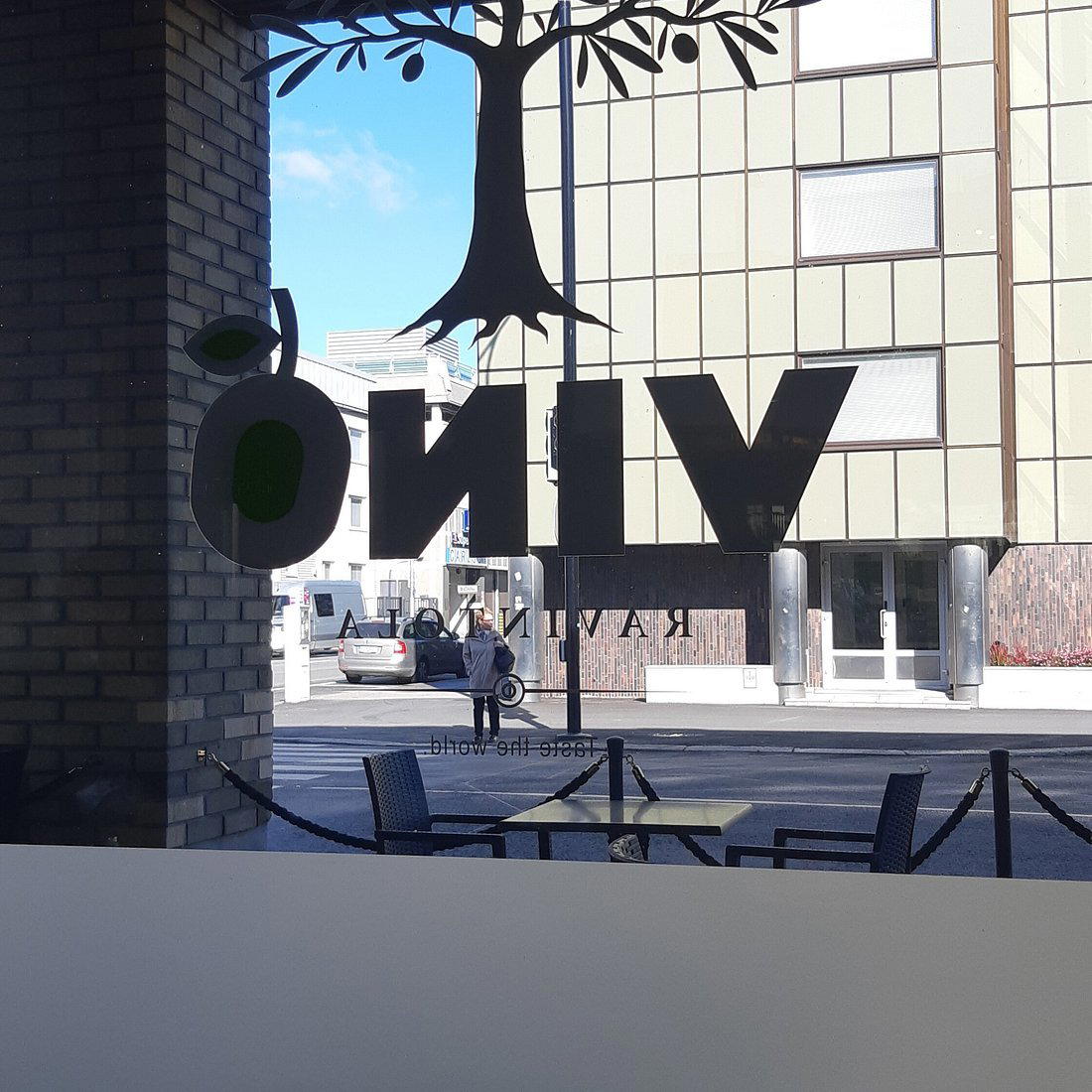
A Street That Sets Expectations
Raatihuoneenkatu, the street of the town hall, runs through the civic core of Mikkeli, a city of roughly 50,000 in the South Savo region of Finland. Addresses on this stretch tend to be deliberate: law offices, civic institutions, and the occasional restaurant that has decided its surroundings matter. Vino, at number 14, sits in that last category. Before you reach the door, the street itself communicates something about the register of the room: this is not a casual lakeside grill or a chain lunch spot. The physical setting primes you for a certain kind of meal, and in a city where ambitious dining is not distributed evenly, that framing is meaningful.
South Savo is lake country. The region around Mikkeli is defined by the Saimaa lake system, one of the largest freshwater bodies in Europe, and by forests that in autumn produce serious quantities of wild mushrooms, berries, and game. Finnish cuisine in this part of the country has historically leaned on those materials: pike-perch and vendace from the lakes, elk and deer from surrounding forests, and a root-vegetable culture that reflects long winters and short growing seasons. A restaurant operating under the name Vino, with its explicit wine reference, is making a statement about how it intends to sit relative to that tradition: not as a folk-cooking house but as a place where provenance and pairing share equal billing.
The Sourcing Question in Finnish Provincial Dining
In Finnish cities outside Helsinki and Turku, the ingredient sourcing conversation tends to be more direct than in the capital. At a place like Kaskis in Turku or VÅR in Porvoo, sourcing narratives are layered into menus with considerable sophistication. In Mikkeli, the question is blunter: where does the fish actually come from, and how close is the farm? The Saimaa region answers that question with some force. Freshwater fish pulled from local waters, foraged ingredients from surrounding forests, and dairy from South Savo farms represent a supply chain that is, in geographic terms, extremely short. Restaurants in this region that choose to honour that proximity rather than import more photogenic ingredients from elsewhere are making a considered culinary argument.
The broader pattern across Finnish provincial dining, visible in restaurants like Figaro in Jyväskylä, Juurella in Seinäjoki, or Hejm in Vaasa, is that particularly interesting rooms have stopped competing with Helsinki on Helsinki's terms. Instead, they have committed to place: to what the land and water immediately around them actually produce, and to finding cooking frameworks that make that produce legible to a diner who might arrive with expectations shaped by the capital's tasting-menu culture. This is the space Vino appears to occupy in Mikkeli.
Wine in a Beer-and-Spirits Market
The name Vino is a declaration of intent in a country where wine culture has historically been compressed by state retail monopoly and high import taxes. Alko's monopoly on alcohol sales above 5.5% ABV means that wine in Finland reaches consumers through a different channel than in most of Europe, and restaurant wine programs are consequently one of the few places where curation and depth are visible to the diner. A restaurant in a provincial Finnish city that foregrounds wine is positioning itself at the more considered end of the dining market, and it is implicitly competing less with local pubs and more with the wine-program ambitions of places like Bistro Henriks in Tampere or Filipof in Joensuu.
At the highest tier of Finnish dining, wine is treated as integral architecture rather than ancillary service. Palace in Helsinki operates at the level where the sommelier program is as much a signal of seriousness as the kitchen's Michelin recognition. Mikkeli is not Helsinki, and Vino is not Palace, but the precedent matters. It establishes that wine-forward restaurants can be serious and regionally grounded at the same time.
Mikkeli as a Dining City
South Savo's capital is not a destination city in the way that Mikkeli's dining scene is sometimes framed for visitors. It draws regional traffic, summer lake tourism, and some business travel, it was the location of the Finnish Defence Forces' headquarters during the Winter War, which gives it a particular place in national memory, but it does not have the culinary density of Tampere or Turku. What it does have is a catchment of serious local diners who expect a certain standard from the city's better restaurants, and an ingredient environment that, seasonally, is genuinely rich.
The comparison set within Finland's mid-tier cities is instructive. Vintti in Hämeenlinna and Gösta in Mänttä both operate in cities of comparable size and face similar pressures: serving a local market that wants quality without always wanting Helsinki prices, while maintaining enough ambition to attract visitors making a point of the detour. Vino sits in that same tier, on a street that signals seriousness, in a region whose larder, if used well, justifies the effort of the journey. For those coming from further afield in Finland, the comparison with Laanilan Kievari in Saariselkä or Aurora Sky Restaurant in Sirkka illustrates how geography shapes the dining proposition: Mikkeli's answer is lakes and forests, not arctic spectacle.
Planning a Visit
Raatihuoneenkatu 14 is walkable from Mikkeli's train station, which sits roughly ten minutes on foot from the city centre. Mikkeli is served by regular rail connections from Helsinki, with journey times around two hours depending on the service. The city's dining options are concentrated in the compact centre, which makes it practical to combine Vino with other stops in a single evening. Reservations are recommended, especially during summer when lake-tourism traffic increases. Seasonal timing matters here: South Savo's wild-ingredient season peaks in late summer and early autumn, when the forest larder is at its fullest and the region's sourcing advantages are most evident on a plate.
Side-by-Side Snapshot
Comparable venues nearby, for context on price, style, and recognition.
| Venue | Cuisine | Price | Notes |
|---|---|---|---|
| VinoThis venue — the venue you are viewing | Mediterranean & European | $$ | Not listed |
| Gastro Cafe Kallio | Modern Scandinavian Gastro Cafe | $$ | Torkkelinmaki |
| Oven | Nepalese | $$ | Kruununhaka |
| Runar | Craft Cocktail Bar | $$ | Kaartinkaupunki |
| Restaurant Quartier | Nordic Bistro | $$ | Ullanlinna |
| Paulette | French Brasserie with Nordic Influences | $$ | Ullanlinna |
At a Glance
- Cozy
- Classic
- Intimate
- Family
- Group Dining
- Casual Hangout
- Business Dinner
- Standalone
- Beer Program
- Local Sourcing
Current opening hours
- Monday
- 10:30 AM–2 PM
- Tuesday
- 10:30 AM–2 PM
- Wednesday
- 10:30 AM–2 PM
- Thursday
- 10:30 AM–2 PM
- Friday
- 10:30 AM–2 PM, 5–10 PM
- Saturday
- 4–10 PM
- Sunday
- Closed
Hours can change for holidays and private events. Last verified .
Relaxed and cozy atmosphere with friendly, welcoming service; tidy and well-maintained interior.