Our verdict
Hejm sits at Sininen tie 1 B in Vaasa, a Finnish coastal city where Swedish-speaking culture and proximity to the Bothnian archipelago have historically shaped what ends up on the plate. The restaurant occupies a position in a dining scene that has grown more confident about local sourcing and Nordic technique without chasing Helsinki-level recognition. For visitors approaching Vaasa from outside Finland, it represents a practical anchor point into the city's quieter, more considered food culture.

Pearl is the En Primeur Club membership app, where members save venues, book tables and use the concierge.
The menu
What to order
- Pikeperch
- Arctic char
- Chocolate mousse
Where Coastal Vaasa Meets the Table
Vaasa sits on Finland's west coast facing the Gulf of Bothnia, a bilingual city where Finnish and Swedish cultural currents have run alongside each other for centuries. That dual identity has always shaped the local food character: archipelago fishing traditions, Swedish-influenced preservation methods, and a growing interest in the agricultural inland that stretches east toward Ostrobothnia. The city's restaurant scene is smaller and less internationally documented than Helsinki or Turku, but that relative quietness has allowed a handful of addresses to develop without the pressure of external expectation. Hejm, located at Sininen tie 1 B, sits within that context.
The name itself signals the direction before anything else arrives at the table. In Swedish, hem means home, and the spelling variant Hejm carries that domestic implication into something slightly more considered, a word that feels handmade rather than institutional. In Finnish coastal cities with a strong Swedish-speaking population, that kind of naming choice is not incidental. It positions the restaurant inside a particular cultural conversation about belonging and locality that runs deeper than menu language.
The Sourcing Logic of the Bothnian Coast
The editorial frame that matters most for understanding what Vaasa's better restaurants are doing is sourcing geography. The Bothnian archipelago to the west produces perch, pike-perch, whitefish, and Baltic herring across different seasons. The flatlands of Ostrobothnia to the east and north are among Finland's most productive agricultural zones, known for root vegetables, dairy, and grain. A restaurant at the intersection of these two supply corridors, as Hejm's address places it, has access to a larder that is genuinely distinct from what Helsinki kitchens pull from.
This matters because the broader shift in Finnish fine dining over the past decade has moved away from imported luxury references toward hyper-local specificity. Kaskis in Turku has built its reputation on exactly this approach, using southwestern Finnish producers with the same care that Burgundy kitchens apply to named-village sourcing. Palace in Helsinki operates at the apex of Finnish modern cuisine with a different kind of institutional weight. VÅR in Porvoo makes a case for historic river-town produce. Each of these addresses frames its identity through what the surrounding geography provides. Hejm's position in Vaasa asks a similar question: what does this specific stretch of Finnish coastline taste like when treated seriously?
Across the broader Nordic region, the most instructive recent movement has been the rejection of generic Scandinavian signifiers in favour of sub-regional specificity. The archipelago herring prepared one way in Turku is not the same as the herring traditions of the Vaasa coast. Pike-perch from the Ostrobothnian lakes carries a different character from the same species pulled from southern Finnish waters.
Vaasa's Dining Position in the Finnish Hierarchy
Finland's gastronomic recognition has historically concentrated in the capital and a handful of other cities. The Michelin Guide's Finnish coverage, while expanding, remains Helsinki-weighted. Cities like Tampere, Turku, and Kuopio have produced addresses that hold their own against the capital's mid-tier, as demonstrated by Bistro Henriks in Tampere and Musta Lammas in Kuopio. Vaasa is smaller and receives less food-media attention, which means its better restaurants operate with less external validation but also less external pressure to perform for visiting critics.
That condition produces a particular kind of cooking when it works well: food directed at a local audience that knows the producers, understands the seasons, and returns regularly rather than arriving once as a destination diner. Compare this to what happens in larger cities, where restaurants increasingly calibrate their experience toward international visitors or guide inspectors. The same pattern appears in other smaller Finnish cities: Filipof in Joensuu, Figaro in Jyväskylä, and Popot in Lahti each function within city-specific contexts rather than against a national benchmark. Hejm belongs to that cohort.
For international reference, the gap between Helsinki's upper tier and a Vaasa mid-tier address is roughly analogous to the distance between Le Bernardin in New York City and a serious regional American restaurant: the ambition and technique may overlap in places, but the operating context, competitive pressure, and guest expectations differ substantially. Atomix in New York City represents an entirely different tier of investment and global positioning. Placing Hejm against those references is not the useful exercise; placing it against other committed regional Finnish addresses is.
Planning a Visit
Vaasa is accessible by train from Helsinki, with journey times typically around three to four hours depending on the service, and by domestic flights to Vaasa Airport which connects regularly to Helsinki-Vantaa. The city is compact enough that Sininen tie 1 B is reachable from the centre on foot or by a short taxi ride. Given the limited publicly available data on Hejm's current hours, pricing, and booking method, contacting the restaurant directly before arrival is the practical approach. Vaasa's dining scene is concentrated enough that an evening at Hejm could anchor a short itinerary that also covers the city's waterfront and the Kvarken Archipelago, a UNESCO World Heritage area just offshore. For a broader orientation to what the city's restaurants offer, our full Vaasa restaurants guide covers the range. Those extending a Finnish west coast trip might also consider Viinitupa Vuorenmaja in Mänttä or further north, Aurora Restaurant in Luosto, Hai Long in Rovaniemi, Restaurant Solitary in Rantasalmi, Paakari in Kangasala, Vino in Mikkeli, and Lucy in the Sky in Espoo as part of a wider Finnish circuit.
Frequently asked questions
Is Hejm child-friendly?
Hejm's address on Sininen tie in central Vaasa places it in a city known for a relaxed, community-oriented atmosphere rather than a strictly formal dining scene.
What kind of setting is Hejm?
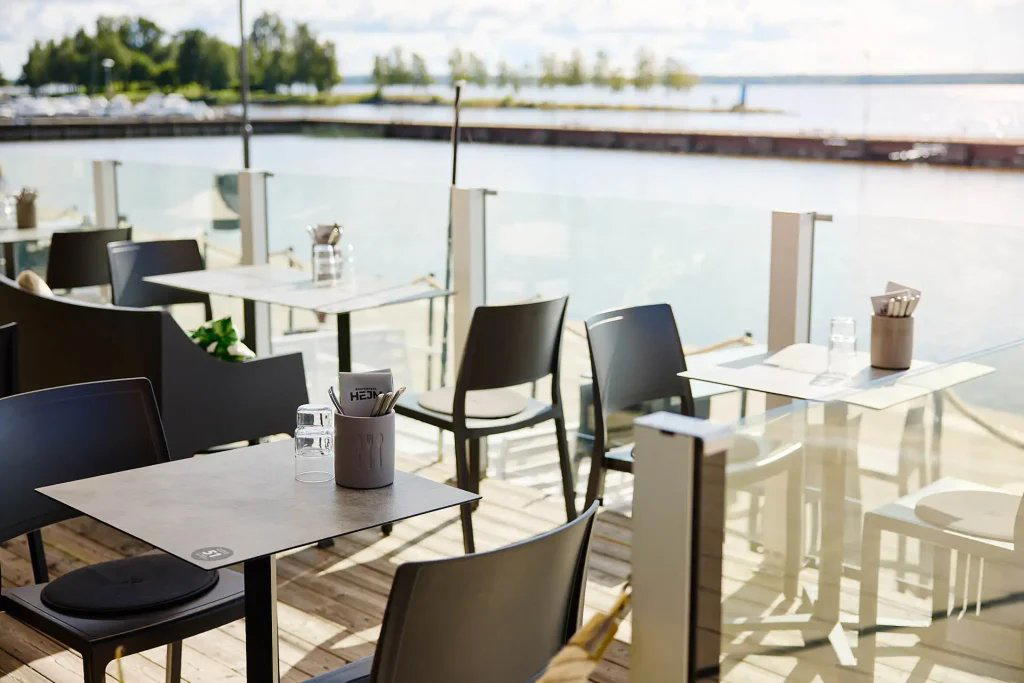
Hejm sits at Sininen tie 1 B in Vaasa, a bilingual Finnish-Swedish city on the Gulf of Bothnia's western coast. The name itself, hejm is a Swedish-dialect inflection of 'home', signals an intention toward warmth and familiarity rather than formality.
Is Hejm a good option for dining in Vaasa if you're arriving by train from Helsinki?
Vaasa is reachable from Helsinki by train in roughly three to four hours, making it a practical destination for an overnight or extended visit. Hejm's location on Sininen tie 1 B places it within Vaasa's urban core, accessible from the city's main transport connections.
What's the best thing to order at Hejm?
What shapes the plate logic at Vaasa's better restaurants is proximity to the Bothnian archipelago, fish, coastal produce, and seasonal ingredients from the surrounding region tend to define what kitchens here do well. Checking directly with Hejm for current offerings is the most reliable route.
How It Stacks Up
Comparable venues nearby, for context on price, style, and recognition.
| Venue | Cuisine | Price | Notes |
|---|---|---|---|
| HejmThis venue (the venue you are viewing) | Modern Scandinavian | $20–30 | Not listed |
| Laanilan Kievari | Scandinavian Lappish with French influences | $50–100 | Saariselka |
| E. Ekblom | Modern Finnish Bistro | $30–50 | Central Turku |
| Apaja | Seasonal Scandinavian Fine Dining | $50–100 | Tammela |
| Aurora Sky Restaurant | Refined Nordic Cuisine | $100–150 | Levi |
| JJ's BBQ | American BBQ | $20–30 | Salo |
Details
- Cozy
- Modern
- Scenic
- Elegant
- Date Night
- Business Dinner
- Open Kitchen
- Terrace
- Waterfront
- Local Sourcing
- Waterfront
- A La Carte
- Vegetarian Friendly
- Vegan Options
Current opening hours
- Monday
- 11 AM–3 PM, 4–11 PM
- Tuesday
- 11 AM–3 PM, 4–11 PM
- Wednesday
- 11 AM–3 PM, 4–11 PM
- Thursday
- 11 AM–3 PM, 4–11 PM
- Friday
- 11 AM–3 PM, 4–11 PM
- Saturday
- 12–2:30 PM, 4–11 PM
- Sunday
- Closed
Hours can change for holidays and private events. Hours as of .
Cozy and relaxed atmosphere with abundant natural sunlight, huge windows offering waterfront views, and a pleasant, professional vibe.