Our verdict
Gösta sits at Joenniementie 47 in Mänttä, a small Finnish town more associated with art museums than restaurant destinations. The address places it within one of Finland's most quietly compelling cultural pockets, where serious dining has begun to follow serious cultural infrastructure. For visitors making the journey from Tampere or beyond, it represents the kind of table that rewards the detour.

Pearl is the En Primeur Club membership app, where members save venues, book tables and use the concierge.
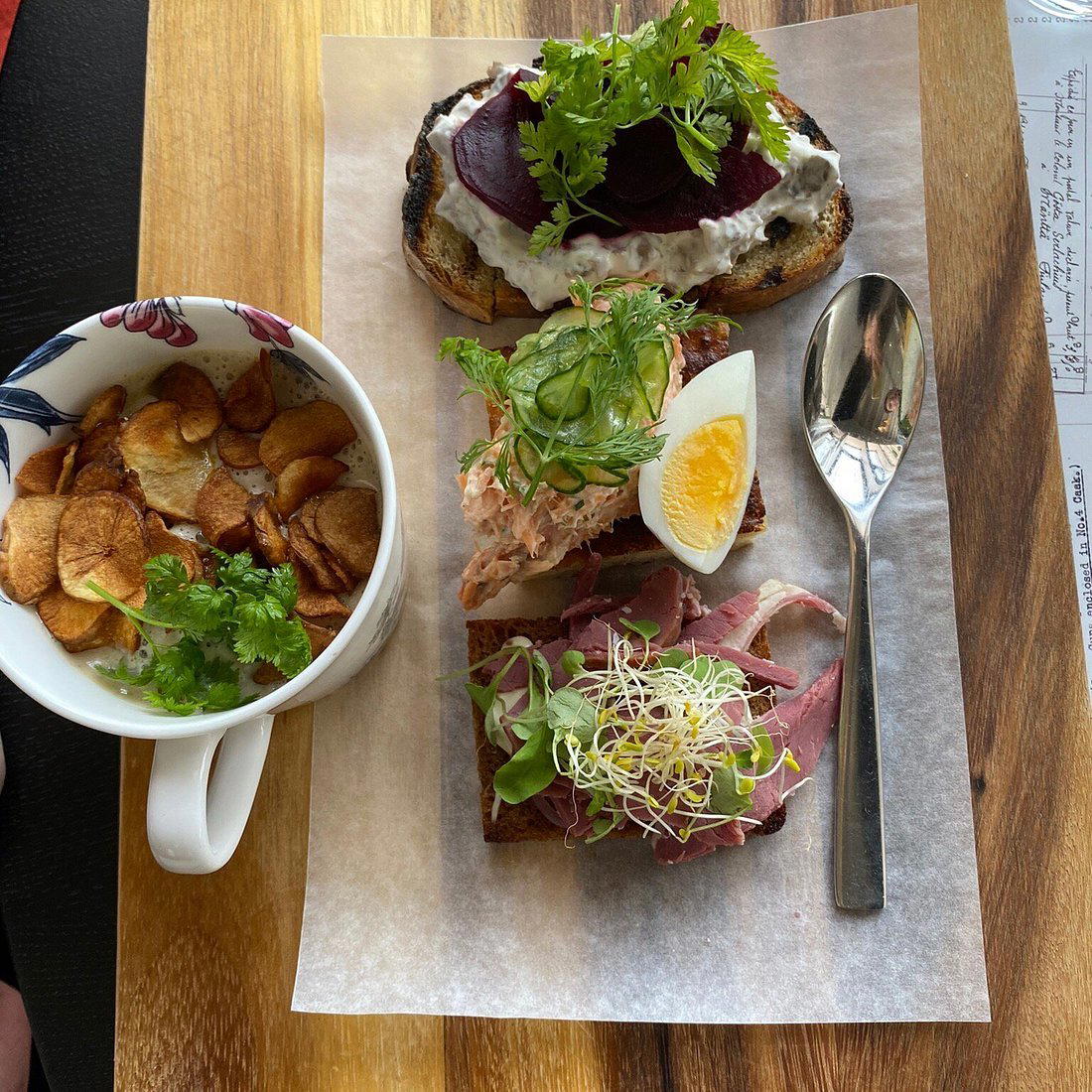
A Small Town With a Specific Kind of Seriousness
Finland's most interesting dining is no longer exclusively a Helsinki story. Over the past decade, the pattern has shifted: serious kitchens have followed cultural investment into smaller cities, and Mänttä is a clear case study. The town built its reputation on Serlachius Museums, one of Scandinavia's most significant private art collections housed in a setting that draws visitors from across the Nordic region. Where cultural infrastructure reaches a certain density, restaurants tend to follow, not tourist-facing brasseries, but places that reflect the sensibility of the audience already arriving. Gösta occupies that position in Mänttä's emerging dining picture.
The address, Joenniementie 47, places the restaurant in direct proximity to that cultural gravity. Visitors who have spent an afternoon inside the Gösta Serlachius Museum's extended wing, with its lakeside setting and contemporary acquisitions, are already primed for considered, unhurried experiences. That context shapes the kind of dining room Gösta operates as, and it shapes the kind of guest who arrives at the table.
Ingredient Sourcing and the Finnish Larder
Finnish cuisine's identity is built, more than most European traditions, on geography rather than technique. The country's short growing season, extensive forest coverage, and access to clean-water lakes and coastal fisheries produce ingredients with a specificity that resists substitution. Wild mushrooms, freshwater perch, pike, vendace roe, cloudberries, lingonberries, and root vegetables harvested from the inland regions carry a seasonal logic that any serious Finnish kitchen must either engage with honestly or work around. Kitchens that try to import their way into Nordic credibility tend to be visible as such within a few bites.
The Mänttä region sits within the Pirkanmaa district, close enough to the Tarjannevesi and Vatiharju lake systems that local sourcing of freshwater fish is a practical reality rather than a marketing position. Regional producers, small farms, foragers, and lake fisheries operating on short supply chains, feed into the kind of menu architecture that kitchens in this part of Finland tend to construct around seasonal availability rather than year-round consistency. This is a different discipline than what drives destination kitchens in Helsinki, where imported product and controlled-environment sourcing can buffer against seasonality. In a town like Mänttä, you eat what the region is currently offering, and that constraint tends to produce menus with a specific seasonal honesty.
For the broader context of how Finnish kitchens handle this sourcing discipline, the comparison set is instructive. Kaskis in Turku has built a reputation on exactly this regional-ingredients-first approach, operating at the €€€€ tier with a tasting menu that tracks Finnish seasons closely. Palace in Helsinki applies similar principles at the highest price point in the country's dining hierarchy. VÅR in Porvoo works the same logic in another small-city context. What unites these kitchens is a sourcing commitment that the menu makes visible rather than abstract.
Mänttä as a Dining Destination
Small-city dining in Finland has its own logic. Unlike Helsinki, where a visitor has fifteen alternatives within walking distance if a first choice disappoints, Mänttä requires a level of commitment from the traveller. You make a reservation before you make the journey, not the other way around. That pre-commitment dynamic tends to attract a more engaged diner, and it tends to motivate kitchens differently than high-turnover urban locations.
The drive from Tampere covers roughly 90 kilometres north, passing through the kind of Finnish inland scenery, birch and pine, lake glimpses, long straight roads, that functions as its own form of sensory preparation. Visitors arriving from Tampere might also consider Bistro Henriks in Tampere as a comparison point for the region's wider dining conversation. Further afield in the Finnish network, Figaro in Jyväskylä operates a similar small-city fine dining format, and Vino in Mikkeli offers another data point for how serious kitchens are functioning in non-capital Finnish cities.
Locally, Viinitupa Vuorenmaja represents the other side of Mänttä's restaurant offer, a useful cross-reference for visitors building a fuller picture of what the town's dining scene provides across different formats and price points. The our full Mänttä restaurants guide maps that picture in detail.
Placing Gösta in the Finnish Fine Dining Conversation
The Finnish fine dining tier has internationalised its reference points while remaining committed to local product. Kitchens like Hejm in Vaasa and Vintti in Hämeenlinna demonstrate that this combination of international technique and regional sourcing is now operating reliably outside the capital. Mikko Utter in Lohja and Filipof in Joensuu extend the same pattern further across the map.
For travellers who have followed the Nordic dining story more broadly, the reference points are not exclusively Finnish. The sourcing discipline that defines kitchens in this tier shares DNA with what drives tasting-menu formats at the highest level internationally. Le Bernardin in New York City built its reputation on a different ingredient category, oceanic fish, but the same principle applies: when sourcing is specific and traceable, technique exists to express the ingredient rather than override it. Atomix in New York City operates a comparable philosophy through a Korean lens. These comparisons clarify the category that serious Nordic kitchens are competing in, even when located 300 kilometres from their country's main airport.
For travellers venturing further into Finland's less-expected dining pockets, Hai Long in Rovaniemi, Laanilan Kievari in Saariselkä, and Aurora Sky Restaurant in Sirkka illustrate how far Finland's restaurant geography now extends beyond the south. JJ's BBQ in Salo represents yet another regional format, further evidence that Finnish dining has diversified well beyond its capital anchor.
Planning the Visit
Mänttä is not a destination you stumble into. The practical shape of a visit requires thought: the Serlachius Museums complex justifies a full day, which makes a dinner reservation at Gösta a natural conclusion to that itinerary rather than an afterthought. Visitors travelling by car from Tampere have the most flexibility; public transport options to Mänttä are limited, and the town's scale means a car is useful for moving between the museum campus and the restaurant. Booking ahead is the only sensible approach for a kitchen in this location, where walk-in capacity is almost certainly not the operating model.
Frequently asked questions
Is Gösta good for families?
Gösta is positioned within the Serlachius Museums complex in Mänttä, a setting that draws culturally engaged visitors of all ages. The restaurant's fine dining orientation suits adults and older children comfortable with a considered pace. Families visiting the museums will find the location convenient, though the experience is calibrated toward a deliberate, unhurried meal rather than a casual family stop.
What should I expect atmosphere-wise at Gösta?
Gösta sits at Joenniementie 47 in Mänttä-Vilppula, a small Finnish town whose dining scene operates on a different register than Helsinki: fewer alternatives, higher stakes per visit. The setting within the Serlachius complex gives the room a cultural weight that most standalone restaurants cannot replicate. Expect a measured, quiet seriousness rather than the ambient noise of a city dining room.
Is Gösta worth the journey to Mänttä from Helsinki?
Mänttä is roughly 270 kilometres north of Helsinki, a drive that requires planning rather than impulse. The Serlachius Museums alone justify the trip for many visitors, and Gösta adds a dining anchor that makes a full overnight stay coherent. In Finnish fine dining terms, kitchens outside Helsinki, from Vaasa to now Mänttä, have demonstrated that geography is no longer a ceiling on ambition.
What do people recommend at Gösta?
What the restaurant's context makes clear is that Finnish fine dining at this level prioritises seasonal, locally sourced ingredients shaped by the country's short growing season and forested terrain. Visiting with an open approach to a set or chef-led format is consistent with how serious Finnish kitchens typically operate.
Comparison Snapshot
Comparable venues nearby, for context on price, style, and recognition.
| Venue | Cuisine | Price | Awards | Notes |
|---|---|---|---|---|
| GöstaThis venue (the venue you are viewing) | Art-Inspired Scandinavian Fine Dining | $50–100 | Not listed | Not listed |
| Viinitupa Vuorenmaja | Central European Wine Tavern | $20–30 | Star Wine List | Mäntänvuori |
| Ravinteli Bertha | Modern European Bistro | $50–100 | Not listed | Kyttälä |
| Bistro Eloisa | Modern European Bistro | Not listed | Not listed | Pantti building, city centre area |
| Laanilan Kievari | Scandinavian Lappish with French influences | $50–100 | Not listed | Saariselka |
| Way Herttoniemi | Modern Finnish Bakery Café | $20–30 | Not listed | Lansi-Herttoniemi |
Continue exploring
More in Mänttä
Restaurants in Mänttä
All restaurants in Mänttä →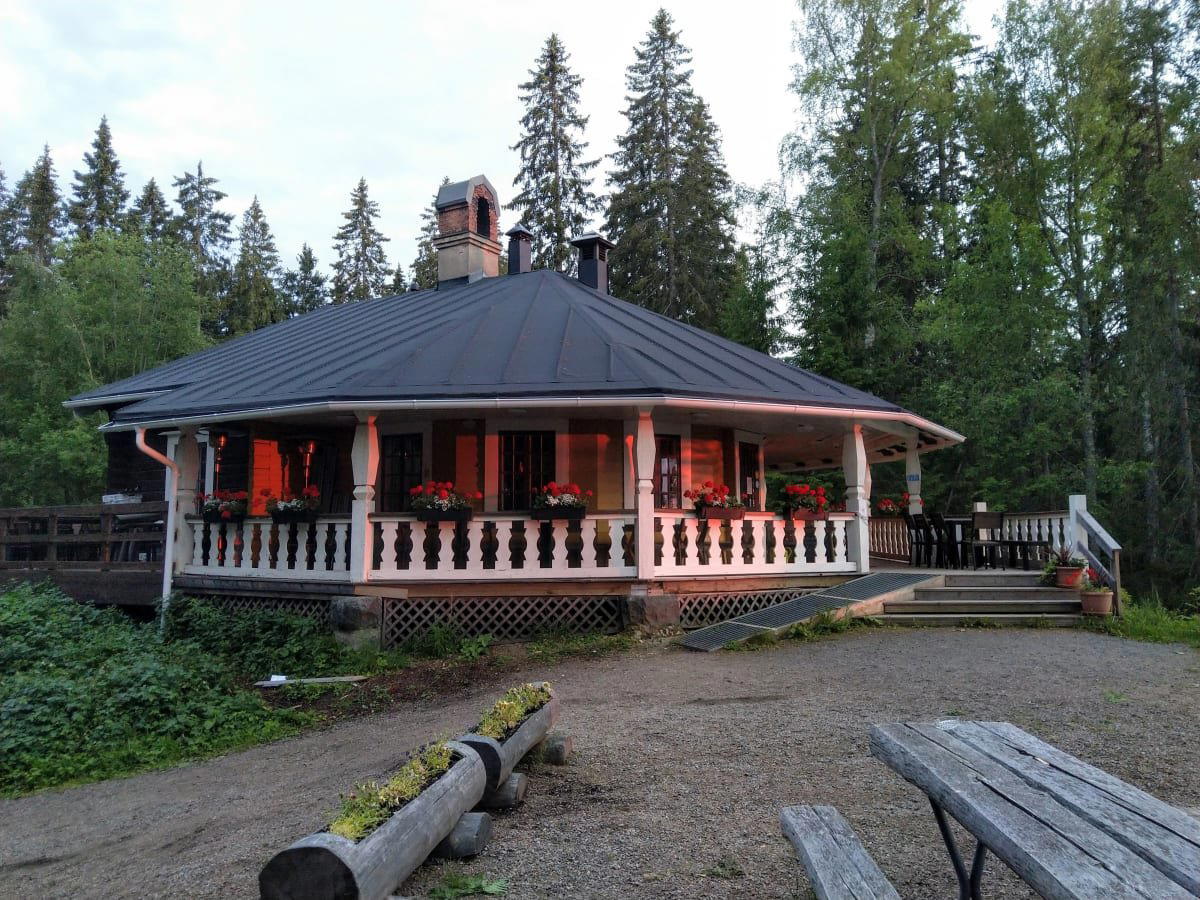
Details
- Elegant
- Scenic
- Modern
- Cozy
- Special Occasion
- Date Night
- Hotel Restaurant
- Open Kitchen
- Extensive Wine List
- Local Sourcing
- Garden
- Waterfront
- Tasting Menu
- A La Carte
- Vegetarian Friendly
Current opening hours
- Monday
- Closed
- Tuesday
- 11 AM–5 PM
- Wednesday
- 11 AM–5 PM
- Thursday
- 11 AM–5 PM
- Friday
- 11 AM–5 PM
- Saturday
- 11 AM–5 PM
- Sunday
- 11 AM–5 PM
Hours can change for holidays and private events. Hours as of .
Quiet, relaxed atmosphere with natural light through large windows showcasing scenic park and lake views, evoking a library-like serenity amid stylish museum decor.