On Kauppakatu in central Lohja, Mikko Utter occupies a position that reflects the broader story of Finnish regional dining: serious cooking operating at a remove from Helsinki's Michelin circuit, where local sourcing and proximity to the Uusimaa countryside shape what ends up on the plate. For travellers making the hour-long drive from the capital, it offers a grounded alternative to the city's more orchestrated fine-dining formats.
Pearl is the En Primeur Club membership app — saves, bookings, and concierge access live there. Same editors, same standards.
- Address
- Kauppakatu 16, 08100 Lohja, Finland
- Phone
- +358503568109
- Website
- mikkoutter.fi
- Directions
- Get directions
 Saves & bookings on Pearl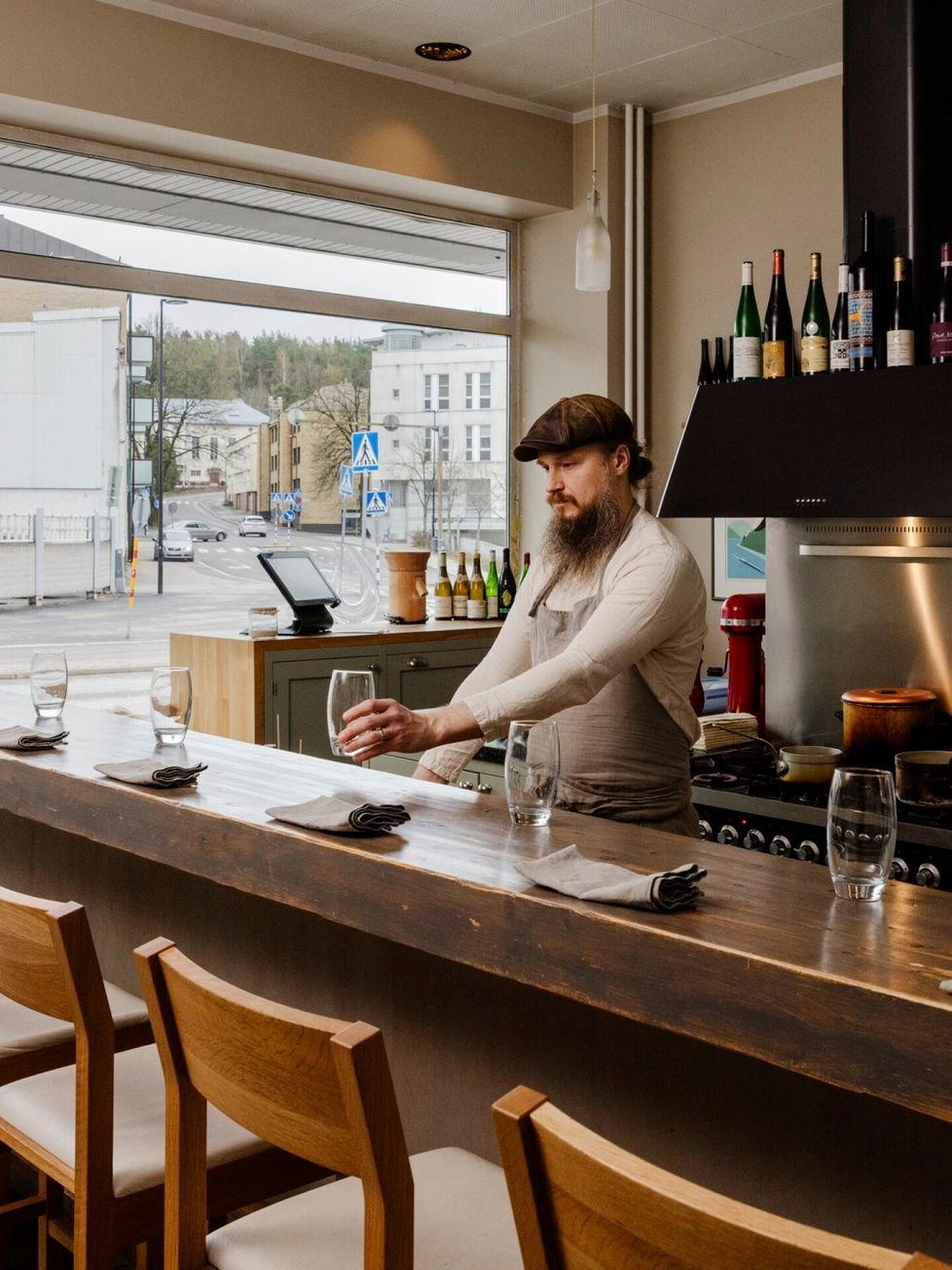
Lohja and the Case for Regional Finnish Dining
Finland's most discussed restaurant addresses cluster in Helsinki, where venues like Palace in Helsinki and the Nordic fine-dining circuit occupy a well-mapped tier of Michelin attention and international press. What that concentration tends to obscure is the quality operating in the ring of smaller cities within a hundred kilometres of the capital. Lohja, a lakeside town of roughly 47,000 people about 60 kilometres west of Helsinki, sits in that overlooked band. Its restaurant scene is modest in scale but anchored in the same sourcing logic that drives the country's leading cooking: short supply chains, seasonal discipline, and direct relationships with producers in the surrounding Uusimaa region.
That context matters when considering Mikko Utter, which sits at Kauppakatu 16 in the town centre. The address places it on Lohja's main commercial street, a location that signals accessibility rather than destination theatre. What you find instead is a room that reads as genuinely local, serving a community rather than performing for a travelling audience.
What the Sourcing Geography Tells You
The editorial angle most relevant to understanding Mikko Utter is not the menu format or price tier, but geography. Lohja's agricultural surroundings are among the more productive in southern Finland. The lake district supports freshwater fish; the farmland of the broader Uusimaa province provides root vegetables, dairy, and grain at a quality that Helsinki restaurants often source from the same region at greater remove. A kitchen operating in Lohja can theoretically compress that supply chain considerably, which in Finnish cooking terms translates directly into what arrives on the plate and when.
This is the logic that separates regional Finnish dining from its Helsinki counterpart. Venues like Kaskis in Turku and VÅR in Porvoo have built reputations precisely by working this proximity advantage, turning shorter distances from farm or water to kitchen into a culinary argument that capital-city restaurants, for all their resources, cannot easily replicate. The same principle applies across Finnish regional dining more broadly: Figaro in Jyväskylä, Juurella in Seinajoki, and Vintti in Hameenlinna all work within regional sourcing frameworks that shape their menus as directly as any chef's technique.
Ingredients sourced from within Uusimaa in late summer and autumn carry a seasonal specificity that is difficult to manufacture: crayfish from Finnish lakes, chanterelles from nearby forests, new-season root vegetables, Baltic herring at its firmest. A kitchen with direct access to these materials, without the logistical buffer of a capital-city distribution network, operates in closer contact with what each season actually produces.
The Room and the Register
Kauppakatu 16 puts Mikko Utter within walking distance of Lohja's central services, which shapes the clientele considerably. This is not a destination restaurant drawing visitors from two time zones away, in the manner of a Le Bernardin in New York City or an Atomix in New York City. The register is closer to neighbourhood anchor: a place that a local family returns to across seasons, where the kitchen's response to what is available in the market this week matters more than maintaining a fixed tasting format from month to month.
That distinction is worth holding. Finnish regional restaurants in this tier, comparable in civic function to Bistro Henriks in Tampere or Hejm in Vaasa, tend to calibrate their atmosphere around repeat visits rather than single-occasion spectacle. The pacing is unhurried, the service more likely to reflect genuine familiarity with regular guests than the scripted hospitality of a multi-course tasting operation.
For a visitor arriving from Helsinki, the contrast in register is part of the point. Finnish cities of Lohja's scale offer a version of the country's food culture that operates without the pressure of international critical attention, and the cooking that results often reflects that freedom, more direct, less self-conscious about its own position in a global fine-dining conversation.
Lohja in the Wider Finnish Regional Picture
Mapping Lohja against other Finnish regional dining destinations helps calibrate expectations. Turku's scene, anchored in part by Kaskis, carries the weight of Finland's oldest city and a port identity that has historically connected it to broader European food culture. Porvoo, where VÅR operates, draws on a well-preserved old town and proximity to a wealthy coastal commuter population. Lohja's identity is different: lake-country, agricultural, quieter in its claims.
That quietness extends to how restaurants in the town present themselves. Venues further afield in Finland's regional network, from Laanilan Kievari in Saariselka in Lapland to Aurora Sky Restaurant in Sirkka, build their identity around geography as spectacle. Lohja's geography is more ordinary, which paradoxically makes the sourcing story more transferable as a model: this is what good regional Finnish cooking looks like when the setting is not notable, and the ingredient quality still is.
Those planning a southern Finland loop might also consider JJ's BBQ in Salo, roughly 60 kilometres further southwest, or Vino in Mikkeli for a contrast in register. Elsewhere in Finland's regional dining network, Filipof in Joensuu, Gösta in Mänttä, and Hai Long in Rovaniemi each demonstrate how different Finnish cities have developed distinct dining personalities shaped by their local geography and economies.
Planning a Visit
The restaurant's address at Kauppakatu 16 in Lohja's centre is especially concrete logistical anchor available. Lohja is accessible from Helsinki by road in approximately one hour, making it viable as a day trip or a stop on a longer Uusimaa route. Direct bus connections run from Helsinki's Kamppi terminal regularly. Reservations are essential, and advance booking is advisable, particularly for larger groups or weekend visits.
- Asparagus
- Mushroom
- Zander
- Nettle
- Bison tartar
- Rhubarb
Comparable Spots, Quickly
Comparable venues nearby, for context on price, style, and recognition.
| Venue | Cuisine | Price | Notes |
|---|---|---|---|
| Mikko UtterThis venue — the venue you are viewing | Contemporary Scandinavian Fine Dining | $$$ | Not listed |
| Näsinneula | Seasonal Scandinavian Fine Dining | $$$ | Särkänniemi |
| Laanilan Kievari | Scandinavian Lappish with French influences | $$$ | Saariselka |
| Emo | Modern Scandinavian Bistro | $$$ | Kaartinkaupunki |
| Elite | Classic Finnish with French influences | $$$ | Taka-Toolo |
| Ragu | Modern Scandinavian-Italian Fine Dining | $$$ | Kaartinkaupunki |
Continue exploring
More in Lohja
Hotels in Lohja
Browse all →
At a Glance
- Intimate
- Cozy
- Sophisticated
- Special Occasion
- Date Night
- Celebration
- Chefs Counter
- Standalone
- Sommelier Led
- Local Sourcing
small and intimate, centered around the chef and stove, with a food-bar feel rather than a conventional dining room.