Very Good Vegan Gua Bao

Michelin Plate
Our verdict
A descendant of a century-old Chinese herbal shop, Very Good Vegan Gua Bao on Linsen Road puts the medicinal pantry at the centre of a concise plant-based menu. The signature fluffy bun is packed with herbs, vegetables, and mushrooms in place of the traditional pork belly, producing a layered herbal profile that reads more apothecary than street food. Fragrant Chinese angelica soup and yam and lily bulb broth round out a menu built entirely around herbal ingredients.

Pearl is the En Primeur Club membership app — saves, bookings, and concierge access live there. Same editors, same standards.
- Address
- 129 Linsen Road, East District
- Phone
- +886 3 523 5161
- Directions
- Get directions
The menu
What to order
- Vegan gua bao
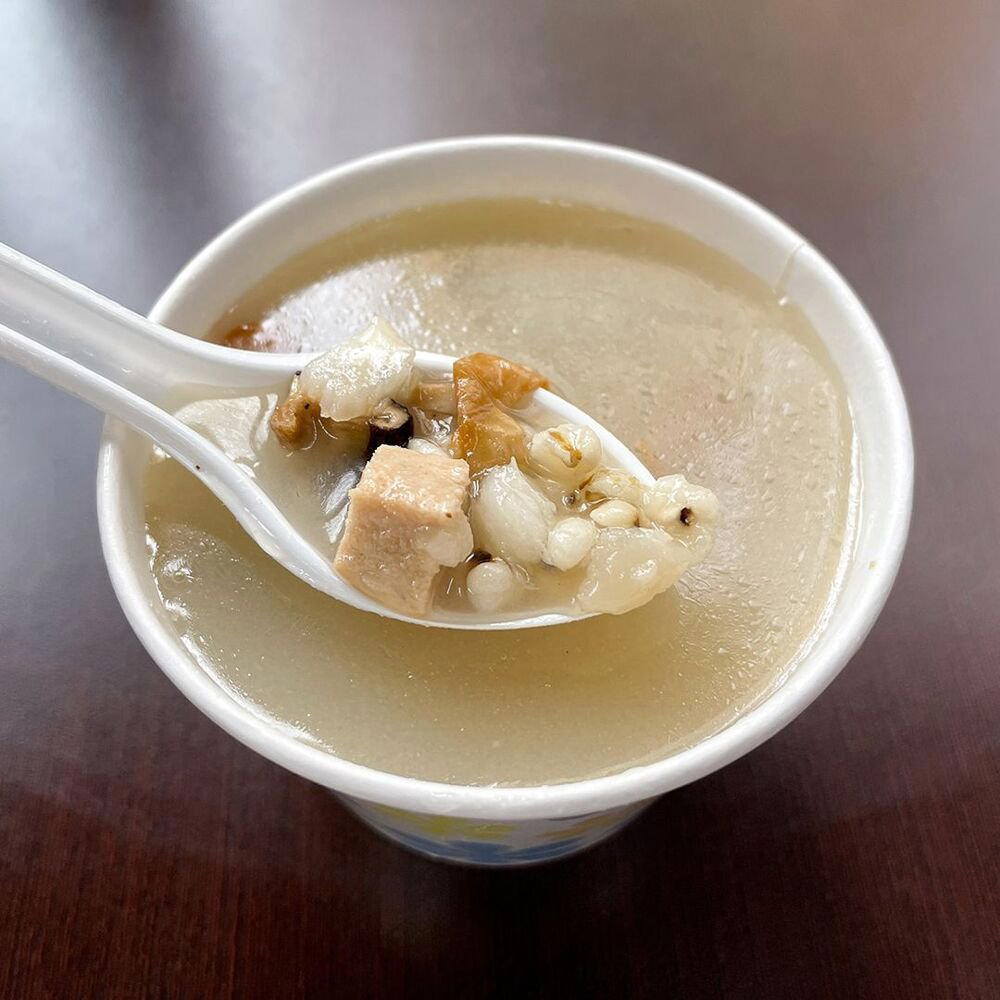
- Chinese angelica soup
- Yam and lily bulb soup
When the Herbal Shop Becomes the Kitchen
Taiwan's gua bao tradition is, by default, a pork story. The braised pork belly version, lacquered and fatty, has anchored night markets and temple fairs for generations, its richness balanced by pickled mustard greens and peanut powder inside a steamed bao. That template is so entrenched that departing from it is not a minor stylistic choice — it is a structural argument about what the dish can be. At Very Good Vegan Gua Bao on Linsen Road in Hsinchu City's East District, that argument is made through the vocabulary of a Chinese herbal pharmacy rather than a butcher's counter.
The address carries its own context. The business traces its lineage to a century-old Chinese herbal shop, which means the ingredient logic here precedes the current plant-based moment by several decades. What the owner developed for his vegan wife — a gua bao rebuilt around herbs, vegetables, and mushrooms, draws on that accumulated herbal knowledge rather than on the current conventions of Western-style vegan food. The result sits in a distinct position within Taiwan's growing plant-forward dining scene, one that is rooted in traditional Chinese medicine's ingredient philosophy rather than in substitution thinking.
The Herbal Bao and What It Actually Delivers
The fluffy steamed bun format remains intact: the same pillowy, slightly chewy wrapper that has defined the dish across its Taiwanese and Fujianese lineage. What changes is everything inside. In place of the pork belly's fat-forward richness, the filling works through layered herbal flavours and contrasting textures, assorted herbs, seasonal vegetables, and mushrooms whose earthiness provides the structural weight that meat traditionally supplies. The sensory register shifts from savoury depth built on fat to a more complex, aromatic profile where individual botanical notes have room to surface.
This matters in the context of sustainability, because the most durable environmental argument for plant-based eating is not simply the removal of meat, it is the replacement of that meat with ingredients that carry their own nutritional and flavour logic. A filling built around traditional Chinese herbs and mushrooms does not read as diminished; it reads as a different system entirely, one with centuries of culinary and medicinal documentation behind it. The kitchen is not working against tradition to make a vegan product. It is working within a parallel tradition that happens to align with reduced environmental impact.
For visitors comparing Hsinchu's gua bao options, Hai Kou Guabao represents the more conventional pork-based approach to the same format. The divergence between the two addresses the same base dish from fundamentally different ingredient philosophies, which makes them useful counterpoints rather than competitors for the same customer.
The Menu Beyond the Bao
The menu is deliberately concise, and everything on it is built around herbal ingredients, a constraint that functions as a coherence mechanism. The two soups carry the clearest expression of the herbal pantry's range. The Chinese angelica soup is fragrant in the way that traditional tonic soups are fragrant: not perfumed in a floral sense, but deeply aromatic, with a warm, slightly bitter undertone that traditional Chinese medicine associates with blood circulation and warming properties. Angelica root (dong quai) is a staple of Taiwanese restorative cooking, appearing in everything from three-cup chicken stocks to postpartum broths.
The yam and lily bulb soup takes a different register: softer, more nourishing, with the lily bulb (bai he) contributing a subtle sweetness and a texture that is somewhere between firm and yielding. Both soups function as extensions of the herbal philosophy that runs through the bao, rather than as afterthoughts. Ordering them alongside the gua bao is how the full range of the kitchen's herbal vocabulary becomes legible.
Taiwan's plant-based dining scene has expanded significantly in the past decade, partly because of the island's strong Buddhist vegetarian tradition and partly because of broader global trends. Restaurants like Garden.V in Hsinchu represent a more contemporary, internationally inflected approach to plant-forward cooking, while Very Good Vegan Gua Bao occupies a narrower, more culturally specific lane, one that requires familiarity with Chinese herbal ingredients to fully appreciate. Across Taiwan, the wider dining context includes significant plant-conscious work at places like JL Studio in Taichung and logy in Taipei, though both operate at a very different format and price register.
Hsinchu's East District and Where This Fits
Hsinchu is better known internationally for its science park than for its food scene, but the city's East District contains a functional concentration of independent restaurants and street-food spots that repay exploration. Linsen Road, where Very Good Vegan Gua Bao is located at number 129, sits within that network. The surrounding area draws a mix of local residents, science park workers, and, increasingly, food-aware visitors who have moved beyond the standard tourist circuit. For a broader picture of the city's dining options, [our full Hsinchu City restaurants guide]() maps the range from casual street food to more considered independent kitchens.
Other independent spots in the area worth considering include Chang Chang Kitchen and Dongmen Rice Noodle Soup, which together give a sense of the range of independent, locally rooted cooking in this part of the city. Cat House adds a different character to the neighbourhood's independent dining mix. For those spending more time in the city, [our full Hsinchu City hotels guide](), [bars guide](), [wineries guide](), and experiences guide provide broader orientation.
Beyond Hsinchu, Taiwan's food culture at the independent, tradition-rooted end of the spectrum is well represented by restaurants like Akame in Wutai Township, GEN in Kaohsiung, Zhu Xin Ju in Tainan, and Volando Urai Spring Spa and Resort in Wulai District. For international comparison points at the opposite end of the format and price spectrum, Le Bernardin in New York City and Emeril's in New Orleans illustrate how different cultural contexts shape plant-adjacent or sustainability-minded fine dining.
Planning Your Visit
Very Good Vegan Gua Bao is at 129 Linsen Road, East District, Hsinchu City. The menu is concise and fully herbal-based, which means the kitchen's output is coherent across the board, there is no need to navigate a large menu to find what the kitchen does with intention. Given the specialty nature of the offer and the small format typical of this style of Taiwanese independent spot, visiting during off-peak lunch hours is advisable to avoid a wait.
Frequently asked questions
Is Very Good Vegan Gua Bao award-winning?
Very Good Vegan Gua Bao has received recognition including: A descendant of a century-old Chinese herbal shop, the owner came up with a plant-based gua bao recipe for his vegan wife. The fluffy bun is stuffed with assorted herbs, veggies and mushrooms. Rather than rich pork belly gua bao, you will t….
What part of town is Very Good Vegan Gua Bao in?
Very Good Vegan Gua Bao is located at 129 Linsen Road, East District, Hsinchu City.
What's the signature dish at Very Good Vegan Gua Bao?
The plant-based gua bao is the centrepiece: a fluffy steamed bun filled with assorted herbs, vegetables, and mushrooms. Where the conventional version relies on braised pork belly, this one builds complexity through layered herbal flavours and contrasting textures. The recipe was developed by the owner — a descendant of a century-old Chinese herbal shop — specifically for his vegan wife.
How far ahead should I plan for Very Good Vegan Gua Bao?
The venue sits at 129 Linsen Road in Hsinchu's East District, so arriving during off-peak hours is the practical approach. Given the concise, focused menu, turnover tends to be steady rather than slow.
What's Very Good Vegan Gua Bao best at?
Applying a century-old Chinese herbal shop's ingredient knowledge to a format — the gua bao — that rarely moves beyond pork. Every item on the concise menu is built around herbal ingredients, giving the kitchen a coherence that most single-dish specialists lack. The fragrant Chinese angelica soup and the yam and lily bulb soup extend that herbal logic beyond the bao itself.
Do they accommodate allergies at Very Good Vegan Gua Bao?
The entire menu is plant-based, so meat and fish are absent by design, but the heavy use of varied herbs, mushrooms, and root vegetables means ingredient-specific sensitivities are worth raising in person at 129 Linsen Road.
Is there a connection between Very Good Vegan Gua Bao and traditional Chinese herbal medicine?
Yes, in a documented lineage sense: the business descends from a century-old Chinese herbal shop, and that heritage directly shapes what goes into the bao and the soups. The owner translated that ingredient knowledge into plant-based cooking after developing a recipe for his vegan wife, making the herbal dimension a founding principle rather than a marketing angle. This positions the Hsinchu City stall within a tradition of food-as-medicine thinking common in Fujianese and Taiwanese culinary culture.
Recognition, Side-by-Side
Comparable venues nearby, for context on price, style, and recognition.
| Venue | Cuisine | Price | Awards | Notes |
|---|---|---|---|---|
| Very Good Vegan Gua BaoThis venue — the venue you are viewing | Vegan Taiwanese Gua Bao | $1–10 | Michelin Plate | Not listed |
| Dongmen Rice Noodle Soup | Traditional Taiwanese Thick Rice Noodle Soup | $1–10 | Michelin Bib Gourmand | East District |
| Ying Wang Meatball | Traditional Taiwanese Ba-wan | $1–10 | Michelin Plate | Xiangshan |
| Chang Chang Kitchen | Chinese Restaurant | Not listed | Michelin Plate | North District |
| Garden.V | Authentic Jiangzhe (Shanghai-style) Chinese | Not listed | Michelin Bib Gourmand | East District |
| Miao Kou Ya Xiang Fan (Zhongshan Road) | Taiwanese Smoked Duck Rice | $1–10 | Michelin Plate | North District |
Recognition history
Dated appearances from independent guides and award organizations, with the underlying list record or original source where available.
Michelin Plate
Michelin
Continue exploring
More in Hsinchu City
Restaurants in Hsinchu City
Browse all →
Bars in Hsinchu City
Browse all →
Details
- Trendy
- Casual Hangout
- Standalone
- A La Carte
- Small Plates
- Vegan Options
Casual takeaway stand with focus on herbal flavors and textures.