Val occupies a quiet address on the island of Vis, where Dalmatian cooking traditions run deeper than on the more tourist-trafficked mainland coast. The restaurant draws on the island's seafood-first pantry and the konoba heritage that has shaped how islanders eat for generations. Vis's relative remoteness from mass tourism gives places like Val a different kind of regularity, locals and returning visitors rather than passing crowds.
Pearl is the En Primeur Club membership app — saves, bookings, and concierge access live there. Same editors, same standards.
- Address
- Ul. don Cvjetka Marasovića 1, 21480, Vis, Croatia
- Phone
- +385998507830
- Website
- val-restaurant.com
- Directions
- Get directions
 Saves & bookings on Pearl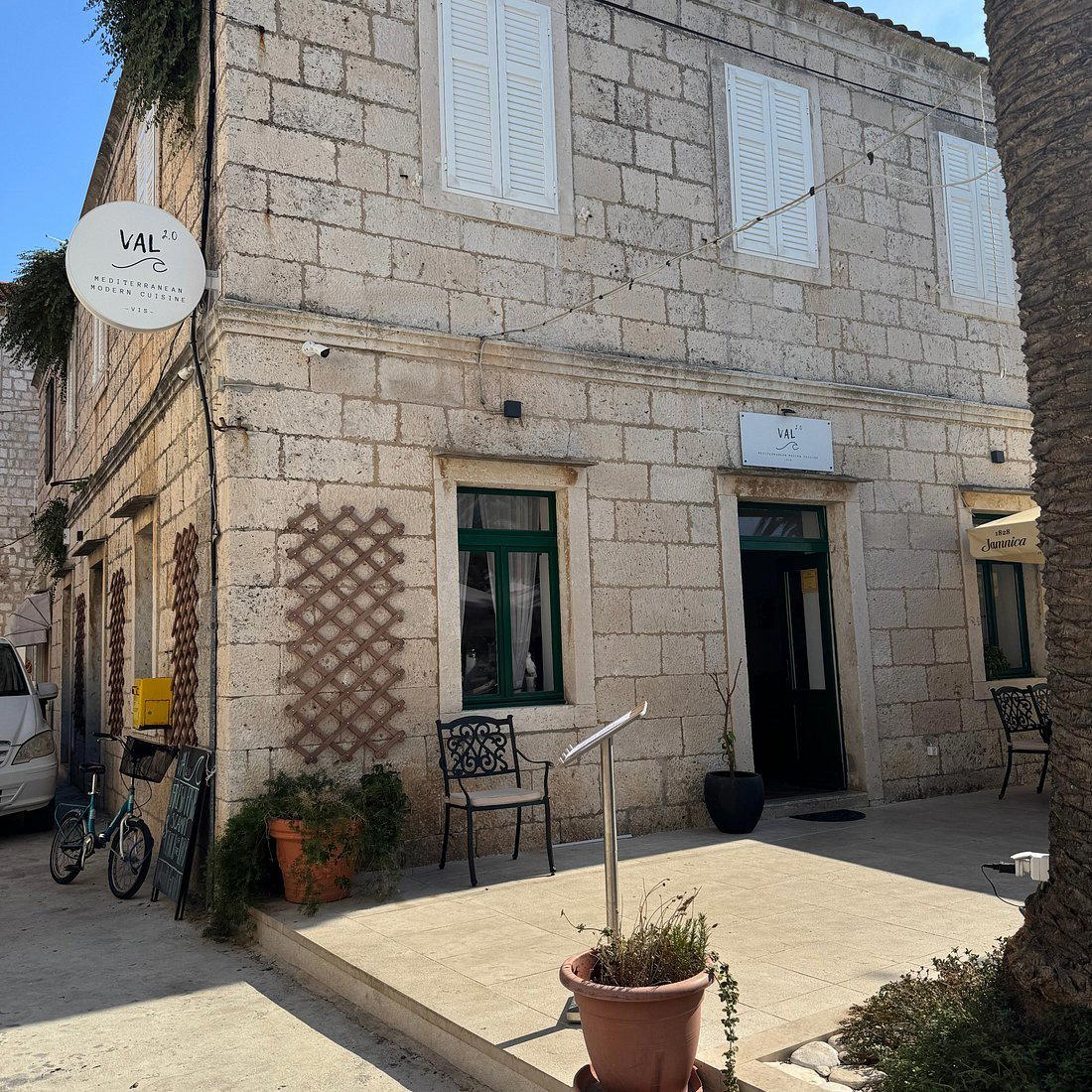
An Island That Eats on Its Own Terms
Vis is not a typical Adriatic stop. Closed to foreign visitors until 1989 due to its status as a Yugoslav military base, the island spent decades in a kind of forced culinary self-sufficiency. The fishing communities along its two main bays developed a food culture that answered to local appetite rather than tourist expectation, and that disposition has not entirely left. The tavernas and konobas that operate here tend to source from the sea directly in front of them and from the small agricultural plots that stitch together the island's interior. Val, at Ul. don Cvjetka Marasovića 1 in the town of Vis, is a modern Mediterranean seafood restaurant with a smart casual dress code, recommended reservations, and an average spend of about $40 per person.
Understanding what Val represents requires some familiarity with what Dalmatian konoba culture actually means at its more grounded end. Across the region, from Split's back streets to the quieter dining rooms of Konoba Golub on Vis itself, the konoba form has historically meant a family-run room where the menu follows the morning catch and the season rather than a fixed card. That model sits in direct contrast to the resort-facing restaurants of the more frequented Adriatic islands, where menus are engineered for throughput. Vis, given its history and its relative distance from the ferry-tourism circuit, has preserved more of the former.
The Adriatic Pantry Val Works From
The culinary logic of this part of the Croatian coast is built on a narrow but demanding set of ingredients. Adriatic fish, dentex, sea bream, John Dory, grouper, arrive with a salinity and freshness that makes elaborate preparation unnecessary and often counterproductive. The dominant cooking methods along this coastline are peka (slow-roasting under a bell-shaped lid covered with embers), grilling over open wood or charcoal, and brodetto, the fish stew that every Dalmatian family makes slightly differently. Olive oil, locally grown on Vis in enough quantity to give it regional distinction, functions as both cooking medium and seasoning. Wine from the island's own vineyards, Vugava white and Plavac Mali red are the indigenous varieties, moves from glass to pot and back again with the ease of a cuisine that has never needed to import its pairings.
This is the pantry that shapes what gets served across Vis's better dining addresses. At Konoba Kantun, the emphasis lands on the same Adriatic catch and island-grown produce. Konoba Magić operates within the same frame. Val, at its address in the town of Vis, is positioned inside this same culinary ecosystem rather than apart from it. What differentiates individual addresses at this tier is usually execution consistency, sourcing relationships, and the accumulated confidence that comes from cooking the same things well over a long period.
Where Vis Sits in the Croatian Fine-Dining Picture
Croatia's more decorated restaurants have increasingly concentrated around a handful of cities and coastal towns. Pelegrini in Sibenik holds Michelin recognition and operates with a formality that reflects the international attention Croatian cooking has attracted since the mid-2010s. Restaurant 360 in Dubrovnik and LD Restaurant in Korčula occupy a similar tier, addresses where the ambition is partly directed at an international traveller who arrives with Michelin expectations. Agli Amici Rovinj in Rovinj and Boskinac in Novalja extend that pattern to other parts of the Adriatic coast.
Vis sits at a different register. The island has not positioned itself as a destination for that kind of structured fine dining, and the restaurants that work here tend to be valued for something more difficult to award-programme: an unforced relationship between the kitchen and its immediate geography. That is not a lesser quality, it is simply a different one. Visitors who have spent time at Alfred Keller in Mali Losinj or the produce-led rooms of Dubravkin Put in Zagreb will recognise a Croatian culinary sensibility that connects island simplicity to serious ingredient sourcing. Val operates at the Vis end of that spectrum.
For diners approaching from the mainland Split coast, Krug in Split provides a useful point of comparison in terms of city-based Croatian cooking before boarding the ferry. From Rijeka further north, Nebo by Deni Srdoč in Rijeka and Korak in Jastrebarsko represent the inland and northern Adriatic iteration of serious Croatian food. Val, by contrast, is specifically an island proposition, the ferry ride is part of what the experience means.
Dining in the Town of Vis
The town of Vis, one of two settlements that anchor the island alongside Komiža, has a harbour-front character shaped by its fishing history and the low-rise stone architecture that the military decades left largely undisturbed. Restaurants here tend to cluster near the water or step back into the quieter residential lanes behind the promenade. The pace of service on Vis reflects the island's own tempo: unhurried, occasionally deliberate, better received by visitors who have adjusted to the island's clock than by those arriving with mainland-city expectations.
The wider dining picture on Vis rewards some advance navigation. Fort George sits above the town and offers a different setting entirely, an 18th-century British fortification converted into a venue with views across the bay. Fields of Grace Vineyards connects the island's wine production directly to the table. These addresses collectively map a Vis dining scene that is small, seasonal, and closely tied to the agricultural and maritime calendar.
Planning a Visit
Vis is accessible by ferry from Split, with crossing times of roughly two to two and a half hours on the standard catamaran service and longer on the car ferry. The island's restaurants operate on a seasonal basis, with the core period running from late spring through early autumn; visiting outside July and August means a quieter island but requires checking which addresses are open. Val's location at Ul. don Cvjetka Marasovića 1 in the town of Vis places it within walking distance of the harbour.
Budget Reality Check
Comparable venues nearby, for context on price, style, and recognition.
| Venue | Cuisine | Price | Notes |
|---|---|---|---|
| ValThis venue — the venue you are viewing | Vis, Modern Mediterranean Seafood | $$$ | Not listed |
| Corto Magarese | Vis, Mediterranean | $$ | Not listed |
| Konoba Golub | Podselje, Traditional Dalmatian Grill | $$ | Not listed |
| Roki's-Plisko Polje VIS | Plisko Polje, Traditional Croatian Peka | $$ | Not listed |
| Fields of Grace Vineyards | Not listed | $$$ | Zlopolje, Asian Fusion with European Influences |
| Fort George | Not listed | $$$ | Island of Vis, Mediterranean Seafood in Historic Fortress |
Continue exploring
More in Vis
Restaurants in Vis
Browse all →
Bars in Vis
Browse all →
Hotels in Vis
Browse all →

At a Glance
- Scenic
- Romantic
- Cozy
- Elegant
- Date Night
- Special Occasion
- Waterfront
- Terrace
- Extensive Wine List
- Local Sourcing
- Waterfront
Current opening hours
- Monday
- 12 PM–12 AM
- Tuesday
- 12 PM–12 AM
- Wednesday
- 12 PM–12 AM
- Thursday
- 12 PM–12 AM
- Friday
- 12 PM–12 AM
- Saturday
- 12 PM–12 AM
- Sunday
- 12 PM–12 AM
Hours can change for holidays and private events. Last verified .
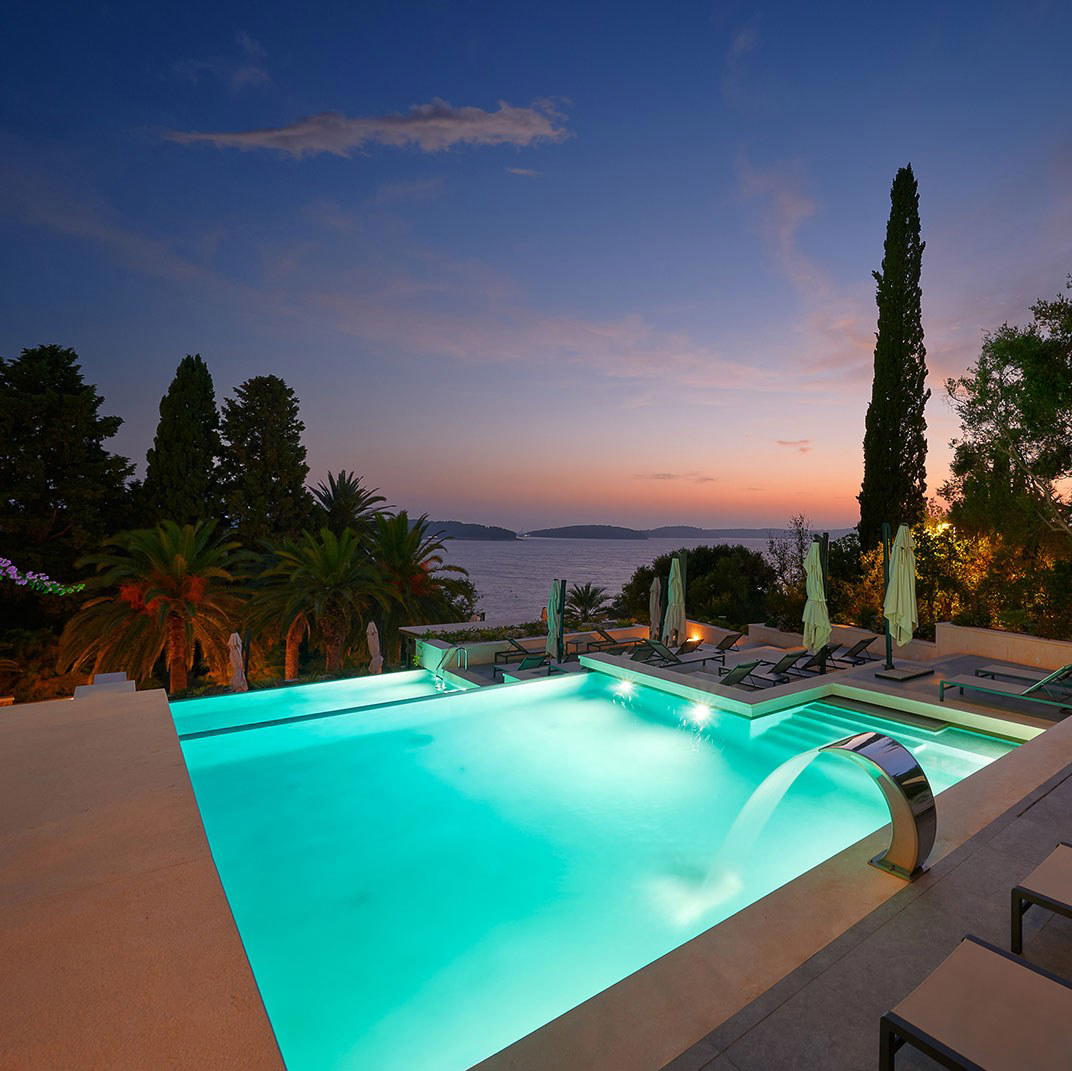
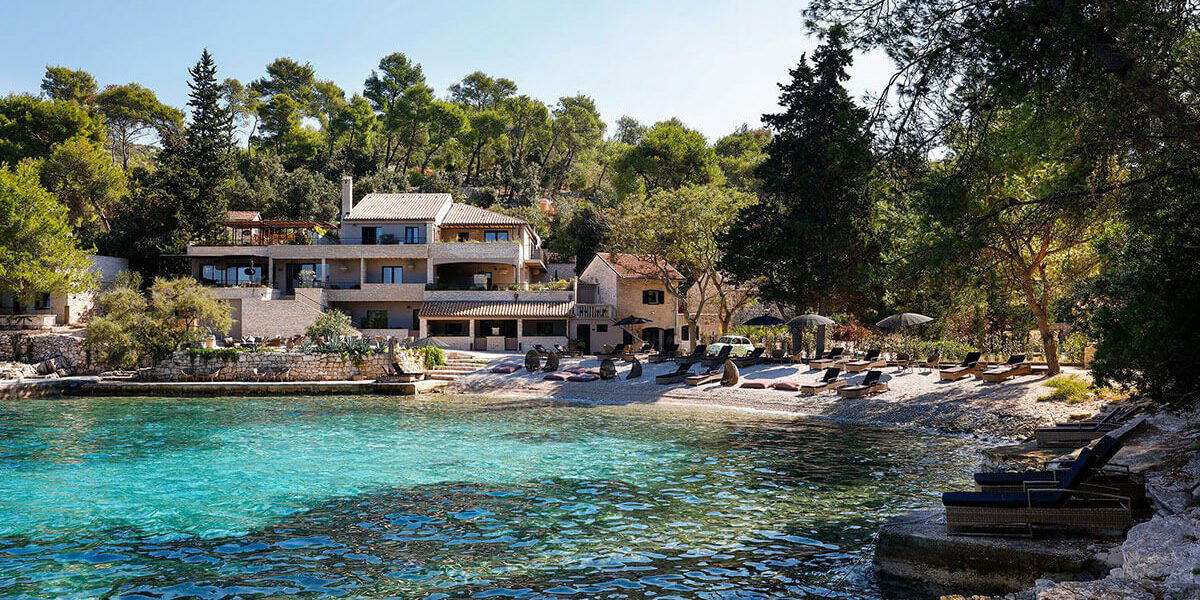
Charming and relaxing atmosphere with idyllic outdoor seating under palm trees, dramatic sea views, and a beautiful courtyard.