This listing is retired after a June 2026 status audit found the place inactive at its stored address.
- Address
- 2nd Floor, 26 Ekkamai 10 Alley, Lane 2, Phra Khanong Nuea, Watthana, Bangkok 10110, Thailand
- Phone
- +66 91 713 9034
- Directions
- Get directions
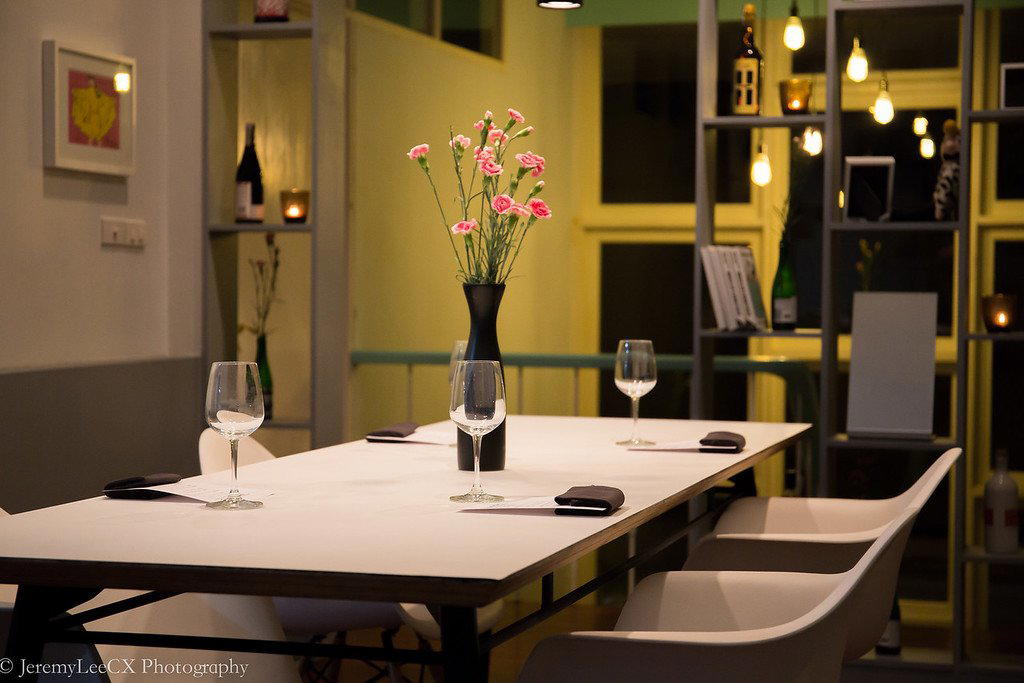
Ekkamai's Second-Floor Beer-and-Food Equation
Upstairs at Mikkeller Bangkok is a restaurant in Watthana, Bangkok, serving Progressive American Tasting Menu dishes at about USD 110 per person. Upstairs at Mikkeller Bangkok, located on the second floor of a low-rise building at 26 Ekkamai 10 Alley, occupies a specific and legible position in that shift: a venue where the beer programme and the food programme are designed to operate at equivalent levels of seriousness, neither serving as an afterthought to the other.
Mikkeller itself requires some context. Founded in Copenhagen, the brand built its reputation through gypsy brewing, producing small-batch, experimental beers in borrowed facilities before opening a global network of bar outposts and dedicated brewpubs. By the time Mikkeller arrived in Bangkok, it carried the credibility of a craft beer movement that had already earned recognition in cities where beer culture runs deep. The Bangkok outpost sits within that lineage, which means the beer selection at any given moment will skew toward range and experimentation rather than toward a fixed house style.
What distinguishes the Bangkok location from other Mikkeller outposts globally is the upstairs positioning, both literally and editorially. In a city neighbourhood like Watthana, where the ground-floor hospitality offer is dense and competitive, that vertical remove matters. It changes the acoustics, the sightlines, and crucially, the expectation the venue sets for itself before a single drink is poured.
How the Menu Architecture Reads
Across Bangkok's higher-end dining circuit, menus tend to announce their ambitions structurally before any dish arrives. At Michelin-recognised addresses like Sorn (Southern Thai) or Baan Tepa (Thai contemporary), the tasting menu format is the primary signal: the kitchen controls the sequence, the pacing, and the narrative arc. At European-influenced concepts such as Sühring (German) or Côte by Mauro Colagreco, similar logic applies, though the reference points differ. Upstairs at Mikkeller Bangkok operates under a different structural logic entirely. The menu here is built to accommodate lateral movement, the kind of ordering pattern suited to a group sharing plates and rotating through different beers, where the food anchors the session rather than directing it.
That architecture is more difficult to execute than it appears. A menu designed around beer pairing has to resist two failure modes simultaneously: becoming so food-forward that the beer becomes ornamental, or so beer-centric that the kitchen output feels like an afterthought. The tension between those poles is, in many ways, what defines the creative challenge of the beer-and-food format globally. At venues like Lazy Bear in San Francisco, this challenge resolves through highly structured tasting sequences with explicit beverage pairings. Mikkeller's model, across its global network, has tended to resolve it differently: by building menus that are flavour-complementary to the beer range without being formally tied to any single pairing protocol.
In Bangkok specifically, that approach intersects with a local dining culture that has always been comfortable with lateral, share-everything table structures. Thai communal dining habits align naturally with bar-kitchen formats where dishes arrive across a loose timeline. The result is that restaurant's menu architecture likely feels less foreign to a Bangkok regular than it would to a visitor arriving from a city where beer-and-food pairing is still understood as a novelty rather than a refined subcategory of hospitality.
Positioning in the Ekkamai-Thonglor Belt
The Ekkamai-Thonglor corridor has emerged as Bangkok's most concentrated zone of internationally inflected hospitality, drawing the kind of resident and visitor who cross-references dining choices rather than defaulting to hotel recommendations. Alongside venues like Gaa (Modern Indian), the neighbourhood supports a range of price tiers and formats that collectively signal creative intent. The restaurant occupies a more casual register than the full tasting-menu addresses in the area, but the Mikkeller network's international credentials place it above the generic bar-kitchen offer that makes up much of the street-level competition.
For visitors building a Bangkok itinerary that extends beyond fine dining, the Mikkeller format offers a pressure-reduced entry point to the neighbourhood's food scene. The second-floor address at Ekkamai 10 Alley is reachable via BTS Ekkamai station, making the logistics direct from most central Bangkok hotels. The alley setting insulates it from the main road noise without requiring significant navigation from first-time visitors to the area.
Thailand's broader restaurant scene rewards those who move beyond Bangkok's core. Readers who have built their dining around verified provincial addresses, from AKKEE in Pak Kret to PRU in Phuket, or further afield to Anuwat in Phang Nga and Ayutthayarom in Phra Nakhon Si Ayutthaya, will find Bangkok's craft hospitality tier a useful counterpoint. Addresses like Baan Chik Pork Noodles in Udon Thani, Baan Heng in Khon Kaen, Baan Suan Lung Khai in Ko Samui, Banmai Chay Nam in Nakhon Ratchasima, and Banrimbung in Nakhon Pathom illustrate how developed Thailand's regional dining circuit has become. The capital's craft bar scene, where Mikkeller operates, represents one end of a spectrum that is considerably wider than Bangkok alone suggests. For a complete view, see our full Bangkok restaurants guide.
Internationally, the beer-forward dining format has found its most rigorous expressions in cities with long craft brewing traditions. At the fine dining end, venues like Le Bernardin in New York City have demonstrated how beverage programmes can be engineered to match kitchen ambition, even where wine rather than beer is the primary medium. The Spa in Lamai Beach represents yet another register of the food-and-drink pairing conversation in the Thai context. Mikkeller's Bangkok operation sits within a global conversation about what the beer-and-food pairing format can be when executed with genuine creative intent on both sides of the bar.
Planning Your Visit
The restaurant is located at 26 Ekkamai 10 Alley, Lane 2, in the Phra Khanong Nuea sub-district of Watthana. The BTS Ekkamai station puts the venue within a short ride or walk, depending on traffic conditions in the alley network.
Accolades, Compared
Comparable venues nearby, for context on price, style, and recognition.
| Venue | Cuisine | Price | Notes |
|---|---|---|---|
| Upstairs at Mikkeller BangkokThis venue — the venue you are viewing | Progressive American Tasting Menu | $$$$ | Not listed |
| Bunker | New American | $$$ | Bang Rak Khwaeng |
| Anne-Sophie Pic at Le Normandie | Modern French fine dining with Thai influences | $$$$ | Bang Rak |
| VIU | Modern Mediterranean | $$$$ | Siam Square |
| Ore Bangkok | Modern Thai Ingredient-Based Fine Dining | $$$$ | Chong Nonsi, Yan Nawa |
| Baan Tepa Culinary Space | Creative Thai farm-to-table tasting menu | $$$$ | Ramkhamhaeng / Hua Mak, Bang Kapi |
At a Glance
- Intimate
- Cozy
- Modern
- Minimalist
- Date Night
- Special Occasion
- Open Kitchen
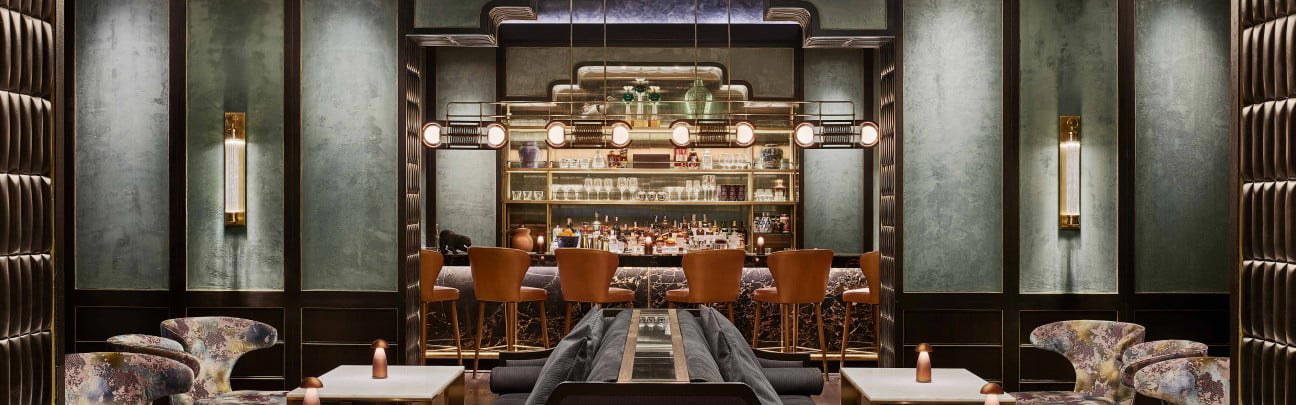
- Beer Program