
Unagi no Sueyoshi gives Kagoshima’s Tenmonkan district a focused unagi address rather than a broad izakaya detour. Recognition in Tabelog 100 - Unagi - 2024, a JPY 3,000–3,999 spend band, private rooms, tatami seating, sake, shochu, and take-out place it in the city’s practical, ritual-led dining lane.
Pearl is the En Primeur Club membership app — saves, bookings, and concierge access live there. Same editors, same standards.
- Address
- 鹿児島県鹿児島市東千石町14-10
- Phone
- +81992221525
- Website
- unagi-sueyoshi.com
 Saves & bookings on Pearl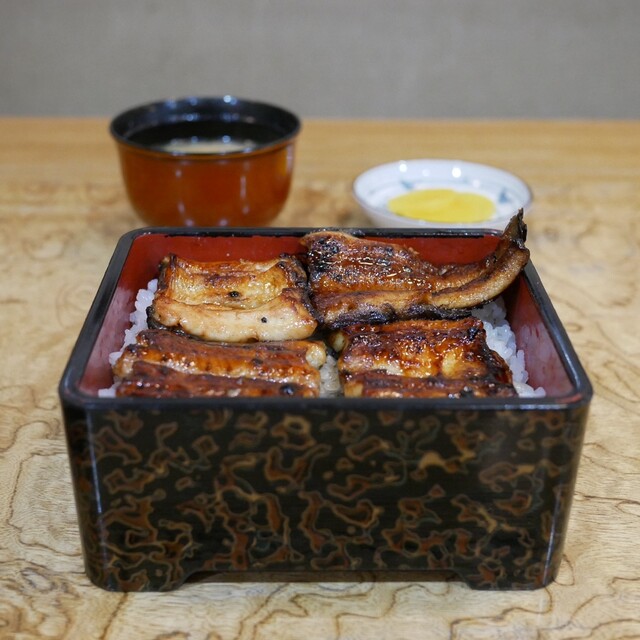
Tenmonkan’s dining streets work at street level: shopfronts close together, local regulars moving between lunch counters, family restaurants, tonkatsu houses, fish specialists, bars, and places built around a single craft. In that setting, unagi has a different tempo from the city’s pork-and-shochu shorthand. The meal is narrower, quieter, and more ceremonial, organized around eel, rice, lacquered boxes, and the expectation that the kitchen’s repetition matters more than a long menu.
That is the useful way to read Unagi no Sueyoshi. It is not trying to represent every part of Kagoshima dining. It sits inside a focused national category, with selection for Tabelog 100 - Unagi - 2024 giving it a signal beyond local habit. In a city where visitors often default to black pork, market seafood, or late shochu bars, a dedicated eel house changes the rhythm of the day: earlier, more structured, and less dependent on grazing.
Unagi as a paced meal in a city better known for pork and shochu
Kagoshima’s restaurant identity is often read through kurobuta, charcoal grilling, market set meals, and drinking rooms. That bias is understandable. Restaurants such as Aji no Tonkatsu Maruichi, Akadori Sumiyaki Daiyasu, and Ichiba Shokudo Jounan ten speak to the city’s appetite for pork cutlets, charcoal, and market cooking. Unagi belongs to another grammar. The order narrows the field, the rice matters, and the room’s value lies in how consistently a familiar form is handled.
The price band, JPY 3,000–3,999 for both lunch and dinner, places the restaurant above casual curry or set-meal spending but below the broader splurge bracket common to many formal Japanese dinners. Compared with Kagoshima peers such as Tonkatsu to, Shabushabu. Kurobuta Fukuya and Ichinii San Tenmonkan ten, both listed at JPY 4,000–4,999 for dinner and JPY 1,000–1,999 for lunch, the eel format compresses the decision: the main expenditure is the central dish rather than a sequence of add-ons.
The Tabelog score of 3.57 is less important than the category recognition. Tabelog’s Hyakumeiten lists are genre-specific, and unagi is a field where regional specialists compete against long-running houses across Japan. Selection for the 2024 unagi list says the restaurant is being judged within that craft lane, not merely as another useful Tenmonkan address.
The room suits a ritual, not a long evening
Format points to a traditional meal rather than a theatrical tasting-menu experience. Private rooms are available, the space includes tatami seating, and the restaurant is non-smoking. Those details matter in Japan’s eel culture because unagi meals often carry a family or intergenerational quality: planned rather than improvised, steady rather than performative. School-age children are welcomed, which further pushes the experience toward a local dining custom instead of a destination-only room.
Drinks keep the geography intact. Sake appears, but shochu has particular resonance in Kagoshima, where the local drinking culture is tied closely to sweet potato distillation and evening meals that do not need to become formal pairings. The presence of take-out also fits the unagi tradition. Eel over rice travels better than many grilled formats, and that option broadens the restaurant’s role beyond the dining room without changing the identity of the meal.
Tenmonkan itself helps the case. The district concentrates many of Kagoshima’s eating and drinking options, from direct counters to cocktail rooms such as BAR STINGER. For travelers building a food day, eel works as a structured anchor before a looser evening. A meal here can sit beside a fish-and-rice lunch at Charcoal-grilled Fish & Clay Pot-cooked Rice Ochawan, Japanese Set Meal Diner, or as a contrast to pork-led rooms that define much of the city’s reputation.
How to place it within a Kagoshima itinerary
The practical appeal is its specificity. Travelers with one or two meals in Kagoshima often chase the city’s headline proteins, then miss how narrow specialist restaurants shape everyday Japanese dining. Unagi no Sueyoshi is the kind of address that makes sense when the itinerary already includes pork, shochu, or market seafood and needs one meal built around a single disciplined form.
Its position near Tenmonkandori Station makes it easy to fold into a central Kagoshima day, and the lack of parking reinforces the urban pattern: arrive by tram or on foot, eat deliberately, then move back into the district. Payment details are also part of the planning culture here. Credit cards and electronic money are not accepted, while QR code payments such as PayPay and au PAY are accepted, so cash remains the safer assumption for visitors.
For wider planning, use Our full Kagoshima restaurants guide to balance eel with pork, seafood, and counter dining. The city also rewards broader routing through Our full Kagoshima hotels guide, Our full Kagoshima bars guide, Our full Kagoshima wineries guide, and Our full Kagoshima experiences guide. Readers comparing Japanese specialist formats beyond Kagoshima can look at -Grilled beef Sukiyaki- KAMAKURA TANUKIAN 鎌倉 たぬき庵 in Kamakura,. 鮪と炭火焼き うお炭 秋葉原店 in Tokyo,.cafe in Osaka,.know in Kumamoto, (Shoku) Vietnam in Kawasaki, [Curry Senmon Ten] Maruyama Kyoju. in Sapporo, Jōdo Saké Bar in Los Angeles, and Onigiri Time in Pasadena.
The editorial case is clear: this is a category meal, not a generalist stop. Choose it when the point is to understand how Kagoshima’s central dining district makes room for a precise Japanese ritual alongside pork, shochu, and market cooking.
Cuisine Context
Comparable venues by cuisine and price in the same metro.
| Venue | Cuisine | Price | Awards | Notes |
|---|---|---|---|---|
| Unagi no SueyoshiThis venue — the venue you are viewing | Traditional Kagoshima charcoal-grilled eel (unagi) | $$ | , | |
| Tonkatsu Kawakyu | Kagoshima Black Pork Tonkatsu | $$ | , | Chuocho |
| 菜々かまど | Japanese Seafood Izakaya | $$ | , | 天文館 |
| Washoku Tei | Japanese Set-Meal Restaurant | $$ | , | Chuocho |
| Unagi no Mitsuru | Japanese Unagi | $$ | , | Shimofukumotochō |
| Aji no Tonkatsu Maruichi | Kagoshima Kurobuta Tonkatsu | $$ | , | downtown Kagoshima (Takamibaba) |
Continue exploring
More in Kagoshima
Restaurants in Kagoshima
Browse all →
Hotels in Kagoshima
Browse all →
Wineries in Kagoshima
Browse all →
At a Glance
- Classic
- Cozy
- Iconic
- Solo
- Family
- Group Dining
- Casual Hangout
- After Work
- Standalone
- Historic Building
- Sake Program
- Local Sourcing
A long-established, traditional Japanese eel restaurant with a cozy, classic dining room featuring tatami, tables, and counter seats; the atmosphere is authentic and relaxed rather than trendy, attracting both locals and visitors for unhurried meals.