
Tabelog 100 #90
Our verdict
Unagi Heihachi belongs to Tokyo’s quieter unagi tradition: small rooms, set rhythms, and a category where patience matters as much as polish. In Denenchofu, its Tabelog 100 - Unagi - 2024 selection, 25-seat room, sake and shochu focus, and mid-range budget place it in a specialist bracket rather than the city’s tasting-menu economy.

Pearl is the En Primeur Club membership app, where members save venues, book tables and use the concierge.
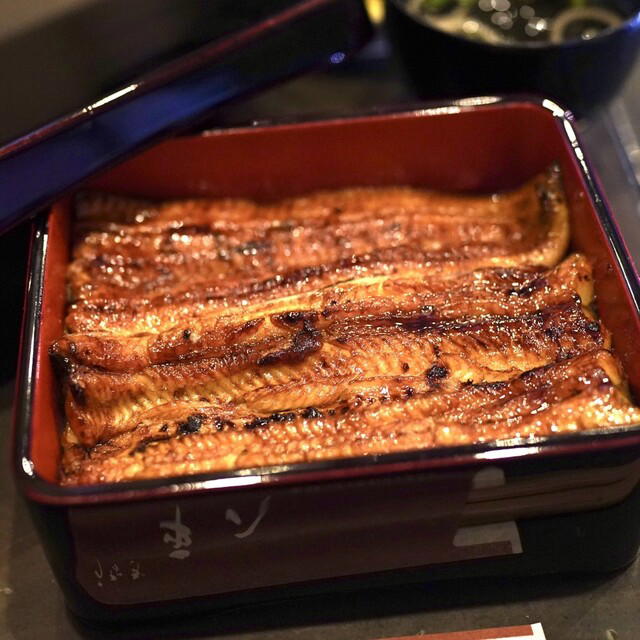
Tokyo slows the meal before it begins. Away from the city’s busiest restaurant corridors, Unagi Heihachi suits unagi: eel restaurants are built around waiting, heat, smoke, rice, and timing, not counter-sushi speed or kaiseki procession. Unagi Heihachi works in that older rhythm, where the category supplies the drama.
Tokyo’s unagi scene rewards specialization. The craft is narrow by design, and stronger addresses compete through control rather than novelty: eel preparation, rice texture, tare behavior over repeat use, and a room that manages a dish resistant to haste. A 2024 selection in Tabelog Hyakumeiten for unagi places Unagi Heihachi within a defined group of eel specialists, not broad Japanese restaurants that also serve eel.
Tokyo puts unagi in a slower register
Location shapes expectation. Tokyo is not only late-night dining density or hotel-lobby spectacle. Its restaurant culture can also be local, domestic, and purpose-led, which suits unagi better than theatre. The setting is useful for travellers who have already done Tokyo’s high-pressure reservation circuit and want a meal anchored in one tradition.
The format says what kind of lunch or dinner this is. Unagi Heihachi is best understood as a focused eel restaurant rather than a private-counter exercise. The appeal is not controlled seclusion or design spectacle, but a specialist dining room where aroma, rice, sauce, and timing carry the experience.
Compared with other Tokyo addresses in the wider EP Club index, the distinction is category focus. ARTISAN BOULANGER CUPIDO points to bakery craft, while Okusawa Factory Coffee and Bakes sits in a coffee-and-bakes lane. BAMBAKUN, Yakitori Uno, and 日本酒と和風中華OZ speak to other Tokyo appetites. Unagi Heihachi is narrower, and that is the point.
The meal is about focus rather than range
The clearest frame is category recognition, but in an unagi room the more important language is the meal’s internal rhythm. Unagi can be a solitary bowl-and-go proposition in less formal settings; here, the point is to treat grilled eel, sauce, and rice as the main event rather than as an afterthought.
That matters for international diners who often approach unagi as one famous dish rather than a restaurant category. In Japan, eel houses have their own cadence and vocabulary. The conversation is not chef autobiography or seasonal invention, but repetition, heat management, and the confidence to do one thing with discipline. A Tabelog score of 3.69 should be read in that context. Japanese user-rating culture is conservative, and category-specific recognition often says more than broad acclaim.
The price band clarifies the decision. Lunch and dinner both sit at JPY 4,000 to JPY 4,999, below Tokyo’s luxury omakase economy and above casual station dining. That middle bracket makes the restaurant useful for travellers seeking a serious unagi address without making the evening a high-ticket event.
For a wider trip, the restaurant belongs in a Tokyo itinerary that values category depth. The city is better understood by moving across forms: eel at Unagi Heihachi, yakitori, bakery stops, coffee and bakes, then other dining in Tokyo showing another side of the capital. EP Club’s wider indexes help frame that spread: Our full Tokyo restaurants guide, Our full Tokyo bars guide, Our full Tokyo hotels guide, Our full Tokyo wineries guide, and Our full Tokyo experiences guide.
Who should choose this over central Tokyo dining
Choose it when value lies in a specialist Japanese form rather than breadth. Diners seeking a long tasting menu, chef-led narrative, or high-design room should look elsewhere. Diners who want unagi as the main event, with a grounded Tokyo setting, have a clear reason to choose it.
The practical read is straightforward: this is a category-led restaurant with pricing that is easy to understand before committing. For current opening details or booking questions, call the restaurant directly at +81-3-3722-0198. Its Tokyo position pairs better with a day built around focused food stops than with an overpacked sightseeing schedule.
For comparison beyond this meal, EP Club’s Japan and overseas restaurant coverage shows how category-specific dining travels across regions. Other restaurants may express Japanese food through grilling, curry, rice-based formats, or drinking culture, but Tokyo remains the stronger classroom for unagi as a dedicated restaurant tradition.
The editorial read is simple: Unagi Heihachi does not compete with Tokyo’s grand dining rooms. Its value lies in focus, category recognition, accessible pricing, and a setting that slows the meal down. In a city where prestige often means counter scarcity and tasting-menu ambition, a disciplined eel specialist offers another kind of confidence.
Frequently asked questions
What's Unagi Heihachi's location?
Tokyo.
What's the price range at Unagi Heihachi?
Pricing at Unagi Heihachi is listed as JPY 4,000 - JPY 4,999 JPY 4,000 - JPY 4,999 View spending breakdown.
What time does Unagi Heihachi open and close?
For current hours, call Unagi Heihachi at +81-3-3722-0198.
What's Unagi Heihachi best at?
Unagi Heihachi is built around eel, and that focus is backed by its 2024 Tabelog Hyakumeiten recognition for unagi. The appeal is a specialist Tokyo unagi meal rather than range.
Can Unagi Heihachi adjust for dietary needs?
The menu is centered on unagi, so dietary adjustments may be limited. For specific needs, call +81-3-3722-0198 before visiting.
Cuisine and Credentials
Side-by-side context: comparable cuisine and price.
| Venue | Cuisine | Price | Awards | Notes |
|---|---|---|---|---|
| Unagi HeihachiThis venue (the venue you are viewing) | Traditional Unagi (grilled eel) restaurant | $30–50 | Tabelog 100 #90 | Not listed |
| たんたん亭 本店 | Classic Tokyo Shina Soba & Wonton Ramen | $10–20 | Tabelog 100 #84 | Hamadayama |
| Toyama Shiroebitei (富山白えび亭) | Toyama White Shrimp Tempura Bowls | $20–30 | Not listed | Marunouchi |
| Toyoda | Japanese chicken & kara-age specialist | $30–50 | Tabelog 100 #12 | Meguro |
| Mahakala | Kushikatsu Izakaya | $30–50 | Not listed | Meguro |
| Yakiniku Dori gg | Chicken-focused Yakiniku Izakaya | $30–50 | Tabelog 100 #52 | Shibuya |
Recognition history
Dated appearances from independent guides and award organizations, with the underlying list record or original source where available.
Tabelog 100 #90 · No. 90
Tabelog · Tabelog 100 - Unagi - 2024
Continue exploring
More in Tokyo
Restaurants in Tokyo
All restaurants in Tokyo →

Bars in Tokyo
All bars in Tokyo →






Details
- Classic
- Cozy
- Quiet
- Family
- Casual Hangout
- Group Dining
- Solo
- Standalone
- Sake Program
- A La Carte
- Counter Dining
- Sake
- Shochu
- Pescatarian Friendly
Current opening hours
- Monday
- 11:30 AM–1:30 PM, 5–8 PM
- Tuesday
- 11:30 AM–1:30 PM, 5–8 PM
- Wednesday
- 11:30 AM–1:30 PM, 5–8 PM
- Thursday
- 11:30 AM–1:30 PM, 5–8 PM
- Friday
- 11:30 AM–1:30 PM, 5–8 PM
- Saturday
- 11:30 AM–1:30 PM, 5–8 PM
- Sunday
- 11:30 AM–1:30 PM, 5–8 PM
Hours can change for holidays and private events. Last verified .
A small, non-smoking unagi restaurant with around two dozen seats split between counter, tables, and a raised tatami area, offering a calm, classic neighborhood feel suited to families and friends rather than high-end formality.