Ultra bite

Michelin Plate
Our verdict
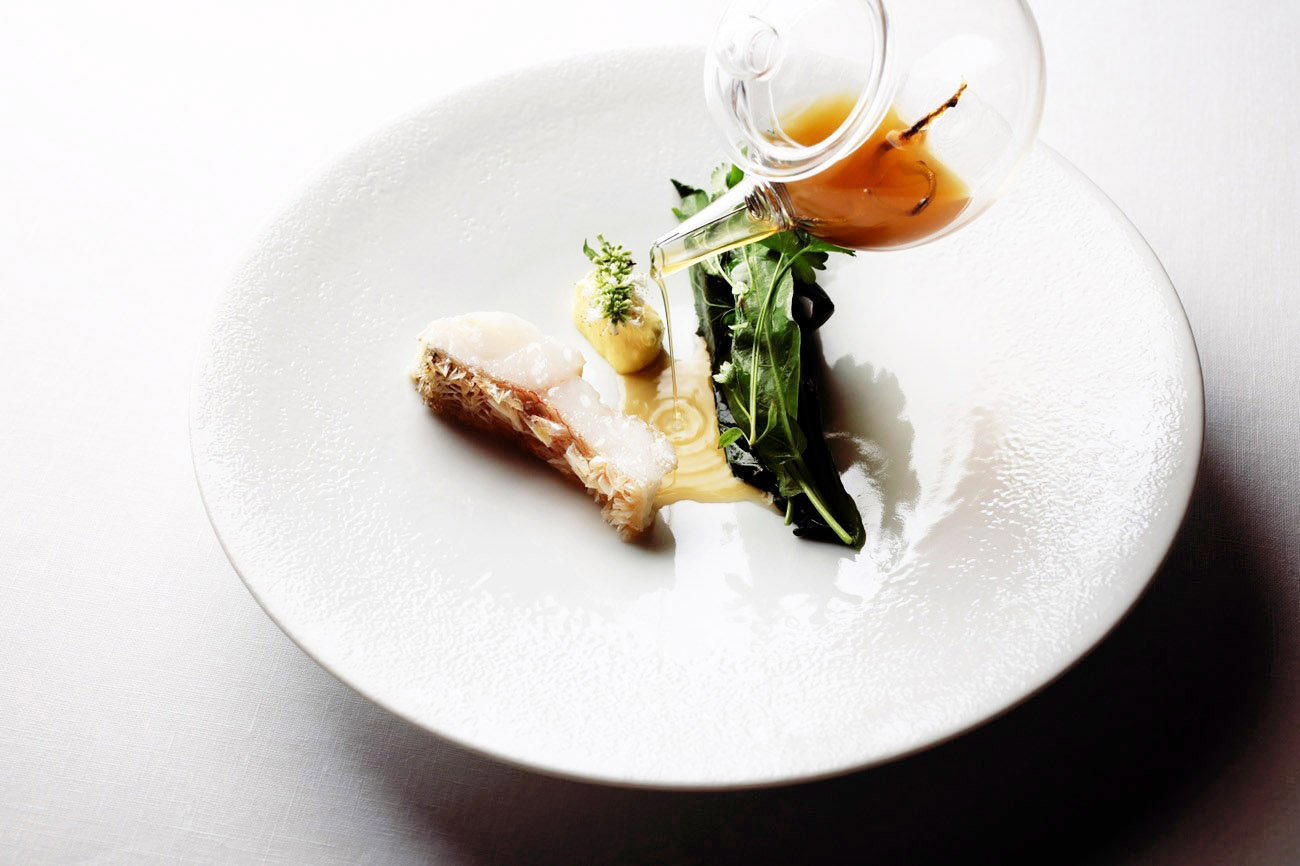
At the end of a Gwanganri alley in Suyeong-gu, Ultra bite runs a tight, modern operation where young chefs trained in Australia and Seoul apply technical precision to local ingredients. Whole grilled squid with anchovy cream, and deep-fried king oyster mushrooms in a sweet-spicy ginger sauce signal the kitchen's range. The wine list follows the same international-meets-Korean register.

Pearl is the En Primeur Club membership app, where members save venues, book tables and use the concierge.
The menu
What to order
- Whole grilled squid
- Deep-fried whole king oyster mushrooms
A Gwanganri Alley, Reframed
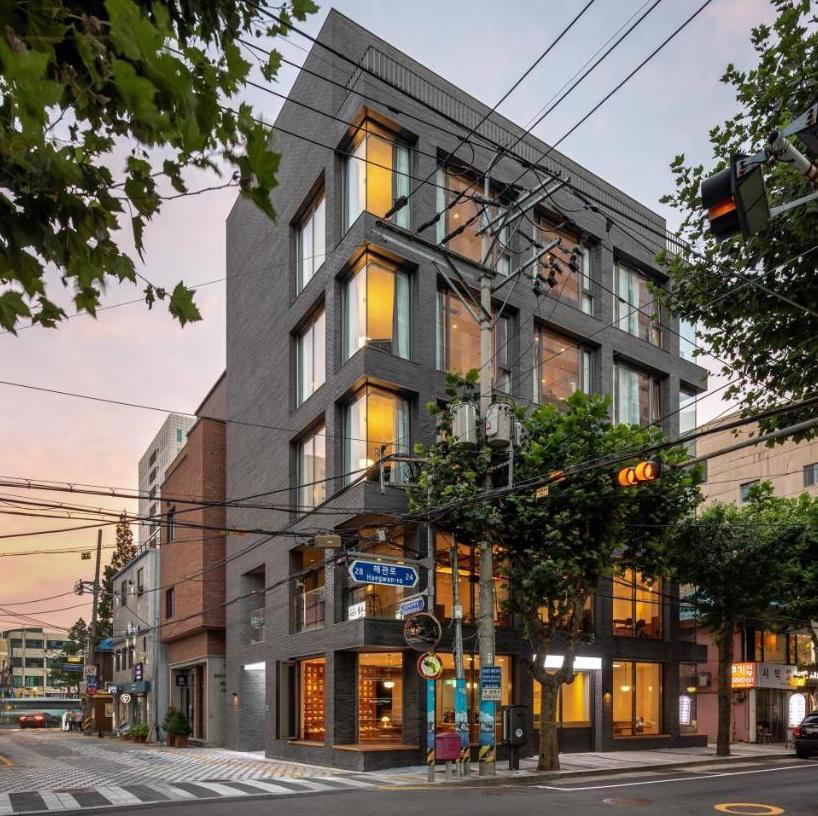
Busan's contemporary dining scene has developed a recognisable spatial grammar: small-format rooms in low-profile buildings, often tucked into residential or light-commercial streets rather than the restaurant corridors of Seomyeon or Haeundae. Ultra bite fits this pattern. The restaurant sits at the end of a narrow alley off Milak-ro in Suyeong-gu, its sleek modern façade contrasting with the surrounding streetscape in a way that has become shorthand for a certain kind of serious, independent kitchen in this city. The building announces its intentions before you enter: this is not a legacy institution but a forward-looking project in a neighbourhood still finding its dining identity.
The interior follows through on that first impression. Where older Busan dining rooms leaned into warmth through exposed wood and low lighting, the newer cohort of contemporary restaurants here tends toward restraint in materials and deliberate spatial compression. A small counter or tight table layout is not an accident of real estate but a design choice that places the food at the centre of the experience and leaves little room for distraction. Ultra bite belongs to this format, where the physical container signals that the kitchen's work is the event.
The Kitchen's Frame of Reference
South Korea's contemporary restaurant generation increasingly draws on training arcs that pass through multiple cities and cuisines. The chefs behind Ultra bite trained in both Australia and Seoul, a combination that surfaces in the menu's logic: Korean ingredients and fermentation techniques read alongside the cross-cultural precision that Australian fine dining has developed over the past two decades. This is not fusion in any reductive sense. It is a kitchen that has absorbed two distinct food cultures and found a coherent register between them.
That register shows up most clearly in the way the menu handles both protein and vegetable. Whole grilled squid arrives with anchovy cream, lardo, and fermented tomato pickles. The dish is technically composed but stops short of being fussy: the fermentation element gives it a depth that anchors the richness of the lardo, and the squid is treated as a main subject rather than a supporting act. The approach is comparable, at a register level, to what younger Seoul kitchens are doing with Korean produce at restaurants like Mingles in Seoul, though Ultra bite operates at a more accessible price point and in a more compressed spatial format.
The vegetable treatment is equally considered. Deep-fried whole king oyster mushrooms coated in sweet and spicy ginger sauce, finished with lime juice and seaweed flakes on the side, demonstrate a kitchen that takes textural contrast seriously. The crisp exterior against the mushroom's natural density, the citrus cut against the ginger heat: these are not decorative choices. They are the same kind of deliberate balance that drives high-attention kitchens elsewhere, from Le Bernardin in New York City to Emeril's in New Orleans, scaled down to a neighbourhood format in Suyeong-gu.
Where Ultra bite Sits in Busan's Dining Spread
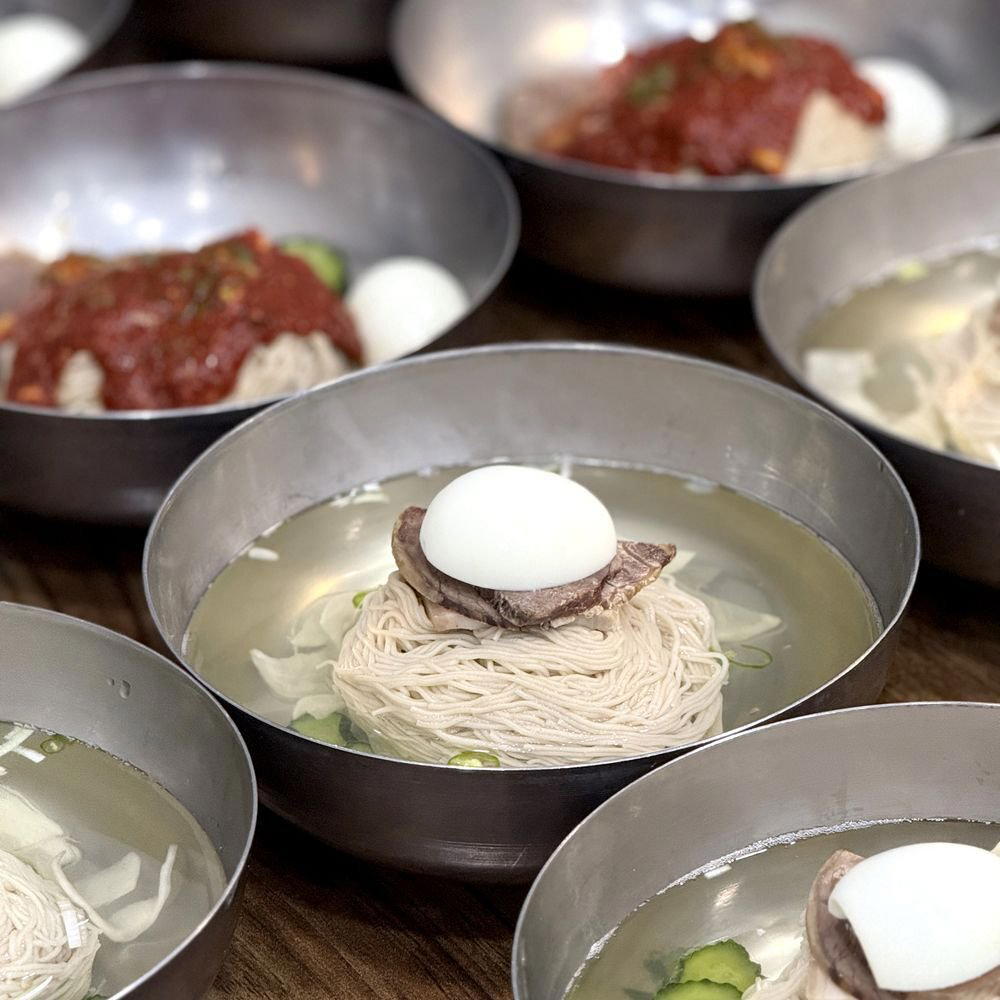
Busan's restaurant offer spans a wide range, from the city's foundational pork bone soup and cold noodle houses to high-investment contemporary rooms. 100.1. Pyeongnaeng and 1969 Buwondong Kalguksu anchor the traditional end of the spectrum. At the upper end, Born and Bred operates as a four-price-band steakhouse. Mori holds the Japanese fine-dining position at three price bands.
Ultra bite occupies a middle register similar to Palate, Busan's other contemporary two-band room, though the two kitchens approach the contemporary format differently. Where Palate applies its own editorial logic to ingredients, Ultra bite's dual training background gives it a specific Australia-Korea cross-cultural signature. Both represent the growing tier of Busan restaurants that are building an audience on technical cooking rather than traditional category identity or imported prestige.
The wine program at Ultra bite, from the available record, follows the same internationalist logic as the food: approachable rather than trophy-focused, chosen to work with a menu that moves between Korean fermentation notes and the cleaner, brighter acidity of its Australian-influenced dishes. This is a different instinct from the sake-led pairing culture at Japanese rooms like Mori, or the cellar-depth expected at a room like 권숙수 - Kwon Sook Soo in Gangnam-gu. It is more in line with what independent contemporary restaurants across South Korea are building at this price tier, where wine is present and considered but not the primary signal of ambition.
Getting There and Planning Your Visit
Ultra bite is located at 28 Milak-ro 14beon-gil in Suyeong-gu, within walking distance of the Gwanganri waterfront. The neighbourhood sits between the busier Haeundae district to the east and the older commercial core of Seomyeon to the west, making it a natural stop in an evening that moves across Busan's southern coastal strip. Given the small-format nature of the space and the kitchen's evident following, booking ahead is advisable; alley restaurants of this type in Korean cities at this price point tend to fill on weekends with limited walk-in availability. Suyeong-gu is accessible by subway on Line 2 (Gwangan or Geumnyeon stations) and by taxi from Haeundae in under fifteen minutes outside peak traffic.
For a fuller picture of what Busan's dining, drinking, and hospitality offer looks like across categories, see our full Busan restaurants guide, our full Busan bars guide, our full Busan hotels guide, our full Busan wineries guide, and our full Busan experiences guide. For comparable contemporary cooking in other Korean cities, Double T Dining in Gangneung, Pool House in Incheon, and 더 플라잉 호그 - The Flying Hog in Seogwipo provide useful reference points. For temple food as a distinct Korean dining tradition, Baegyangsa Temple in Jangseong-gun offers a different angle on the country's relationship with fermentation and vegetable-forward cooking.
Frequently asked questions
What distinctions does Ultra bite have?
Ultra bite has received recognition including: With its sleek, modern façade, Ultra bite stands at the end of a small Gwanganri alley. Run by young chefs trained in Australia and Seoul, the restaurant offers refined, imaginative yet approachable dishes and wines. Highlights include whol….
How do I find Ultra bite?
Ultra bite is located at 28 Milak-ro 14beon-gil, Suyeong-gu, Busan.
What's the must-try dish at Ultra bite?
Two dishes define the kitchen's approach: whole grilled squid with anchovy cream, lardo, and fermented tomato pickles, and deep-fried whole king oyster mushrooms in a sweet and spicy ginger sauce finished with lime juice and seaweed flakes. Both show the kitchen's preference for fermentation and textural contrast over straightforward plating.
Is Ultra bite reservation-only?
Given the small-format room at 28 Milak-ro 14beon-gil in Suyeong-gu, arriving without a booking carries risk, contacting the venue directly through available local platforms before visiting is advisable.
What has Ultra bite built its reputation on?
Ultra bite draws attention for placing Australian and Seoul training behind dishes that read as approachable rather than overly technical. The Gwanganri address, at the end of a low-profile alley, has become part of the identity: a room that does not signal its ambition from the street but delivers it through the food.
Can Ultra bite adjust for dietary needs?
The kitchen's use of anchovy cream, lardo, and fermented elements across signature dishes suggests animal products are central to the current menu, guests with specific requirements should confirm directly with the restaurant before booking.
Accolades, Compared
Comparable venues nearby, for context on price, style, and recognition.
| Venue | Cuisine | Price | Awards | Notes |
|---|---|---|---|---|
| Ultra biteThis venue (the venue you are viewing) | Contemporary | Not listed | Michelin Plate | Not listed |
| Jin Dweji Gomtang | Modern Dwaeji Gomtang | $10–20 | Michelin Plate | Millak-dong |
| Moemiljip | Korean Buckwheat Noodles (Memil-guksu) | $20–30 | Michelin Bib Gourmand | U 3-dong |
| 1969 Buwondong Kalguksu | Traditional Busan Kalguksu | $1–10 | Michelin Plate | Nampo-dong |
| Pyeongyangjip | North Korean-style Mandu | Not listed | Michelin Plate | Deokcheon 2(i)-dong |
| Cha Ae Jeon Halmae Kalguksu | Traditional Korean Kalguksu Noodles | Not listed | Michelin Plate | Yeonsan 9(gu)-dong |
Recognition history
Dated appearances from independent guides and award organizations, with the underlying list record or original source where available.
Michelin Plate
Michelin
Continue exploring
More in Busan
Restaurants in Busan
All restaurants in Busan →
Bars in Busan
All bars in Busan →
Details
- Modern
- Cozy
- Trendy
- Date Night
- Open Kitchen
- Extensive Wine List
- A La Carte
Current opening hours
- Monday
- 6 PM–1 AM
- Tuesday
- Closed
- Wednesday
- 6 PM–1 AM
- Thursday
- 6 PM–1 AM
- Friday
- 6 PM–1 AM
- Saturday
- 6 PM–1 AM
- Sunday
- 6 PM–1 AM
Hours can change for holidays and private events. Hours as of .
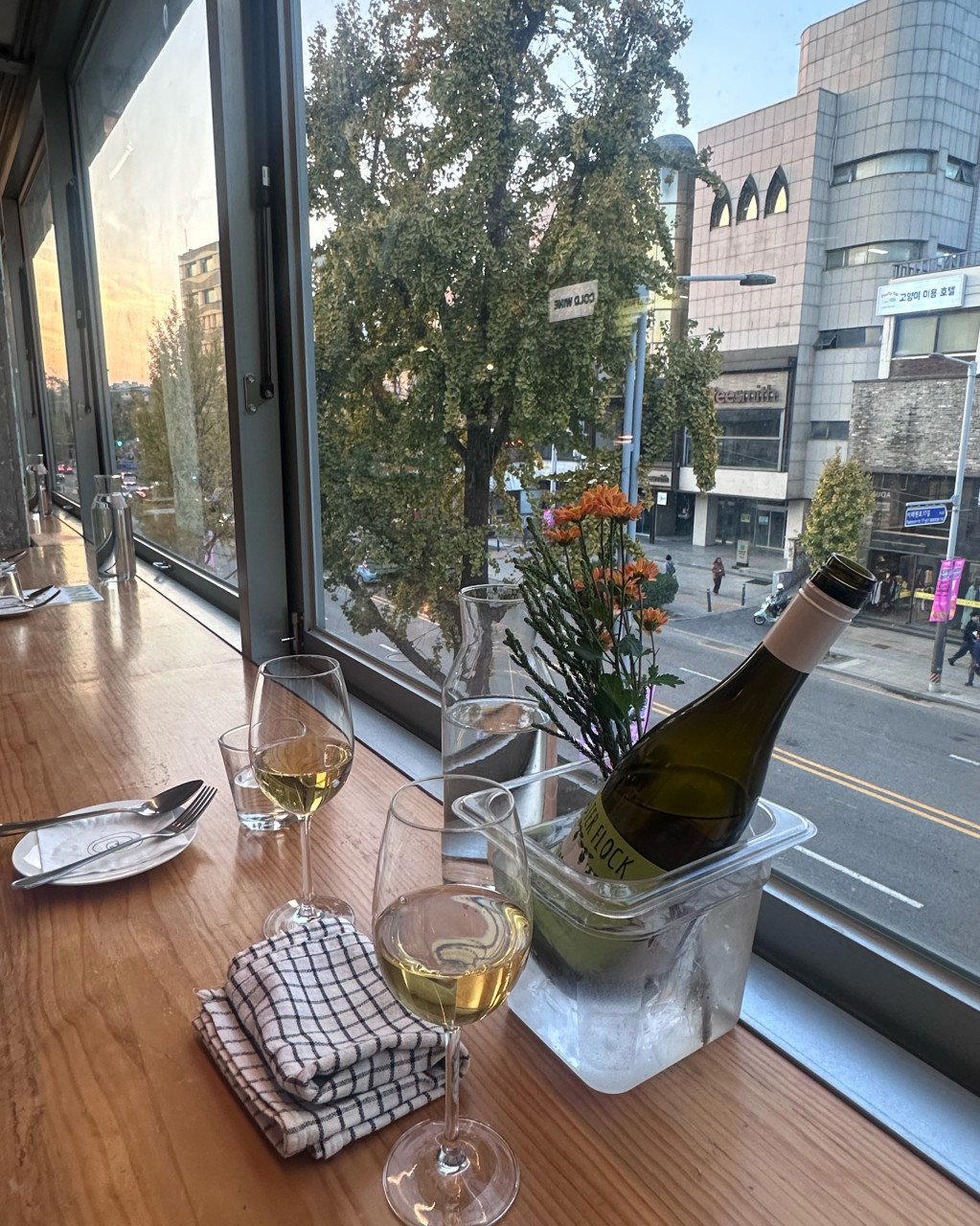
Cozy interior with soft lighting and visible wine bottles through large windows.