Star Wine List
Our verdict
In Uehara, Shibuya's quieter residential fringe, Ukiyo occupies a ground-floor space where chef Toshi Akama applies spice with the precision of a seasoning editor rather than a showman. The kitchen draws on global influences without advertising them, producing dishes — soft-shell turtle among the signatures — that read as subtle before they reveal themselves as considered. For Tokyo's globally inflected dining tier, Ukiyo is a measured and rewarding address.

Pearl is the En Primeur Club membership app — saves, bookings, and concierge access live there. Same editors, same standards.
- Address
- Japan, 〒151-0064 Tokyo, Shibuya, Uehara, 1 Chome−32−3 Cabo, 1F
- Phone
- +81 3-6407-0170
- Hours
- Mon–Thu 7 PM–12 AMFri–Sat 12–3 PM, 7 PM–12 AMSun Closed
- Website
- instagram.com
- Directions
- Get directions
Uehara and the Quietly Global Edge of Tokyo Dining
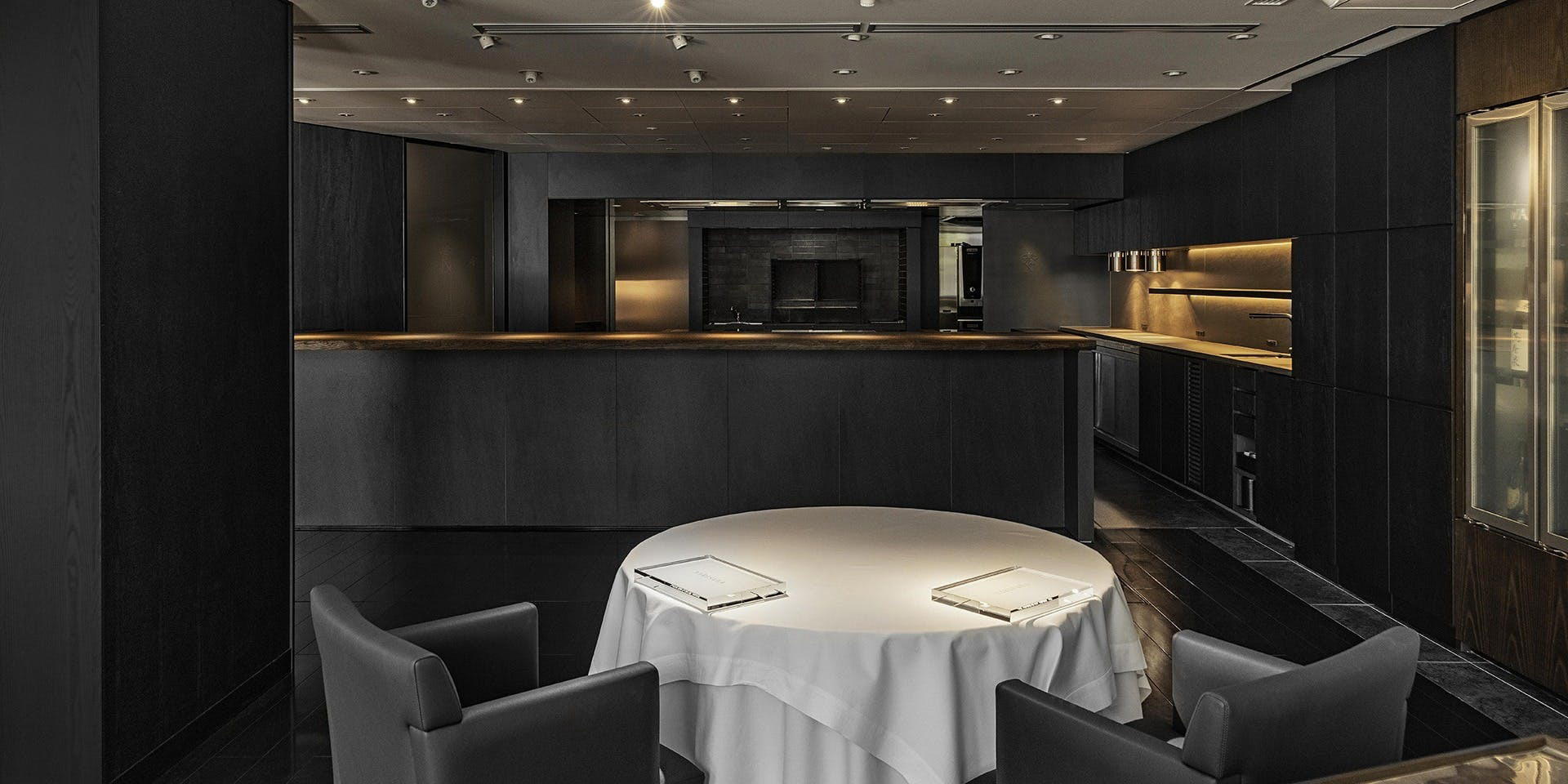
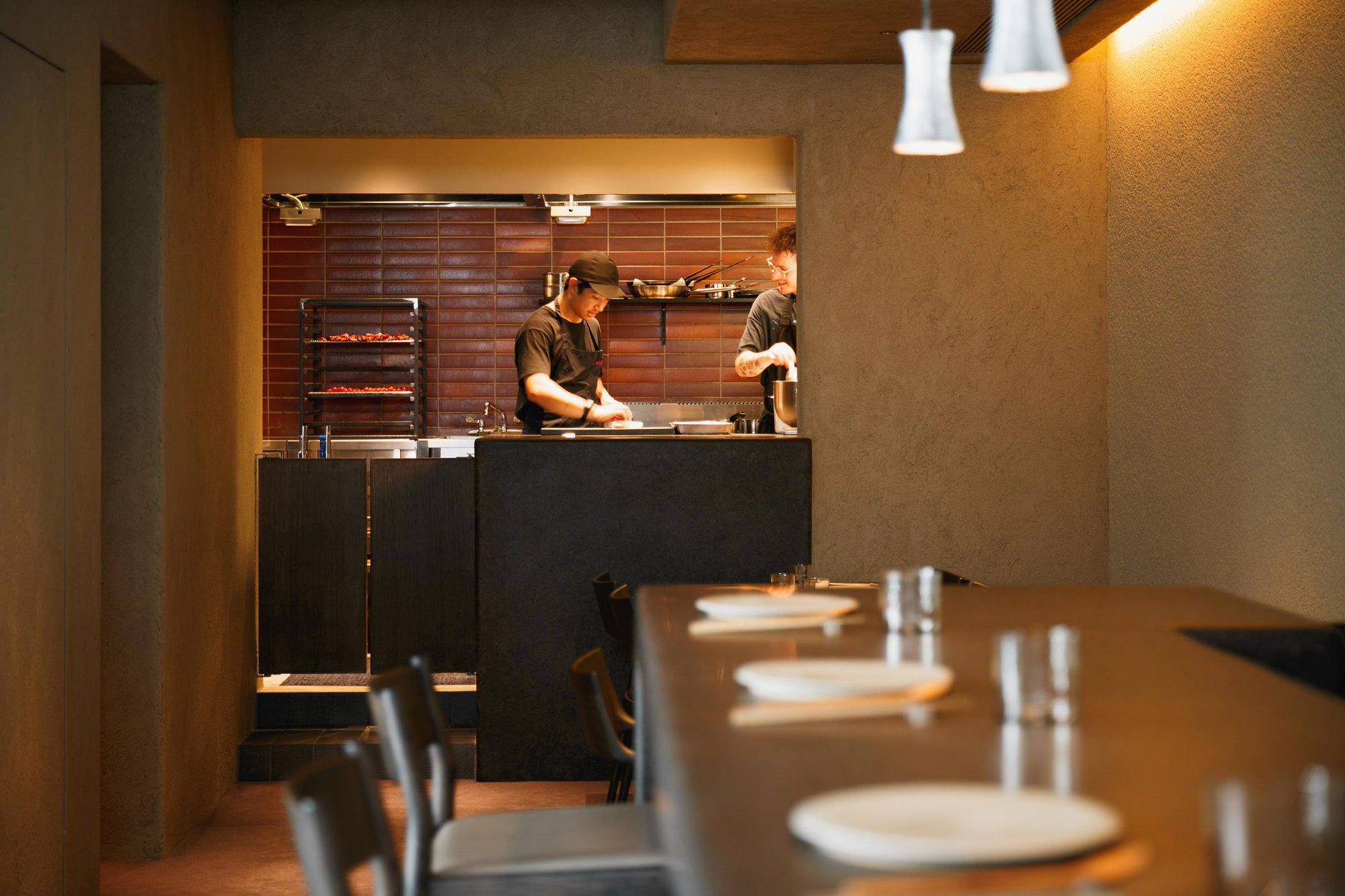
Tokyo's dining map rarely flattens. The city stratifies by neighbourhood as much as by cuisine tier, and Uehara — a residential pocket of Shibuya ward that most visitors drift past on the way to Shimokitazawa or Yoyogi — has quietly accumulated a cluster of considered restaurants that owe nothing to the spectacle economy of central Tokyo. The address at 1 Chome-32-3 Cabo, 1F, Uehara, places Ukiyo in that company: ground-floor, no marquee signage, no street-theatre entrance. Approaching at dusk, the visual register is domestic rather than commercial, which in Tokyo dining shorthand signals a room built around the plate rather than the threshold.
This is worth contextualising against where much of Tokyo's globally influenced cooking actually happens. The ¥¥¥¥-tier tables in Ginza or Minami-Aoyama increasingly perform internationalism loudly, French technique displayed over kaiseki bones, Iberian produce announced on menus, wine lists assembled to impress importers. Ukiyo operates differently. Chef Toshi Akama works with global ingredients and cross-cultural spice logic, but the emphasis is on calibration rather than declaration. Dishes surprise in the way that well-edited prose surprises: you notice the effect before you locate the mechanism.
The Kitchen's Approach: Spice as Nuance
Across Tokyo's broader category of globally inflected modern cooking, a tier that includes addresses like Crony, which works a French-innovative register, and the seasonally rigorous L'Effervescence, the handling of non-Japanese flavour sources varies widely. Some kitchens use them as accent; others restructure dishes around them entirely. Akama's method sits in a third position: spice deployed for nuance rather than for impact, functioning below the level of overt identification. You may register warmth, or depth, or a finish that extends longer than expected, without necessarily identifying a specific spice source. This is harder to execute than it looks. Spice at low volume has nowhere to hide structural weakness.
The kitchen's treatment of suppon, soft-shell turtle, a traditional Japanese ingredient with considerable textural and flavour complexity, illustrates the approach. In classic Japanese cooking, suppon tends toward richly gelatinous preparations with minimal interference. Akama's crisp suppon treatment reframes the ingredient's texture, applying global technique to a product embedded in Japanese culinary memory. The result is the kitchen's sensibility in microcosm: familiar reference point, unexpected execution, no ingredient wasted on effect alone.
For context on how Tokyo handles modernist reinterpretation of Japanese ingredients at the high end, the kaiseki programme at RyuGin and the sushi counter at Harutaka represent the more orthodox high-investment track. Ukiyo reads as a different kind of proposition: quieter scale, less ceremony, but a kitchen with a clear point of view.
On the Wine and Beverage Programme
Tokyo's globally inflected cooking tier has in recent years developed wine programmes that move well beyond the default gesture toward Burgundy and Champagne. The city now has sommeliers operating at a genuinely curatorial level, building lists that match the cross-cultural logic of their kitchens rather than simply importing a European hierarchy. The editorial angle at Ukiyo's beverage programme aligns with the kitchen's philosophy: selection shaped by how a wine or drink performs alongside spice-led, globally inflected food rather than how it performs as a standalone cellar statement.
In practical terms, this means the list rewards guests who work with the room's recommendation rather than defaulting to known producers. Tokyo has demonstrated, across a number of independently operated modern restaurants, that smaller curated programmes with higher editorial discipline tend to produce better pairings than deep cellars assembled for prestige. Ukiyo's address in Uehara, away from the import-heavy international hotel dining circuit, allows a beverage approach built around the food rather than around market expectation. Comparable cross-cultural beverage curation at the higher price tier can be tracked at Sézanne, where the wine programme works in explicit dialogue with Daniel Calvert's French-accented kitchen.
For readers building a broader Japan itinerary with wine as a lens, it is worth noting how regionally specific some of the country's serious programmes have become. Bleston Court Yukawatan in Nagano operates with access to domestic Japanese wine producers at a level Tokyo restaurants rarely match, and akordu in Nara brings a Spanish-trained perspective on natural wine to kaiseki-adjacent cooking. These are reference points rather than competitors; Ukiyo belongs to a specifically Tokyo-based, globally inflected category that has no exact equivalent elsewhere in Japan.
Where Ukiyo Sits in the Tokyo Dining Order
Tokyo's restaurant hierarchy is both dense and internally specific. The Michelin framework, which has covered Tokyo longer and more granularly than almost any other city outside France, rewards both precision craft (the sushi counters, the kaiseki rooms) and innovative departure (the creative-French tier represented by addresses like L'Effervescence). Ukiyo's globally inflected, spice-nuanced approach places it in a sub-tier that Michelin has increasingly engaged with: restaurants that are neither purely Japanese in tradition nor straightforwardly Western in technique, but that operate in the productive friction between both.
Beyond Tokyo, the restaurants that most closely parallel Akama's calibration-led approach include HAJIME in Osaka, which takes ingredient purity to a different extreme, and Goh in Fukuoka, where Takeshi Fukuyama applies modern technique to Kyushu produce with similarly quiet confidence. At the international level, the model of technical rigour applied without theatrical declaration has parallels at Le Bernardin in New York City, where precision is the spectacle. Gion Sasaki in Kyoto and giueme in Akita represent how different regional contexts within Japan shape the same impulse toward considered, non-showy cooking.
Planning a Visit
Uehara is accessible from Yoyogi-Uehara Station on the Odakyu and Tokyo Metro Chiyoda lines, making it a direct connection from central Shibuya or Shinjuku without the crowd density of either. The ground-floor space at Cabo, 1F is compact in the manner of most serious independent Tokyo restaurants, which means seat count is limited and demand-to-capacity ratios favour advance planning. No booking window figure appears in available data, but the general pattern for restaurants of this type and ambition in Tokyo is two to four weeks minimum for weekend sittings, with weekday slots somewhat more accessible.
For further context on Shibuya's broader dining and hospitality offer, see our full Tokyo restaurants guide, our full Tokyo hotels guide, our full Tokyo bars guide, our full Tokyo experiences guide, and our full Tokyo wineries guide.
Frequently asked questions
Where exactly is Ukiyo?
Ukiyo is located at Japan, 〒151-0064 Tokyo, Shibuya, Uehara, 1 Chome−32−3 Cabo, 1F, Tokyo.
What distinctions does Ukiyo have?
Ukiyo has received recognition including: Ukiyo takes a measured approach to globally influenced cuisine, with chef Toshi Akama using spice not for impact but for nuance. His dishes surprise in subtle, creative ways – a crisp suppon (soft-she....
What's the must-try dish at Ukiyo?
The suppon (soft-shell turtle) preparation is the clearest expression of chef Toshi Akama's approach at this Uehara address: a dish that surprises through restraint and precision rather than overt technique. It represents the kitchen's philosophy of spice as nuance, which distinguishes Ukiyo from louder entries in Tokyo's globally inflected tier.
How far ahead should I plan for Ukiyo?
Ukiyo operates in Uehara, a residential pocket of Shibuya ward that draws a deliberate crowd rather than walk-in traffic. Booking ahead is advisable; as with comparable creative kitchens in Tokyo's quieter neighbourhoods, demand typically outpaces casual availability, particularly on weekends.
What's the signature at Ukiyo?
Chef Toshi Akama's defining move is using global spice frameworks to add depth rather than heat or novelty — the kitchen's crisp suppon dish is the documented example of this. That measured, unexpected approach to flavour construction is what separates Ukiyo from peers working a more straightforwardly French-inflected register in the same Tokyo tier.
Can Ukiyo handle vegetarian requests?
The kitchen's documented focus on proteins like suppon suggests animal products are central to the tasting format at this Uehara restaurant. Prospective vegetarian guests should contact Ukiyo directly before booking to confirm whether the kitchen can accommodate dietary substitutions within its current menu structure.
Cost Snapshot
Comparable venues nearby, for context on price, style, and recognition.
| Venue | Cuisine | Price | Awards | Notes |
|---|---|---|---|---|
| UkiyoThis venue — the venue you are viewing | Modern Spice-Infused Charcoal Grill | $100–150 | Star Wine List | Not listed |
| LOOP TOKYO | Innovative Creative Tasting Menu in Asakusa | $100–150 | Tabelog 100 #89 | Taitō, Innovative Creative Tasting Menu in Asakusa |
| Spice Kurashi | Creative spice-driven Asian & Indian curry bar | $30–50 | Tabelog 100 #4 | Meguro, Creative spice-driven Asian & Indian curry bar |
| La Clairière | French Fine Dining | Not listed | Tabelog Bronze | Minato, French Fine Dining |
| songbook | Wood-fired Italian-Asian Fusion Pizza | $50–100 | Michelin Plate | Setagaya, Wood-fired Italian-Asian Fusion Pizza |
| Hatsudai Spice Shokudo Wakon Insai Tandoru | Japanese-inspired Indian curry & spice canteen | $10–20 | Tabelog 100 #6 | Shinjuku, Japanese-inspired Indian curry & spice canteen |
Recognition history
Dated appearances from independent guides and award organizations, with the underlying list record or original source where available.
Star Wine List
Star Wine List