
1 Michelin Star
Our verdict
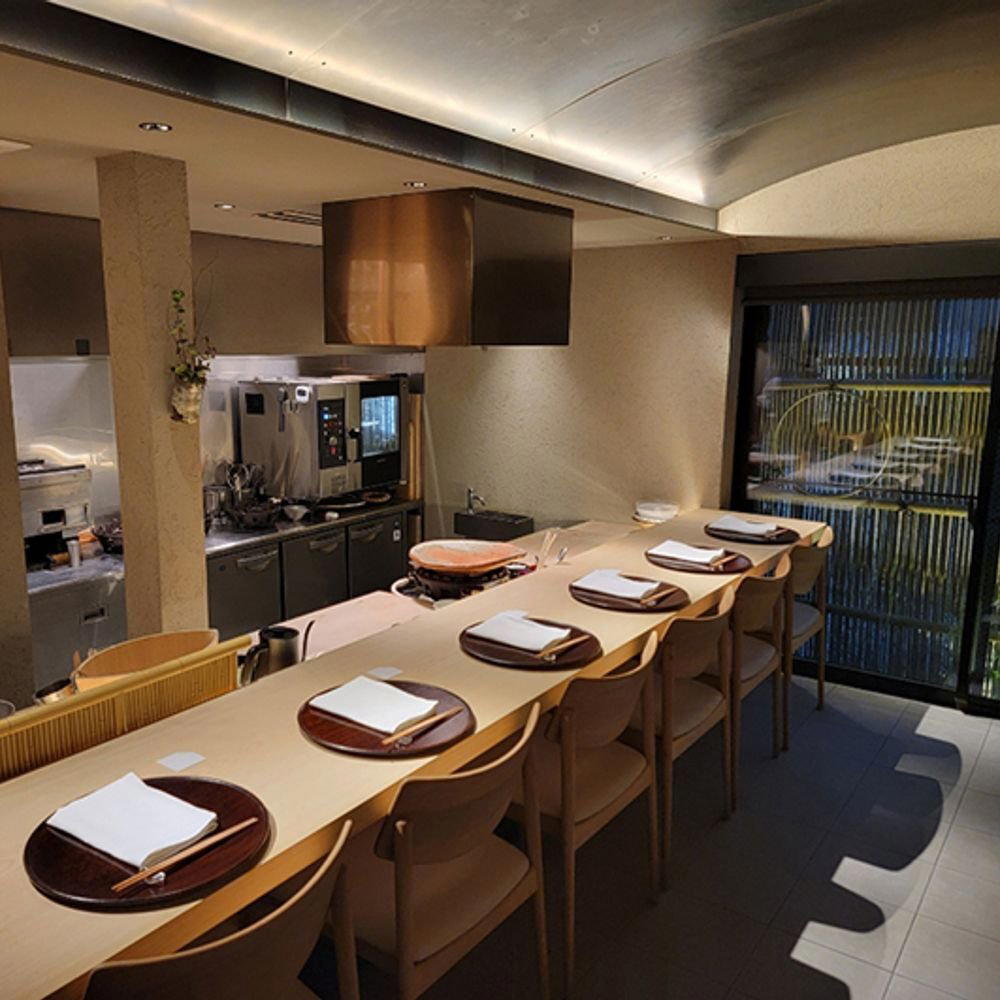
Located in Osaka's Kita-ku district, Ukitacho Ima is a chef-driven restaurant rooted in the disciplined traditions of Hozenji Yokocho. The kitchen's emphasis on knife technique and its commitment to cooking that reflects the present moment place it within Osaka's broader conversation about what contemporary Japanese dining can be. Reservations are advisable given the intimate format.

Pearl is the En Primeur Club membership app, where members save venues, book tables and use the concierge.
Kita-ku and the Question of What Japanese Dining Looks Like Now
Osaka's Kita-ku carries a different energy from the tourist-facing streets of Dotonbori or the heritage weight of Minami's older dining corridors. The neighbourhood functions more as a working city district, where restaurants earn their reputations from a local clientele that returns regularly rather than from passing foot traffic. In that context, a kitchen that describes its cooking as cuisine of the 'here and now' is making a specific argument: that the most interesting Japanese food at this moment is neither a faithful reconstruction of classical forms nor a wholesale adoption of Western techniques, but something formed from accumulated craft applied without nostalgia. Ukitacho Ima, at 2-5-27 Ukida, makes that argument through the food on the plate.
The Hozenji Yokocho Lineage and What It Produces
Hozenji Yokocho, the narrow stone-paved alley in Minami lined with small, long-established restaurants, has served as a training ground for several generations of Osaka cooks. Its kitchens tend toward intimacy and precision: small counter formats, menus that shift with the season, and a relationship between chef and diner that assumes some level of shared literacy about what's on the plate. A chef who spent years working in that environment carries a particular set of instincts into any subsequent kitchen, including a sensitivity to how knife work affects the texture and flavour of raw fish, and a preference for cooking that communicates through restraint rather than accumulation.
At Ukitacho Ima, those instincts are present in the daily knife practice the chef maintains as a disciplinary exercise rather than a performance. In Japanese professional kitchens, the relationship between cutting technique and flavour in sashimi is taken seriously at every tier: the angle of the cut, the thickness of each slice, and the temperature of the fish all affect what arrives on the tongue. That the kitchen treats this as a living skill requiring constant refinement rather than a settled competency is one of the more telling signals about how the food is approached overall. It sits within Osaka's broader tradition of taking craft seriously without making craft the spectacle.
Where Ukitacho Ima Sits in Osaka's Restaurant Tiers
Osaka's fine dining spectrum runs from three-Michelin-star French-influenced formats like HAJIME and La Cime at the top of the ¥¥¥¥ tier, through kaiseki houses such as Kashiwaya Osaka Senriyama and Taian in the ¥¥¥ bracket, to a wider set of chef-driven Japanese restaurants where format and pricing are less standardised. Ukitacho Ima does not carry the institutional weight of the comparison venues above, but it operates with a clarity of purpose that places it in conversation with them. The distinction between copying a mentor and forging an independent approach is not a romantic notion in Japanese restaurant culture; it is a concrete marker of a kitchen's maturity and its relationship to the broader tradition it emerged from.
For those building a multi-day Osaka dining itinerary, Ukitacho Ima offers a register that the Michelin-decorated rooms do not: a more intimate, less codified experience where the cooking reflects a chef at work on his own terms rather than executing within an established critical framework. It is a different kind of visit from Fujiya 1935's structured innovation, and its value lies precisely in that difference.
Drinks, Pairing, and the Question of Curation at This Scale
The editorial angle of wine list depth and sommelier expertise requires some honesty at a kitchen of this type. Osaka has a well-developed restaurant wine culture, partly because of the influence of its French-trained chefs and partly because the city's diners have broader European wine exposure than is sometimes assumed from outside Japan. At the ¥¥¥¥ tier, houses like HAJIME carry cellars curated with serious depth. At a chef-driven Japanese restaurant of Ukitacho Ima's scale and positioning, the drinks program is more likely to serve the food than to function as a parallel curatorial statement.
That is not a limitation so much as a structural reality of intimate Japanese restaurants: the pairing logic here typically runs through sake, shochu, and a focused selection of wine rather than through a cellar designed for vertical exploration. For diners whose primary interest is deep wine programming, the comparison venues at the ¥¥¥¥ tier will be the more appropriate choice. For diners whose interest is in how drinks are chosen to support cooking that changes with the season and the chef's current thinking, a smaller program can be precisely calibrated in ways a large cellar sometimes cannot. The key question to ask at booking is whether the kitchen offers any guided pairing, and whether the selection includes local sake producers alongside any wine.
Readers with an interest in what Japanese culinary craft looks like in other regions can find related reference points at Harutaka in Tokyo, Gion Sasaki in Kyoto, akordu in Nara, Goh in Fukuoka, Bleston Court Yukawatan in Nagano, and giueme in Akita. Each operates from a similar premise: that Japanese cooking in its strongest contemporary form is rooted in specific technique, specific place, and a specific chef's accumulated understanding, rather than in a category label.
Planning a Visit
Ukitacho Ima is at 2-5-27 Ukida, Kita-ku, Osaka. Kita-ku is well served by rail connections through Osaka and Umeda stations, making the address accessible without complication from central Osaka. Given the intimate scale of the restaurant, booking in advance is the sensible approach; walk-in availability at kitchens of this type tends to be limited, particularly on weekend evenings. For the broader Osaka dining context, our full Osaka restaurants guide covers the city's tiers in detail. Accommodation options are mapped in our full Osaka hotels guide, and the city's bar scene is covered in our full Osaka bars guide. For completeness, our full Osaka wineries guide and our full Osaka experiences guide round out the city picture.
Frequently asked questions
Is Ukitacho Ima award-winning?
Ukitacho Ima has received recognition including: The chef spent years fine-tuning his skills in a Japanese restaurant in Hozenji Yokocho. While treasuring the lessons he learned there, he now blazes his own culinary trail. Mindful of how knife technique can affect the flavour of sashimi, ….
How do I find Ukitacho Ima?
Ukitacho Ima is located at 2-5-27 Ukida, Kita-ku, Osaka.
What do people recommend at Ukitacho Ima?
The kitchen's reputation centres on its sashimi work, where the chef applies a knife technique refined through years at Hozenji Yokocho and continued through daily practice. Dishes are framed around the present season rather than a fixed menu, so what arrives at the counter reflects that week's produce and the chef's current thinking. There is no signature dish in the conventional sense, the menu is the point.
Is Ukitacho Ima reservation-only?
Chef-driven Japanese counters in Kita-ku at this scale almost never accommodate walk-ins reliably. Booking ahead is the practical approach, and for a kitchen with a following built on personal training lineage at Hozenji Yokocho, seats fill on reputation alone. Contact is best made through the restaurant directly; no online booking link is currently listed.
What's the standout thing about Ukitacho Ima?
The defining quality here is the chef's deliberate break from imitation. Trained in the long-established restaurant culture of Hozenji Yokocho, he absorbed that tradition and then built a distinct cooking identity around what he calls cuisine of the 'here and now.' That framing, absorbed craft expressed as something current rather than inherited, separates this kitchen from restaurants that rest on a mentor's name.
Pricing, Compared
Comparable venues nearby, for context on price, style, and recognition.
| Venue | Cuisine | Price | Awards | Notes |
|---|---|---|---|---|
| Ukitacho ImaThis venue (the venue you are viewing) | Seasonal Japanese Fine Dining | $300–500 | 1 Michelin Star | Not listed |
| Oryori Nonohara | Modern Japanese Kappo Omakase | $300–500 | Michelin Plate | Fukushima, Modern Japanese Kappo Omakase |
| Kawahara | Modern Kaiseki | $100–150 | Michelin Plate | Kita, Modern Kaiseki |
| Shintaro | Kansai-Style Tempura | $100–150 | Michelin Plate | Kita, Kansai-Style Tempura |
| Sushisho Nehachi | Modern Omakase Sushi | $50–100 | Michelin Plate | Fukushima, Modern Omakase Sushi |
| Numata Sou | Tempura Omakase | Not listed | 1 Michelin Star · Tabelog 100 #11 | Kita, Seasonal Tempura Omakase |
Recognition history
Dated appearances from independent guides and award organizations, with the underlying list record or original source where available.
Michelin 1 Star
Michelin
Continue exploring
More in Osaka
Restaurants in Osaka
All restaurants in Osaka →



Bars in Osaka
All bars in Osaka →



Hotels in Osaka
All hotels in Osaka →


Wineries in Osaka
Browse all →
Details
- Elegant
- Intimate
- Date Night
- Special Occasion
- Chefs Counter
- Sake Program
- Counter Dining
Refined and intimate counter seating with focus on seasonal ingredients.