Rue Sainte-Anne has been Paris's most concentrated strip of Japanese dining for decades, and Udon Jubey occupies a dependable position within it. The kitchen focuses on sanuki-style udon in a format that suits both solo diners and groups. For visitors spending time in the 1st arrondissement, it sits within walking distance of the Palais Royal and the Louvre.
Pearl is the En Primeur Club membership app — saves, bookings, and concierge access live there. Same editors, same standards.
- Address
- 39 Rue Sainte-Anne, 75001 Paris, France
- Phone
- +33 1 40 15 92 54
- Website
- kintarogroup.com
- Directions
- Get directions
 Saves & bookings on Pearl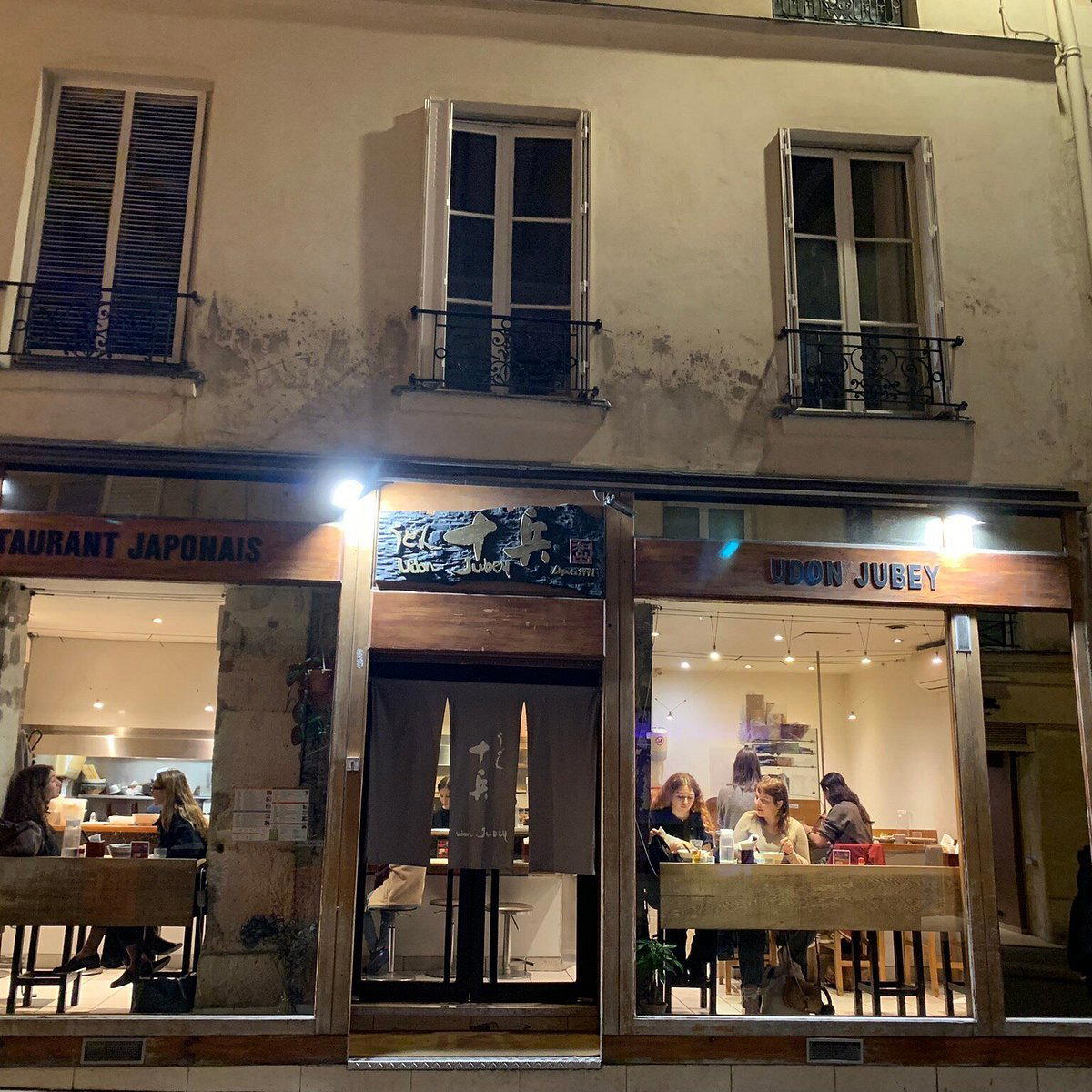
Rue Sainte-Anne and the Grammar of Parisian Japanese Dining
The stretch of Rue Sainte-Anne running through the 1st arrondissement has functioned as Paris's Japanese dining corridor since at least the 1980s, when the city's Japanese expatriate and business community began concentrating around the Opéra district. By the early 2000s, the street had developed a recognisable grammar of its own: ramen counters, izakayas, sushi bars, and udon specialists operating side by side at price points accessible well below the starred French dining that defines much of the city's international reputation. Udon Jubey, at number 39, belongs to that tradition — a specialist format in a neighbourhood that has long rewarded specialisation.
That context matters more than it might first appear. Paris's Japanese restaurant scene is not monolithic. The high-end end of the spectrum includes Michelin-recognised fusion work, such as Kei, where Japanese technique operates inside a Contemporary French framework at €€€€ price points. Rue Sainte-Anne functions differently: its appeal rests on authenticity of form and accessibility of format, not on positioning relative to the starred establishments around Place Vendôme or the Champs-Élysées. Where Le Cinq at the Four Seasons George V or Alléno Paris au Pavillon Ledoyen define the capital's highest-register dining, Rue Sainte-Anne defines something else entirely: the daily-use, craft-focused end of a genuinely international food city.
The Physical Container: Space, Format, and the Design Logic of Udon Counters
Japanese noodle restaurants in Paris — and in Tokyo, for that matter, tend to resolve around a consistent spatial logic: the counter, the open kitchen visible from the dining area, the absence of excess space between preparation and service. This arrangement is partly cultural and partly practical. Udon requires precision in noodle temperature and broth consistency that does not travel well across long service distances. Counter and close-format seating keeps the interval between kitchen and guest short, which in turn keeps the product closer to its intended state.
Udon Jubey at 39 Rue Sainte-Anne operates within this tradition. The address is a narrow-frontage building on a street where narrow-frontage buildings are the architectural norm, and the interior reflects the compressed, functional aesthetic that sanuki udon specialists in Japan have refined over generations. There is no theatrical gesture here of the kind found in destination dining rooms, no design-led hotel restaurant aesthetic of the sort that has become common across Paris's higher price tiers. The spatial priority is the bowl and the efficiency of its delivery. That restraint is itself a form of design commitment, and one worth reading correctly rather than dismissing as absence of ambition.
For diners accustomed to the formal dining rooms of L'Ambroisie on the Place des Vosges or the considered interiors of Arpège, Rue Sainte-Anne operates in a completely different register. The comparison is not a value judgement; it is a clarification of what the format promises and delivers.
Sanuki Udon in a French Context
Sanuki udon, the style associated with Kagawa Prefecture in Japan, is characterised by thick, firm wheat noodles with a pronounced chew, served in a light dashi broth. The discipline required to produce the noodle correctly is significant: the wheat-to-water ratio, the kneading method, the resting time, and the cutting precision all affect the final texture in ways that experienced diners notice immediately. In Japan, sanuki udon specialists operate at volume and speed, with self-service formats common in Kagawa itself. In Paris, that same discipline is transposed into a sit-down, table-service context that suits the city's dining culture without compromising the core product.
Udon Jubey's position on Rue Sainte-Anne places it within a peer group of Japanese specialists operating at a similar format and price register. The street's dining character has remained consistent even as other parts of the 1st arrondissement have shifted toward higher-end French and international dining. For a sense of how far the French fine dining tradition extends beyond Paris, the work at Flocons de Sel in Megève, Mirazur in Menton, or Troisgros in Ouches represents an entirely different branch of what French dining means. Rue Sainte-Anne's Japanese corridor sits outside that tradition entirely, which is precisely its function.
Who Eats Here and When
The seasonal logic of Rue Sainte-Anne is worth noting. Autumn and winter are high-demand periods for broth-based noodle formats across the city, and udon specialists in particular see sustained weekday lunch traffic from the neighbourhood's office and cultural institution workers. The street draws fewer tourists than the immediately adjacent Palais Royal or Louvre precincts, which gives it a working-lunch character that persists even during high-season summer months.
The broader French dining calendar, particularly the August slowdown, when many Paris restaurants close, affects Rue Sainte-Anne less than it does traditional French establishments. Japanese-operated restaurants on the street have historically maintained more consistent year-round service schedules, though specific hours for Udon Jubey should be confirmed directly before visiting. This pattern holds across comparable noodle specialists in the city and reflects the different operational logic of Japanese restaurant formats versus French ones.
Planning Your Visit: How Udon Jubey Compares
| Venue | Cuisine / Format | Price Tier | Booking Approach | Location |
|---|---|---|---|---|
| Udon Jubey | Japanese udon specialist | €–€€ | Walk-in typical for the format | 39 Rue Sainte-Anne, 1st arr. |
| Kei | Contemporary French/Japanese | €€€€ | Advance reservation required | Louvre district, 1st arr. |
| L'Ambroisie | Classic French | €€€€ | Advance reservation required | Place des Vosges, 4th arr. |
| Alléno Paris | Creative French | €€€€ | Advance reservation required | Champs-Élysées, 8th arr. |
For a fuller view of where Udon Jubey sits within the broader Paris dining picture, including the city's Michelin-starred addresses, neighbourhood breakdowns, and practical logistics, see our full Paris restaurants guide. For reference points on what the upper end of French regional dining looks like beyond the capital, Auberge de l'Ill in Illhaeusern, Bras in Laguiole, and Paul Bocuse in Collonges-au-Mont-d'Or offer useful contrast. Internationally, the technical discipline of noodle-focused tasting formats at Atomix in New York or the French-rooted precision of Le Bernardin occupies a different tier entirely. Closer to Paris, Assiette Champenoise in Reims, Au Crocodile in Strasbourg, Auberge du Vieux Puits in Fontjoncouse, and AM par Alexandre Mazzia in Marseille represent the French regional starred tradition at its most serious.
How Udon Jubey Paris compares with similar nearby venues.
| Venue | Cuisine | Price |
|---|---|---|
| Charbon Kunitoraya | Yakitori | €€€€ |
| Kunitoraya | Udon | Not listed |
Continue exploring
More in Paris
Restaurants in Paris
Browse all →
Bars in Paris
Browse all →
Hotels in Paris
Browse all →



At a Glance
- Cozy
- Modern
- Casual Hangout
- Open Kitchen
- Sake Program
Current opening hours
- Monday
- 11:30 AM–9:45 PM
- Tuesday
- 11:30 AM–9:45 PM
- Wednesday
- 11:30 AM–9:45 PM
- Thursday
- 11:30 AM–9:45 PM
- Friday
- 11:30 AM–9:45 PM
- Saturday
- 11:30 AM–9:45 PM
- Sunday
- 11:30 AM–9:45 PM
Hours can change for holidays and private events. Last verified .
Cozy and simple modern Japanese canteen with an open kitchen providing transparency into fresh preparations.
Know Before You Go
- Getting there
- 39 Rue Sainte-Anne, 75001 Paris, France