
Tsuke Soba Ishii gives Ichikawa a serious tsukemen counter with a narrow format and real recognition: Tabelog Ramen EAST “Tabelog 100” selections in 2024 and 2025. The appeal is less about ceremony than concentration, with dipping noodles framed as a compact, ingredient-led meal rather than a casual fallback.
Pearl is the En Primeur Club membership app — saves, bookings, and concierge access live there. Same editors, same standards.
- Address
- 千葉県市川市市川3‐27‐20 ライオンズステーションプラザ市川・国府台 1F
- Website
- tabelog.com
 Saves & bookings on Pearl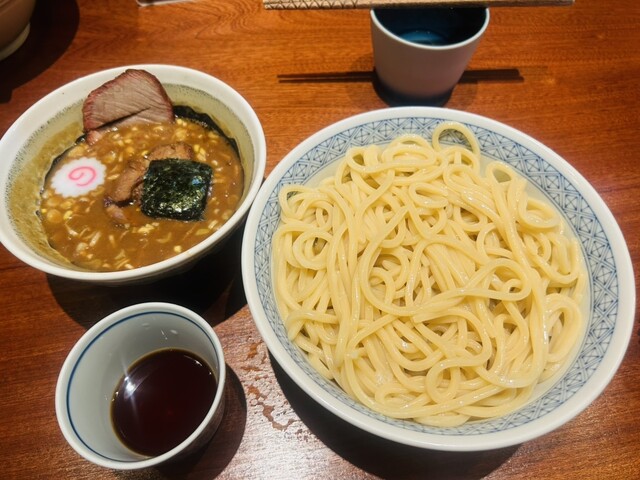
The first signal is scale. Ichikawa’s strongest noodle rooms are not built for lingering; they compress the meal into a counter, a bowl, a dipping broth, and a quick read of how much care has gone into the base. Tsukemen rewards that compression. Because the noodles and soup are served separately, weak texture and thin seasoning have nowhere to hide. Tsuke Soba Ishii belongs to that demanding category: a small counter dedicated to dipping noodles, recognised in Tabelog’s Ramen EAST “Tabelog 100” in both 2024 and 2025, and operating in a price tier that keeps the focus on the bowl rather than the occasion.
That matters in Ichikawa, a city often treated as a commuter corridor between central Tokyo and Chiba rather than a dining destination in its own right. The better reading is different. Ichikawa’s food scene is fragmented but useful: specialist noodle shops, neighbourhood grills, curry houses, Indonesian cooking, and low-key counters that do not need a Ginza postcode to draw serious eaters. For a wider map, Our full Ichikawa restaurants guide gives the city more context than a single ramen stop can carry.
Tsukemen here is about separation, texture, and sourcing discipline
Tsukemen is often misunderstood by travellers as ramen with a side bowl. The format is stricter than that. The noodles need enough chew to stay convincing after cooling slightly; the dipping soup needs concentration without turning salty after repeated passes; toppings and aromatics have to support the broth rather than distract from it. In Japan’s ramen culture, where regional broths and shop lineages are debated with forensic attention, tsukemen sits in a particularly technical lane because temperature, starch, fat, and salt are experienced in sequence rather than as one blended bowl.
Ingredient sourcing is the quiet pressure point. A dipping-noodle shop cannot disguise average noodles with a flood of hot broth. Wheat character, hydration, cut, and cooking precision all register quickly. The same is true of the soup base: animal richness, seafood depth, soy seasoning, or dried-fish intensity must be calibrated for dipping, not sipping. Tsuke Soba Ishii’s recognition on a ramen-specific Tabelog list places it among shops judged within that exact grammar, not against broader casual dining. A Tabelog score of 3.77 also signals traction in a category where small differences in execution are heavily scrutinised by repeat diners.
Ichikawa has useful contrasts nearby. China Soba Komuro points toward the shoyu-ramen side of the city’s noodle conversation, while Chonan Montaichio gives another local reference for how focused, inexpensive Japanese dining can compete on craft rather than room design. Outside noodles, Enak Enak and Gyotoku Biryani House show how Ichikawa’s dining identity extends beyond Japanese staples, while Jagaimo sits in a higher local spend bracket and serves a different kind of neighbourhood decision.
A six-seat counter changes the meal's tempo
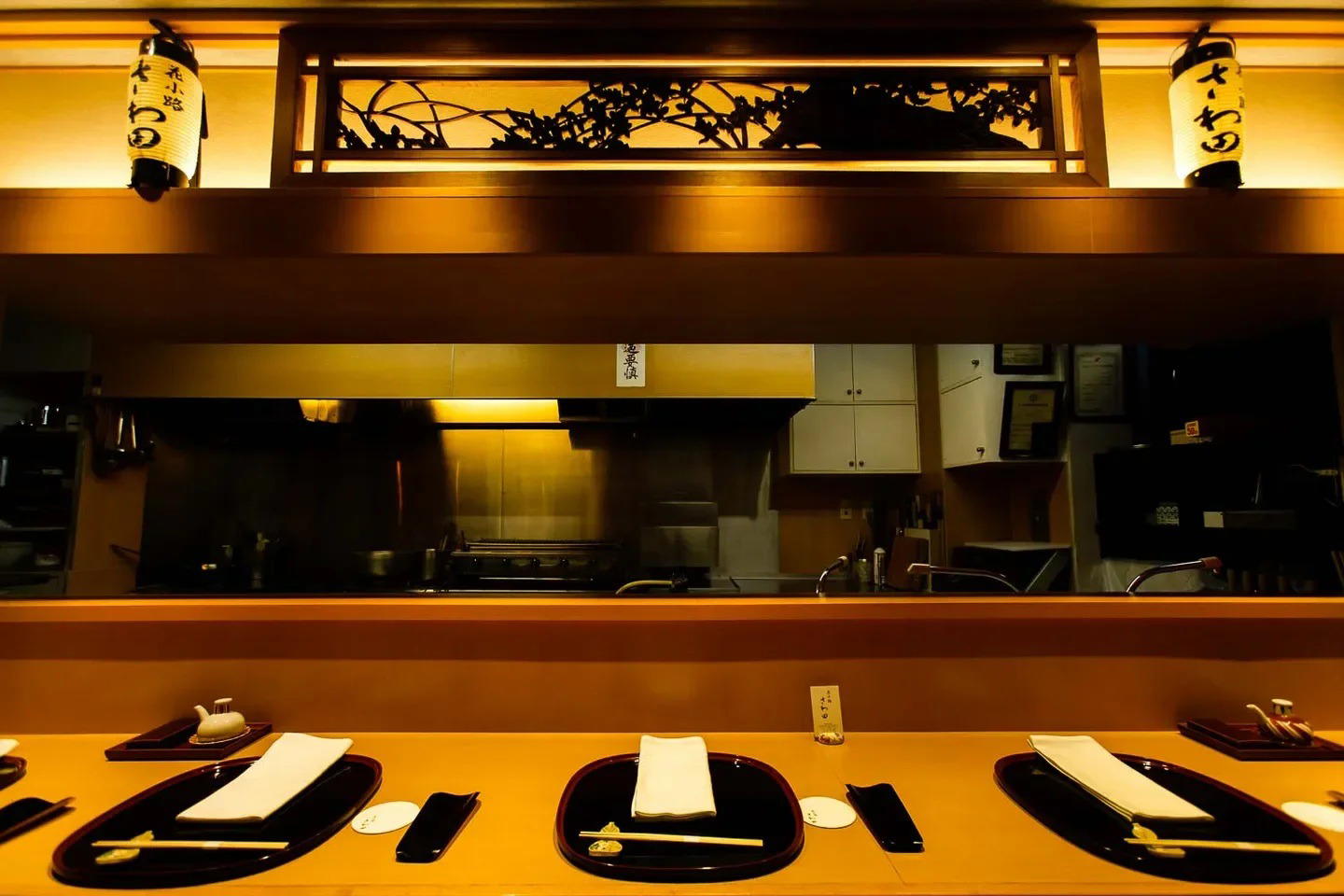
Small ramen counters create a useful discipline for diners. The room does not ask for a long narrative; it asks for attention. With six counter seats, the experience is closer to a tasting bar for noodles than a casual table meal, even though the spend remains modest. That contrast is part of the appeal. Japan’s noodle culture has long separated seriousness from luxury, and tsukemen is one of the clearest examples: a narrow format, quick turnover, direct scrutiny from the counter, and a meal that can be judged on repeatable fundamentals.
The setting also changes how to think about Ichikawa as a stop. This is not a restaurant to build an entire day around unless noodles are the point of the trip. It works better as a precise detour within a Chiba or eastern Tokyo itinerary, especially for diners who understand that award-list ramen is often less theatrical than social media suggests. The useful comparison is not a multi-course restaurant. It is the broader class of Japanese specialist counters where limited seating, a defined category, and consistent execution carry more weight than menu breadth.
For travellers using Ichikawa as a base, the surrounding editorial map matters. Dining can be paired with Our full Ichikawa hotels guide, while the city’s after-dark options sit separately in Our full Ichikawa bars guide. Broader planning pages such as Our full Ichikawa wineries guide and Our full Ichikawa experiences guide are better used as orientation tools than as proof that every category has equal depth locally.
How it fits into a Japan specialist-eating itinerary
The strongest reason to come is category specificity. Tsuke Soba Ishii is not trying to cover ramen as a whole; it is built around tsukemen, and that narrower brief is exactly why the recognition carries weight. In a country where many high-performing meals happen in rooms with little ceremony, a small dipping-noodle counter can be a cleaner expression of craft than a larger restaurant with broader ambitions.
Travellers building a route around Japanese specialist dining can place Ichikawa alongside other narrowly defined stops rather than only famous city-centre addresses. The same logic applies across formats: -Grilled beef Sukiyaki- KAMAKURA TANUKIAN 鎌倉 たぬき庵 in Kamakura for a beef-focused meal. 鮪と炭火焼き うお炭 秋葉原店 in Tokyo for tuna and charcoal-grill context.cafe in Osaka for a different urban rhythm.know in Kumamoto for regional contrast, (Shoku) Vietnam in Kawasaki for non-Japanese cooking within Japan, and [Curry Senmon Ten] Maruyama Kyoju. in Sapporo for another single-category address. For readers comparing Japanese food culture abroad, Jōdo Saké Bar in Los Angeles and Onigiri Time in Pasadena show how formats travel and change outside Japan.
The editorial call is simple: this is a strong Ichikawa pick for diners who care about noodles as craft, not as convenience. The Tabelog selections supply the trust signal; the counter format supplies the discipline; the tsukemen category supplies the reason to pay attention to sourcing and texture. In a city where the dining conversation is spread across small specialists, that is enough.
Comparable Spots, Quickly
Comparable venues by cuisine and price in the same metro.
| Venue | Cuisine | Price | Notes |
|---|---|---|---|
| Tsuke Soba IshiiThis venue — the venue you are viewing | Tsukemen / Dipping Noodles | $ | Not listed |
| Shokudo Otsuka | Japanese cafeteria set-meal (shokudo) | $ | Gyotoku |
| Chonan Montaichio | Tsukemen ramen shop | $ | Moto-Yawata |
| Pizzeria Canto Della Terra | Neapolitan Pizzeria & Italian | $$ | Minamiyawata / Motoyawata |
| Jagaimo | Potato-focused yoshoku (Japanese-style Western) | $$ | Motoyawata |
| China Soba Komuro | Classic Japanese Ramen | $ | Suehiro |
Recognition history
Dated appearances from independent guides and award organizations, with the underlying list record or original source where available.
Tabelog 100 #55 · No. 55
Tabelog · Tabelog 100 - Ramen - EAST - 2025








At a Glance
- Quiet
- Cozy
- Solo
- Family
- Casual Hangout
- Standalone
Minimal, intimate counter dining with a small footprint and a focused, no-frills noodle shop atmosphere.