
Tabelog 100 #35
Our verdict
China Soba Komuro places Ichikawa’s ramen conversation in a precise, ingredient-led register rather than a maximalist one. Its Tabelog Ramen EAST 100 selections for 2023, 2024, and 2025, 18-seat format, and ramen-tsukemen focus make it a serious stop for readers tracking how suburban Chiba shops compete with Tokyo’s better-known noodle counters.

Pearl is the En Primeur Club membership app, where members save venues, book tables and use the concierge.
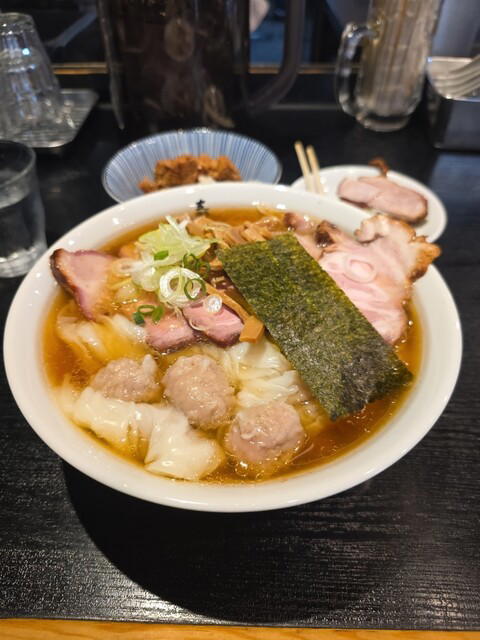
The menu
See the current menu on x.com →A serious ramen shop in suburban Chiba often speaks quietly. Around Gyotoku, the rhythm is residential and practical: station traffic, errands, compact storefronts, and dining rooms for regulars, not ceremony. In that context, China Soba Komuro matters because it belongs to the contemporary shina soba current, where clarity, sourcing discipline, and restraint outweigh volume or spectacle.
Ichikawa’s position on the Tokyo Metro Tozai Line gives its dining scene useful tension: close enough to central Tokyo to absorb ramen culture, local enough to reward consistency over novelty. Its stronger casual addresses tend to be independent, format-specific, and sharper than their settings suggest. For a wider read, Our full Ichikawa restaurants guide is the natural starting point, with nearby contrasts from Gyotoku Biryani House to Jagaimo, Open Oven, Chonan Montaichio, and Enak Enak.
Shina soba discipline in a city that rewards regulars
Japan’s ramen culture is often misread abroad as one comfort-food category. In practice, its serious end splits into heavy tonkotsu, chicken paitan, niboshi-led bowls, tsukemen, and the cleaner shina soba lineage. Shina soba asks for balance rather than force: broth, tare, noodles, aroma oil, and toppings must read as one composition, with little room to hide behind fat, salt, or theatrical plating.
China Soba Komuro sits in that clearer register, with ramen and tsukemen as stated categories and a public note linking the owner to Shina Soba Kazuya. That credential matters less as biography than context: in ramen, lineage signals technique, palate, and competitive set. A shina soba address with that background is judged against precision-focused noodle counters, not broad casual chains or late-night drinking ramen.
The Tabelog Ramen EAST 100 selections in 2023, 2024, and 2025 place the shop in a regional conversation beyond Ichikawa. Tabelog’s Hyakumeiten lists are not Michelin-style inspections, but they matter in Japanese food culture because they reflect sustained user attention around category specialists. A 3.85 score on the platform, attached to a small ramen shop outside central Tokyo, is a strong signal in a market where ratings move conservatively.
The ingredient-sourcing angle is not about naming farms or rare products, which would be irresponsible without a published list. It is about how this ramen school treats ingredients as structure. In shina soba, stock materials, soy seasoning base, noodle choice, and finishing oil are not decorative; they decide whether the bowl lands clean or thin, layered or muddled. For serious ramen travelers, the format exposes decisions rather than burying them.
The counter-and-table format keeps the focus on the bowl
Room scale shapes the experience. Eighteen seats, split between six counter seats and three four-person tables, put the shop between a tiny counter-only ramen bar and a more accommodating casual room, while keeping pace and turnover important. The counter suits solo diners eating with attention; the tables make it easier for pairs, friends, and families than many specialist noodle shops.
That matters in Ichikawa, where suburban ramen demand is not only destination-driven. Local customers need a place that works for lunch, a parent with a school-age child, or a quick meal with a friend. The no-smoking policy and children-welcome note reinforce that civic function. Specialist ramen can seem intimidating, but better suburban examples require no guest performance: order, eat while the noodles hold texture, and leave the seat for the next diner.
Compared with Gyotoku Biryani House, whose draw is a different spice-and-rice tradition at a casual price tier, this is Ichikawa’s Japanese noodle lane: narrower, more timing-dependent, and more exposed to ramen obsessives’ expectations. Steak Ishii sits in a higher dinner-spend bracket, clarifying Komuro’s role. It is not a splurge restaurant; it is a category specialist whose credibility comes from repetition, recognition, and control.
Tsukemen also reframes the meal. Dipping noodles are not simply ramen with broth on the side; the format changes texture, temperature, and pacing. Shops listing both ramen and tsukemen ask diners to treat noodles as the central object, not just a soup vehicle. That distinction is central to ingredient-led ramen culture, where flour selection, hydration, cut, and cooking time can matter as much as stock.
How to place it inside an Ichikawa food day
For travelers, Ichikawa works well not as a substitute Tokyo itinerary but as a close-range food district with its own rhythms, especially around Gyotoku and the Tozai Line corridor. A ramen stop can anchor the day while the area supplies softer edges: bakeries, casual international restaurants, and local coffee rather than a grand tasting-menu circuit.
Readers building a broader plan can pair the restaurant guide with Our full Ichikawa hotels guide, Our full Ichikawa bars guide, Our full Ichikawa wineries guide, and Our full Ichikawa experiences guide. The aim is not to overbuild the itinerary, but to make a compact, food-led excursion where one serious bowl explains more about local dining culture than a checklist of famous Tokyo names.
Japan’s casual dining map rewards this specificity. A ramen shop repeatedly selected for a regional Hyakumeiten list, operating at small scale, shows how prestige works below the luxury tier: through consistency in a narrow category. The guest gets a low-formality room, a focused menu type, and a meal whose success depends on decisions made before service: stock composition, tare balance, noodle handling, and pace through a short service window.
That is the editorial case for China Soba Komuro. It gives Ichikawa a serious ramen anchor without becoming an occasion restaurant. For readers tracking ingredient-led Japanese cooking outside expensive counters, the lesson is relevant: craft can sit in a small room, in a residential city, at a casual spend, and still belong in a regional conversation.
For broader Japan and international food planning, EP Club’s restaurant coverage also includes -Grilled beef Sukiyaki- KAMAKURA TANUKIAN 鎌倉 たぬき庵 in Kamakura. 鮪と炭火焼き うお炭 秋葉原店 in Tokyo.cafe in Osaka.know in Kumamoto, (Shoku) Vietnam in Kawasaki, [Curry Senmon Ten] Maruyama Kyoju. in Sapporo, Jōdo Saké Bar in Los Angeles, and Onigiri Time in Pasadena.
Frequently asked questions
Is China Soba Komuro suitable for children?
Yes. The venue lists children welcome, with school-age children specifically accepted, and the 18-seat room gives families table seating as well as counter seats. It is in Ichikawa, at 1 Chome-18-13 Suehiro, and was selected for Tabelog Ramen EAST 2025.
Is China Soba Komuro better for a quiet night or a lively one?
It is not an evening spot at all, since service runs Wednesday to Sunday from 10:00 AM to 3:30 PM and the shop is closed Monday and Tuesday. The 18-seat layout and no-reservations format suit a calm lunch rather than a lively night out.
What price level is China Soba Komuro?
Pricing at China Soba Komuro is listed as - JPY 999 - JPY 999.
What is China Soba Komuro known for?
China Soba Komuro is primarily known for its core concept and execution in Ichikawa.
Comparison Snapshot
Comparable venues by cuisine and price in the same metro.
| Venue | Cuisine | Price | Awards | Notes |
|---|---|---|---|---|
| China Soba KomuroThis venue (the venue you are viewing) | Classic Japanese Ramen | $10–20 | Tabelog 100 #35 | Not listed |
| Tsuke Soba Ishii | Tsukemen / Dipping Noodles | $1–10 | Tabelog 100 #55 | Konodai |
| Chonan Montaichio | Tsukemen ramen shop | Not listed | Tabelog 100 #96 | Moto-Yawata |
| Gyotoku Biryani House | Northern Indian Halal & Biryani | $10–20 | Tabelog 100 #48 | Gyotoku Ekimae |
| Shokudo Otsuka | Japanese cafeteria set-meal (shokudo) | $10–20 | Tabelog 100 #82 | Gyotoku |
| Jagaimo | Potato-focused yoshoku (Japanese-style Western) | $20–30 | Tabelog 100 #69 | Motoyawata |
Recognition history
Dated appearances from independent guides and award organizations, with the underlying list record or original source where available.
Tabelog 100 #35 · No. 35
Tabelog · Tabelog 100 - Ramen - EAST - 2025
Continue exploring
More in Ichikawa
Restaurants in Ichikawa
All restaurants in Ichikawa →






Details
- Classic
- Cozy
- Solo
- Casual Hangout
- Standalone
- A La Carte
- Counter Dining
Current opening hours
- Monday
- Closed
- Tuesday
- Closed
- Wednesday
- 10 AM–3:30 PM
- Thursday
- 10 AM–3:30 PM
- Friday
- 10 AM–3:30 PM
- Saturday
- 10 AM–3:30 PM
- Sunday
- 10 AM–3:30 PM
Hours can change for holidays and private events. Hours as of .
Simple, focused ramen-shop atmosphere with a modest, no-frills feel that emphasizes the bowl over the decor.