
Tabelog 100 #48
Our verdict
Gyotoku Biryani House gives Ichikawa a serious North Indian reference point outside central Tokyo’s better-known dining circuits. Its Tabelog 100 Asian and Ethnic cuisine EAST 2024 selection, Lucknow connection and biryani focus make it less a novelty stop than evidence of how Chiba’s suburban stations can carry specialist cooking with real audience depth.

Pearl is the En Primeur Club membership app, where members save venues, book tables and use the concierge.
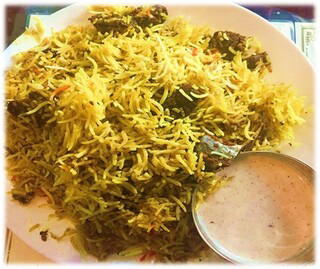
Ichikawa’s restaurant streets are practical, local and commuter-led rather than staged for destination dining: families, small groups and solo diners moving between errands and dinner. In that setting, Indian cooking has sharper pull because it is not framed as spectacle. Gyotoku Biryani House fits the suburban Japanese pattern where serious specialist food appears in modest rooms, judged less by theatre than repeat use.
Ichikawa is close enough to Tokyo to share its appetite for regional Asian cooking, but its dining rhythm differs. It rewards restaurants that serve neighbourhood demand while drawing people off the central-Tokyo map. For a broader read, our full Ichikawa restaurants guide is the companion; nearby names such as China Soba Komuro, Jambo Shinozaki Honten, Shokudo Otsuka, Steak Ishii and patissier Hiro Yamamoto show how varied the city’s casual dining grammar has become.
Biryani as a reference point, not decorative branding
Indian restaurant menus in Japan can flatten into curry-and-naan familiarity. The more interesting question is whether a kitchen signals a clearer specialist purpose and lets it shape the meal. Here, the name itself puts biryani forward, while public category listings place the restaurant in Indian and Indian curry territory. That matters because biryani is not rice with garnish; in disciplined forms it tests grain separation, richness, handling and spice integration.
The name places biryani at the centre, a useful editorial signal. In Japan, Indian restaurants have long been judged by curry sets, lunch value and bread service. Biryani asks for another reading: rice becomes the structure, not the side act. The strongest version of that idea is adaptation rather than museum-piece authenticity, a common feature of durable immigrant and regional restaurants in Japan. The cooking must speak to local habits without dissolving into generic comfort food.
Gyotoku Biryani House has Tabelog Hyakumeiten recognition for 2024 and carries a Tabelog score of 3.58, useful signals in a category where national attention usually gathers around Tokyo, Osaka and a few well-publicised curry addresses. The award is not a substitute for taste, but it places the restaurant inside a vetted regional conversation. For Ichikawa, the recognition says something larger: suburbs are no longer just overflow territory for central-city food culture; they have specialist addresses of their own.
Where sourcing shows up: rice, meat and spice discipline
The ingredient story is less luxury procurement than category correctness. Biryani depends on rice chosen for length and texture, ingredients that survive cooking without drying, and spices used in sequence rather than dumped in for blunt force. A biryani house earns credibility exactly there. In this kind of cooking, technique and sourcing are intertwined: the wrong rice collapses the dish, the wrong preparation loses structure, and careless spice handling turns perfume into noise.
That is why the biryani cue carries weight. Good rice-centred cooking values fragrance, layering and controlled richness. For diners used to Japan’s ramen culture, the analogy is easy: the point is not intensity alone, but calibration. Ichikawa already has low-cost precision in places such as China Soba Komuro, while Steak Ishii and Shokudo Otsuka point to other everyday and special-meal rhythms. Gyotoku Biryani House occupies another lane: Indian cooking at an accessible level, with recognition strong enough to pull attention beyond its immediate surroundings.
This also helps the restaurant avoid being treated as an ethnic-cuisine checkbox. Japanese cities have matured past the idea that Indian food means only a narrow set of familiar curry-shop expectations. Stronger addresses now distinguish more carefully among rice dishes, curry styles, breads, snacks and broader cookery without needing to over-explain themselves. A biryani-led room in Ichikawa adds to that diversification, giving the city a reference point for rice-centred Indian cooking rather than another interchangeable curry stop.
A neighbourhood room with destination signals
The format reads casual rather than ceremonial, which suits the food. The appeal is not built on luxury staging or a hard-to-enter dining-room myth, but on the practical promise of a specialist meal in Ichikawa. That matters in a city where dining decisions often involve access, family schedules and weekday practicality rather than central Tokyo reservation choreography.
The listed budget keeps the restaurant in an accessible band: dinner is JPY 1,000 - JPY 1,999 and lunch is JPY 1,000 - JPY 1,999. Those details point to a restaurant built for repeat local use as much as destination traffic. The Ichikawa setting reinforces the point: this is not a shrine-like detour, but a local address that can fold into an Ichikawa day or broader Tokyo-area itinerary. Readers mapping the wider city can pair it with our full Ichikawa hotels guide, our full Ichikawa bars guide, our full Ichikawa wineries guide and our full Ichikawa experiences guide.
The better way to read Gyotoku Biryani House is as part of a wider Japanese dining shift: regional Asian cooking is gaining status without fine-dining costume. Across Ichikawa, the comparison is not a single style but a pattern of focused local dining, from China Soba Komuro to Shokudo Otsuka, Steak Ishii, Jambo Shinozaki Honten and patissier Hiro Yamamoto. Other unnamed dining rooms add still more range. The Ichikawa lesson is quieter but as telling. Specialist food does not need a central postcode to matter.
Frequently asked questions
Would Gyotoku Biryani House be comfortable with kids?
Gyotoku Biryani House reads as a casual Ichikawa restaurant rather than a formal dining room.
How would you describe the vibe at Gyotoku Biryani House?
It is a casual Ichikawa room built around Indian and Indian curry, with biryani signalled clearly in the name. The Tabelog Hyakumeiten 2024 recognition gives it more weight than the JPY 1,000 - JPY 1,999 budget range might suggest.
What should I budget for a meal at Gyotoku Biryani House?
Pricing at Gyotoku Biryani House is listed as dinner: JPY 1,000 - JPY 1,999; lunch: JPY 1,000 - JPY 1,999.
When is Gyotoku Biryani House open?
Check directly with Gyotoku Biryani House before making a special trip.
What's the address for Gyotoku Biryani House?
Ichikawa.
Fast Comparison
Comparable venues by cuisine and price in the same metro.
| Venue | Cuisine | Price | Awards | Notes |
|---|---|---|---|---|
| Gyotoku Biryani HouseThis venue (the venue you are viewing) | Northern Indian Halal & Biryani | $10–20 | Tabelog 100 #48 | Not listed |
| Shokudo Otsuka | Japanese cafeteria set-meal (shokudo) | $10–20 | Tabelog 100 #82 | Gyotoku |
| Saryo Ren | Dining | Not listed | Tabelog 100 #25 | Ichikawa |
| Tomino Ya Motoyawata honten | Authentic Korean home cooking & offal hot pot | $20–30 | Tabelog 100 #68 | Ichikawa |
| China Soba Komuro | Classic Japanese Ramen | $10–20 | Tabelog 100 #35 | Suehiro |
| Jagaimo | Potato-focused yoshoku (Japanese-style Western) | $20–30 | Tabelog 100 #69 | Motoyawata |
Recognition history
Dated appearances from independent guides and award organizations, with the underlying list record or original source where available.
Tabelog 100 #48 · No. 48
Tabelog · Tabelog 100 - Asian cuisine / Ethnic cuisine - EAST - 2024
Continue exploring
More in Ichikawa
Restaurants in Ichikawa
All restaurants in Ichikawa →






Details
- Cozy
- Lively
- Casual Hangout
- Family
- Group Dining
- Solo
- After Work
- Standalone
- A La Carte
- Halal
Current opening hours
- Monday
- 11 AM–3 PM, 5:30–10 PM
- Tuesday
- 11 AM–3 PM, 5–10 PM
- Wednesday
- 11 AM–3 PM, 5–10 PM
- Thursday
- 11 AM–3 PM, 5–10 PM
- Friday
- 11 AM–12 AM
- Saturday
- 12–10 AM, 11 AM–10 PM
- Sunday
- 11 AM–10 PM
Hours can change for holidays and private events. Hours as of .
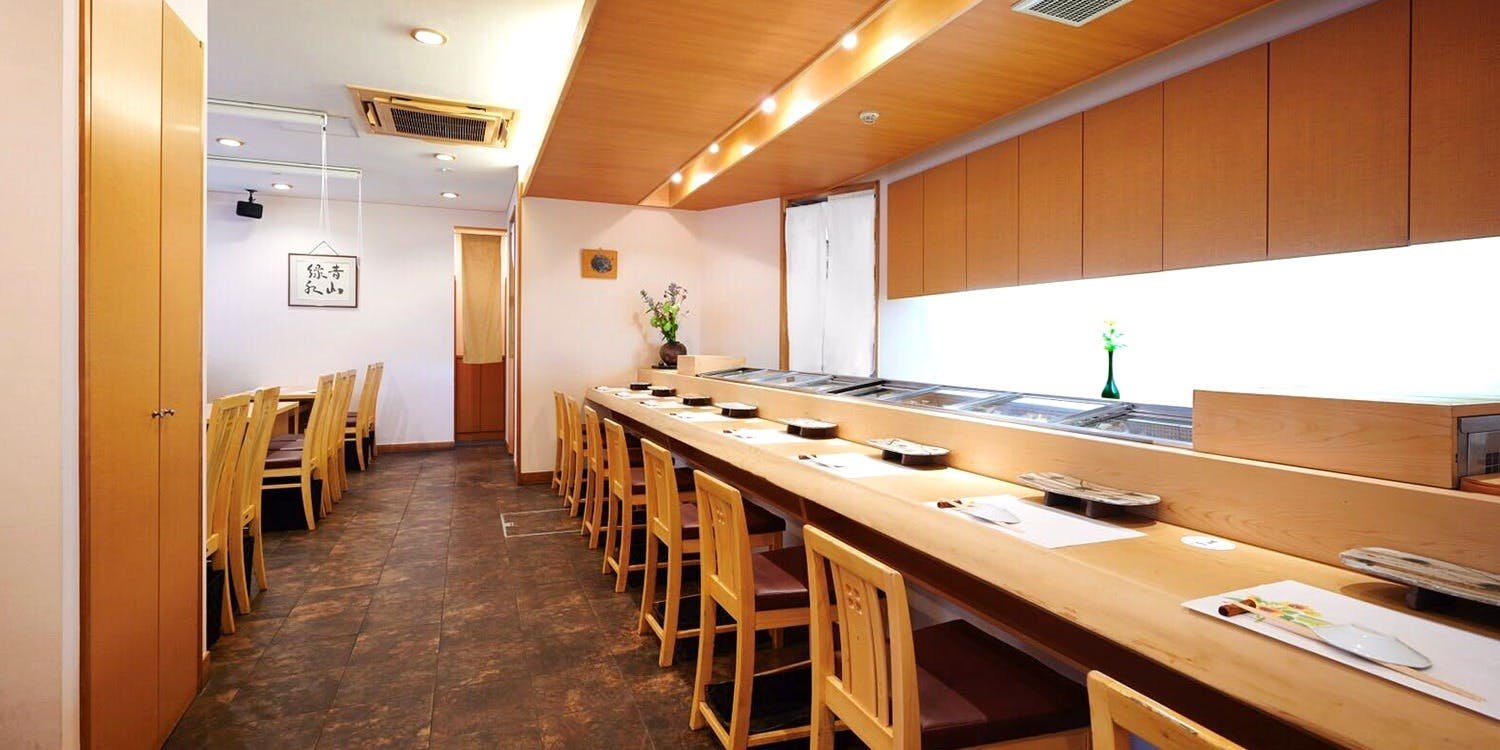
Clean and cozy neighborhood spot with simple table seating and decor featuring images of the Mughal empires, creating a casual, homely atmosphere suited to families and small groups.