Tsujiri UK
Tsujiri UK brings one of Kyoto's most established matcha house lineages to Hawley Wharf in Camden, a development that has repositioned north London's food scene around specialty imports and artisan formats. The Tsujiri name traces back to 1860 in Japan, giving it a depth of provenance that most European matcha operations cannot match. For visitors seeking a focused, tradition-grounded tea experience in London, it occupies a distinct position in the specialty beverage tier.
Pearl is the En Primeur Club membership app — saves, bookings, and concierge access live there. Same editors, same standards.
- Address
- Unit 163, Water Lane, Hawley Wharf, London NW1 8JZ, United Kingdom
- Phone
- +44227615307
- Website
- tsujiri.co.uk
- Directions
- Get directions
 Saves & bookings on Pearl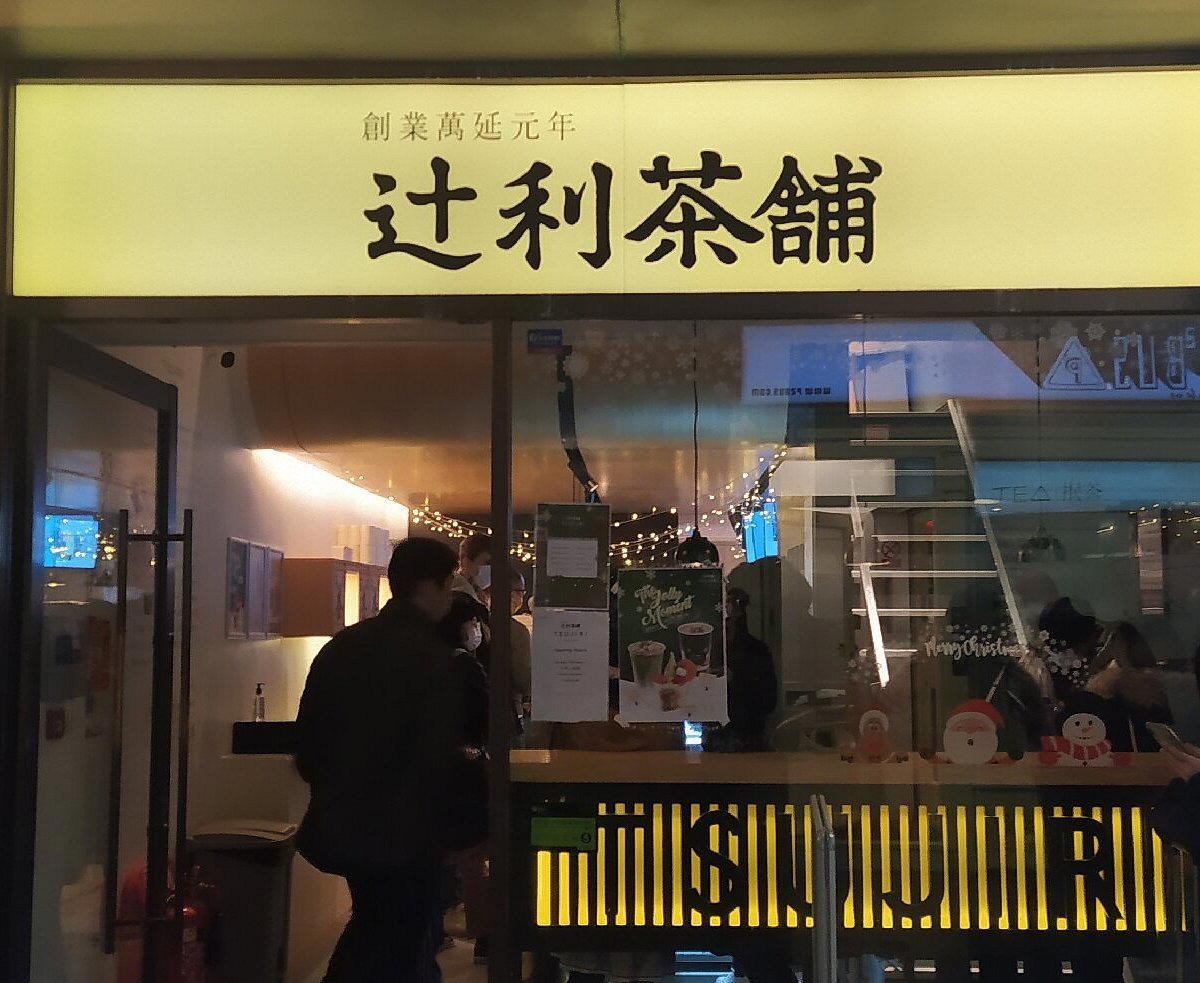
A Kyoto Tea Lineage Arrives at Hawley Wharf
The matcha category in London has expanded sharply over the past decade, moving from a niche health-food footnote to a fully fledged specialty beverage tier with its own hierarchies and credentials. Within that tier, provenance has become the primary differentiator. Anyone can source ceremonial-grade powder; far fewer operations can point to a founding date of 1860 in Kyoto's Uji district, the heartland of Japanese green tea cultivation. Tsujiri UK sits at Hawley Wharf in Camden, NW1, representing one of Japan's oldest continuously operating tea houses in the London market.
That historical anchor matters because the matcha category is crowded with newcomers presenting minimal sourcing transparency. The Tsujiri name, in Japan, carries associations with a specific standard of leaf selection and processing discipline developed over more than 160 years. Its arrival in London places it in a different conversation from the wave of café-format matcha counters that opened across the city in the 2010s, and positions it closer to specialty import operations where the supply chain itself is the primary credential.
Hawley Wharf: A Development Built Around Specialty Formats
The choice of Hawley Wharf as a London base is editorially significant. The development, opened in phases from 2021 onward, was designed from the start as a mixed-use site with a food-and-drink component weighted toward specialty, artisan, and import-led concepts rather than high-street chains. It sits on the Regent's Canal in Camden, within walking distance of Camden Market but deliberately architecturally separate from its street-food energy.
Hawley Wharf's interior design language runs to exposed concrete, raw steel, and large glazed sections facing the canal, which means individual units within it inherit a certain industrial-meets-considered aesthetic by default. For a tea-focused operator, that container does specific work: it signals that what is being offered belongs to the specialty tier, not the mass-market one. The physical environment frames the transaction before the menu is consulted. In cities where interior architecture has become a form of positioning shorthand, that framing carries weight.
The development's Unit 163 placement, on Water Lane, means the space sits within a cluster of food and beverage tenants where foot traffic is drawn by the broader offer rather than by any single name. This is a structural advantage for a brand that is well-established in East Asia but requires a period of introduction in the UK market. Visitors who arrive for another reason often encounter Tsujiri UK as a discovery, which is a more durable form of brand-building than destination-only traffic.
What the Space Signals About the Offer
Specialty beverage formats in London have largely split between high-volume café operations with rapid turnover and slower, more deliberate formats where dwell time is encouraged and the drink itself is the primary event. Hawley Wharf's architectural bones, with its canal-facing outlook, multi-level layout, and material palette that prioritises texture over polish, tend to support the latter model. A space designed for lingering is a different proposition from one optimised for takeaway throughput.
For a matcha house with deep roots in Japanese tea ceremony culture, where the preparation of the drink is inseparable from the experience of consuming it, that spatial logic is appropriate. The Tsujiri format in Japan has always operated across different registers simultaneously: ceremonial-grade preparation for those who want it, and accessible soft-serve or latte formats for the wider public. How that range translates in the London unit will determine where it settles in the city's specialty café hierarchy.
London's Japanese food and beverage scene has matured considerably. The city now supports a range of operators across price points and format types, from fast-casual ramen to high-end omakase, and the beverage category has followed a similar trajectory. For those mapping the fuller picture of high-end dining in the capital, venues like CORE by Clare Smyth, The Ledbury, and Sketch, The Lecture Room and Library represent the formal restaurant tier, while specialty beverage operations like Tsujiri UK occupy a different but increasingly credible category of their own. The fuller London dining context is covered in our complete London restaurants guide.
Provenance as the Primary Credential
In the specialty matcha category, sourcing claims are easy to make and difficult for consumers to verify. What distinguishes operations with genuine heritage from those with borrowed aesthetics is typically the paper trail: relationships with specific tea gardens, documented processing methods, and a track record that predates the Western matcha boom of the 2010s. Tsujiri's 1860 founding date in Uji places it among a small group of tea houses with an unambiguous pre-industrial provenance.
Uji, situated between Kyoto and Nara, produces green tea under geographic and climatic conditions that have been documented in Japanese agricultural records for centuries. The region's fog patterns, soil composition, and cultivation techniques for tencha, the shaded leaf that becomes matcha after stone-grinding, are specific enough that Uji matcha occupies a recognised quality tier in the same way that specific wine appellations operate in France or Italy. An operator with roots in that region is positioned to make sourcing claims that operators without them cannot credibly match.
For comparison, consider how the UK's most recognised fine dining destinations justify their credentials through verifiable lineage: Waterside Inn in Bray and Le Manoir aux Quat'Saisons in Oxford both carry decades of accumulated recognition. L'Enclume in Cartmel, Moor Hall in Aughton, and Gidleigh Park in Chagford demonstrate that regional provenance and long operational histories translate directly into consumer trust. The same logic applies in the specialty tea category: depth of record is a credential that cannot be manufactured after the fact.
Beyond London, the UK's award-recognised dining scene extends to operations like Hand and Flowers in Marlow, hide and fox in Saltwood, Midsummer House in Cambridge, and Opheem in Birmingham, alongside Scotland's Restaurant Andrew Fairlie in Auchterarder. Internationally, Korean-influenced tasting menu formats like Atomix in New York City and seafood-led precision at Le Bernardin in New York City show how Asian culinary traditions and classical European technique now occupy peer positions in the global dining hierarchy. For further London context, Restaurant Gordon Ramsay and Dinner by Heston Blumenthal anchor the formal end of the city's dining spectrum.
Know Before You Go
Address: Unit 163, Water Lane, Hawley Wharf, London NW1 8JZ
Area: Camden, north London, adjacent to the Regent's Canal
Getting There: Chalk Farm (Northern line) and Camden Town (Northern line) are both within walking distance of Hawley Wharf. King's Cross St. Pancras is approximately 15 minutes on foot.
Continue exploring
More in London
Restaurants in London
Browse all →
Bars in London
Browse all →
Hotels in London
Browse all →



At a Glance
- Modern
- Trendy
- Minimalist
- Casual Hangout
- Standalone
- Sake Program
Current opening hours
- Monday
- 11 AM–6 PM
- Tuesday
- 11 AM–6 PM
- Wednesday
- 11 AM–6 PM
- Thursday
- 11 AM–6 PM
- Friday
- 11 AM–8 PM
- Saturday
- 11 AM–8 PM
- Sunday
- 11 AM–8 PM
Hours can change for holidays and private events. Last verified .
Relaxed and modern atmosphere with a focus on authentic Japanese matcha treats, featuring limited upstairs seating.