Trèsind
Trèsind brings contemporary Indian cooking to central London with a useful lens on how the city now treats tandoor work: not as background heat, but as structure. The appeal is in the contrast between Mayfair polish and the primal logic of clay-oven cooking, where smoke, char, bread, and spice carry much of the argument.
Pearl is the En Primeur Club membership app — saves, bookings, and concierge access live there. Same editors, same standards.
- Address
- 13-14 Hanover Street, London, W1S 1YH, United Kingdom
- Phone
- +44 800 369 9555
- Website
- tresind.co.uk
- Directions
- Get directions
 Saves & bookings on Pearl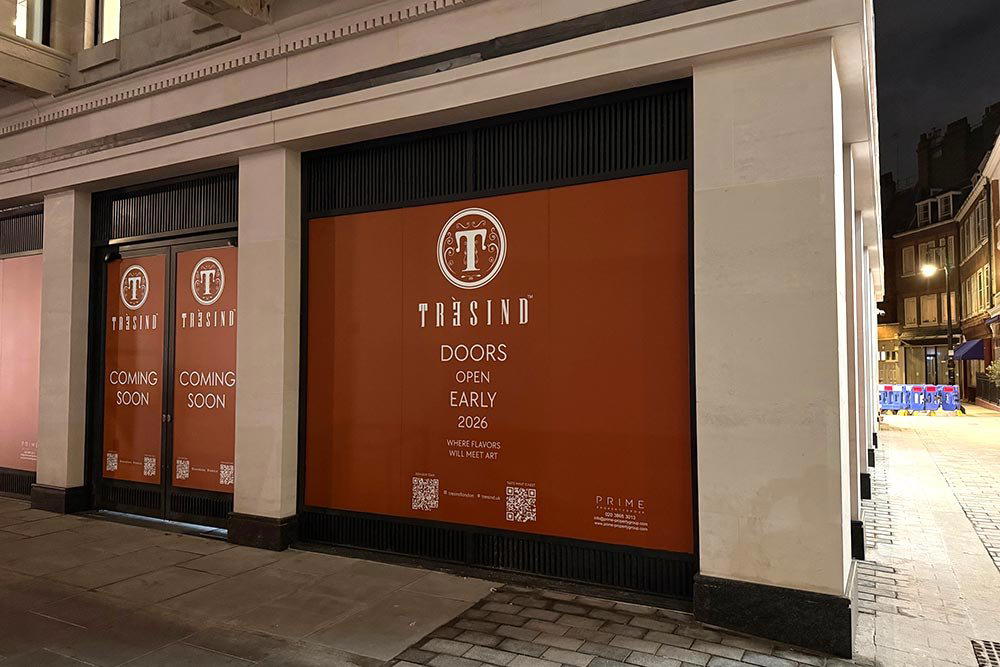
Approach Trèsind through central London and the first useful expectation is not spectacle, but calibration. This is Indian dining in a city that has spent decades moving between curry-house comfort, clubby Mayfair dining rooms, and sharper contemporary kitchens. The room matters less than the question it raises: how far can Indian technique travel in London before it loses the force of fire, bread, smoke, and spice?
Clay-oven cooking gives the answer a backbone. The tandoor is often treated in Britain as a shorthand for naan and tikka, but its physics are more precise than that. Heat radiates from the walls, moisture flashes from dough, marinades tighten around protein, and smoke works as seasoning rather than decoration. In a contemporary Indian setting, that means the kitchen has to balance theatre with restraint. Too much polish and the food drifts into hotel-dining anonymity; too much nostalgia and it becomes another replay of familiar North Indian grammar.
London Indian dining is strongest when fire stays in the foreground
London has a deep Indian restaurant culture, but its premium tier is now split across several instincts: grill-led rooms, regional cooking, old-guard fine dining, and modern tasting-menu formats. Trèsind belongs to the contemporary end of that spectrum, where technique is expected to do more than signal luxury. The useful measure is whether spice, char, acidity, and bread retain authority after the plating has been refined.
That tension is why the tandoor lens matters. Naan is not an accessory in serious Indian cooking; it is a timing test. Tikka is not just marinated protein; it is a negotiation between dairy, acid, spice, and high heat. London diners are accustomed to Indian food arriving with abundance, but this register asks for closer reading: the heat source, the structure of the sauce, the role of smoke, and the way a dish moves from richness to lift.
For readers mapping the city more broadly, Amaya has long made the grill central to London’s Indian conversation, while Benares sits in the city’s established fine-dining Indian lane. Ambassadors Clubhouse and Bombay Bustle point to a different kind of London appetite, one shaped by club rooms, social dining, and sharper urban pacing. Babur shows how the city’s Indian story extends beyond central postcodes. These are not interchangeable experiences; they show how broad the category has become.
Mayfair polish changes the contract
In Mayfair-adjacent Indian dining, the stakes are not only about flavor. Service rhythm, table spacing, pacing, and the visual grammar of the room all shape how the cuisine is read. The danger in this part of London is over-correction: Indian cooking can be softened for an audience that expects gloss. Trèsind is more interesting when it lets the elemental parts of the cuisine remain legible, especially the char and bread traditions that do not need cosmetic explanation.
The stronger editorial frame is not “modern Indian” as a slogan, but modern Indian as a pressure test. Can a kitchen carry the memory of clay-oven heat into a central London dining room without reducing it to garnish? Can spice be layered without becoming decorative? Can the meal feel contemporary while acknowledging that the tandoor is older, hotter, and more persuasive than most dining-room theatrics?
That is the reader decision here. Trèsind suits diners who want Indian cooking in a polished London format and are more interested in technique than nostalgia alone. Those seeking a casual curry-night rhythm may find the register too composed; those tracking how Indian cooking is being reframed in the capital will find the premise clearer. For a wider city edit, use our full London restaurants guide, then branch into our full London bars guide, our full London hotels guide, our full London experiences guide, and our full London wineries guide for the surrounding trip architecture.
Where it fits in a UK itinerary
London remains the country’s densest restaurant market, but the stronger UK itineraries now look beyond the capital. Pairing a central London Indian meal with regional dining gives better perspective on how British restaurants handle locality, technique, and format. Useful extensions include 'Seasgair' by Michel Roux Jr in Fort William, “8” By Andrew Sheridan in Liverpool, 1 York Place in Bristol, 10 Tib Lane in Manchester, 11th and Social in Norwich, and 1215 in Egham. For a wider Indian diaspora comparison outside Britain, Aanch, Indian in Toronto and Adda Indian Cuisine, Indian in Queens show how the cuisine shifts when shaped by different immigrant cities.
In Context
Comparable venues nearby, for context on price, style, and recognition.
| Venue | Cuisine | Price | Notes |
|---|---|---|---|
| TrèsindThis venue — the venue you are viewing | Mayfair, Modernist Indian Fine Dining | $$$$ | Not listed |
| Kahani | Belgravia, Modern Indian Fine Dining | $$$$ | Not listed |
| Farzi Cafe | Charing Cross, Modern Indian Bistro | $$$ | Not listed |
| Shezan | Not listed | $$$ | Knightsbridge, Authentic Indian & Pakistani |
| Kennington Tandoori | Kennington, Modern Indian Cuisine | $$$ | Not listed |
| Gunpowder Soho | Soho, Modern Regional Indian | $$$ | Not listed |
Continue exploring
More in London
Restaurants in London
Browse all →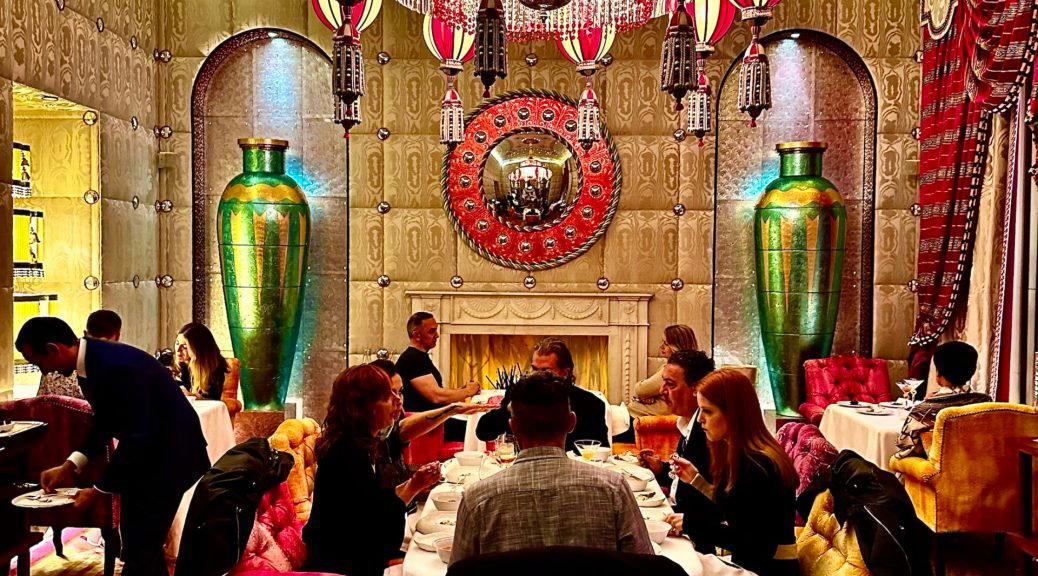
Bars in London
Browse all →
Hotels in London
Browse all →



At a Glance
- Elegant
- Modern
- Sophisticated
- Intimate
- Trendy
- Date Night
- Business Dinner
- Celebration
- Special Occasion
- After Work
- Private Event
- Design Destination
- Standalone
- Private Dining
- Craft Cocktails
- Extensive Wine List
- Zero Proof
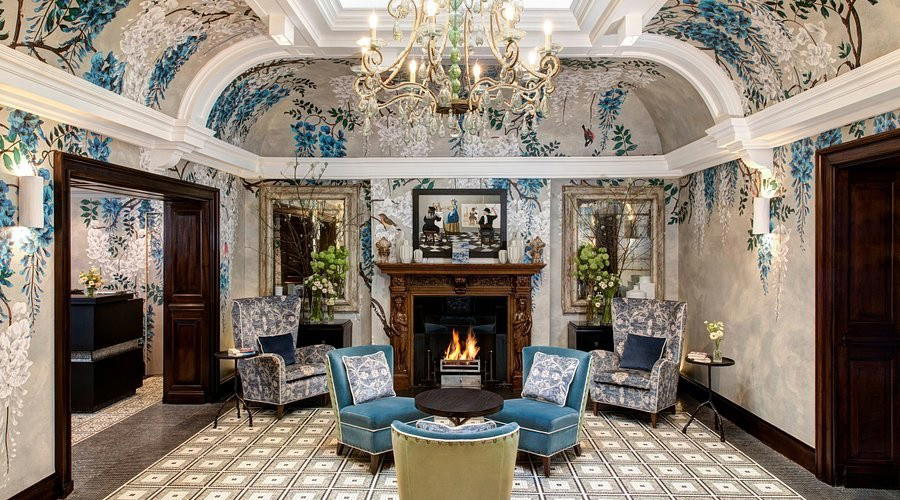
Refined, low-lit and polished Mayfair dining room with a contemporary design, intimate scale and a sense of choreographed theatre around a multi-course Indian tasting menu and serious bar program.