Shezan
Shezan on Cheval Place has served Knightsbridge's Pakistani and North Indian cooking for decades, occupying a quiet residential street a short walk from Harrods. Few London restaurants of this type have remained in the same postcode through so many shifts in the city's dining culture. For visitors anchored in SW7, it represents a long-running local institution in a neighbourhood better known for European fine dining.
Pearl is the En Primeur Club membership app — saves, bookings, and concierge access live there. Same editors, same standards.
- Address
- 16-22 Cheval Pl, London SW7 1ES, United Kingdom
- Phone
- +44 20 7584 9316
- Website
- shezan.co.uk
- Directions
- Get directions
 Saves & bookings on Pearl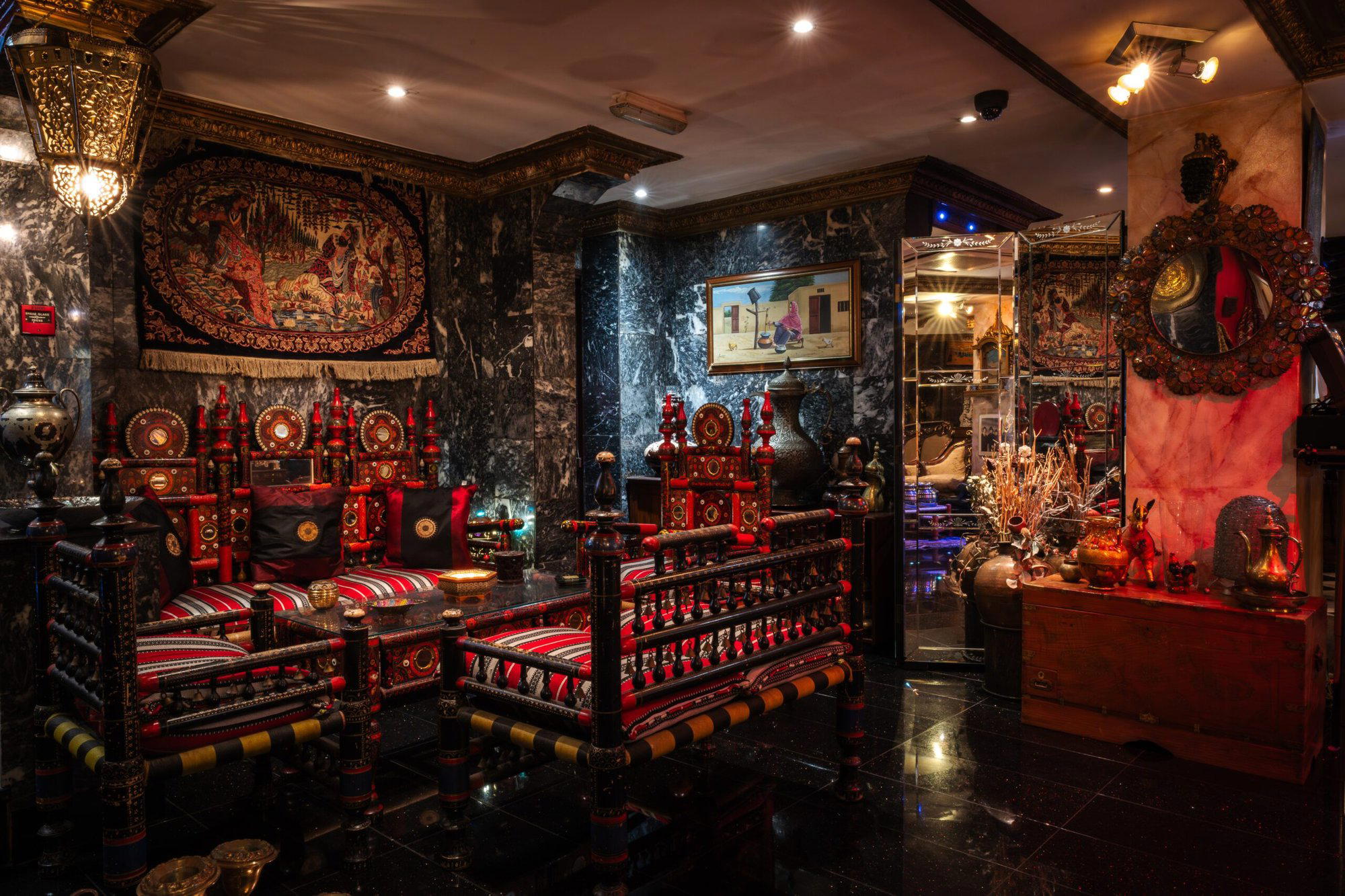
Knightsbridge's Longest-Running Pakistani Kitchen
The street itself runs quietly behind Brompton Road, far removed from the theatre of the hotel dining rooms that dominate this postcode. While much of the surrounding area has cycled through reinvention, Shezan has operated on the same block through successive decades of London's restaurant upheaval, which in itself tells you something about the loyalty it commands from a residential clientele that does not need to perform discovery.
London's Pakistani and North Indian restaurant culture has historically concentrated in Southall, Whitechapel, and Tooting, where rents allowed large kitchens and immigrant communities provided a built-in customer base. A restaurant of this persuasion surviving in Knightsbridge across multiple decades is a different proposition entirely. The overheads are different, the clientele is different, and the pressures to modernise or anglicise the cooking are far more acute. That Shezan has remained in place at 16 to 22 Cheval Place, SW7, while the neighbourhood has grown steadily more expensive around it, places it in a distinct category among London's South Asian restaurants.
How the Knightsbridge Dining Scene Has Shifted Around It
The broader SW7 and SW3 dining corridor now reads predominantly as a zone of European fine dining and hotel restaurants pitched at international money. Properties like Dinner by Heston Blumenthal at the Mandarin Oriental and the tasting-menu rooms that define the city's upper bracket, such as CORE by Clare Smyth and Sketch, The Lecture Room and Library, set the dominant tone for London's premium dining conversation. Restaurant Gordon Ramsay and The Ledbury pull the editorial focus further toward Modern European and Modern British formats. These are the rooms that attract awards, generate press cycles, and define London's reputation abroad.
Shezan operates outside that circuit entirely, which is precisely the point. The South Asian restaurant tradition in London has its own parallel critical culture, one less legible to international food guides but no less demanding among those who follow it closely. Within that tradition, longevity in an expensive postcode is a credential. It signals that the cooking does not depend on novelty or critical-cycle momentum to stay commercially viable.
The Evolution Question: What Changes, What Doesn't
How does a restaurant that has been in place for decades actually change, and what does it choose to preserve? In London's South Asian restaurant category, the evolution story is often told as a tension between the registers of the original diaspora kitchen and the pressures of a wealthier, more internationally mobile clientele. Restaurants in expensive postcodes face particular pressure to soften heat, increase portion elegance, and align the format with the expectations of tasting-menu culture. Some have pivoted toward modern Indian fine dining, a format that has found significant critical traction in London over the past fifteen years. Others have held their position.
Shezan's location on Cheval Place places it within walking distance of the Brompton Road hotels and the private residential streets of core Knightsbridge, a customer base that has included the area's long-term residents alongside hotel guests and business diners for generations. The restaurant's continued presence in this footprint across shifting economic and cultural conditions in the neighbourhood represents a specific kind of institutional durability that is rarely documented but frequently cited by those who grew up eating there.
Where Shezan Sits Among London's Broader Dining Offer
London's fine dining infrastructure is well documented. The city's leading European-format rooms are fully covered, from the Michelin-starred kitchens of central London to the destination restaurants that draw visitors out of the city: The Fat Duck in Bray, L'Enclume in Cartmel, Moor Hall in Aughton, Gidleigh Park in Chagford, Hand and Flowers in Marlow, and Le Manoir aux Quat' Saisons in Great Milton. Internationally, the reference points for sustained credibility at the summit tier include rooms like Le Bernardin in New York City and Atomix, where format discipline and consistent execution over years define the value proposition.
Shezan does not compete in that tier and does not position itself there. Its relevance is local and longitudinal: a Pakistani and North Indian kitchen that has maintained a physical presence in one of London's most expensive residential neighbourhoods through multiple decades of rising costs and shifting dining fashions. For visitors using Knightsbridge as a base, it offers a genuinely different register from the European fine dining that otherwise defines the area's restaurant options.
Planning Your Visit
Shezan is at 16 to 22 Cheval Place, London SW7 1ES, a short walk from the Knightsbridge underground station and immediately behind the main Brompton Road corridor. For the current booking position, hours, and any menu or pricing information, the restaurant should be contacted directly, as these details are subject to change.
- Murgh Makhani
- Lamb Khaiber Karahi
- Samosas
- Palak Aloo
- Machli Tikka Tandoori
- Lamb Shank Nihaari
Price and Positioning
Comparable venues nearby, for context on price, style, and recognition.
| Venue | Cuisine | Price | Notes |
|---|---|---|---|
| ShezanThis venue — the venue you are viewing | Not listed | $$$ | Not listed |
| Tandoor | Kingsbury Green, Tandoori Grill | $$$ | Not listed |
| ZAFFRAN UK | Marylebone, Authentic Halal Indian | $$ | Not listed |
| Three Falcons | Lisson Grove, Indian Gastropub | $$$ | Not listed |
| The Bengal | Westbourne, Authentic Indian & Bengali | $$ | Not listed |
| Ragam | Not listed | $$ | Fitzrovia, Authentic Keralan South Indian |
Continue exploring
More in London
Restaurants in London
Browse all →
Bars in London
Browse all →
Hotels in London
Browse all →



At a Glance
- Elegant
- Intimate
- Romantic
- Classic
- Date Night
- Business Dinner
- Group Dining
- Celebration
- Special Occasion
- Private Dining
- Standalone
- Beer Program
Current opening hours
- Monday
- 6–11 PM
- Tuesday
- 6–11 PM
- Wednesday
- 6–11 PM
- Thursday
- 6–11 PM
- Friday
- 6–11 PM
- Saturday
- 1–11 PM
- Sunday
- 1–11 PM
Hours can change for holidays and private events. Last verified .
Intimately lit with table candles and traditional Indian decor; described as cozy yet elegant with well-suited lighting and a warm, welcoming atmosphere that feels transported to another world.