Traxx
Traxx occupies a historically charged address inside Los Angeles Union Station, one of the great American rail terminals of the twentieth century. The restaurant's position within that 1939 Streamline Moderne building gives it a context that few dining rooms in California can claim, placing it at the intersection of civic architecture and contemporary cooking in Downtown LA.
Pearl is the En Primeur Club membership app — saves, bookings, and concierge access live there. Same editors, same standards.
- Address
- 800 N Alameda St UNIT 1, Los Angeles, CA 90012
- Phone
- +13234707094
- Website
- traxxunion.com
- Directions
- Get directions
 Saves & bookings on Pearl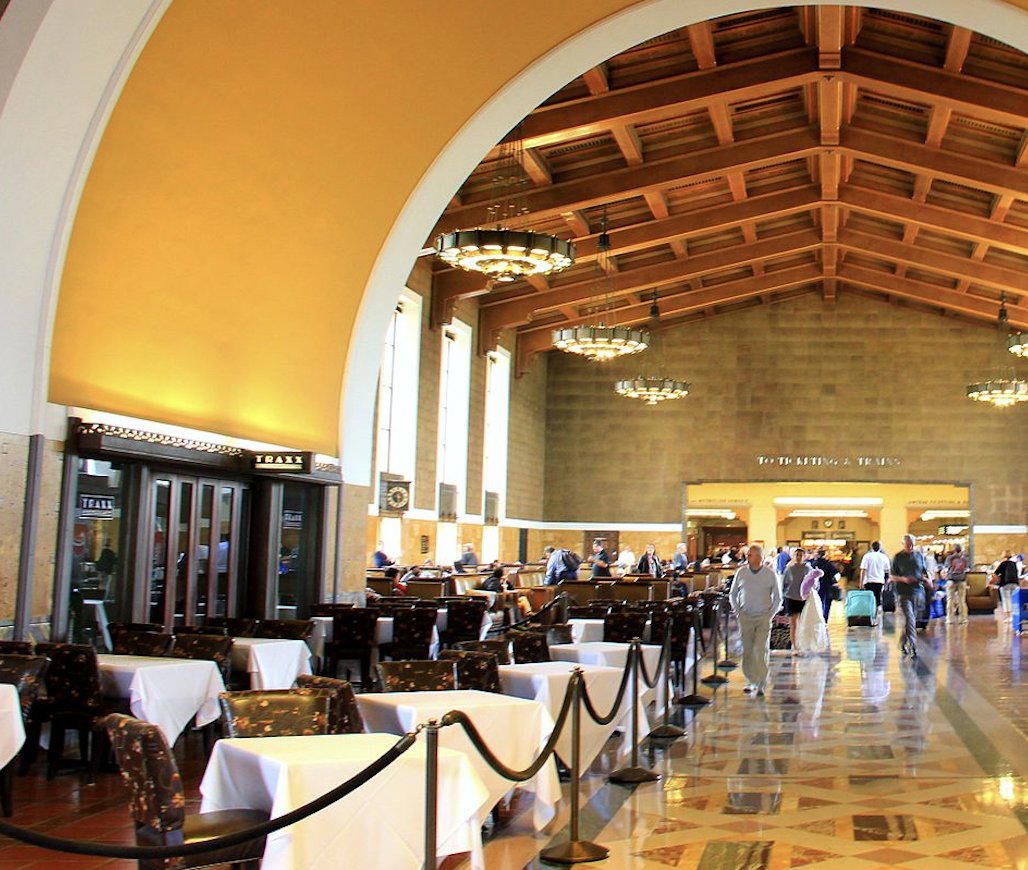
A Room With a Rail History
American train stations reached their architectural peak between the two world wars, and Los Angeles Union Station, completed in 1939, represents that era's most confident expression on the West Coast. The building fuses Spanish Colonial Revival with Art Deco and Streamline Moderne detailing across a complex that once processed tens of thousands of passengers daily. Traxx sits inside that structure at 800 North Alameda Street, which means it operates inside a piece of civic infrastructure that predates California's freeway era and the car-centric identity that followed. For a city that has spent decades reorienting its centre around rail transit again, that address carries weight that extends well beyond nostalgia.
Restaurants that occupy landmark buildings face a consistent challenge: the architecture either overwhelms the food or the food ignores the architecture entirely. The more interesting position is when a menu takes the setting as a genuine reference point rather than a backdrop. That tension between place and plate is one of the more productive editorial questions you can ask about any historic dining room, and it applies here with particular force given how much of Downtown LA's identity is bound up in the Union Station story.
How the Menu Is Organised, and What That Tells You
The editorial angle that illuminates Traxx most clearly is menu architecture, because the way a restaurant structures its food makes an argument about what kind of place it intends to be. In the tier of Los Angeles restaurants that occupy non-hotel landmark spaces, menus tend to fall into one of two positions: they chase accessibility to convert tourist or transit traffic into covers, or they use the address as a platform for more considered cooking aimed at a neighbourhood and destination audience. The distinction matters because the former produces food that is competent but incurious, while the latter treats the physical address as a reason to be more ambitious, not less.
Across the broader Los Angeles dining scene, this split is visible when you compare the approaches of Downtown's more conceptually driven rooms against restaurants built primarily around venue spectacle. Places like Kato and Hayato operate in the $$$$ tier with menus that make a coherent argument about a cuisine tradition, while Somni pushes into progressive territory where the menu structure itself is the medium. Traxx occupies a different register, one shaped as much by its mixed audience of transit passengers, downtown office workers, and deliberate dining visitors as by a single culinary thesis.
What the address and building context make clear is that the menu operates within the practical constraints of a high-footfall public building while also serving guests who have come specifically to eat in the room. That dual audience typically pushes menus toward American comfort food with California produce sourcing, a format that has sustained restaurants in comparable transit and civic settings across the country, from the dining rooms attached to historic hotels to station brasseries in markets like New York and Chicago.
Downtown LA as a Dining Context
The neighbourhood around Union Station has undergone significant repositioning over the past fifteen years. Arts District cooking, the expansion of Little Tokyo just south of the station, and the continued development of the Civic Center corridor have brought a more varied and considered restaurant population to a part of the city that was historically underserved relative to the Westside. Traxx predates much of that movement, which places it as an early entrant in Downtown's dining rehabilitation rather than a beneficiary of the current moment.
For comparison, the Southern California fine dining tier includes Providence on the Westside and Addison in San Diego, both operating with Michelin recognition and tasting-menu formats that position them in a different competitive set from a landmark brasserie. Traxx's competitive peer group is less the Michelin circuit and more the category of American restaurants that use historic or architecturally significant settings as a primary asset, a category that includes places like Emeril's in New Orleans and Bacchanalia in Atlanta, each of which navigates the relationship between setting, audience, and culinary ambition in its own way.
Nationally, the restaurants that have resolved this challenge most effectively, such as Blue Hill at Stone Barns outside New York or The Inn at Little Washington in Virginia, have done so by making the environment and the cooking inseparable, so that removing either element diminishes the whole. The standard is high, and the comparison is instructive for understanding where a historically sited restaurant needs to direct its energy.
The Union Station Setting in Practice
Union Station's main waiting hall remains among the more photographed interiors in Los Angeles, with its original 1939 tile work, coffered ceilings, and leather seating still largely intact. The building's passenger activity has increased substantially since the Metro system expanded, meaning the foot traffic around the station is no longer the preserve of Amtrak passengers alone. That shift has changed the potential audience for a restaurant inside the complex, introducing a commuter demographic that did not exist in the same volume when the station was primarily a long-distance rail terminal.
For diners approaching Traxx as a destination rather than a convenience stop, the architectural experience of arriving through the station's public spaces is part of the proposition. few American restaurants require you to walk through a functioning landmark before reaching your table, and that sequence of arrival is worth accounting for in any plan to visit. The surrounding Downtown grid also connects directly to the Arts District, Little Tokyo, and the Civic Center, making the area navigable on foot for anyone staying in the immediate area.
Where Traxx Sits in the Broader Conversation
Los Angeles has built a serious restaurant culture over the past two decades, with entries in the global conversation through places like Osteria Mozza and a growing roster of tasting-menu rooms that benchmark against national peers such as Lazy Bear in San Francisco, Alinea in Chicago, The French Laundry in Napa, Single Thread Farm in Healdsburg, Atomix in New York, and Le Bernardin in New York City. Traxx does not operate in that stratum, and the distinction matters for setting expectations. Its value is different: it offers a specific historical and architectural experience that the city's tasting-menu circuit does not provide, and that is a legitimate kind of value for a particular kind of visit.
For high-concept international comparison, 8 1/2 Otto e Mezzo Bombana in Hong Kong represents another data point in how legacy and architectural gravitas can anchor a dining room's identity across different market contexts.
Know Before You Go
- Address: 800 N Alameda St, Unit 1, Los Angeles, CA 90012
- Location: Inside Los Angeles Union Station, accessible via Metro B, D, and J Lines
- Booking: Recommended
- Price range: $$
- Parking: Union Station has a public car park; the station is also served by Metro Rail, making it accessible without a vehicle from much of the city
- Grilled Chicken Cobb Sandwich
- New York Strip
- Green Chile Posole
- Seared Salmon
- Waldorf Salad
- Smoked Trout Roasted Beet Salad
- Crab Cakes
Awards and Standing
Comparable venues nearby, for context on price, style, and recognition.
| Venue | Cuisine | Price | Notes |
|---|---|---|---|
| TraxxThis venue — the venue you are viewing | American Bistro | $$ | Not listed |
| COMMISSARY | Modern Vegetable-Driven American | $$ | Koreatown |
| Justice Urban Tavern | American Gastropub | $$ | Civic Center |
| Cole's | Classic French Dip Sandwiches | $$ | Old Bank District |
| Cafe Fig | American with Mediterranean & Southwestern Fusion | $$ | Downtown |
| The Edmondson Faculty Center | American Farm-to-Table | $$ | Lincoln Heights |
Continue exploring
More in Los Angeles
Restaurants in Los Angeles
Browse all →
Bars in Los Angeles
Browse all →

Hotels in Los Angeles
Browse all →

Wineries in Los Angeles
Browse all →

At a Glance
- Classic
- Elegant
- Well Known
- Romantic
- Date Night
- Business Dinner
- Group Dining
- Solo
- Casual Hangout
- Historic Building
- Terrace
- Standalone
- Craft Cocktails
- Beer Program
- Local Sourcing
Current opening hours
- Monday
- 11 AM–8 PM
- Tuesday
- 11 AM–8 PM
- Wednesday
- 11 AM–8 PM
- Thursday
- 11 AM–8 PM
- Friday
- 11 AM–8 PM
- Saturday
- 11:30 AM–4 PM
- Sunday
- Closed
Hours can change for holidays and private events. Last verified .
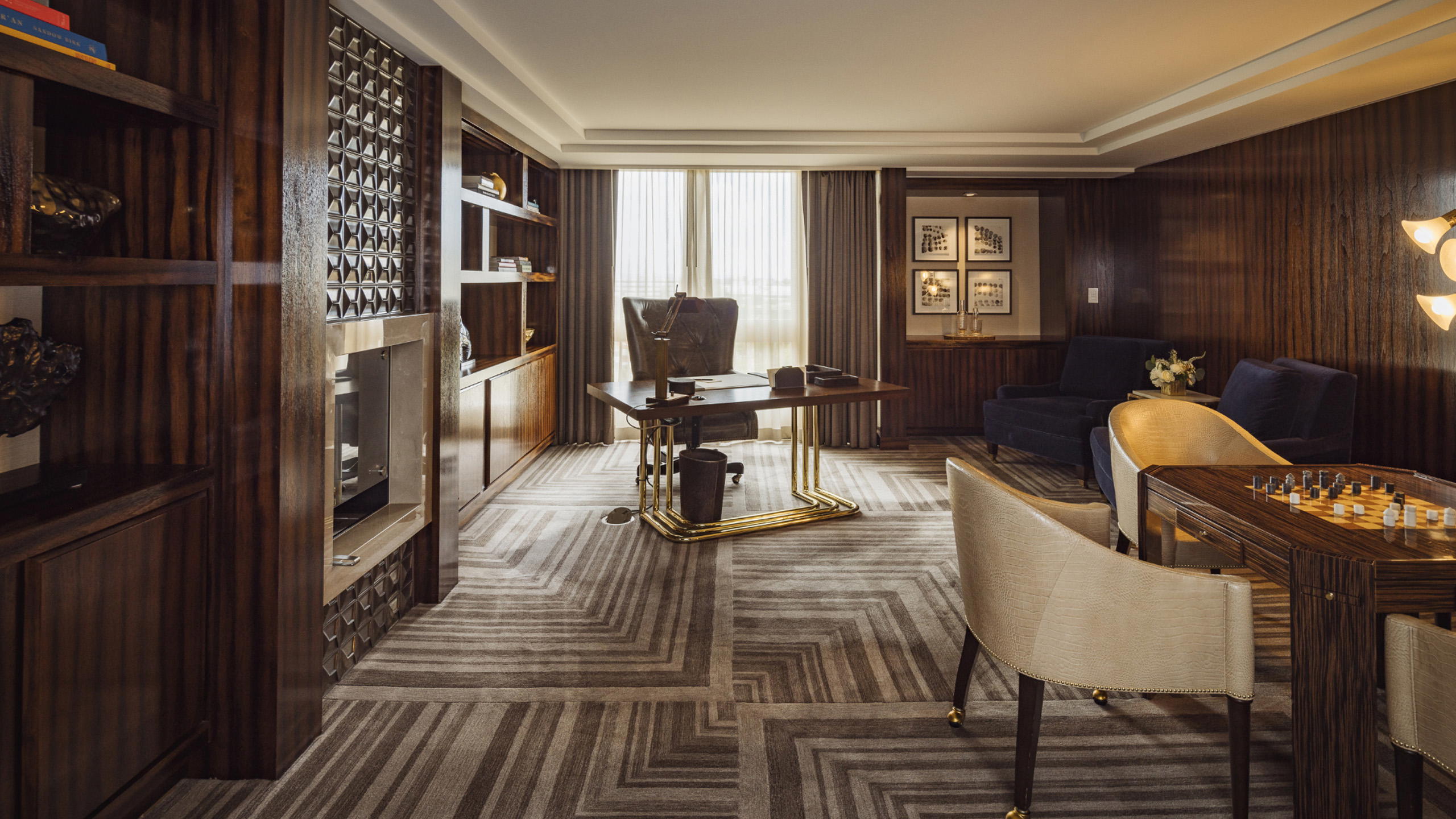
Art Deco styling with polished, clean aesthetic; relaxed yet refined atmosphere that evokes the glamour of 1930s-40s train stations.