Cafe Fig
Cafe Fig sits at 939 S Figueroa Street in downtown Los Angeles, a neighborhood where the dining scene has grown considerably more considered over the past decade. With cuisine details still emerging, it occupies a block that places it alongside the city's evolving South Park corridor. Visitors to the area will find it worth cross-referencing with the broader downtown context before booking.
Pearl is the En Primeur Club membership app — saves, bookings, and concierge access live there. Same editors, same standards.
- Address
- 939 S Figueroa St UNIT 300, Los Angeles, CA 90015
- Phone
- +12136603006
- Website
- cafefig.com
- Directions
- Get directions
 Saves & bookings on Pearl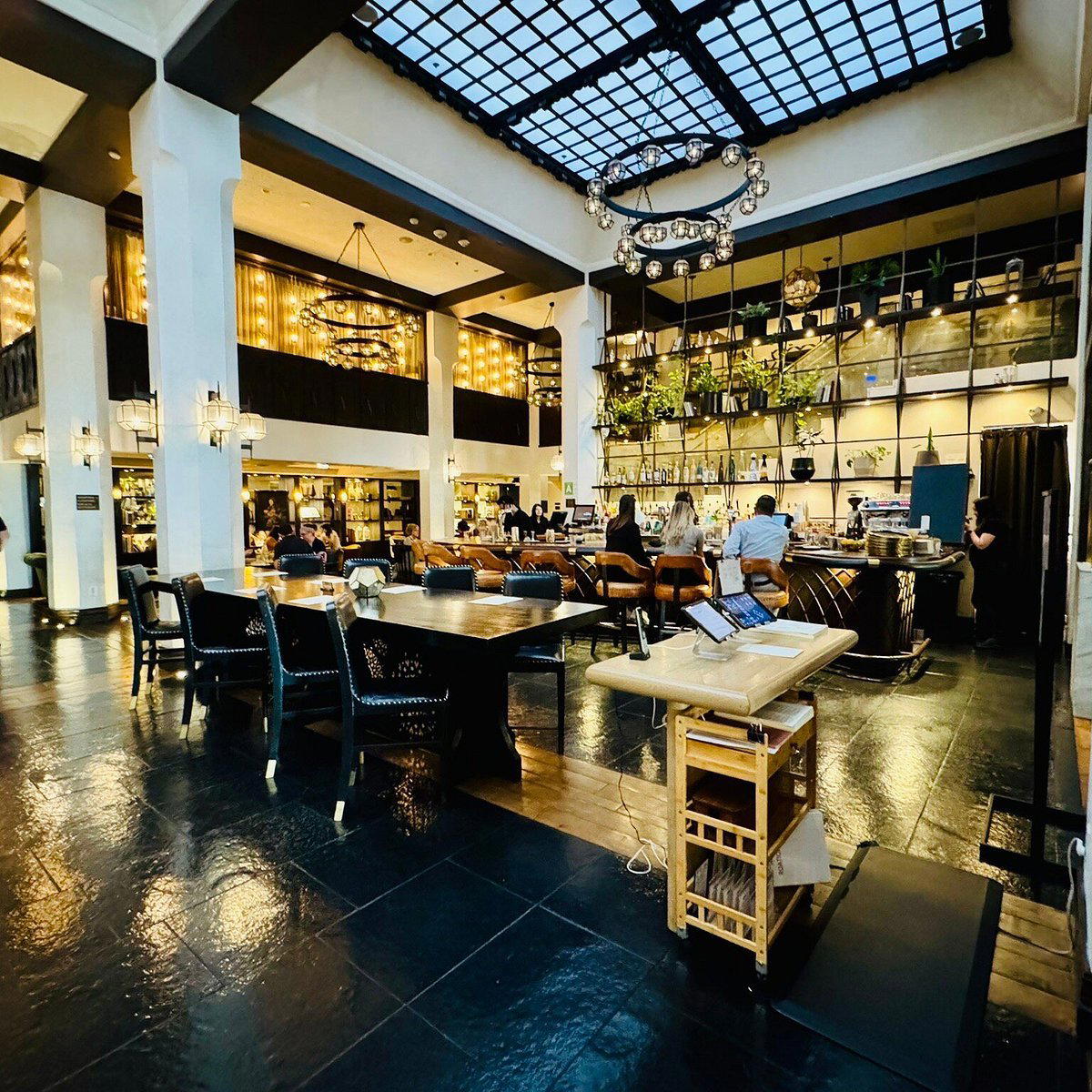
South Figueroa and the Downtown Dining Shift
Downtown Los Angeles has gone through several reinventions, but the stretch of South Figueroa Street around the Staples Center corridor, now Crypto.com Arena, represents one of the more consequential. For years, the blocks between the convention center and the arena sustained a dining economy almost entirely oriented around event traffic: pre-game meals, conference lunches, post-show drinks. That model still exists, but it has been joined by something more durable. A cluster of restaurants has taken root here that operate on their own terms, drawing guests who aren't necessarily holding a ticket to anything. Cafe Fig is a restaurant in Los Angeles at 939 S Figueroa Street, Unit 300, with an American menu shaped by Mediterranean and Southwestern fusion.
The address places it in a part of the city that rewards some contextual understanding before you arrive. South Park, the neighborhood technically encompassing this block, is not a dining destination in the way that, say, Koreatown or Silver Lake function as culinary districts with identifiable cuisines and generational depth. It is a newer kind of dining geography: mixed-use towers, a significant hotel presence, and a lunch and dinner population drawn from nearby offices and visitor accommodation. That context shapes what restaurants here need to do well. Consistency, accessibility, and a certain civic usefulness matter here as much as culinary ambition.
The Role of Neighborhood Anchors in a Convention-Adjacent Zone
In American cities, the restaurant that anchors a hotel-adjacent or convention-adjacent block occupies a specific position in the local dining ecology. It is not competing directly with destination restaurants in the way that Providence (Contemporary Seafood, Michelin-starred) competes for the city's special-occasion dollar, nor is it making the kind of statement that Kato (New Taiwanese, $$$$) makes in its particular niche. It serves a different function: reliable, contextualized, and place-specific in ways that distinguish it from the generic hotel dining that dominated this neighborhood a decade ago.
That distinction matters in a city where the fine dining tier has grown considerably more competitive. Somni (Molecular) operates at the experimental edge. Hayato (Japanese, $$$$) draws from kaiseki tradition with high booking pressure and deliberate scarcity. Osteria Mozza (Italian) has held its cultural relevance across a long run that most Los Angeles restaurants cannot match. Against that backdrop, a restaurant at this address in South Park is not positioning itself for the same reader. It is speaking to a different set of needs, and understanding that comparable set is more useful than comparing it to tasting-menu destinations on the westside or in Silver Lake.
Cultural Roots in a City Built on Migration
Los Angeles has among the more layered food cultures in the United States, built through successive waves of migration and an agricultural system that gives chefs access to ingredients most American cities cannot source year-round. The South Figueroa corridor has historically been less connected to those culinary traditions than neighborhoods with deeper immigrant food histories, but the demographic shifts of the past decade have brought the broader LA food culture closer to downtown. Mexican seafood at spots like Holbox, Japanese precision at counters in Little Tokyo, and the broader pan-Asian diversity that venues like Atomix in New York represent in a different market, these traditions have informed what diners in this part of downtown now expect from a neighborhood restaurant.
The fig, as a food symbol, carries its own cultural resonance. Present in Mediterranean, Middle Eastern, and California culinary traditions, it is an ingredient that connects this state's agricultural heritage to older food cultures across a considerable geographic span. That kind of place-based naming has become a meaningful signal in Los Angeles dining, where provenance and specificity have replaced generic globe-spanning menus as the more credible positioning.
Placing Cafe Fig in the Wider American Dining Conversation
American restaurant culture has been reorganizing around a clearer hierarchy of intent. At the destination end, places like The French Laundry in Napa, Le Bernardin in New York, and Blue Hill at Stone Barns in Tarrytown each occupy a tier where the meal is itself the event, planned months in advance and calibrated to a specific vision. Further along the spectrum, restaurants like Smyth in Chicago or Lazy Bear in San Francisco operate as serious culinary projects without requiring the same planning horizon or price commitment. And then there are the neighborhood restaurants that hold a city together at the everyday level, places where the value proposition is about presence and reliability as much as ambition.
Cafe Fig's position in that spectrum is not fully legible from current public data. The venue's price tier is modest, and its cuisine is American with Mediterranean and Southwestern fusion. What the address and the name do confirm is a downtown Los Angeles location with real neighborhood utility, in a corridor that has moved past its purely event-adjacent origins. For the reader planning a visit, that context is worth holding alongside the restaurant's current profile. Nearby reference points, including comparisons to what Addison in San Diego or Frasca Food & Wine in Boulder have done with location-grounded identity in their own markets, suggest that place-specific positioning can carry real weight when executed with consistency.
Planning Your Visit
Address: 939 S Figueroa Street, Unit 300, Los Angeles, CA 90015. Reservations: Recommended. Timing: The South Park corridor is busiest on event nights at the adjacent arena; visiting on non-event evenings generally means easier access and a calmer room.
Cuisine and Awards Snapshot
Comparable venues nearby, for context on price, style, and recognition.
| Venue | Cuisine | Price | Notes |
|---|---|---|---|
| Cafe FigThis venue — the venue you are viewing | American with Mediterranean & Southwestern Fusion | $$ | Not listed |
| Gaby’s | California Fresh Bowls & Sandwiches | $$ | Los Angeles |
| Abernethy's | Rotating Emerging Chef Cuisine | $$ | Civic Center |
| Monty's Good Burger | Plant-Based American Burgers | $$ | Wilshire Center |
| Fred 62 | Retro American Diner | $$ | Los Feliz |
| Traxx | American Bistro | $$ | Historic Core |
Continue exploring
More in Los Angeles
Restaurants in Los Angeles
Browse all →
Bars in Los Angeles
Browse all →

Hotels in Los Angeles
Browse all →
Wineries in Los Angeles
Browse all →
At a Glance
- Cozy
- Modern
- Brunch
- Casual Hangout
- Hotel Restaurant
- Craft Cocktails
- Local Sourcing
- Organic
Current opening hours
- Monday
- 7 AM–9:30 PM
- Tuesday
- 7 AM–9:30 PM
- Wednesday
- 7 AM–9:30 PM
- Thursday
- 7 AM–9:30 PM
- Friday
- 7 AM–9:30 PM
- Saturday
- 7 AM–9:30 PM
- Sunday
- 7 AM–9:30 PM
Hours can change for holidays and private events. Last verified .
Warm and charming atmosphere ideal for everyday gatherings with attentive service.