
Tabelog 100 #39
Our verdict
A 25-seat Italian and pasta address in Osaka’s Fukushima ward, Trattoria da giacomo belongs to the city’s compact, reservations-led trattoria tier rather than its hotel-dining circuit. Its Tabelog Italian WEST 100 selections in 2021, 2023, and 2025 point to sustained local recognition, with game, seasonal vegetables, wine service, and counter seating shaping the meal’s rhythm.

Pearl is the En Primeur Club membership app, where members save venues, book tables and use the concierge.
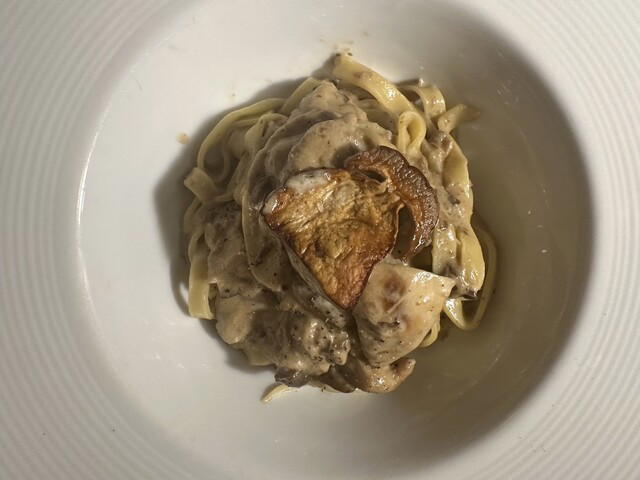
Fukushima’s dining streets work at a lower register than Umeda: tight stairwells, upper-floor rooms, counters that narrow the distance between kitchen and table, and regulars setting the tempo. Here, Italian food in Osaka is less grand-room ceremony than neighborhood ritual: a settled meal, pasta as the meal’s hinge, straightforward pacing, and a setting where the room’s rhythm matters.
Trattoria da giacomo fits that Fukushima pattern with unusual clarity. The listed category is Italian and pasta, but the better reading is Osaka trattoria cooking with a meal-paced bias. Tabelog Hyakumeiten recognition in 2025, alongside a listed score of 3.61, is a useful signal beyond ordinary listing noise. In a city where Italian dining spans polished dining rooms and casual pasta counters, that recognition places it in the dependable specialist tier: not spectacle, but a meal rewarding sequence and appetite.
For Fukushima, that distinction matters. Nearby casual rooms such as Tachinomi Jack to Machilda and Rojiura Avant-garde sit in a lower-spend drinking-and-snacking lane, while PANE PORCINI occupies the bakery-and-quick-stop end of the neighborhood map. Trattoria da giacomo works differently: dinner prices run JPY 6,000 to JPY 7,999, lunch JPY 1,000 to JPY 1,999, and the format keeps it closer to a composed meal than a crawl stop.
Fukushima's trattoria ritual, translated through pasta, pacing, and appetite
Italian dining in Japan often succeeds when it stops imitating Italy wholesale and absorbs local habits: smaller portions in clearer progression, careful pacing, and respect for the pause between courses. The ritual here follows that logic. Pasta is not just comfort; it is where texture, sauce, and timing begin to define the table. Public listing data places the restaurant in Italian and pasta, keeping the emphasis on a familiar category handled with enough focus to stand out in Fukushima.
That is also where Osaka’s appetite shows. The city favors food with substance and little formality, and Fukushima’s better restaurants sharpen that instinct in intimate-feeling rooms and counter-led streets. Meal-led pacing suggests a table built for conversation rather than a quick pasta before the next stop. The appeal is less about novelty than about a steady trattoria rhythm: order with appetite, let the courses build, and keep the meal moving at the room’s pace.
The comparison set is best understood by purpose, not cuisine. Moeyo Mensuke Ramen answers the quick, focused noodle craving; Tempura Urakami belongs to more formal Japanese specialization; Trattoria da giacomo sits between casual neighborhood energy and destination dining. It is for diners who want Fukushima’s local dining scale, with Italian pacing and the satisfaction that comes from a properly sequenced meal.
A compact-room mindset changes the etiquette of the meal
A Fukushima dining room often creates a specific etiquette. Arrival time matters because neighborhood restaurants may have little slack. Conversation lowers as courses move, and the meal is shaped less by menu scanning than by letting the restaurant’s sequence make sense. This is not hushed luxury; it is the etiquette of an Osaka meal where comfort depends on reading the pace around you.
The shared-room feeling sharpens the contours. It suits dates, family meals, and friends who want dinner to carry the evening rather than merely begin it. The model is serious without needing to feel forbidding: a trattoria in the Japanese register, where attention to food can coexist with neighborhood ease.
Lunch and dinner serve different roles. Lunch pricing places the restaurant within Fukushima’s accessible weekday economy, while dinner enters the neighborhood’s higher-spend bracket without the rarefied tasting-menu tier. For travelers, that split helps: lunch offers a measured read on the kitchen’s pasta identity; dinner gives longer pacing more room.
How to place it in an Osaka dining itinerary
Fukushima rewards diners who do not treat Osaka as a two-neighborhood city. Namba and Umeda draw the obvious gravity, but Fukushima often feels more local in scale: close to major transport, dense with compact rooms, specialist counters, and price bands where serious cooking sits beside everyday eating. For a broader scan, Our full Fukushima restaurants guide is the natural starting point, with city-planning context extended through Our full Fukushima hotels guide, Our full Fukushima bars guide, Our full Fukushima wineries guide, and Our full Fukushima experiences guide.
Within that map, build around appetite rather than reputation alone. Pair this Italian dinner with a lighter lunch elsewhere, or use lunch here before a bar-led evening. Readers comparing nearby or related listings can place it against other Fukushima dining rooms for the area’s range, from quick everyday stops to more deliberate meal-paced restaurants.
For cross-city calibration, Japan’s dining breadth makes comparisons useful only when they clarify format. Meal-focused restaurants, counter-led rooms, café stops, curry counters, sake bars, and quick rice-ball specialists all answer different needs. These are not substitutes; Trattoria da giacomo belongs to the small-room, meal-paced category where timing, appetite, and pasta focus matter more than novelty.
Frequently asked questions
What's the address for Trattoria da giacomo?
Fukushima.
Is Trattoria da giacomo open every day?
Check current opening days and hours directly before visiting, as the provided listing details do not establish a complete weekly schedule.
What should I budget for a meal at Trattoria da giacomo?
Pricing at Trattoria da giacomo is listed as dinner JPY 6,000 - JPY 7,999 and lunch JPY 1,000 - JPY 1,999.
What's Trattoria da giacomo best at?
Its strongest card is Italian and pasta in a meal-paced Fukushima setting. The 2025 Tabelog Hyakumeiten recognition gives that focus more weight, and the listed lunch and dinner budgets make it useful for both a lighter daytime visit and a more deliberate evening meal.
Cuisine and Recognition
Side-by-side context: comparable cuisine and price.
| Venue | Cuisine | Price | Awards | Notes |
|---|---|---|---|---|
| Trattoria da giacomoThis venue (the venue you are viewing) | Italian Trattoria | Not listed | Tabelog 100 #39 | Not listed |
| Dal Brigante | Traditional Italian Pizzeria | $30–50 | Tabelog 100 #96 | Fukushima |
| Cuisine Française Liaison | French | Not listed | Tabelog 100 #80 | Fukushima |
| age | Creative Japanese–Western Fusion Izakaya | $20–30 | Tabelog 100 #59 | Fukushima-ku |
| Ichijuu | Yakitori & Izakaya | $30–50 | Tabelog 100 #52 | Fukushima |
| Modern Thai CIEL Oosaka honten | Modern Thai | $30–50 | Tabelog 100 #77 | Fukushima |
Recognition history
Dated appearances from independent guides and award organizations, with the underlying list record or original source where available.
Tabelog 100 #39 · No. 39
Tabelog · Tabelog 100 - Italian - WEST - 2025
Continue exploring
More in Fukushima
Restaurants in Fukushima
All restaurants in Fukushima →



Bars in Fukushima
Browse all →


Hotels in Fukushima
Browse all →


Wineries in Fukushima
Browse all →
Details
- Cozy
- Classic
- Rustic
- Intimate
- Date Night
- Group Dining
- Family
- Casual Hangout
- Standalone
- Beer Program
- A La Carte
- Wine
- Beer
- Vegetarian Friendly
Current opening hours
- Monday
- Closed
- Tuesday
- 11:30 AM–3 PM, 6–9 PM
- Wednesday
- 11:30 AM–3 PM, 6–9 PM
- Thursday
- 11:30 AM–3 PM, 6–9 PM
- Friday
- 11:30 AM–3 PM, 6–9 PM
- Saturday
- 11:30 AM–3 PM, 6–9 PM
- Sunday
- 11:30 AM–3 PM, 6–8 PM
Hours can change for holidays and private events. Hours as of .
Warm and homey, with wood furnishings, brick walls, wine-glass decor, and an atmosphere that feels stylish yet relaxed.