
Tabelog 100 #52
Our verdict
Ichijuu belongs to Osaka’s compact Fukushima yakitori circuit, where counter seats, charcoal grilling, and chicken sourcing matter more than dining-room theatre. Its 2025 Tabelog 100 Yakitori WEST selection, 11-seat counter format, and JPY 4,000–4,999 dinner range place it in a serious but accessible tier for travellers reading the city through its grill culture.

Pearl is the En Primeur Club membership app, where members save venues, book tables and use the concierge.
The menu
What to order
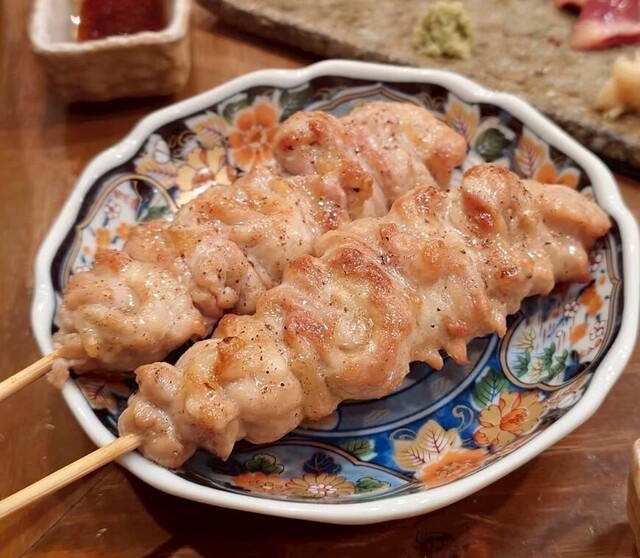
- Charcoal-grilled asa-biki jidori skewers
- Chef’s yakitori course
- Special grilled chicken dishes
Fukushima’s dining streets work at a lower volume than Osaka’s largest station-side dining zones. The area rewards modest dining rooms, short decisions, and meals where the grill is not decoration but the organising principle. In that setting, yakitori is less about abundance than sequencing: heat, salt, sauce, timing, and the steady use of chicken parts that casual diners outside Japan often overlook.
Ichijuu sits inside that Fukushima pattern rather than above it. Its public listing places it in yakitori and izakaya, which gives the meal a clear frame: grilled chicken skewers in a Japanese tavern setting. The restaurant’s Tabelog Hyakumeiten recognition for 2025 gives it a clear external signal in a category where many serious addresses stay physically modest. The point is not grandeur. It is whether a focused yakitori address can hold attention through timing, seasoning, and grill discipline.
Yakitori in Fukushima, judged by focus rather than theatre
Osaka has long treated yakitori as an after-work language, but the sharper Fukushima addresses now ask diners to read chicken with the attention usually reserved for more formal cooking. Freshness and handling matter because the format leaves little cover: a skewer can be seasoned, sauced, or charred, but it cannot hide careless work. Ichijuu’s public category places it directly in yakitori, with an izakaya frame, so the useful expectation is grilled chicken skewers served in a setting built around that core idea.
That focus places the restaurant closer to specialist yakitori than to the broadest version of the izakaya category, even though the label includes both yakitori and izakaya. The distinction is useful for travellers. An izakaya can absorb a scatter of orders; a yakitori-led meal exposes each decision more clearly. The narrower category also limits drift. This is the kind of address where dinner is best understood through the grill’s pace, not by an expectation of endless side dishes.
For context within Fukushima, the district is not defined by one cuisine. Patisserie Crochet points to the area’s daytime sweet-shop economy, while nearby restaurant choices range across casual European, Chinese, and Japanese formats. That variety makes the yakitori address more specific, not less. In a neighbourhood where diners can pivot from pastry to other dining rooms to skewers within a short evening radius, a chicken-focused venue has to justify itself through craft rather than novelty.
The counter format keeps the meal narrow, and that is the advantage
Yakitori has a practical effect on taste: it reduces the meal to fire, seasoning, and timing. In Japan’s serious skewer tradition, the cook’s control over fat, skin, cartilage, and lean meat is the real menu. The meal depends on how different cuts respond to heat, and on how the kitchen alternates richness with relief. Without verified dish names, the useful way to read Ichijuu is by format and category: grilled chicken skewers supported by an izakaya frame.
That narrowness is more than a limitation. Yakitori has moved beyond the simple idea of beer beside skewers, especially at places that want diners to notice seasoning and cut variation. The best versions ask guests to pay attention to sweetness, salt, smoke, texture, and the way each skewer resets the next. This is one reason Fukushima works well for visitors who prefer local dining habits over hotel-district predictability.
The price tier also tells a story about Osaka’s dining culture. At JPY 4,000–4,999 for dinner, this is not the rarefied end of Japan’s counter dining, but the recognition and focused category move it above routine after-work skewers. That middle position is often where Osaka is strongest: serious technique without the ceremonial weight that can make a meal feel staged for collectors rather than eaters.
How to place Ichijuu in an Osaka itinerary
Travellers planning Fukushima around food should think in clusters rather than single trophies. The district sits close enough to central Osaka movement patterns to work as an evening stop, yet its better meals tend to be modest-room affairs. For broader mapping, Our full Fukushima restaurants guide gives the useful neighbourhood frame; hotels, bars, wineries, and experiences can be planned through Our full Fukushima hotels guide, Our full Fukushima bars guide, Our full Fukushima wineries guide, and Our full Fukushima experiences guide.
Within a restaurant-led crawl, the contrast matters. A yakitori address such as Ichijuu reads differently beside other Fukushima dining rooms, including places such as EL ALMA, Uo China Yo, via del emme, and う越貞: the appeal is narrower, but the signal is cleaner. The meal is for diners who want to understand how Osaka handles chicken, grill work, and izakaya intimacy, rather than those seeking a broad menu for a long group dinner.
For readers building a wider Japan file, the comparison is also useful across categories. Other focused rooms, from seafood counters to pastry shops, wine-led restaurants, and compact Japanese dining formats, show how concentration can carry more meaning than larger menus. Ichijuu belongs to that same editorial category: a specialist venue where the value lies in a clear format, a limited field of attention, and the discipline required to make repetition feel purposeful.
The practical takeaway is simple. Choose this for a yakitori dinner in Fukushima, especially if the appeal is ingredient handling and grill pacing. The external recognition, Tabelog score of 3.62, and accessible dinner price band give enough evidence to treat it as a serious stop, while the JPY 4,000–4,999 range keeps it within reach for travellers who are allocating one evening to the area rather than building an entire trip around a single reservation.
Frequently asked questions
Where exactly is Ichijuu?
Fukushima.
Is Ichijuu expensive?
Pricing at Ichijuu is listed as JPY 4,000 - JPY 4,999.
Do they take walk-ins at Ichijuu?
The available public details do not specify a walk-in policy. Because Ichijuu is a yakitori and izakaya venue in Fukushima, checking the venue's official channels before visiting is the safer approach.
What is Ichijuu known for?
Ichijuu is known as a yakitori and izakaya venue in Fukushima, with Tabelog Hyakumeiten recognition in 2025 and a listed score of 3.62.
A Quick Peer Check
Nearby venues at a similar price tier for orientation.
| Venue | Cuisine | Price | Awards | Notes |
|---|---|---|---|---|
| IchijuuThis venue (the venue you are viewing) | Yakitori & Izakaya | $30–50 | Tabelog 100 #52 | Not listed |
| Shoppe Shoppe | Japanese Ramen | $10–20 | Tabelog 100 #11 | Fukushima |
| Ponshuya Santoku Rokumi Fukushima honten | Standing Japanese sake bar & izakaya | $30–50 | Tabelog 100 #79 | Fukushima |
| Ramen Kozou | Rich Tonkotsu Ramen | $10–20 | Tabelog 100 #33 | Fukushima |
| Sushi Hijiri | Edomae Sushi Omakase | Not listed | Tabelog 100 #47 | Fukushima |
| Spice Curry Tairiku | Osaka-style spice curry | $10–20 | Tabelog 100 #45 | Fukushima |
Recognition history
Dated appearances from independent guides and award organizations, with the underlying list record or original source where available.
Tabelog 100 #52 · No. 52
Tabelog · Tabelog 100 - Yakitori - WEST - 2025
Continue exploring
More in Fukushima
Restaurants in Fukushima
All restaurants in Fukushima →




Bars in Fukushima
Browse all →




Hotels in Fukushima
Browse all →



Wineries in Fukushima
Browse all →
Details
- Lively
- Cozy
- Intimate
- After Work
- Casual Hangout
- Date Night
- Solo
- Group Dining
- Late Night
- Chefs Counter
- Open Kitchen
- Standalone
- Sake Program
- Beer Program
- Local Sourcing
- Set Menu
- A La Carte
- Counter Dining
- Small Plates
- Sake
- Shochu
- Whisky
- Wine
A small, counter-only space with a calm, traditional Japanese feel and the energy of an open yakitori grill, where guests sit close to the action in a relaxed yet lively izakaya-style atmosphere.