
Topca Kanda honten belongs to Tokyo’s serious curry circuit, where lunch-counter efficiency and after-work tavern habits often share the same small room. Its Tabelog Curry TOKYO 100 selection for 2024, 23-seat format, and curry-plus-izakaya identity place it in a practical, local category rather than a ceremony-driven fine-dining one.
Pearl is the En Primeur Club membership app — saves, bookings, and concierge access live there. Same editors, same standards.
- Address
- 東京都千代田区神田須田町1-11 竹内ビル 1F
- Phone
- +81332550707
- Website
- topca.co.jp
 Saves & bookings on Pearl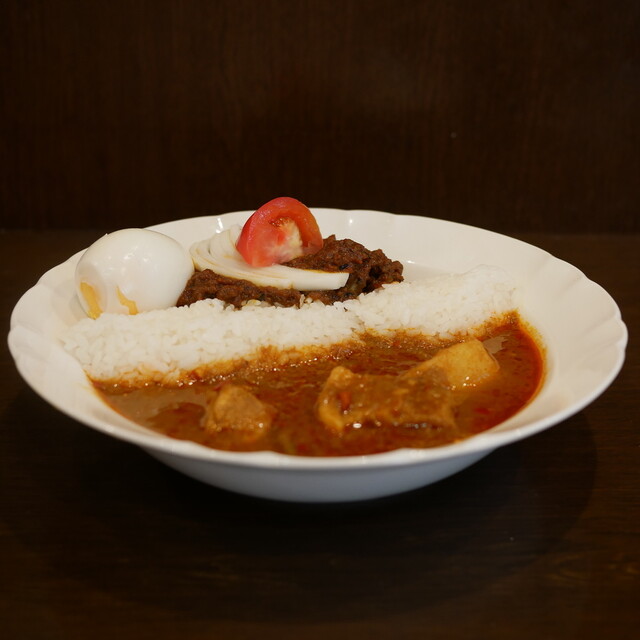
Kanda curry is rarely theatrical. Around Awajicho and Sudacho, the rhythm is office workers, old shopfronts, train-line proximity, and meals built for speed without making speed feel like a flaw. Topca Kanda honten fits that Tokyo habit: compact, counter-capable, and focused on repeatable comfort over performance. In a city where curry ranges from department-store cutlet plates to spice-driven Indian curry rooms, this address sits in the everyday specialist tier, where recognition matters because the format is modest.
That modesty is the point. Tokyo’s curry culture rewards places that work across routine rather than occasion: lunch finished cleanly between meetings, dinner shifting toward drinking food, and pricing that keeps the meal in the city’s casual rotation. The 2024 Tabelog Curry TOKYO 100 selection gives Topca a measurable signal in a crowded field, but category fit matters more. This is not Ginza omakase logic applied to curry. It is a small-room, high-frequency dining ritual, with curry as anchor and tavern habits at the edges.
Kanda curry as a daily ritual, not a tasting-menu event
Kanda remains one of Tokyo’s useful eating districts because it does not force one identity. It sits between office Tokyo, student-adjacent book-town culture, old soba and coffee houses, and the after-work drinking grid toward Akihabara. Curry thrives here: rice and sauce for quick lunch, spice heat without ceremony, and enough Japanese and Indian-inflected variation to support regular comparison.
Topca’s listed categories, curry, Indian curry, and izakaya, point to that hybrid Tokyo grammar. The meal is not framed by chef biography or long explanation; it is framed by pace. Lunch pressures turnover and decisiveness, while evening lets the room behave more like a small tavern. That split changes traveler expectations. A curry-only visit belongs to the quick-meal tradition. A drinking-led visit belongs to Kanda’s after-work pattern, where food and alcohol share the table without formal-course choreography.
Against nearby names in the same broad district, the positioning is clear. Takemura and CHOPIN operate at a lower listed spend, AROMAS of INDIA overlaps at lunch while moving higher at dinner, and Kanda Yunrin belongs to a different dinner bracket. Kanda Yabu Soba reflects the area’s older noodle-house lineage rather than the curry lane. Topca sits in the middle: accessible, recognized, and specific enough to justify a targeted stop when the brief is curry rather than a general Tokyo meal.
The room rewards decisiveness
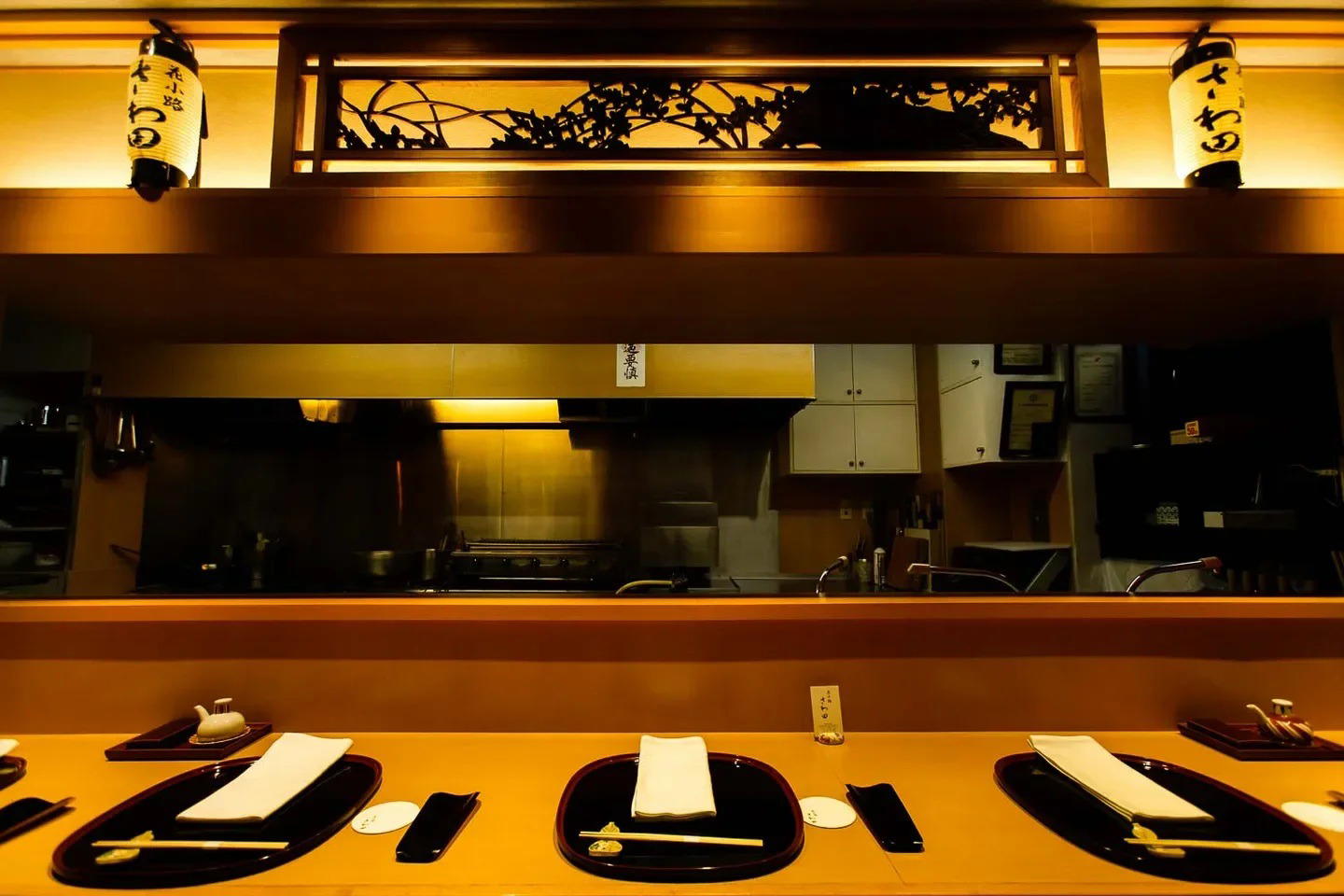
Small Tokyo restaurants often teach etiquette through layout before anyone speaks. A 23-seat room with counter seating asks diners to arrive ready, order without excessive debate, and let the meal move at the room’s required speed. That is not brusqueness; it is compact urban dining’s social contract. Here, the counter is not a luxury stage but a practical instrument, reducing friction between kitchen, staff, and guest.
The useful distinction is scarcity versus intimacy. Many Tokyo visitors link small seat counts with hard-to-access luxury, but curry shops and izakaya hybrids use small rooms differently. Capacity shapes rhythm, not price mythology. The listed spend remains casual, and the Tabelog score of 3.79 signals sustained local attention without turning the meal into status. Award recognition across multiple Curry 100 selections in recent years reinforces the point: in a crowded category, consistency matters more than novelty.
Tokyo curry has its own quiet etiquette. It is usually not a lingering format at peak lunch. The plate arrives, the meal proceeds, and the table turns. The serious part is attention to house style: sauce texture, heat level, rice balance, and how the curry works as a complete plate rather than a set of luxury ingredients. Topca Kanda honten is useful because it keeps that ritual intact while adding evening drinking culture.
How to place it in a Tokyo eating day
For an editorially coherent Tokyo itinerary, this stop works better as a planned anchor than filler. Pair it with the Kanda and Akihabara corridor: the area can absorb a curry lunch, coffee, shopping, and a later drink without cross-city travel. Readers building a wider dining map can use Our full Tokyo restaurants guide for the broader restaurant field, then narrow by mood rather than prestige. Nearby or category-adjacent browsing might include . 鮪と炭火焼き うお炭 秋葉原店, 3 Chome no Curry Ya San, 12/10 Shinjuku ten, 124. KAGURAZAKA (Yakitori), and 2D Cafe.
Tokyo’s casual dining depth is not a consolation prize beneath reservation restaurants. It is a parallel system with its own standards: tight menus, narrow rooms, clear pricing, and enough local scrutiny that awards such as Tabelog’s Curry 100 become useful filters. Topca belongs to that system. It suits travelers who know a disciplined curry lunch can say as much about Tokyo as a long counter meal, especially where workday appetite, train access, and old-neighborhood habits set the pace.
For trips beyond this lane, Tokyo planning benefits from separating categories rather than forcing every meal into one list. Use Our full Tokyo hotels guide for where to stay, Our full Tokyo bars guide for drinking plans, Our full Tokyo wineries guide for wine-focused addresses, and Our full Tokyo experiences guide for cultural scheduling around meals. Wider Japan and beyond can stretch the same logic through -Grilled beef Sukiyaki- KAMAKURA TANUKIAN 鎌倉 たぬき庵 in Kamakura.cafe in Osaka.know in Kumamoto, (Shoku) Vietnam in Kawasaki, [Curry Senmon Ten] Maruyama Kyoju. in Sapporo, [ki:] in Kyoto, Jōdo Saké Bar in Los Angeles, and Onigiri Time in Pasadena.
Cuisine Context
Comparable venues at the same tier.
| Venue | Cuisine | Price | Notes |
|---|---|---|---|
| Topca Kanda hontenThis venue — the venue you are viewing | Japanese & Indian-style Curry House | $ | Not listed |
| Turret Coffee | Specialty coffee & café snacks | $ | Chūō |
| Daphne | Traditional Japanese coffee shop (kissaten) and coffee bean roastery | $ | Minato |
| haritts Uehara ten | Donut Cafe | $ | Shibuya |
| M Size | Neighborhood bakery | $ | Meguro |
| Sucre-rie | Western-style pastry & cake shop | $ | Chūō |
Recognition history
Dated appearances from independent guides and award organizations, with the underlying list record or original source where available.
Tabelog 100 #50 · No. 50
Tabelog · Tabelog 100 - Curry - TOKYO - 2024








At a Glance
- Classic
- Cozy
- Solo
- After Work
- Casual Hangout
- Standalone
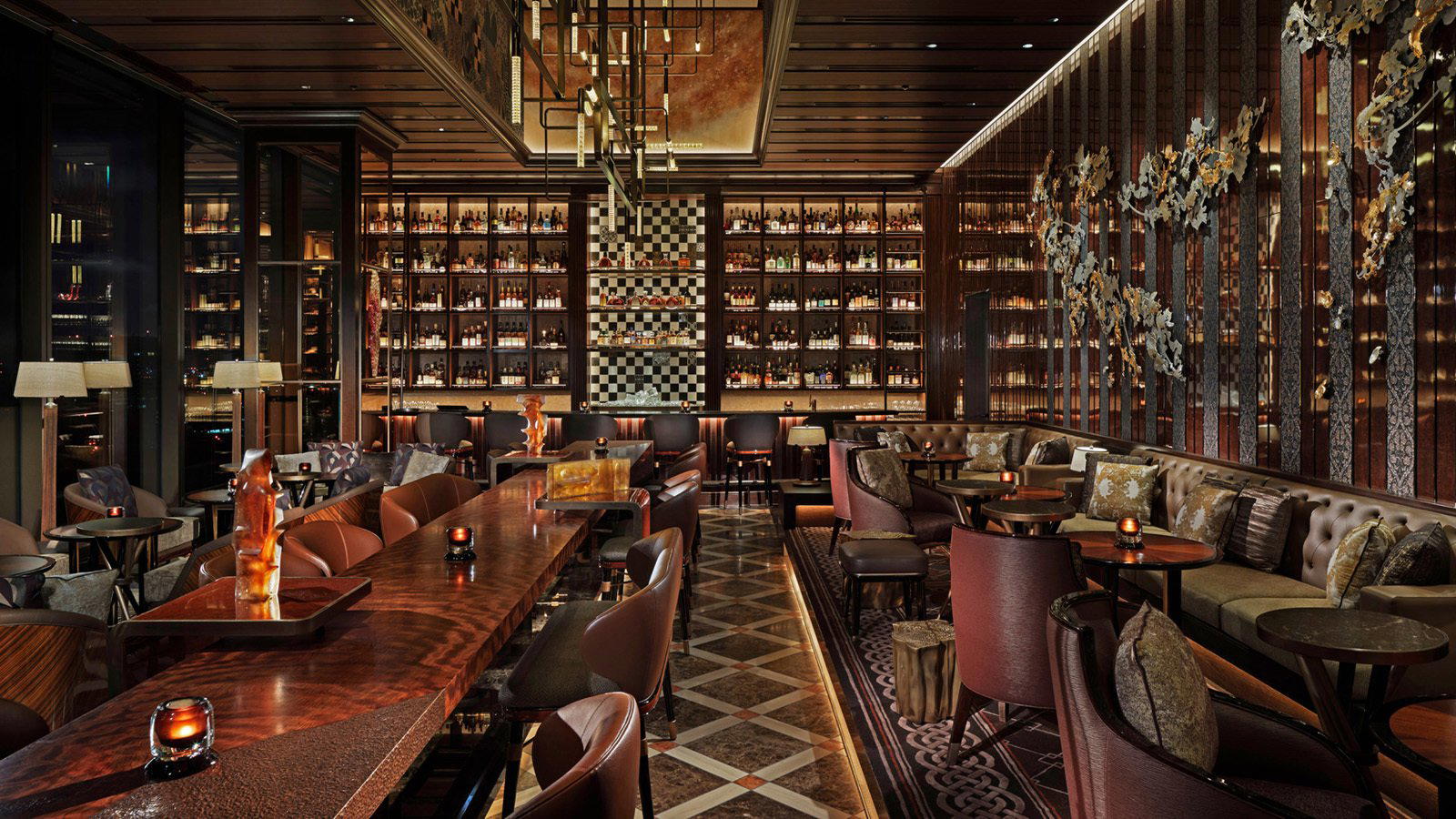
A compact, no-frills curry shop with counter and table seating, direct decor, and a relaxed, everyday atmosphere typical of classic Kanda eateries.