
M Size places Tokyo’s bakery culture in miniature: a bread-focused, take-out format in Gakugei Daigaku with Tabelog Bread TOKYO 100 selections in 2020 and 2022. The appeal is less about restaurant ceremony than disciplined small-scale retail, low spend, and the kind of neighbourhood reputation that makes a bakery matter beyond its immediate block.
Pearl is the En Primeur Club membership app — saves, bookings, and concierge access live there. Same editors, same standards.
- Address
- 東京都目黒区鷹番2-5-17
- Phone
- +81337605661
- Website
- tabelog.com
 Saves & bookings on Pearl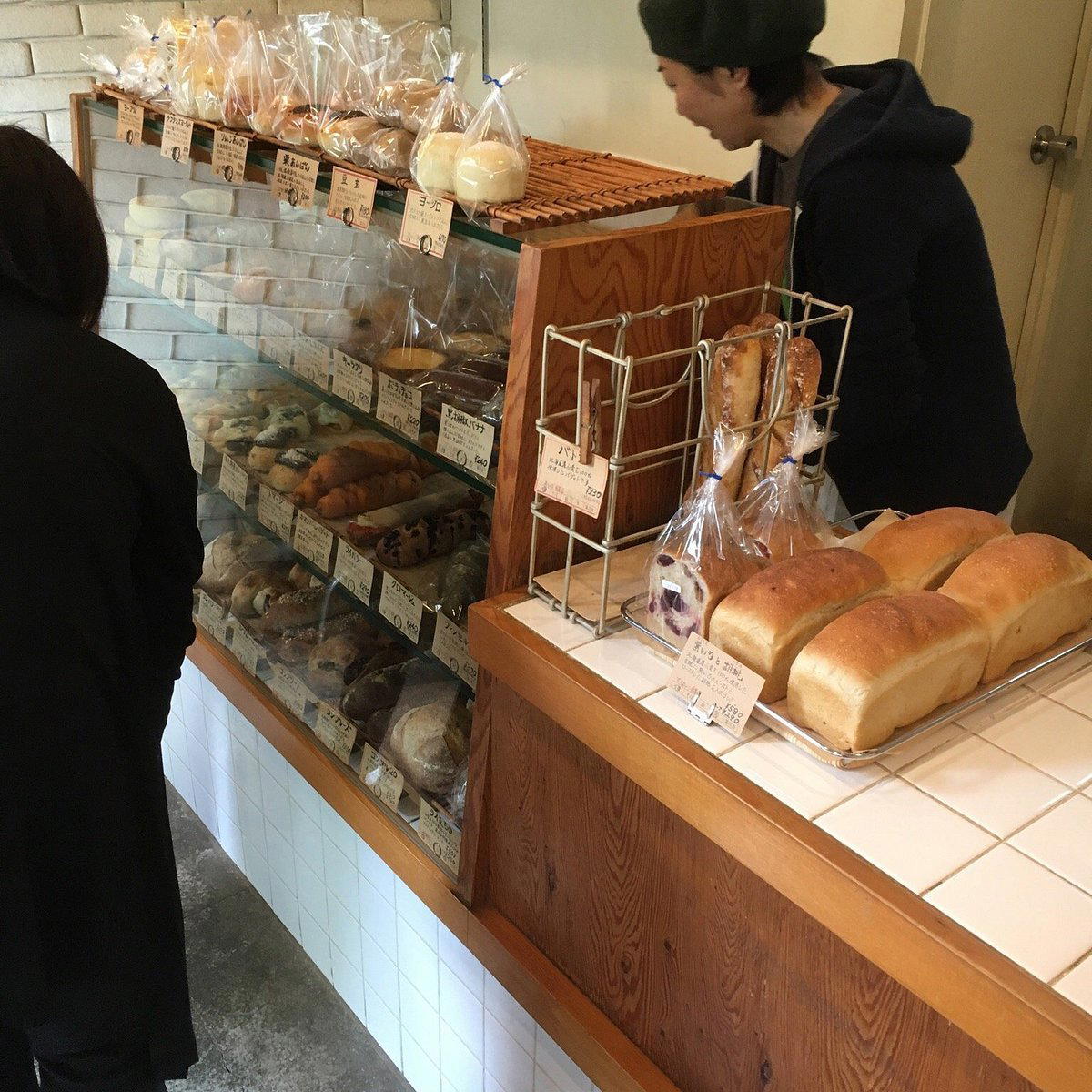
Gakugei Daigaku’s quieter shopping streets suit the Tokyo bakery ritual: short stops, quick decisions, paper bags carried back toward the station, and a clientele that treats bread as part of daily life rather than a special-occasion detour. In that setting, M Size belongs to a precise Tokyo category, the small bread specialist whose reputation is built through repeat local use and critical list recognition rather than dining-room theatre.
Tokyo’s bread scene has long moved beyond the simple import of French technique. The city’s stronger bakeries tend to compress several habits into one format: Japanese preference for softness and portion control, French-derived shaping and fermentation language, and the convenience culture of station-adjacent neighbourhood retail. The result is not a restaurant in the conventional sense. It is closer to a daily provisioning stop, judged by consistency, turnover, and whether a narrow operation can hold attention in a city with an unusually deep bakery field.
A small Tokyo bread counter with list recognition, not restaurant ceremony
Tabelog selected M Size for its Bread TOKYO 100 list in 2020 and again in 2022, which places it inside a competitive category that is especially dense in the capital. That recognition matters because bread shops rarely have the obvious status signals of luxury dining: no tasting-menu arc, no sommelier floor show, no long chef biography required for the guest to understand the premise. Reputation is earned through a more practical test, with regular customers returning for ordinary purchases and rating platforms reflecting sustained attention over time.
The useful comparison is not Ginza fine dining or destination sushi. It is the neighbourhood specialist tier, where format is tight and the visit is measured in minutes. Around Gakugei Daigaku, the broader casual field ranges from ramen at Mendokoro Bigiya Gakugei daigaku honten to higher-spend meat and skewer formats such as Yakitori Uu. with OVERWHELM HAMBURGER & BAR STAND, スタンドバインミー, and Spice Kurashi showing how the area supports compact, category-led eating. A bread shop in that mix has to compete on frequency and trust rather than occasion.
That is why the award signal carries editorial weight. The Tabelog Bread TOKYO 100 list is not a luxury ranking in the hotel-dining sense; it is a map of bakeries that have earned enough attention to be read beyond their immediate neighbourhoods. M Size’s inclusion suggests a place whose relevance is category-specific. The point is not breadth. The point is a focused bakery identity in a city where even casual bread buying has a critical hierarchy.
Gakugei Daigaku's bakery culture rewards precision and speed
Gakugei Daigaku sits in Meguro’s residential-western orbit, where the restaurant rhythm differs from the late-night density of Shinjuku or the expense-account polish of Marunouchi. The area rewards compact places that work for daily life: a counter, a queue, a quick handover, and enough specificity to justify a detour from the station. In Tokyo, that kind of bakery can be as revealing as a formal dining room because it shows how exacting the city can be about ordinary purchases.
M Size’s format aligns with that expectation. It is take-out oriented, with a small amount of outdoor seating noted for the wooden deck, and the operation has been described as accepting customers one at a time. That detail is not a decorative quirk; it changes the tempo. The experience becomes closer to a controlled retail exchange than a café session. For travellers used to sprawling bakery counters, Tokyo’s tighter format can feel compressed, but it also explains why selection, timing, and turnover matter so much in this category.
The low listed spend also sharpens the appeal. Tokyo often separates prestige and price less neatly than visitors expect: a counter restaurant can require planning and serious money, while a specialist bakery with list recognition can sit in an everyday budget band. That imbalance is part of the city’s pleasure. Critical credibility is not confined to expensive rooms, and a bread stop can carry enough local weight to justify being planned into a day of eating.
How to place it within a Tokyo food day
M Size works better as a targeted stop than as the anchor of a long itinerary. Build it into a Meguro or Tokyu Toyoko Line day, then let the rest of the schedule carry the sit-down meals. For broader Tokyo planning, Our full Tokyo restaurants guide gives the wider dining frame, while Our full Tokyo hotels guide, Our full Tokyo bars guide, Our full Tokyo wineries guide, and Our full Tokyo experiences guide help turn a bakery detour into a coherent route.
The contrast with other Tokyo listings is useful.. 鮪と炭火焼き うお炭 秋葉原店 points toward fish and charcoal in Akihabara, 12/10 Shinjuku ten suits a Shinjuku eating plan, 124. KAGURAZAKA (Yakitori) brings the conversation back to skewers, 2D Cafe shows Tokyo’s visual café culture, and 3 Chome no Curry Ya San covers another casual specialist lane.
For readers extending the same category-led approach across Japan, compare the role of compact specialists elsewhere: -Grilled beef Sukiyaki- KAMAKURA TANUKIAN 鎌倉 たぬき庵 in Kamakura.cafe in Osaka.know in Kumamoto, (Shoku) Vietnam in Kawasaki, [Curry Senmon Ten] Maruyama Kyoju. in Sapporo, and [ki:] in Kyoto. Even outside Japan, focused casual formats such as Jōdo Saké Bar in Los Angeles and Onigiri Time in Pasadena show how narrow concepts can carry more editorial value than larger, less disciplined menus.
The verdict is simple: treat this as a serious bakery stop, not a café to linger over or a restaurant to structure an evening around. Its reputation rests on bread, compact service, and repeat recognition in a Tokyo category where casual does not mean careless.
Pricing, Compared
Comparable venues to calibrate price, style, and recognition.
| Venue | Cuisine | Price | Notes |
|---|---|---|---|
| M SizeThis venue — the venue you are viewing | Meguro, Neighborhood bakery | $ | Not listed |
| Shiroichi Shibuya ten | Not listed | $ | Shibuya, Raw milk soft serve & ice cream shop |
| Daily Chico | Nakano, Soft serve ice cream shop | $ | Not listed |
| Newcastle | Chūō, Traditional Japanese curry house | $ | Not listed |
| woodberry's Honten | Not listed | $ | Kichijoji, Seasonal frozen yogurt & gelato |
| Italiano Jerato Ya | Not listed | $ | Taitō, Italian-style gelato & ice cream shop |
Recognition history
Dated appearances from independent guides and award organizations, with the underlying list record or original source where available.
Tabelog 100 #55 · No. 55
Tabelog · Tabelog 100 - Bread - TOKYO - 2022











At a Glance
- Cozy
- Solo
- Family
- Casual Hangout
- After Work
- Standalone
- Terrace
- Street Scene
A compact, low-key bakery with a simple storefront near the station and a small wooden-deck seating area outside; atmosphere is relaxed, non-smoking, and feels like a cozy local spot where most guests grab bread to go.