Tonari
Tonari occupies a corner of Penn Quarter where D.C.'s dining ambitions run high and the competition is specific. The restaurant positions itself within the city's growing cohort of Japanese-influenced casual-to-serious dining, drawing a crowd that treats the neighborhood as a destination rather than a transit point. For visitors arriving from the nearby convention corridor or Gallery Place Metro, it reads as a considered local anchor.
Pearl is the En Primeur Club membership app — saves, bookings, and concierge access live there. Same editors, same standards.
- Address
- 707 6th St NW, Washington, DC 20001
- Phone
- +12022898900
- Website
- tonaridc.com
- Directions
- Get directions
 Saves & bookings on Pearl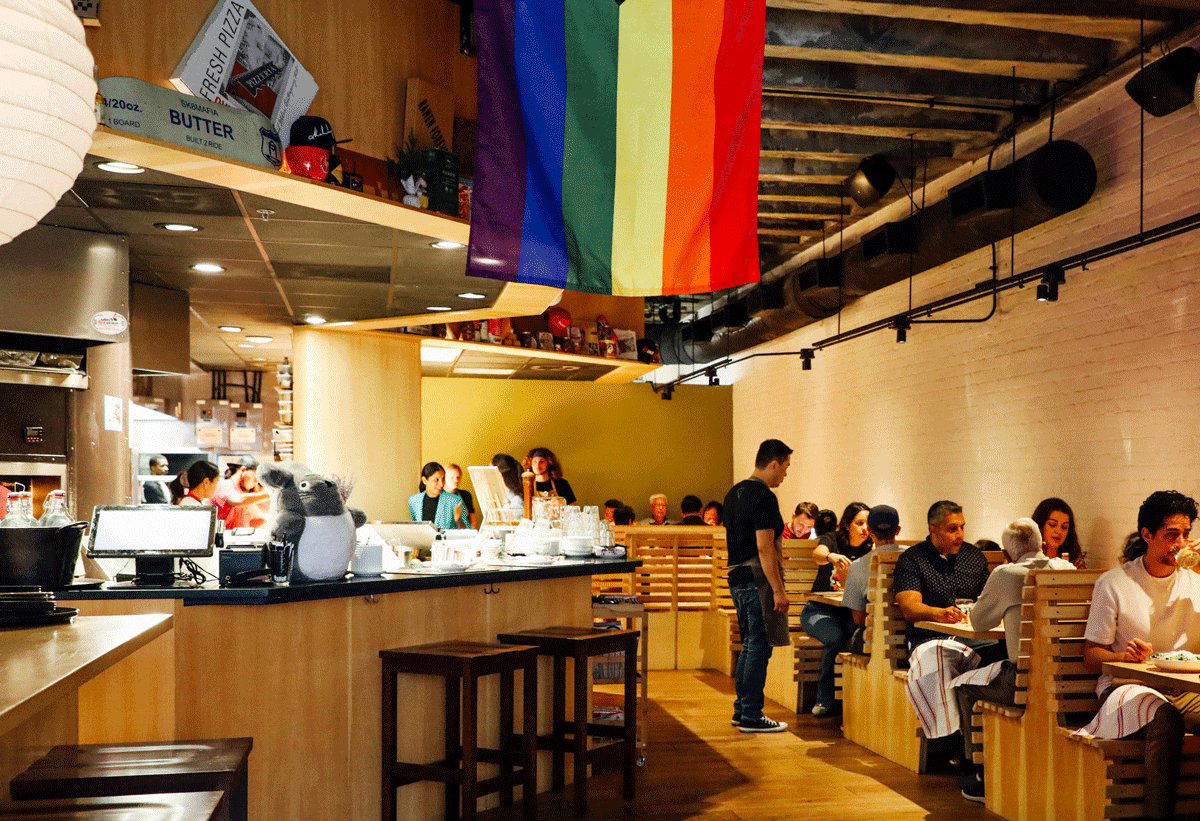
Penn Quarter as a Dining Address
Washington's Penn Quarter sits in a particular kind of urban tension: close enough to the Mall to catch tourist overflow, dense enough with law firms and media offices to sustain a serious weeknight crowd, and just far enough from the Georgetown or 14th Street corridors to develop its own character. Tonari is a Wafu Italian restaurant at 707 6th St NW, Washington, DC 20001.
The neighbourhood matters because it shapes the expectation a guest carries through the door. Penn Quarter diners are not, as a rule, looking for the kind of elaborate ceremony you find at a tasting-menu counter. They want technical precision delivered without theatre, a room that can absorb a business dinner or a group of four without requiring either party to adjust their volume. That calibration is a Penn Quarter signature, and it explains why the dining tier here sits differently from, say, the exploratory price point you encounter at Jônt or the molecular experiment underway at minibar.
The Japanese-Influenced Casual Format in D.C.
D.C.'s relationship with Japanese food and Japanese-adjacent dining has matured considerably. The city now has a recognisable tier of restaurants that draw on Japanese technique, ramen and izakaya traditions, or Japanese-Italian crossover formats without anchoring themselves to a single category. These venues tend to share certain characteristics: open kitchens, a counter culture borrowed from omakase without the price point, and menus that move between small plates and larger composed dishes without forcing a strict progression.
That format competes in a city where Peruvian precision at Causa and the Middle Eastern fire at Albi have raised the general standard for what a non-European dining concept can achieve at the premium end. Tonari operates adjacent to this cohort, offering a format that reads as accessible without conceding on execution.
How Tonari Reads Against Its comparable set
Tonari stands apart in Penn Quarter and nearby Chinatown for its Wafu Italian format. Venues like Oyster Oyster, which works a sustainable New American angle at a mid-premium price, and the higher-stakes tasting formats further afield, illustrate a city that has learned to support multiple registers simultaneously. Tonari's register is casual-serious: the kind of place where the cooking has been thought through but the room does not demand that you acknowledge it.
That positioning connects it, at least structurally, to what izakaya-influenced American restaurants have achieved in other cities. The Japanese-Italian crossover category, sometimes called wa-Italian or simply Italian-Japanese fusion, has produced some of the more interesting rooms in New York, where the format has had longer to settle. D.C. is catching up, and Penn Quarter is one of the places that arrival is most visible.
What the Location Delivers Practically
Gallery Place-Chinatown Metro sits within a short walk of 707 6th St NW, making Tonari easy to reach by transit. That accessibility matters for a restaurant drawing from multiple D.C. neighbourhoods, and it differentiates it from the destination restaurants that require either a rideshare or a committed walk from the nearest station, such as The Inn at Little Washington, which sits an hour out of the city entirely.
The Penn Quarter corridor also benefits from the Capital One Arena proximity, which creates consistent pre- and post-event foot traffic. For a restaurant in this format, that audience is both an asset and a filter: the crowd it draws on event nights skews toward people who want efficiency alongside quality, which is a different brief than the leisurely Saturday tasting-menu guest.
Planning Your Visit
Reservations are recommended. Gallery Place-Chinatown Metro (Red, Yellow, Green lines) is one direct transit option. Dress is casual. Budget: $$.
Side-by-Side Snapshot
Comparable venues nearby, for context on price, style, and recognition.
| Venue | Cuisine | Price | Notes |
|---|---|---|---|
| TonariThis venue — the venue you are viewing | Wafu Italian | $$ | Not listed |
| Singing Tiger | Modern Pan-Asian with Karaoke | $$ | Brentwood Railyard |
| Eunoia | Seasonal Mexican–Bulgarian–Japanese Fusion | $$ | Union Market / NoMa |
| Brisa | Coastal Latin with Tulum-inspired vibes | Not listed | Buzzard Point |
| Realm | Seychelles-Inspired Fusion Rooftop Lounge | $$$ | Shaw |
| Kata | Asian Fusion Tapas & Sushi | $$$ | Chinatown |
Continue exploring
More in Washington DC
Restaurants in Washington DC
Browse all →
Bars in Washington DC
Browse all →
Hotels in Washington DC
Browse all →

At a Glance
- Modern
- Trendy
- Group Dining
- Casual Hangout
- Brunch
- Open Kitchen
- Sake Program
Current opening hours
- Monday
- 5–9 PM
- Tuesday
- 5–9 PM
- Wednesday
- 5–9 PM
- Thursday
- 5–9 PM
- Friday
- 5–10 PM
- Saturday
- 11:30 AM–2:30 PM, 5–10 PM
- Sunday
- 5–9 PM
Hours can change for holidays and private events. Last verified .
Typical Japanese restaurant ambiance with a fusion twist.