Our verdict
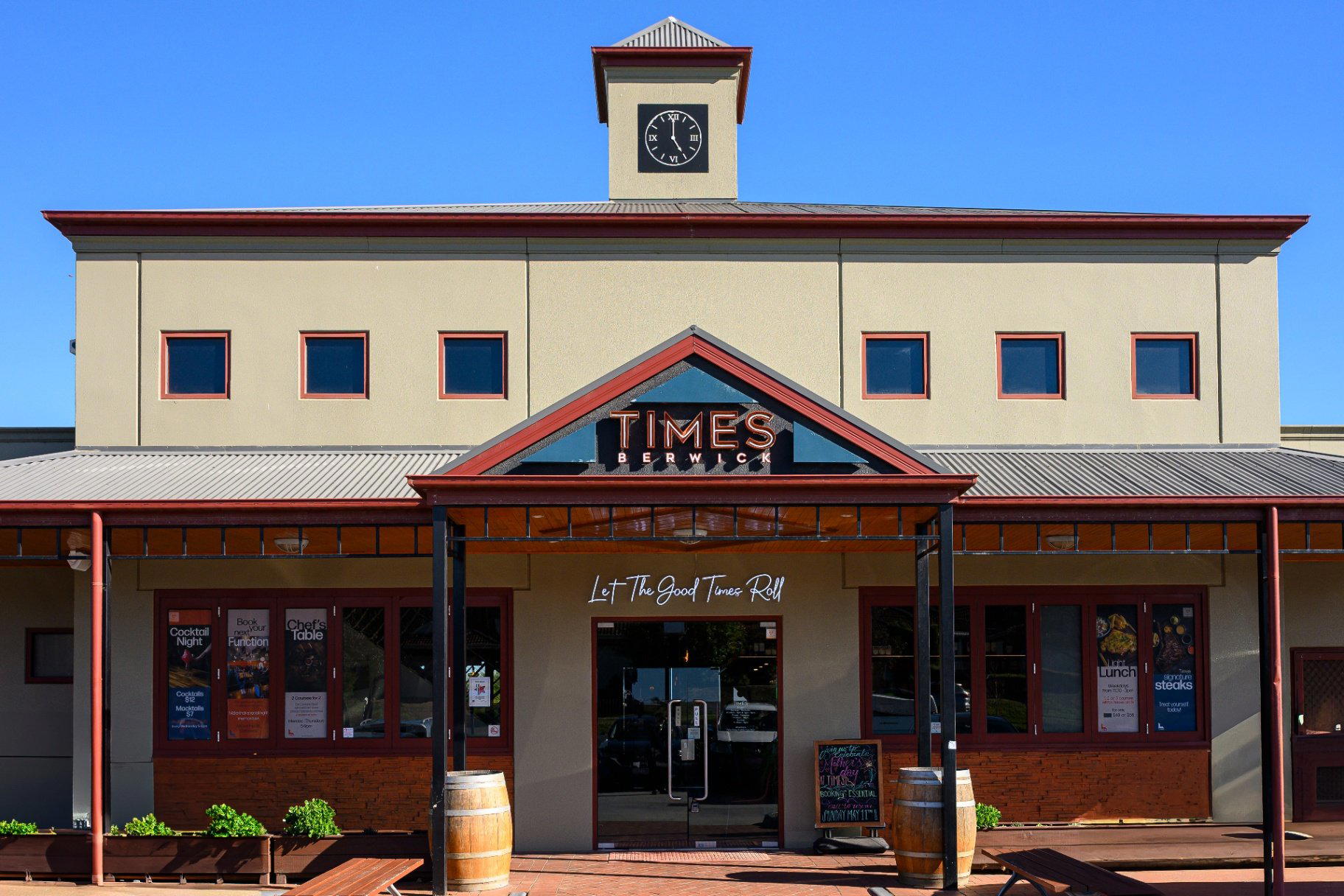
Times Berwick sits in Melbourne's southeastern fringe, where the dining scene operates at a remove from the inner-city circuit. It is the kind of address that surfaces through word of mouth rather than awards columns.

Pearl is the En Primeur Club membership app — saves, bookings, and concierge access live there. Same editors, same standards.
The menu
What to order
- Porterhouse steak with signature basting
- Tempura-fried barramundi fillet
- Ricotta and spinach ravioli
- Half rack beef or pork ribs
- Prawn linguine
Beyond the Inner Ring: Dining in Melbourne's Southeast
Melbourne's restaurant conversation defaults to a tight geography: Flinders Lane, Collingwood, Fitzroy, South Yarra. The venues that dominate critical attention, from Attica (Australian Modern) in Ripponlea to Flower Drum (Cantonese) in the CBD, operate within a corridor that the food press has mapped exhaustively. What receives far less coverage is what exists on the city's outer southeastern arc, where suburbs like Berwick sit roughly 45 kilometres from the CBD and serve a population that has its own dining expectations, independent of inner-city trends. Times Berwick, addressed at 13/84 Bemersyde Drive in Berwick, occupies that outer geography. Understanding what it represents means understanding how dining culture functions when it is not performing for critics or awards panels.
The Berwick Context
Berwick is part of Melbourne's Casey corridor, a growth zone that has expanded rapidly over the past two decades. The dining culture in these areas tends to reflect the communities that actually live there rather than the aspirational positioning that defines inner-city openings. Venues in this bracket compete on consistency, value, and the kind of repeat-visit reliability that neighbourhood restaurants in any city depend on. The comparison set is not Above Board or 48h Pizza e Gnocchi Bar in the inner suburbs, but rather the local operators who have built genuine community standing over years of consistent service. That is the tier in which Times Berwick operates, and it is a tier that the broader Melbourne dining narrative largely ignores.
This pattern is not specific to Melbourne. In Sydney, strong neighbourhood operators in places like Kirribilli or Crows Nest, such as Bayly's Bistro in Kirribilli or Johnny Bird in Crows Nest, maintain loyal followings that have little to do with the awards infrastructure. The same dynamic appears in regional Victoria at venues like Jaani Street Food in Ballarat, or further afield in New South Wales at Kulcha Restaurant Wollongong in Wollongong. The restaurants that sustain communities on the edges of major cities are, in many cases, doing more durable work than the tasting-menu operations that generate the headlines.
What
The public data record for Times Berwick is sparse. This is not unusual for neighbourhood operators in outer suburban areas, where review aggregators and food press coverage thin out considerably beyond the inner-ring postcodes. The absence of a website or verified phone number in the public record suggests either a recent opening, a business that operates primarily through local word-of-mouth channels, or one that has not yet built a significant digital presence. None of those scenarios is damning. Plenty of durable neighbourhood restaurants, including early iterations of what later became respected operations, spend years below the radar of formal documentation.
For readers accustomed to vetting venues through Michelin stars, 50 Best placements, or the kind of multi-source coverage that surrounds operations like Brae in Birregurra or Rockpool in Sydney, Times Berwick requires a different kind of due diligence. The appropriate move here is direct contact or a visit rather than remote research. That holds for cuisine specifics, pricing, current hours, and any team or format details.
The Team Dynamic in Neighbourhood Dining
The editorial angle of chef-sommelier-front-of-house collaboration, so central to fine dining narratives at venues from Le Bernardin in New York City to Atomix in New York City, takes a different shape in suburban neighbourhood restaurants. In outer-suburban operations, the team dynamic is less likely to be structured around formalized roles and more likely to reflect the practical reality of a smaller, often family-run or owner-operated business. The person who cooks may also be the person who manages the floor. The wine selection, if there is one, may be curated by whoever handles ordering rather than a dedicated sommelier. This is not a deficiency. It is a different model, and in many cases a more agile one, where decisions about the menu, service style, and guest experience are made by people with direct skin in the operation rather than by tiered management structures.
The collaboration that sustains a neighbourhood restaurant is often less visible than the choreographed service of a formal dining room, but it is no less deliberate. The venues that last in places like Berwick do so because the team, however it is constituted, has built something that the local community chooses to return to. That is, in its own terms, a meaningful credential.
Planning a Visit
Times Berwick is located at 13/84 Bemersyde Drive, Berwick VIC 3806, in Melbourne's southeastern suburbs. For visitors travelling from central Melbourne, the journey requires either a car or the Pakenham line train to Berwick station, from which the venue address is accessible by local transport or a short drive. Given the absence of confirmed hours and booking information in the public record, reaching out through local discovery channels or stopping by in person is the practical approach before making a dedicated trip from the city. Readers planning a wider sweep of Melbourne's dining range can consult our full Melbourne restaurants guide for context on the inner-city circuit alongside what is operating further afield. For those already in the Casey corridor area, the low-friction approach is simply to visit and form a direct assessment.
The Broader Pattern Worth Watching
Melbourne's food culture has spent two decades building a reputation on its inner-city density, where venues like 7 Alfred (steak-frites) and Bar Carolina in South Yarra operate in a market that is watched closely by both critics and the industry. But the city's actual dining geography is far broader. The outer suburbs, which account for a significant share of Melbourne's population, support a restaurant economy that is largely underdocumented. Operations like Barry Cafe in Northcote and bills in Bondi Beach have demonstrated that neighbourhood anchors can develop lasting reputations without relying on the fine dining infrastructure. The pattern repeats in regional contexts too, from Hungry Wolfs Italian Restaurant in Newcastle to comparable operations throughout Victoria.
Frequently asked questions
What's the overall feel of Times Berwick?
Times Berwick sits at 13/84 Bemersyde Drive in Berwick, part of Melbourne's rapidly grown Casey corridor — a context that shapes it as a neighbourhood venue rather than a destination driven by awards or critical attention. The atmosphere reflects the dining culture of Melbourne's southeastern suburbs, where the priority is local regulars over destination visitors.
What's the address for Times Berwick?
Times Berwick is located at 13/84 Bemersyde Dr, Berwick VIC 3806, Australia, Melbourne.
Is Times Berwick a good option for dining in Melbourne's southeast suburbs?
For those based in or travelling through Berwick, Times Berwick at 13/84 Bemersyde Drive is one of the few named venues serving the Casey corridor, a growth zone that has expanded substantially over the past two decades. Melbourne's dining critical mass stays concentrated in the inner ring — Fitzroy, Collingwood, South Yarra — which means southeast options like this carry more local weight than their profile in city-focused guides suggests.
How hard is it to get a table at Times Berwick?
No booking data, reservation policy, or capacity figures are confirmed for Times Berwick. Neighbourhood venues in Melbourne's Casey corridor typically operate with more accessibility than the inner-city counters that book weeks in advance, but that is a general pattern rather than a venue-specific guarantee. Checking directly with Times Berwick at Bemersyde Drive, Berwick VIC 3806 will give the current picture.
In Context: Similar Options
Comparable venues nearby, for context on price, style, and recognition.
| Venue | Cuisine | Price | Awards | Notes |
|---|---|---|---|---|
| Times BerwickThis venue — the venue you are viewing | Modern Australian Steakhouse with Italian & African BBQ | $50–100 | Not listed | Not listed |
| 7 Alfred | Steak Frites | $30–50 | Not listed | Melbourne |
| Cafe Di Stasio | Classic Italian Trattoria | $50–100 | Not listed | St Kilda West |
| Bistrot d'Orsay | Provençal Mediterranean French Bistro | $50–100 | Not listed | Melbourne |
| Steak Ministry Bar & Grill | Premium Australian Steakhouse | $100–150 | Star Wine List | Glen Waverley |
| VEX | Modern Australian Small Plates | $50–100 | Star Wine List | Northcote |