Skip to Main Content

UpcomingDrink over $25,000 of Burgundy at La Paulée New York

← Collection
CuisineJapanese Sushi
LocationRichmond, Australia
La Liste

Minamishima has held consecutive La Liste Top Restaurant scores (85pts in 2025, 86pts in 2026), placing it among a small cohort of Australian omakase counters measured against international peers. The Lord Street address in Richmond — a suburb better known for Vietnamese eateries and Chinese BBQ than high-end Japanese — gives it an off-pitch setting that underlines the format's self-contained logic: serious sushi needs no fashionable postcode to draw serious diners.

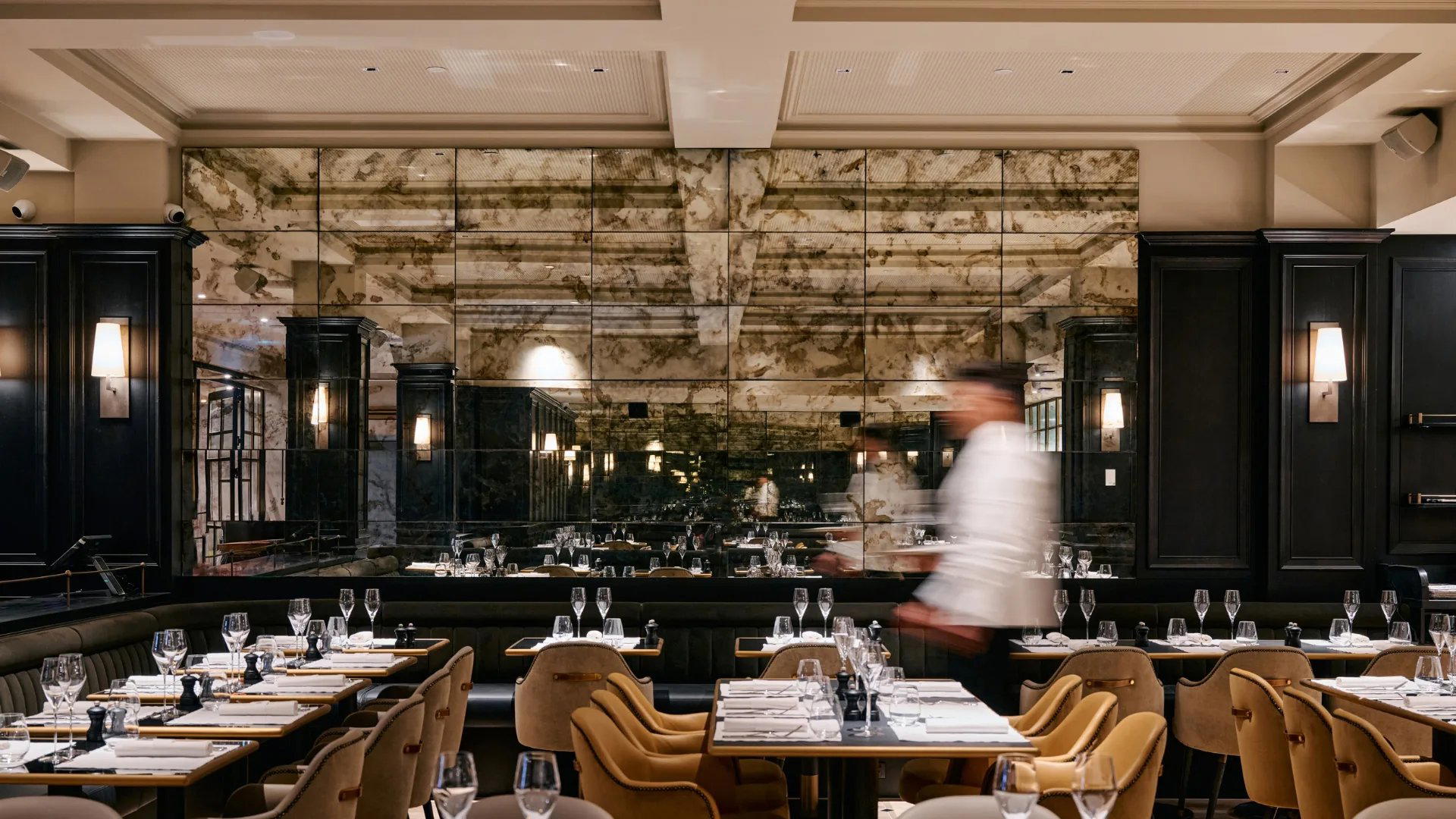
Minamishima restaurant in Richmond, Australia
About

A Quiet Street, a Counter, and a Beverage Question That Matters

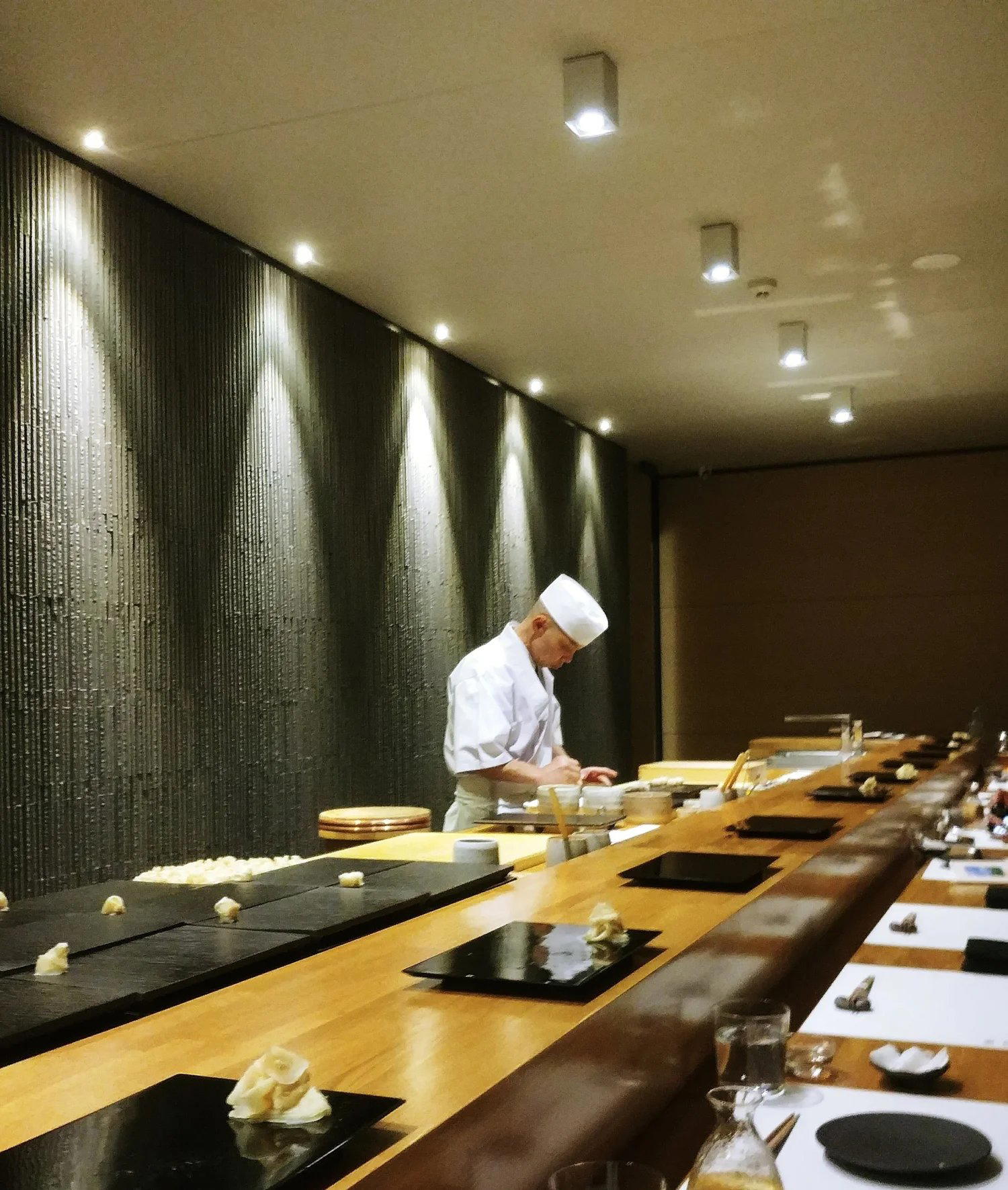
Richmond's dining identity runs along Victoria Street, where roast duck hangs in windows and pho arrives in deep, aromatic bowls. Lord Street, a few blocks away, belongs to a different register entirely. At number four, behind a facade that gives little away, Minamishima operates as a full omakase counter in the Japanese tradition — a format where the physical room, the sequence of courses, and the discipline of service all work toward a single, calibrated experience. The gap between the neighbourhood's everyday character and what happens inside that door is part of the point: this is a room designed to focus attention.

Counter-format omakase has spread through Australian capital cities over the past decade, moving from novelty to a recognised tier of fine dining. Within that tier, only a handful of houses consistently appear in international rankings. Minamishima's La Liste scores — 85 points in 2025 and 86 points in 2026 , place it in that leading cohort, benchmarked against sushi counters globally rather than against Richmond's broader restaurant mix. For context, La Liste draws on hundreds of guides and critical sources across dozens of countries; a score above 85 typically signals peer-level standing with the leading tables in Paris, Tokyo, or New York. The one-point improvement year-on-year is a signal, not a coincidence, in a ranking system where movement is earned incrementally.

Sake at a Counter: Why the Beverage Programme Shapes the Whole Experience

In Tokyo's established omakase houses, the beverage programme is understood as structural , not optional accompaniment, but a parallel sequence that runs alongside fish and rice. The chef controls temperature, rhythm, and portion; the sake selection shapes what the palate registers between pieces. That philosophy travels imperfectly to most diaspora sushi counters, where sake lists are often an afterthought drawn from a single importer's range. The counters that earn sustained international recognition tend to be the ones that have applied the same sourcing rigour to their beverage programme as to their fish.

At Minamishima, the beverage side of the experience is integral rather than supplementary. The broader genre of serious omakase pairing typically involves junmai daiginjo selections chosen for their ability to clean the palate without competing with delicate fat in toro or the mineral edge of lean akami. Aged sake , koshu , pairs differently, bringing umami weight that can work alongside cooked elements or heavier fish. Shochu, particularly barley-based mugi-jochu, offers a drier, more neutral counterpoint at higher proof. Australian diners encountering this range for the first time often find that guided pairing across a full omakase sequence changes the meal fundamentally: the drinks become a timing mechanism, not a social ritual running parallel to the food.

What distinguishes top-tier omakase beverage programmes is curation depth and service knowledge. A list that includes region-specific sake from producers outside the standard export tier , Niigata's cleaner, water-forward styles alongside the richer, more aromatic profiles from Yamaguchi or Hiroshima , gives a counter something to say about each pour. The pairing conversation, when it happens between a knowledgeable server and an engaged diner, is one of the formats where the counter reveals its level of commitment.

Placing Minamishima in Melbourne's Fine Dining Conversation

Melbourne's top-end dining is more pluralist than Sydney's, where single-restaurant reputations have long anchored the market. [Rockpool in Sydney](https://www.enprimeurclub.com/restaurants/rockpool-sydney-restaurant) built its authority around a flagship-and-network model; Melbourne's equivalent tier includes long-running institutions like [Flower Drum in Melbourne](https://www.enprimeurclub.com/restaurants/flower-drum-melbourne-restaurant) alongside newer tasting-menu formats such as [Brae in Birregurra](https://www.enprimeurclub.com/restaurants/brae-birregurra-restaurant) and [Amaru in Armadale](https://www.enprimeurclub.com/restaurants/amaru-armadale-restaurant). Japanese sushi at the counter level sits inside that conversation but operates by different rules: no à la carte flexibility, no menu adaptation, strict time discipline. Minamishima's sustained La Liste recognition confirms it has built the kind of consistency that international critics notice when surveying Australian fine dining.

Internationally, the omakase counter format places Minamishima in a peer set that extends well beyond Australia. [Ginza Sushiko in Los Angeles](https://www.enprimeurclub.com/restaurants/ginza-sushiko-los-angeles-restaurant) and [Edomae Sushi Matsuki in Bratislava](https://www.enprimeurclub.com/restaurants/edomae-sushi-matsuki-bratislava-restaurant) represent the same genre operating in similarly unexpected markets , cities where Japanese sushi tradition has to be imported rather than inherited, and where the house's credibility rests entirely on technique and sourcing rather than on neighbourhood context. That comparison is instructive: the format succeeds globally when it replicates the discipline of its source tradition rather than adapting to local expectations.

Richmond as a Dining Suburb: Context Beyond the Counter

Richmond's dining geography is layered in ways that reward exploration. Victoria Street's Vietnamese corridor is one of Melbourne's most consistent low-to-mid-range eating streets: [Baan Lao](https://www.enprimeurclub.com/restaurants/baan-lao-richmond-restaurant) offers Southeast Asian cooking at an accessible price point, and the suburb's Chinese dining options include [Chef Tony Seafood Restaurant](https://www.enprimeurclub.com/restaurants/chef-tony-seafood-restaurant-richmond-restaurant), [HK BBQ Master](https://www.enprimeurclub.com/restaurants/hk-bbq-master-richmond-restaurant), and [Jade Seafood Restaurant](https://www.enprimeurclub.com/restaurants/jade-seafood-restaurant-richmond-restaurant) , all operating in a different format and price tier from Minamishima but drawing from overlapping ingredient traditions around seafood and precision. [L'Opossum](https://www.enprimeurclub.com/restaurants/lopossum-richmond-restaurant) adds further range to the suburb's more considered end of the market. The full scope of what Richmond offers is covered in [our Richmond restaurants guide](https://www.enprimeurclub.com/restaurants/richmond), with [hotels](https://www.enprimeurclub.com/hotels/richmond), [bars](https://www.enprimeurclub.com/bars/richmond), [wineries](https://www.enprimeurclub.com/wineries/richmond), and [experiences](https://www.enprimeurclub.com/experiences/richmond) also covered separately.

For a diner planning an evening around Minamishima, the surrounding suburb offers very little in the same register , which is, again, part of how the format works. A counter experience of this kind is complete in itself, typically running two to three hours, and the expectation is that you arrive for the counter and leave satisfied rather than moving on to a second venue.

Planning a Visit

Omakase counters at this level in Australian cities typically require advance booking, often weeks out, and Minamishima is no exception to that pattern. The format implies a fixed seat time, no modifications to the sequence, and dress expectations that align with the experience's price positioning. Given the La Liste scoring trajectory, demand is likely to have increased rather than eased since the 2026 ranking. Booking through the venue's direct channel as far ahead as the calendar allows is the practical approach. For diners who want to build the sake pairing into the evening properly, confirming the pairing option at the time of reservation gives the house the leading chance to prepare the correct sequence of pours. Melbourne's position across multiple time zones from Japan also means the fish supply chain involves careful logistics; counter restaurants at this tier typically receive deliveries on specific days, which can influence which sittings offer the widest range of product.

For broader reference across Melbourne's premium dining tier , including formats as different from Minamishima as [400 Gradi in Brunswick East](https://www.enprimeurclub.com/restaurants/400-gradi-brunswick-east-restaurant) or [Bacchus in Brisbane](https://www.enprimeurclub.com/restaurants/bacchus-brisbane-restaurant) at the interstate level , EP Club's city and neighbourhood guides map the full competitive field.

Frequently Asked Questions

What do people recommend at Minamishima?

Minamishima operates as a full omakase counter, meaning there is no à la carte menu and no individual dish selection. The experience follows a chef-led sequence drawing on the Japanese sushi tradition, with fish quality and technique at the centre. The beverage pairing, including sake and potentially shochu, is where diners with prior omakase experience tend to focus attention, as the drink programme at this level shapes the overall arc of the meal as much as any individual piece. The restaurant's La Liste scores , 85pts in 2025 and 86pts in 2026 , confirm that the overall format, not any single element, is what critics have consistently recognised.

Is Minamishima reservation-only?

Counter-format omakase restaurants at this tier operate on reservation-only schedules as a structural requirement, not a preference. Fixed seat counts, timed sequences, and coordinated service make walk-in dining impractical. Given Minamishima's standing in the La Liste rankings (86pts in 2026) and its position as one of Melbourne's most recognised Japanese counters, booking well in advance is the baseline expectation, not a precaution. Diners visiting Richmond from outside Melbourne should secure a reservation before arranging travel.

What do critics highlight about Minamishima?

La Liste's methodology aggregates reviews from a wide range of critical sources globally, so a sustained score above 85 points reflects consistency across multiple critics rather than a single positive notice. The year-on-year improvement from 85 to 86 points between 2025 and 2026 is the kind of incremental movement the ranking reserves for houses that maintain or improve across its full source base. In the Australian context, this places Minamishima in the small cohort of restaurants whose reputations are tracked internationally , alongside institutions in Sydney and Melbourne that have built multi-year critical records in their respective formats.

Collector Access

Need a table?

Our members enjoy priority alerts and concierge-led booking support for the world's most difficult tables.

Access the Concierge