Time Out Market occupies the historic Mercado da Ribeira on Avenida 24 de Julho, channelling Lisbon's fragmented restaurant scene into a single, high-ceilinged hall where the city's most talked-about kitchens share space with wine counters and cocktail stations. It functions less as a food court and more as a curated cross-section of the Portuguese capital at table, drawing locals and visitors in roughly equal measure throughout the day and well into the evening.
Pearl is the En Primeur Club membership app — saves, bookings, and concierge access live there. Same editors, same standards.
- Address
- Mercado da Ribeira, Av. 24 de Julho, 1200-479 Lisboa, Portugal
- Phone
- +351 21 060 7403
- Website
- timeout.pt
- Directions
- Get directions
 Saves & bookings on Pearl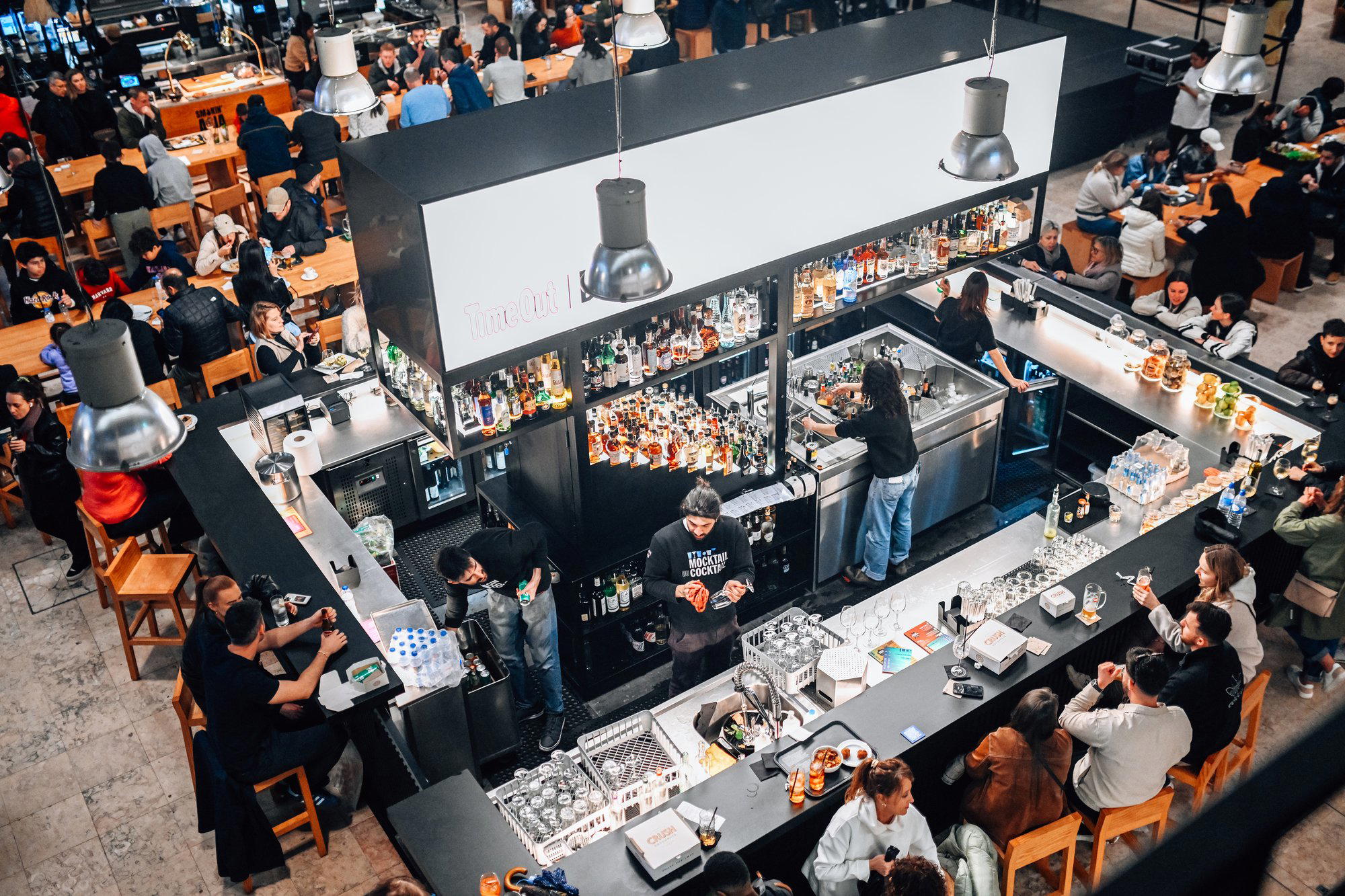
Mercado da Ribeira and the Logic of the Curated Hall
The iron-framed Mercado da Ribeira has stood on Avenida 24 de Julho since 1892, its vaulted roof and tiled facades marking the western edge of Cais do Sodré before the neighbourhood became Lisbon's most contested strip of bars and restaurants. The eastern wing's conversion into Time Out Market in 2014 didn't erase that heritage so much as redirect it: a hall still devoted to the business of feeding people, now operating under a curation model rather than an open-stall one.
That distinction matters more than it might appear. The Lisbon model, by contrast, positioned itself from the outset as a curated project: restaurants are selected for counters inside the market. The result is a shortlist rather than a directory, which gives the hall a coherence that straight commercial letting rarely produces.
The Wine Dimension
Portugal's wine identity is undergoing a period of significant international reappraisal. Regions that spent decades producing inexpensive blends for bulk export are now generating estate-bottled wines that attract serious collector attention, Bairrada's Baga, the Dão's Encruzado, the Alentejo's Aragonez-led reds, and the increasingly complex offerings from the Douro beyond Port. That broader shift is legible inside Time Out Market, where wine counters sit alongside food stations rather than being sequenced as an afterthought or treated as a beverage add-on.
Drinking through Portugal's appellations in a single evening is more achievable here because the curation logic that governs the food stalls extends to the wine offer. Epicur Wine Boutique & Food in Faro runs a focused selection of Algarve and wider Portuguese labels alongside a food pairing menu, while Mosto Wine Shop & Bar in Lagos operates as a reference point for Alentejo and coastal Algarve producers. In the Algarve interior, Touriga Wine & Dine in Carvoeiro takes its name from the grape that anchors the Douro's premium red blends, signalling the national-scale ambition behind what looks like a regional wine list. For a more academic approach to Portuguese appellation depth, Garrafeira Baga in Coimbra is the country's most dedicated retail and bar operation focused on Bairrada's notoriously age-worthy Baga variety.
The market's wine offer doesn't attempt to compete with those specialists on depth. What it does instead is provide breadth and accessibility in a setting that lowers the entry threshold, you can order a glass of Vinho Verde alongside a plate from one counter, then move to a Douro tinto with something from another, assembling a loose tasting progression across an evening without the formality of a restaurant booking or the commitment of a bottle.
Cocktails and the Cais do Sodré Context
Cais do Sodré's bar culture has shifted considerably since the early 2010s. What was a rough waterfront district of working-class tascas and sailors' bars became, across roughly a decade, one of southern Europe's more concentrated pockets of serious cocktail programming. Time Out Market sits at the edge of that zone, and its cocktail counters reflect the same move away from novelty-led drinks toward ingredient-focused, lower-intervention formats that has defined the neighbourhood's better bars.
Red Frog, which operates a reservations-based format and a technically precise menu that positions it at the upper end of Lisbon's cocktail tier. 111 Vinhos takes a different approach, anchoring its drinks list firmly in Portuguese wine and grape-derived spirits. A Ginjinha on Largo de São Domingos has been dispensing the city's signature cherry liqueur from a counter barely wider than a doorway since the nineteenth century, as compressed and singular a drinking experience as Lisbon offers. A Cabreira covers the food-and-wine tavern register that sits between the market's casual format and the more formal restaurant tier.
Inside the restaurant, gin-based drinks featuring Portuguese botanicals are among the more-ordered options at the bar counters. Several counters rotate seasonal compositions built around local botanicals, juniper sourced from Serra da Estrela, citrus from the Algarve, though menus shift frequently enough that specific recommendations travel less reliably than the general advice to ask what is being made with domestic spirits on a given visit.
Format and Practical Logic
The market operates on a counter-service model: you order from individual stalls, collect your food, and eat at shared long tables in the central hall. There is no dress code and no booking requirement for the main hall, which makes it one genuinely flexible entry point in Lisbon's otherwise reservation-heavy dining scene. This accessibility is part of the point. The curated format means that even a visitor with limited Portuguese and no prior knowledge of the city's restaurants can eat at a standard that would otherwise require significant research and advance planning.
Avenida 24 de Julho places the market within easy reach of Cais do Sodré station. For visitors arriving without a fixed plan for the evening, the market functions as a useful orientation device: the range of food on offer maps the city's current cooking priorities more efficiently than any single-kitchen restaurant could.
Those who want to extend the evening beyond the market's perimeter will find the waterfront well-served. Bar do Guincho in Alcabideche operates at the far coastal end of Greater Lisbon's hospitality range, while closer in, Bar e Duna da Cresmina in Cascais e Estoril represents the Atlantic-facing leisure register that the Estoril coast has maintained for decades. For readers coming to Lisbon from further afield, or arriving with a short schedule and high expectations, the full Lisbon restaurants guide provides the neighbourhood-by-neighbourhood breakdown that a single market visit, however well-curated, cannot replace.
City Peers
Comparable venues nearby, for context on price, style, and recognition.
| Venue | Cuisine | Price | Notes |
|---|---|---|---|
| Time Out MarketThis venue — the venue you are viewing | Dining | $$ | Not listed |
| Le Chat | Rooftop Lounge Bar with Small Plates | $$ | Madragoa |
| Restaurante Chiveve | Mozambican | $$ | Estefania |
| Chefe Guiga Restaurant | Brazilian Steakhouse | $$ | Carnide |
| Canto da Atalaia | Traditional Portuguese with Fado | $$ | Chiado |
| Cozinha Popular da Mouraria | Traditional Portuguese Multicultural | $$ | Mouraria |
Continue exploring
More in Lisbon
Restaurants in Lisbon
Browse all →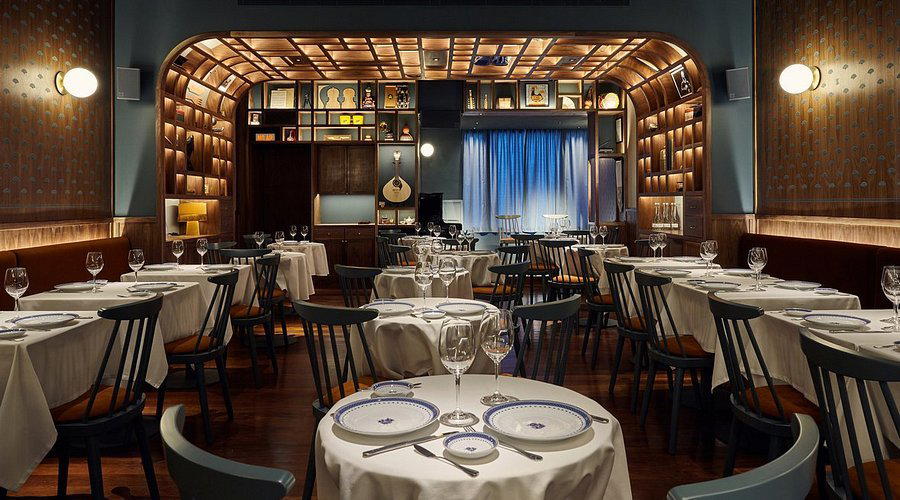
Bars in Lisbon
Browse all →
Hotels in Lisbon
Browse all →

At a Glance
- Lively
- Trendy
- Modern
- Well Known
- Group Outing
- Casual Hangout
- After Work
- Historic Building
Current opening hours
- Monday
- 10 AM–12 AM
- Tuesday
- 10 AM–12 AM
- Wednesday
- 10 AM–12 AM
- Thursday
- 10 AM–12 AM
- Friday
- 10 AM–12 AM
- Saturday
- 10 AM–12 AM
- Sunday
- 10 AM–12 AM
Hours can change for holidays and private events. Last verified .
Lively and casual food hall atmosphere with bustling energy from communal tables and diverse crowds.